
Introduction
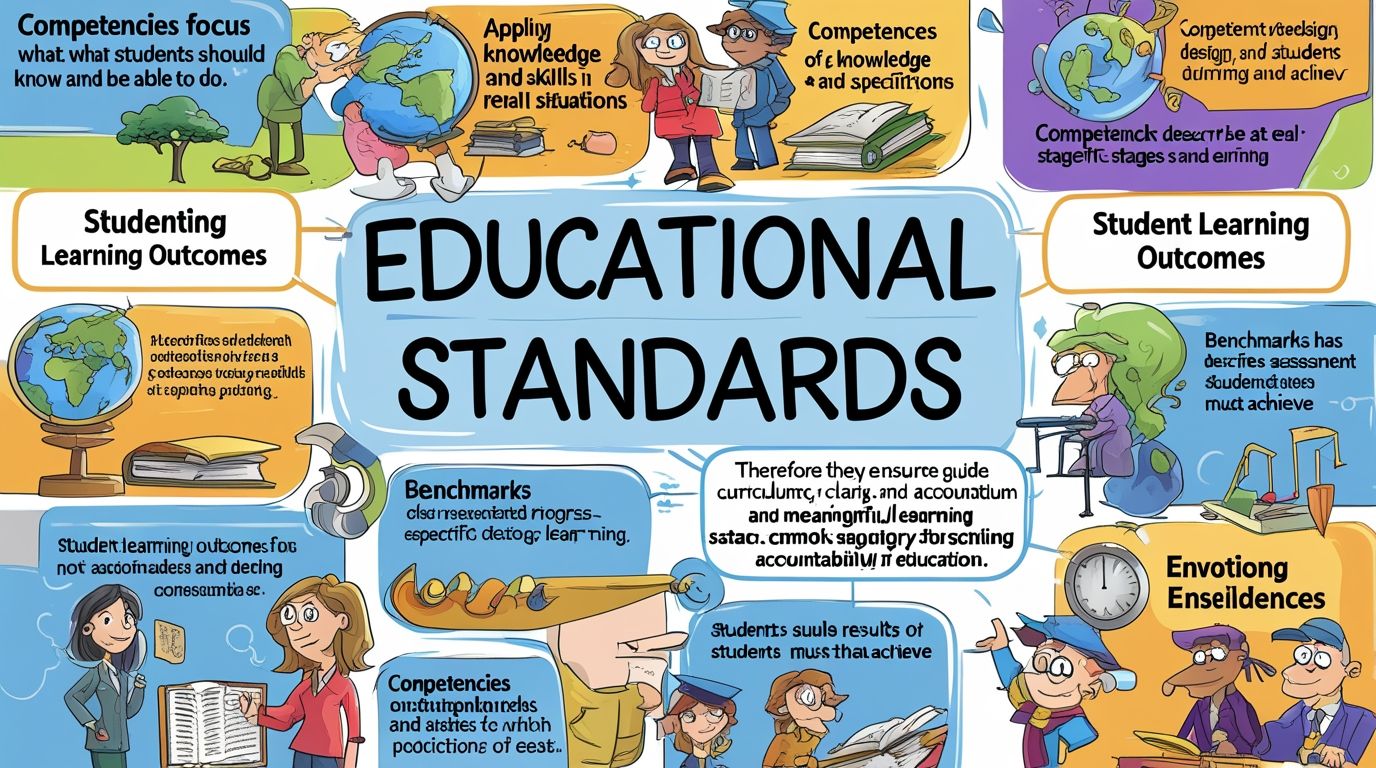
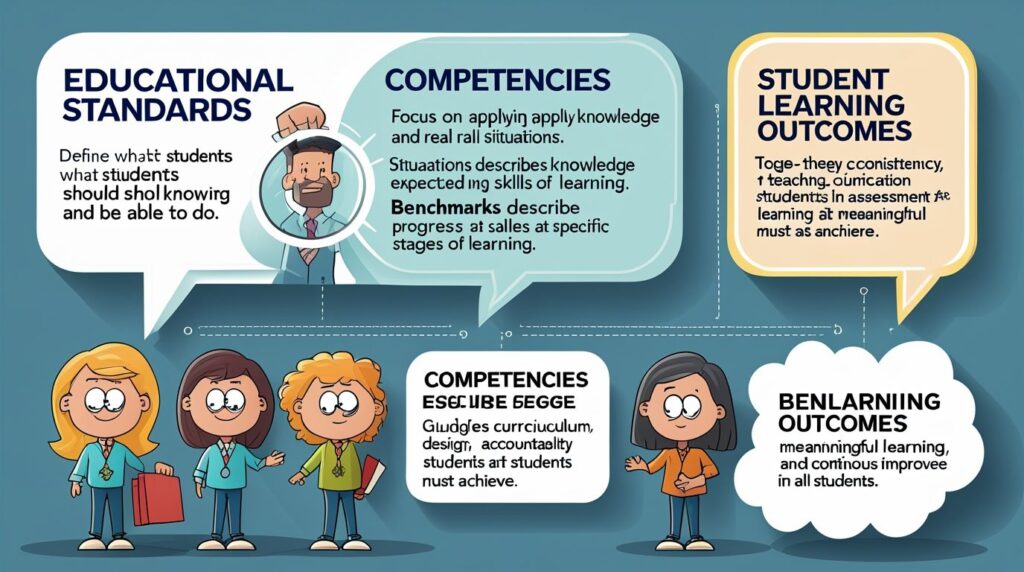
Educational Standards, Competencies, Benchmarks, and Student Learning Outcomes, Education systems depend on clear expectations. Educational standards define what students should know and be able to do. Competencies focus on applying knowledge and skills in real situations. Benchmarks describe expected progress at specific stages of learning. Student learning outcomes state measurable results students must achieve. Together, these elements guide curriculum design, teaching, and assessment. Therefore, they ensure consistency, clarity, and accountability in education while supporting meaningful learning and continuous improvement for all students. Therefore, educators need structured guidance. Educational standards, competencies, benchmarks, and student learning outcomes provide this guidance. Together, they define what learners should know and do. Moreover, they promote consistency across schools and regions. However, these terms are often misunderstood. As a result, confusion affects curriculum design and assessment. Educational standards describe broad goals. Competencies focus on applied skills. Benchmarks mark progress points. Student learning outcomes specify measurable results. Consequently, each element plays a unique role. In addition, they support accountability. They also improve teaching quality. Furthermore, they help learners understand expectations. Therefore, understanding their differences is essential. This article explains each concept clearly. It also explores their relationships. Moreover, it highlights their role in modern education. Ultimately, effective use of these tools improves learning. Thus, educators, policymakers, and students all benefit. Clear frameworks create better educational systems overall.
Educational Standards Defined
Educational standards are formal statements of learning expectations. They describe what students should know. They also outline what students should be able to do. Typically, governments or education boards create them. Therefore, standards ensure consistency. Moreover, they guide curriculum development. However, standards remain broad by design. They do not describe daily lessons. Instead, they define long-term goals. For example, a mathematics standard may require problem-solving skills. Similarly, a language standard may emphasize communication. Consequently, standards shape subject content. In addition, they support national or regional alignment. Furthermore, they allow fair assessment across schools. Therefore, standards promote equity. However, they require interpretation. Teachers must translate them into practice. Thus, standards act as a foundation. They do not stand alone. Instead, they work with competencies, benchmarks, and learning outcomes to guide instruction effectively.
Purpose of Educational Standards
Educational standards serve several important purposes. First, they establish shared expectations. Therefore, all learners aim for the same goals. Moreover, standards guide instructional planning. Teachers use them to design lessons. However, standards also support assessment. Tests align with standards. Consequently, results become meaningful. In addition, standards promote accountability. Schools must demonstrate progress. Furthermore, policymakers use standards to evaluate systems. Therefore, they inform reform efforts. However, standards alone are not enough. They do not specify mastery levels. They also lack timelines. As a result, additional tools are needed. Benchmarks and outcomes fill this gap. Thus, standards provide direction. They act as a compass. Without them, education lacks focus. Ultimately, strong standards improve quality. They ensure relevance. They also prepare students for future demands.
Understanding Competencies
Competencies focus on the ability to apply knowledge. Unlike standards, they emphasize performance. Therefore, competencies describe what learners can do. Moreover, they integrate skills, knowledge, and attitudes. For example, critical thinking is a competency. Similarly, collaboration is another. Consequently, competencies reflect real-world demands. In addition, they support lifelong learning. Employers value competencies highly. Furthermore, competencies encourage deeper learning. Students move beyond memorization. Therefore, learning becomes meaningful. However, competencies require clear definition. They must be observable. They must also be assessable. Thus, educators design tasks carefully. Competency-based education uses this approach. Progress depends on mastery. Time becomes flexible. As a result, learners advance at different rates. Ultimately, competencies connect education to practice.
Role of Competencies in Education
Competencies play a central role in modern education. First, they align learning with real needs. Therefore, students gain practical skills. Moreover, competencies support active learning. Learners engage in problem solving. However, competencies also demand strong assessment methods. Traditional tests may not suffice. Consequently, performance tasks are used. In addition, competencies promote learner autonomy. Students track their progress. Furthermore, feedback becomes continuous. Therefore, learning improves steadily. However, implementing competencies can be challenging. Teachers need training. Systems need flexibility. Despite this, benefits remain strong. Competencies enhance employability. They also encourage adaptability. Thus, education becomes future-focused. When combined with standards, competencies create balance. Knowledge and application work together effectively.
Benchmarks Explained
Benchmarks are specific reference points. They describe expected progress at certain stages. Therefore, benchmarks break standards into steps. Moreover, they provide timelines. For example, a benchmark may define skills by grade level. Consequently, teachers monitor growth more easily. In addition, benchmarks guide instructional pacing. They show when skills should develop. Furthermore, benchmarks support early intervention. Struggling students are identified sooner. Therefore, support becomes timely. However, benchmarks remain flexible. They allow for individual differences. They do not limit creativity. Instead, they provide structure. Benchmarks also help parents understand progress. Thus, communication improves. Ultimately, benchmarks connect standards to classroom practice. They translate goals into manageable targets.
Importance of Benchmarks
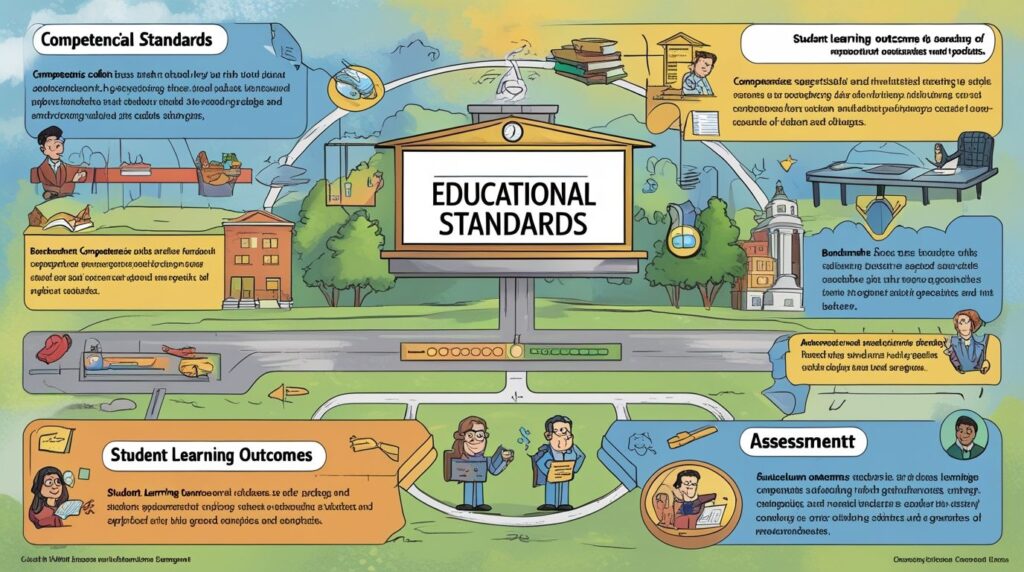
Benchmarks serve as progress indicators. First, they help track learning over time. Therefore, educators can adjust instruction. Moreover, benchmarks support data-driven decisions. Assessment results guide planning. However, benchmarks also prevent gaps. Skills build systematically. Consequently, learning becomes coherent. In addition, benchmarks promote accountability. Schools demonstrate yearly progress. Furthermore, they support curriculum alignment. Content matches expectations. Therefore, teaching becomes focused. However, benchmarks should not be rigid. Over-standardization can limit innovation. Thus, balance is essential. Benchmarks guide, not control. When used wisely, they enhance learning. They also reduce uncertainty. Teachers know what comes next. Students know what is expected. Ultimately, benchmarks support steady achievement.
Student Learning Outcomes Defined
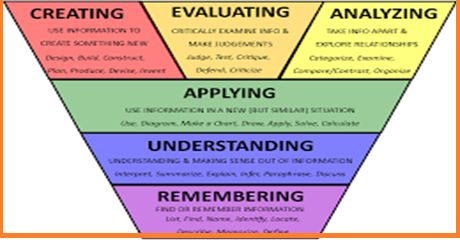
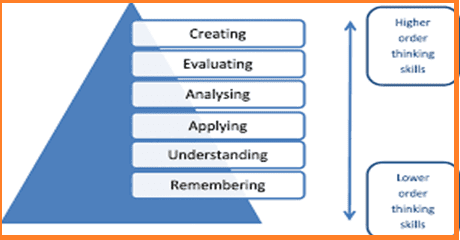
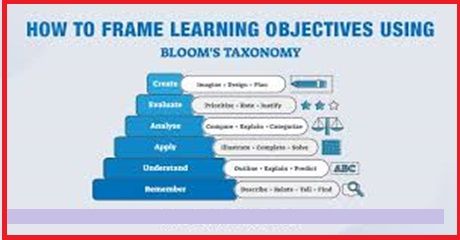
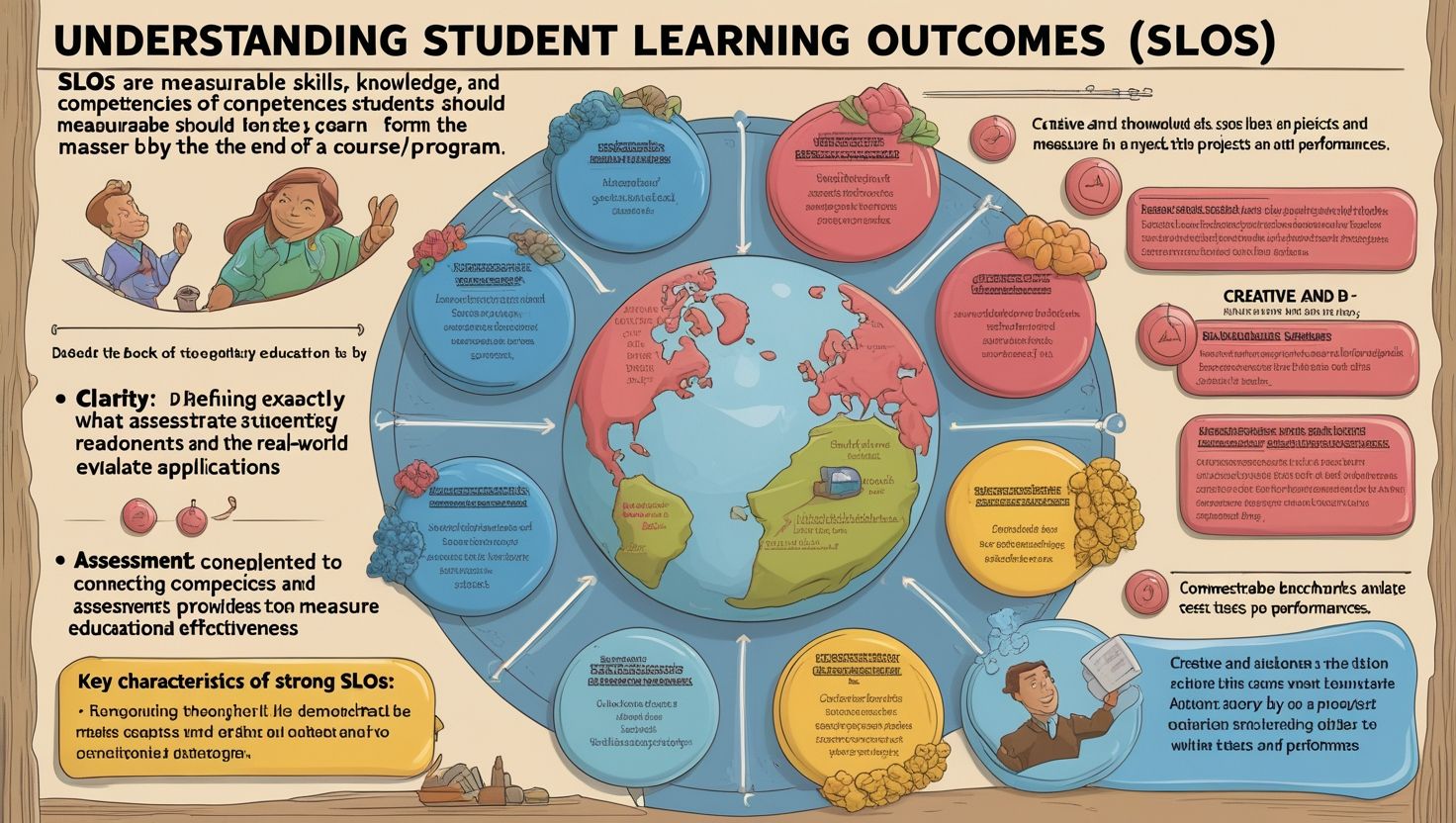
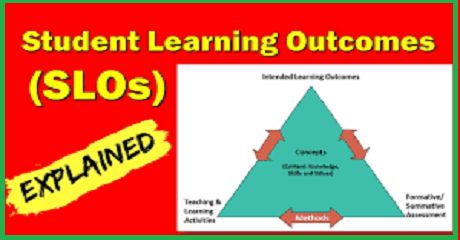
Student learning outcomes, or SLOs, are specific statements. They describe measurable learning results. Therefore, SLOs focus on evidence. Moreover, they clearly state what learners will achieve. For example, an SLO may state performance criteria. Consequently, assessment becomes precise. In addition, SLOs guide lesson objectives. Teachers plan with clarity. Furthermore, students understand goals. Therefore, motivation increases. However, SLOs must be well written. They should be observable. They should also be measurable. Vague outcomes reduce effectiveness. Thus, action verbs are used. Bloom’s taxonomy often guides wording. Ultimately, SLOs translate standards into classroom outcomes. They represent the most concrete level of planning.
Role of SLOs in Assessment
SLOs play a vital role in assessment. First, they define success clearly. Therefore, grading becomes fair. Moreover, SLOs align instruction and assessment. Teaching targets outcomes directly. However, SLOs also support feedback. Students know strengths and weaknesses. Consequently, improvement becomes targeted. In addition, SLOs promote transparency. Expectations are shared openly. Furthermore, they support continuous improvement. Teachers reflect on results. Therefore, instruction evolves. However, writing effective SLOs requires skill. Poorly designed outcomes limit learning. Thus, training is essential. When used effectively, SLOs enhance accountability. They also improve student achievement. Ultimately, SLOs connect learning goals to evidence.
Alignment Among the Four Concepts
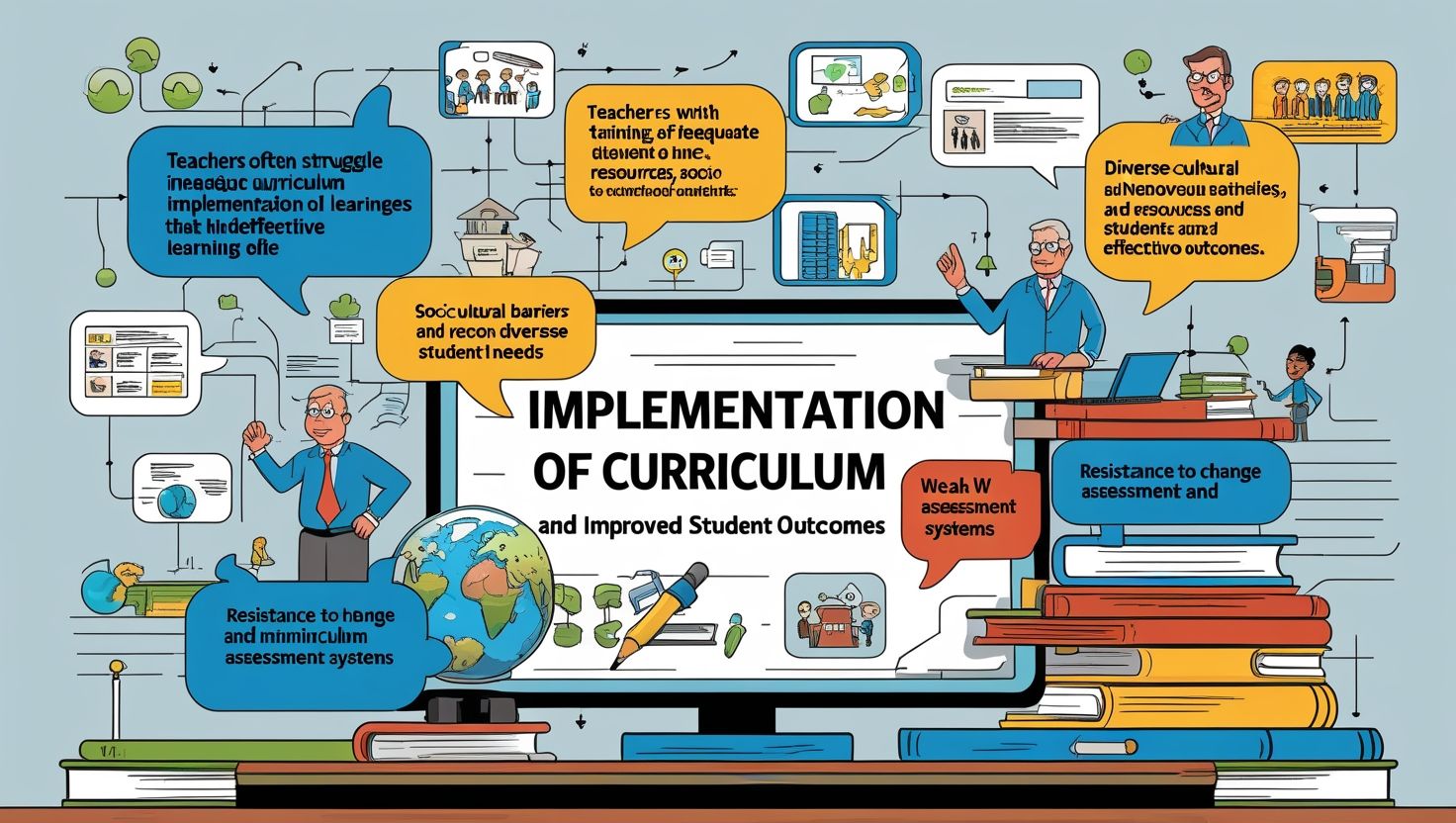
Alignment is critical in education. Standards, competencies, benchmarks, and SLOs must connect. Therefore, coherence is achieved. Moreover, alignment ensures consistency. Learning goals match assessments. However, misalignment causes confusion. Students struggle unnecessarily. Consequently, careful planning is required. Standards provide direction. Competencies define application. Benchmarks mark progress. SLOs measure results. In addition, alignment supports curriculum mapping. Teachers coordinate across grades. Furthermore, aligned systems improve outcomes. Instruction becomes purposeful. Therefore, resources are used effectively. However, alignment takes time. Collaboration is essential. Despite challenges, benefits outweigh costs. Aligned frameworks support quality education. They ensure learning builds logically. Ultimately, alignment strengthens the entire system.
Impact on Teaching Practices
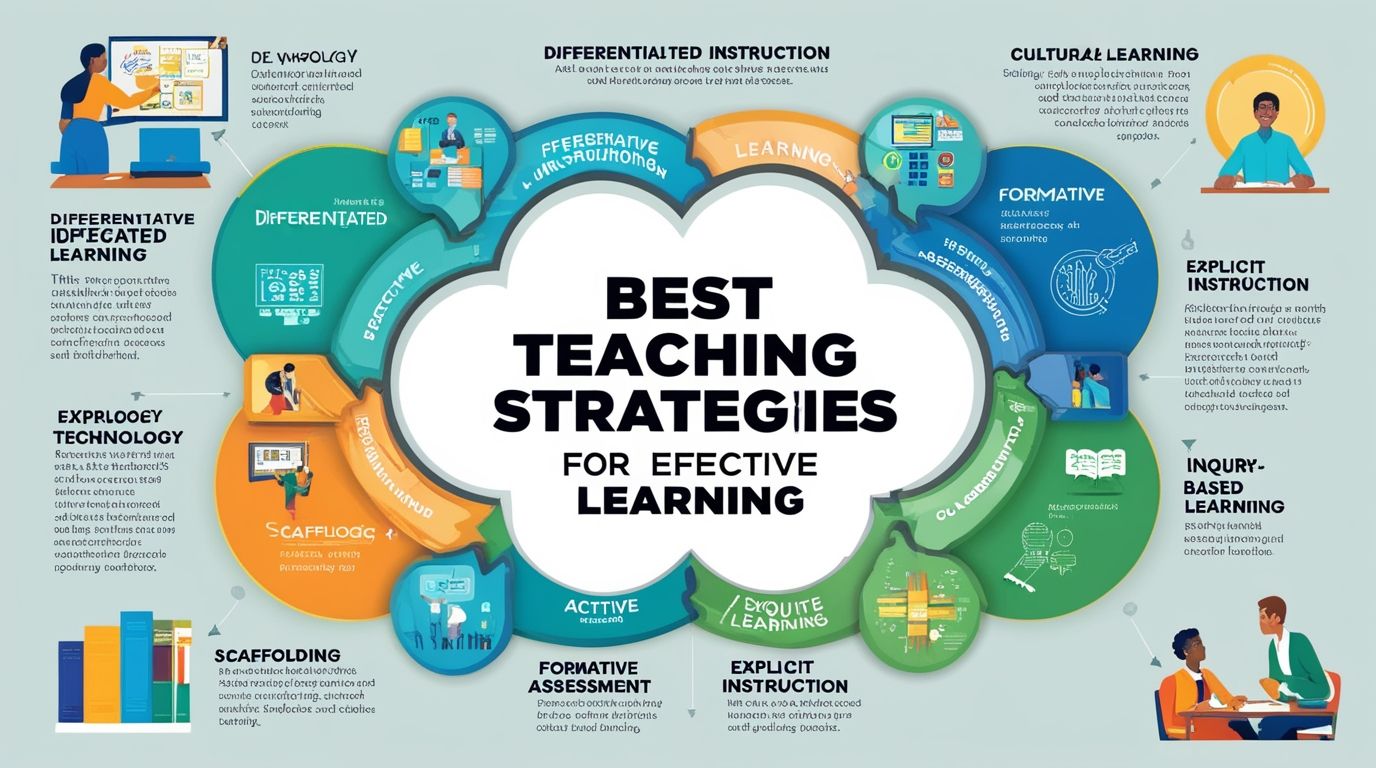
These frameworks strongly influence teaching. First, teachers plan more intentionally. Therefore, lessons align with goals. Moreover, instruction becomes learner-centered. Competencies encourage active methods. However, teachers also rely on benchmarks. They pace lessons appropriately. Consequently, coverage improves. In addition, SLOs shape assessment design. Tasks reflect objectives. Furthermore, reflection increases. Teachers analyze data regularly. Therefore, instruction adapts. However, this approach demands professional development. Teachers need support. Systems must provide resources. Despite challenges, teaching quality improves. Educators gain clarity. Students gain direction. Ultimately, structured frameworks empower effective teaching practices.
Benefits for Students
Students benefit directly from these tools. First, expectations become clear. Therefore, anxiety decreases. Moreover, students understand learning goals. Motivation increases. However, competencies also build confidence. Skills transfer to real life. Consequently, learning feels relevant. In addition, benchmarks help students track progress. They see improvement over time. Furthermore, SLOs provide clear feedback. Students know how to improve. Therefore, ownership increases. However, success depends on implementation. Poor communication reduces benefits. Thus, educators must explain goals clearly. When used well, these frameworks support equity. All learners know what is expected. Ultimately, students achieve more effectively.
Challenges and Considerations
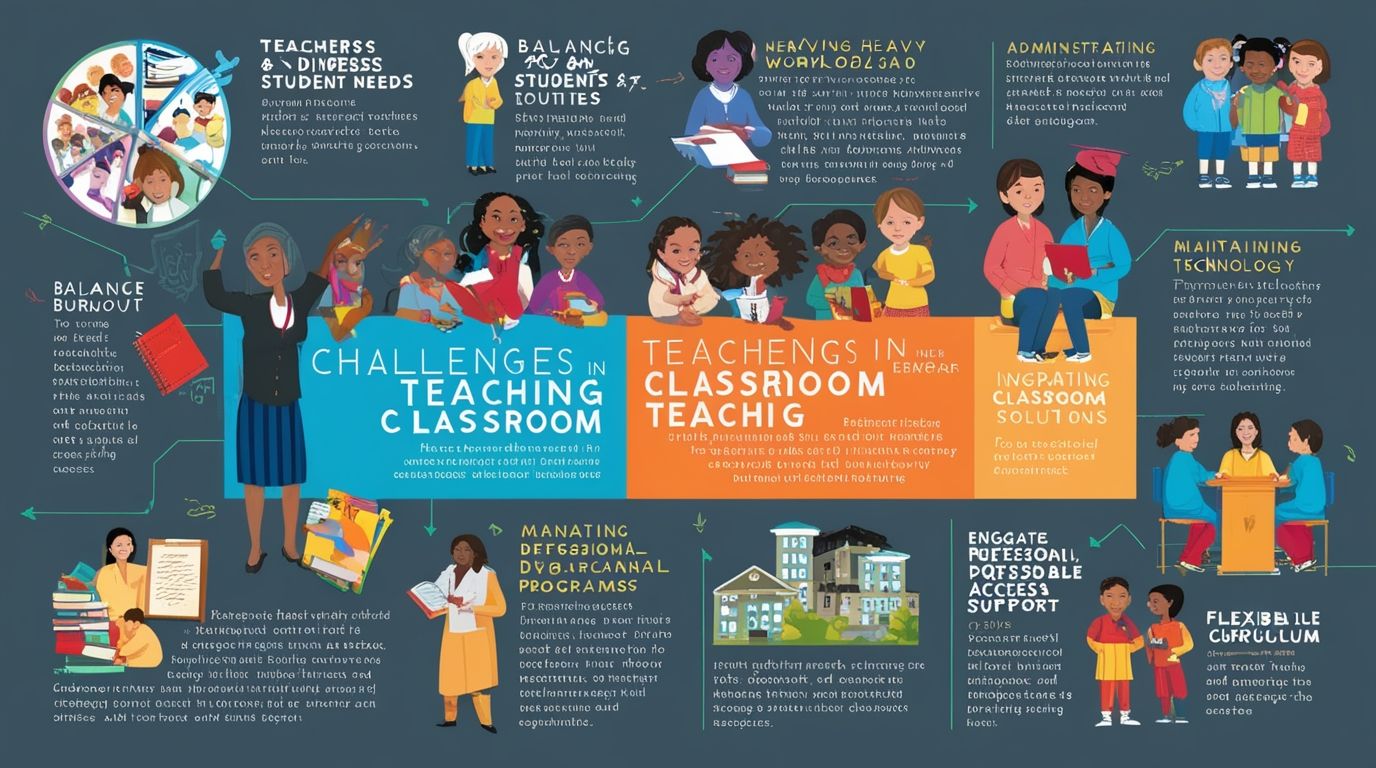
Despite benefits, challenges exist. First, implementation can be complex. Therefore, planning time increases. Moreover, teachers may resist change. Training becomes necessary. However, assessment alignment is difficult. Measuring competencies takes effort. Consequently, resources are required. In addition, overemphasis on measurement can narrow learning. Creativity may suffer. Furthermore, rigid benchmarks may ignore diversity. Flexibility is essential. Therefore, balance must be maintained. Policymakers must listen to educators. Collaboration improves outcomes. Despite challenges, solutions exist. Professional development helps. Thoughtful design matters. Ultimately, challenges should not prevent adoption. Instead, they should guide improvement.
Conclusion
Educational standards, competencies, benchmarks, and SLOs form a complete framework. Together, they guide teaching and learning. Therefore, each component matters. Standards provide direction. Competencies ensure application. Benchmarks track progress. SLOs measure results. Moreover, alignment strengthens effectiveness. However, thoughtful implementation is essential. Balance must be maintained. In addition, educators need support. Training and collaboration improve success. Furthermore, students benefit from clarity. Learning becomes meaningful. Therefore, these tools should be used together. Not in isolation. When integrated, they improve quality. They promote equity. They support accountability. Ultimately, strong educational frameworks prepare learners for the future. They connect knowledge, skills, and outcomes effectively.
































































































































































































































































































































References:
Online Spielhalle James Bond Online Spielhallen Deutschland
References:
La casino https://wsmgroup.co.za/2026/05/13/best-payid-pokies-australia-2026-fast-withdrawals