
Introduction
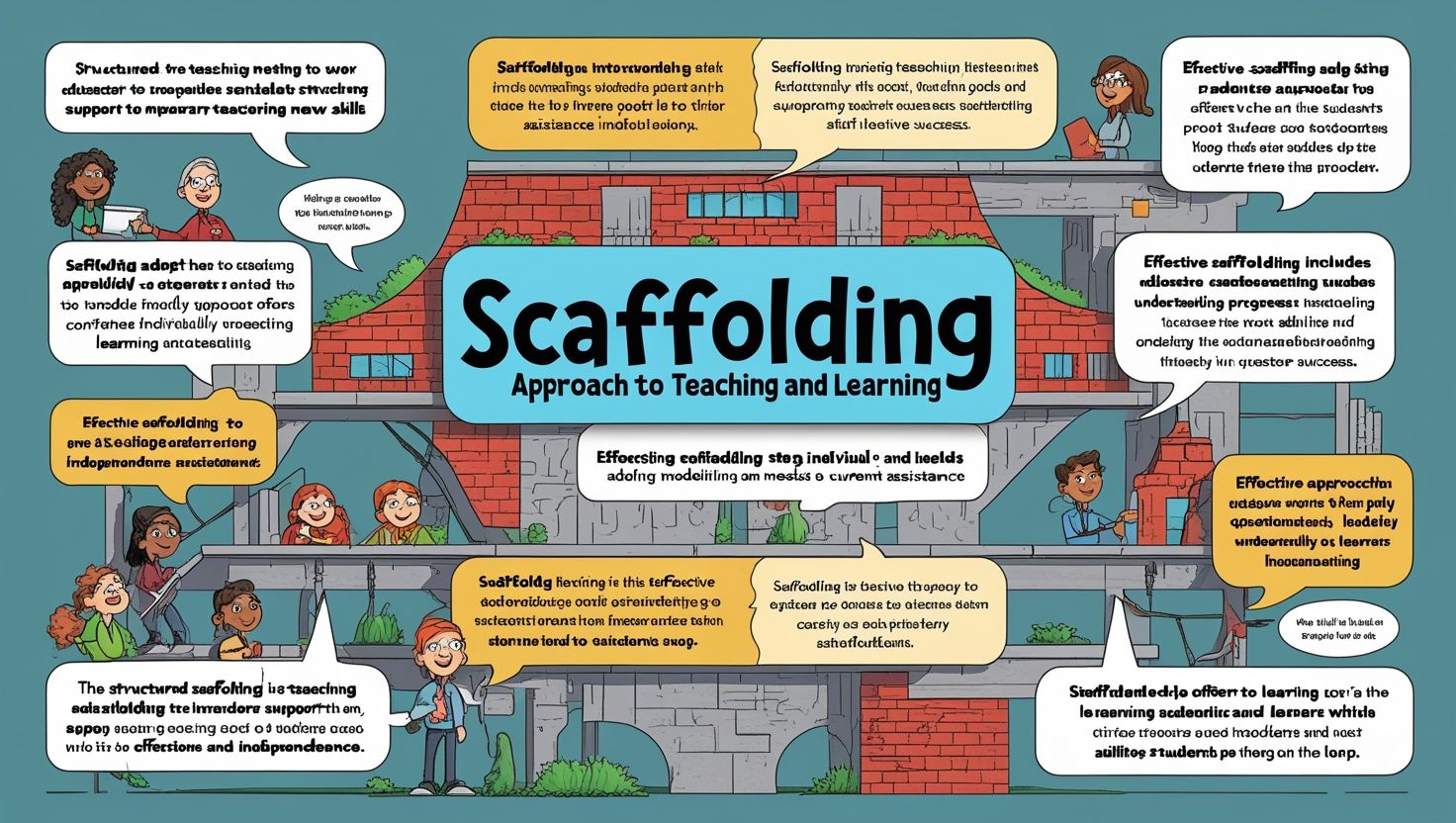
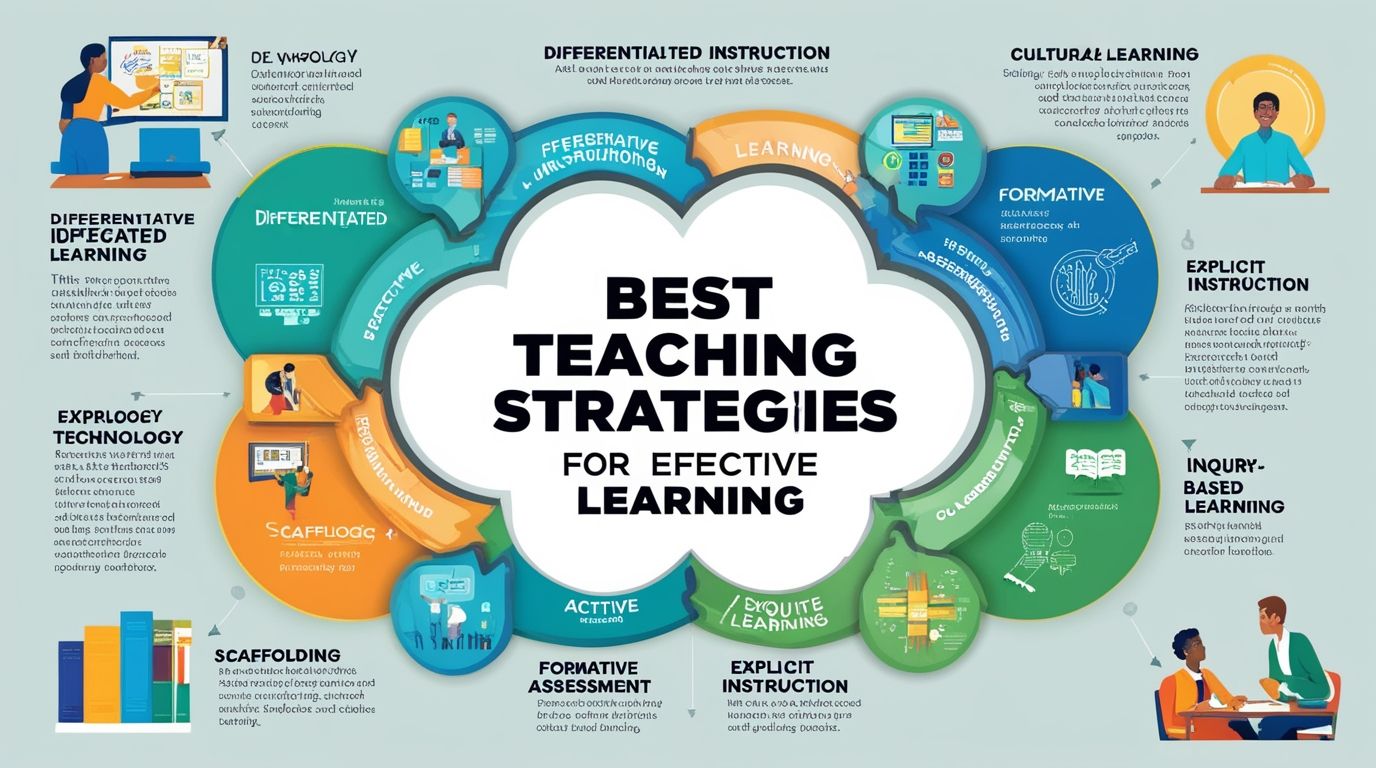
The scaffolding approach to teaching and learning stands as a cornerstone of effective educational practice. Rooted in cognitive psychology and educational theory, scaffolding offers a structured framework to guide learners as they acquire new skills, concepts, and knowledge. Much like the physical scaffolding that supports a building under construction, this instructional method provides temporary assistance until learners are ready to work independently. As students gain mastery, the support is gradually withdrawn, fostering independence and confidence. This method not only aids comprehension but also cultivates the ability to think critically and solve problems. In this discussion, we will explore the key principles, diverse applications, and profound impact of scaffolding on deep learning.
Understanding Scaffolding
At its heart, scaffolding is a flexible and adaptive instructional strategy designed to meet learners at their current level and guide them toward higher competence. The term was introduced by Jerome Bruner and draws heavily from Lev Vygotsky’s concept of the Zone of Proximal Development (ZPD). This zone represents tasks that a learner cannot yet complete alone but can accomplish with proper guidance. The approach recognizes that learning is an active, social process. Students work alongside a more knowledgeable individual—often a teacher—who provides structured support until the learner can perform independently. This process ensures that learners are continually challenged just beyond their comfort zone, enabling steady growth.
Key Principles
Effective scaffolding operates on several guiding principles:
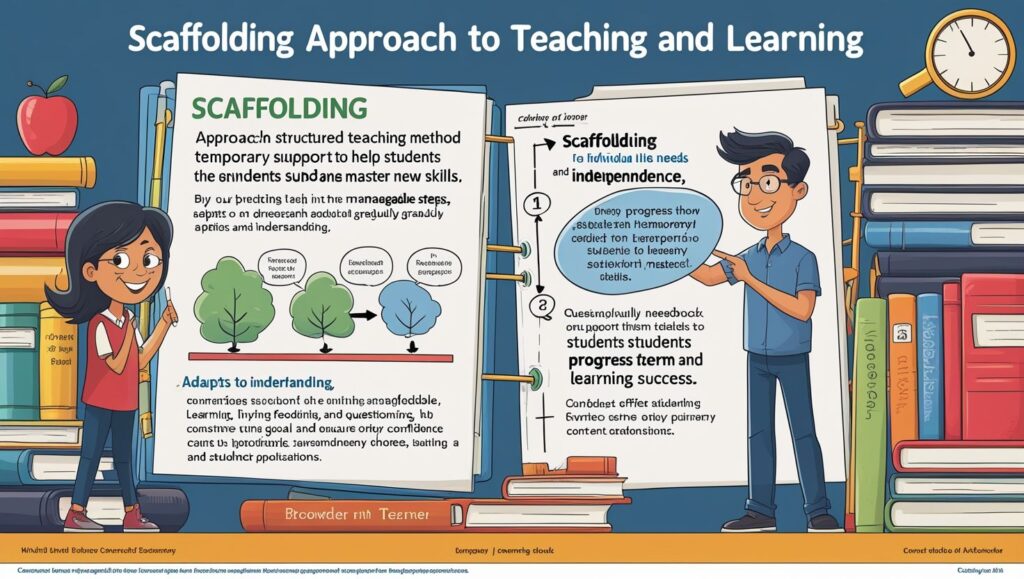
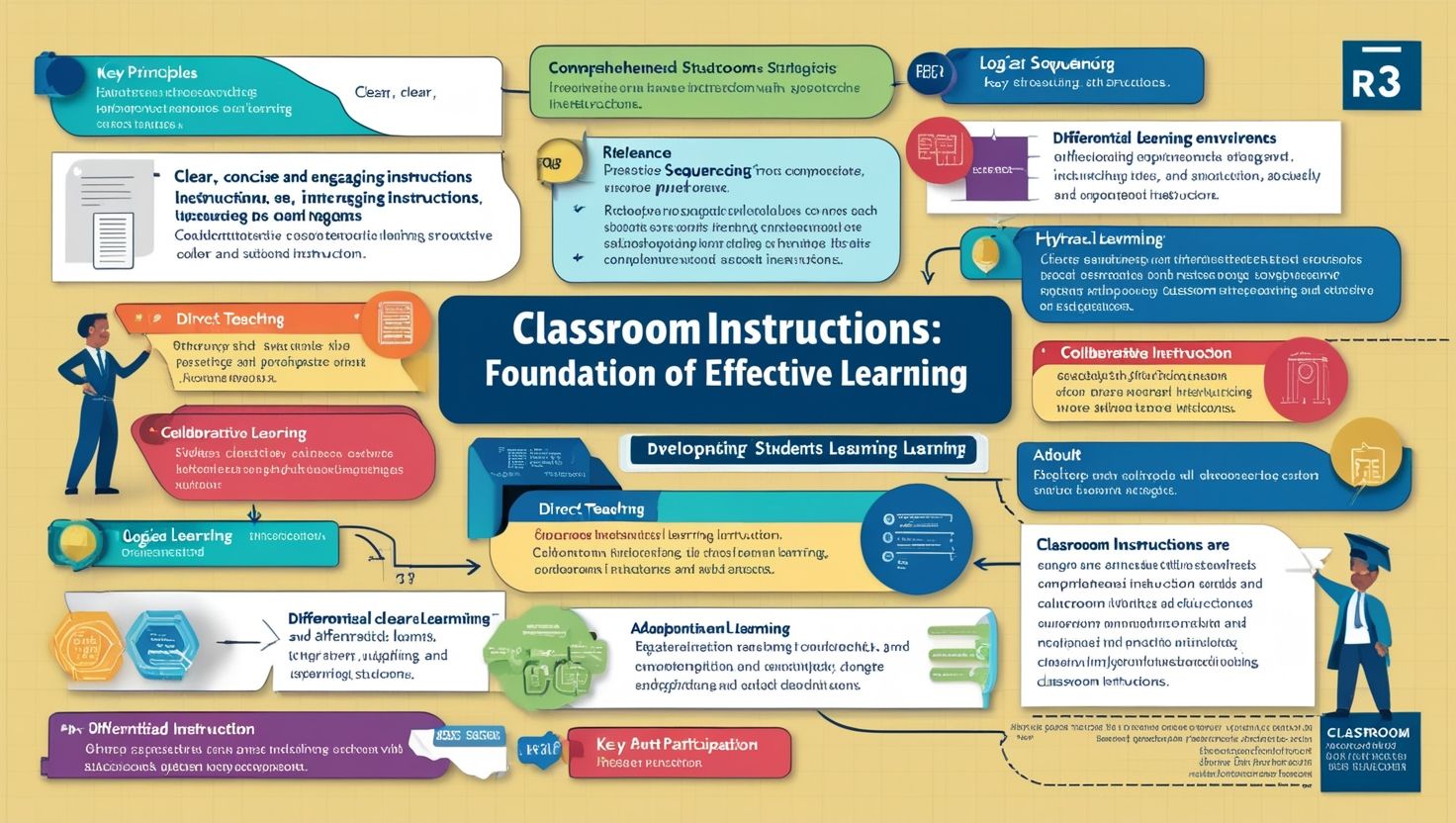
- Zone of Proximal Development (ZPD): Targeting learning tasks within the ZPD ensures that challenges are manageable yet stimulating. This balance maximizes engagement and accelerates skill development.
- Gradual Release of Responsibility: Scaffolding involves shifting responsibility from the teacher to the learner over time. Instruction begins with explicit guidance, moves to shared control, and ends with independent practice. This empowers learners to become autonomous.
- Adaptive Support: Support is flexible and tailored to learners’ unique needs, prior knowledge, and abilities. It evolves as learners make progress, ensuring that assistance remains relevant and effective.
- Sustained Feedback: Continuous, constructive feedback reinforces correct understanding, addresses misconceptions, and helps learners refine their strategies.
Applications in Education
The scaffolding approach is versatile and effective across different educational contexts:
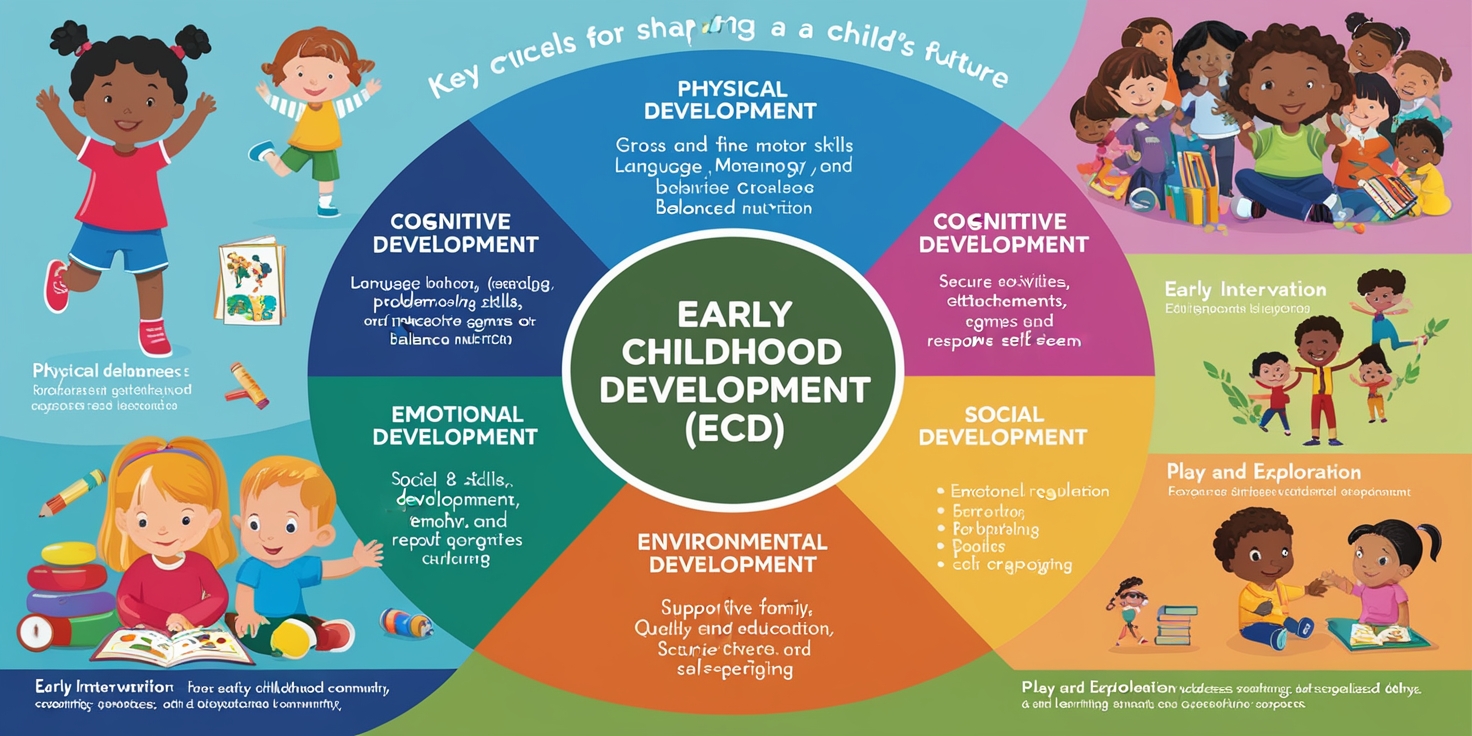
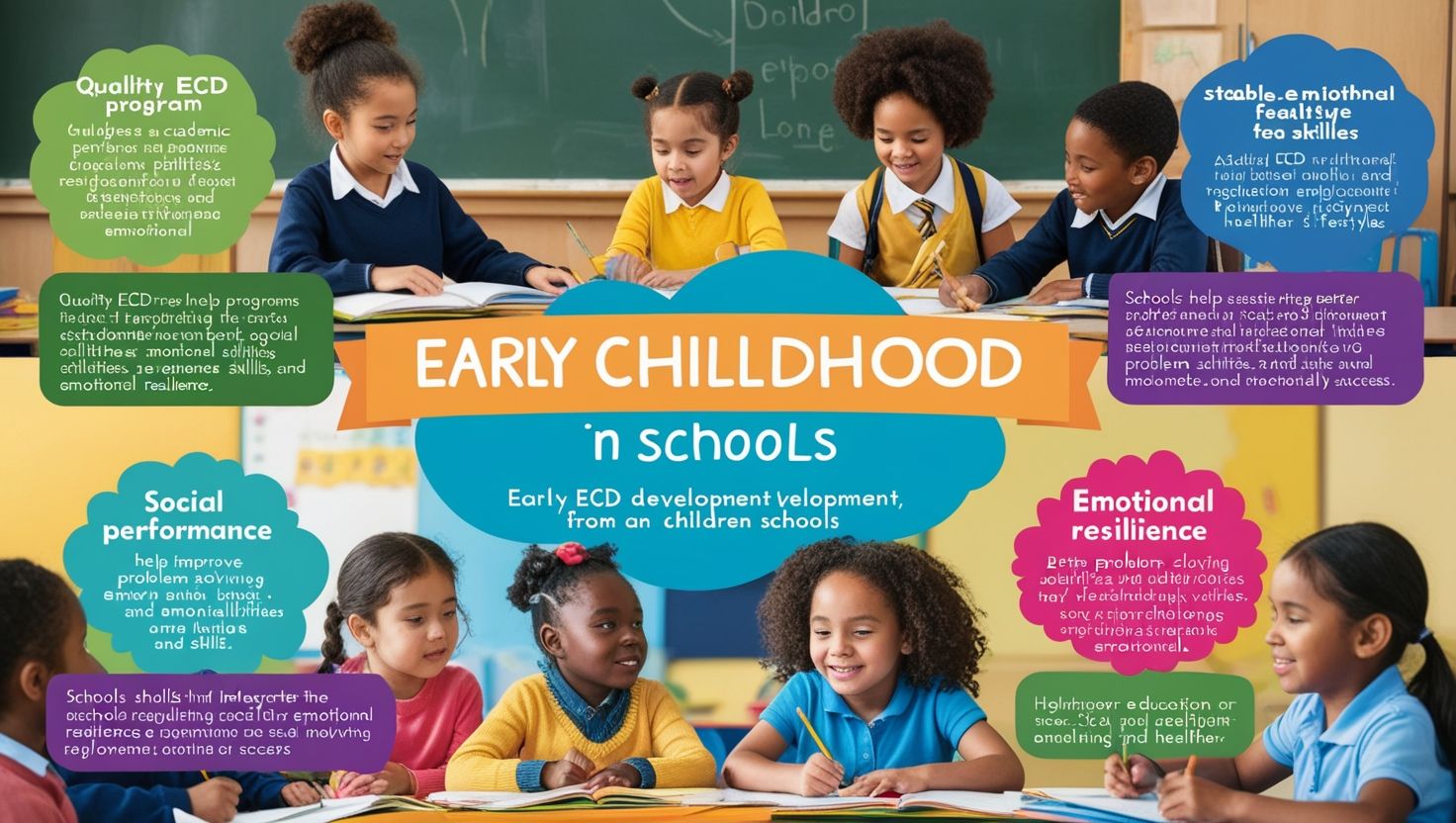
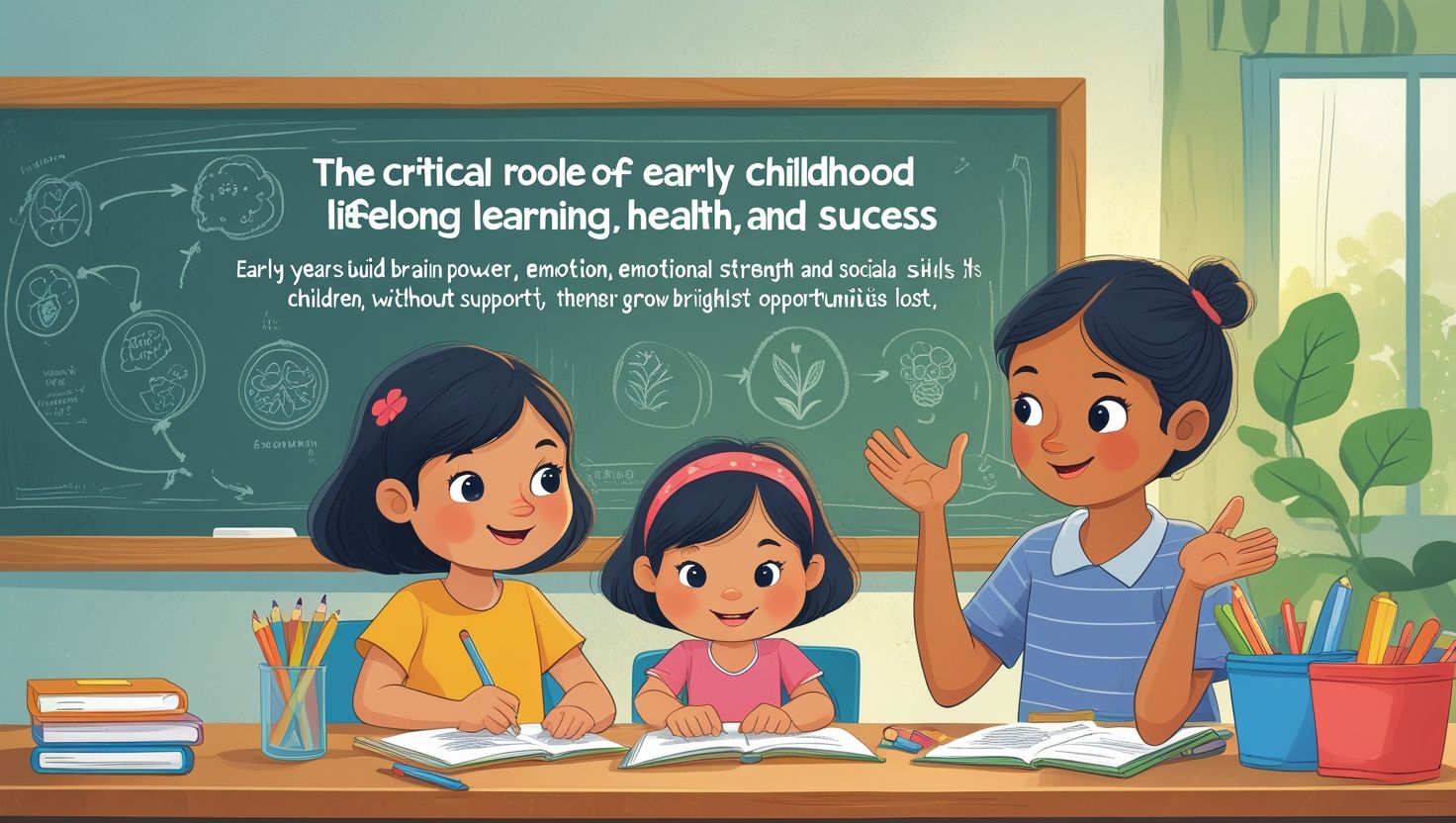
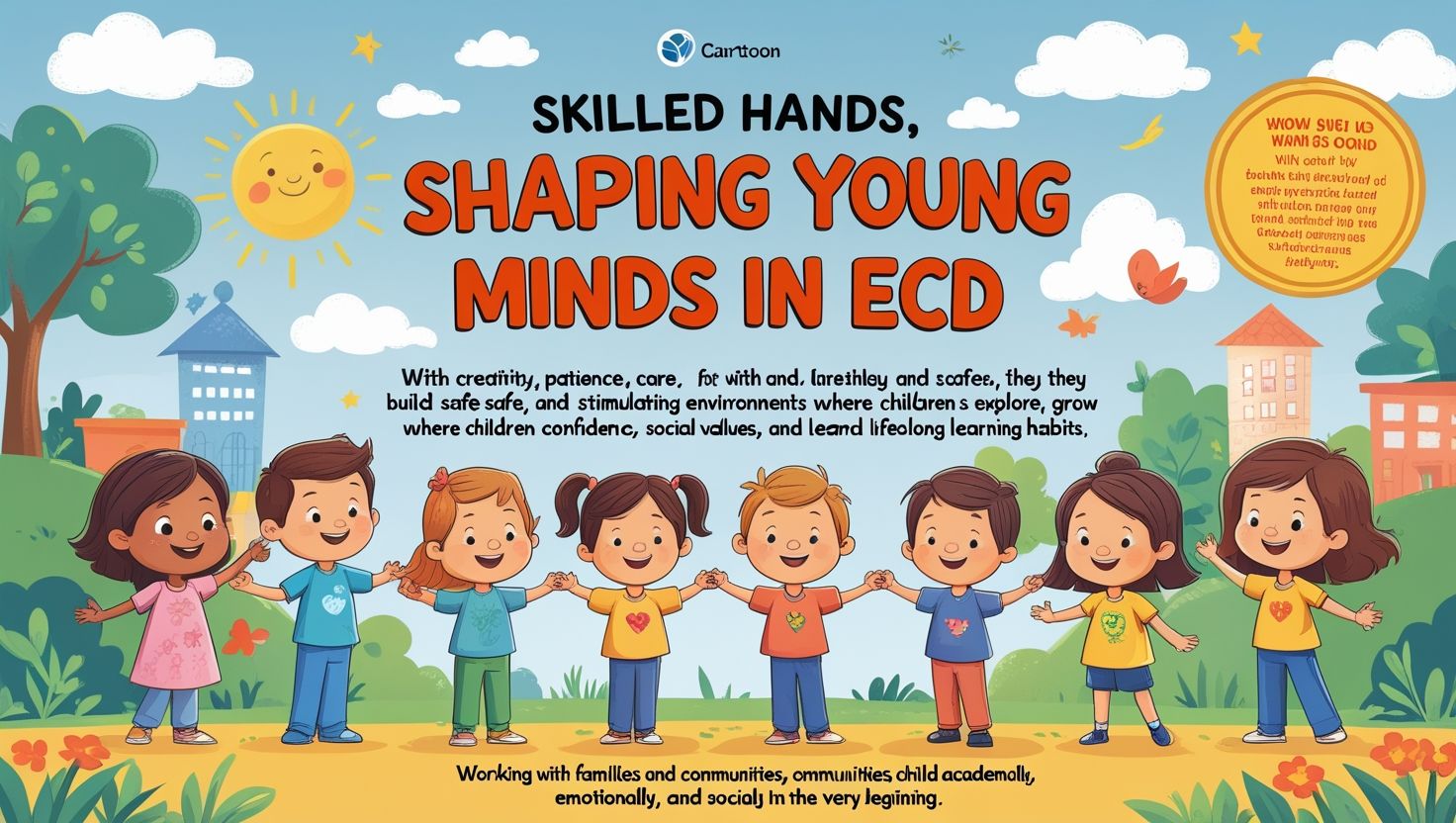
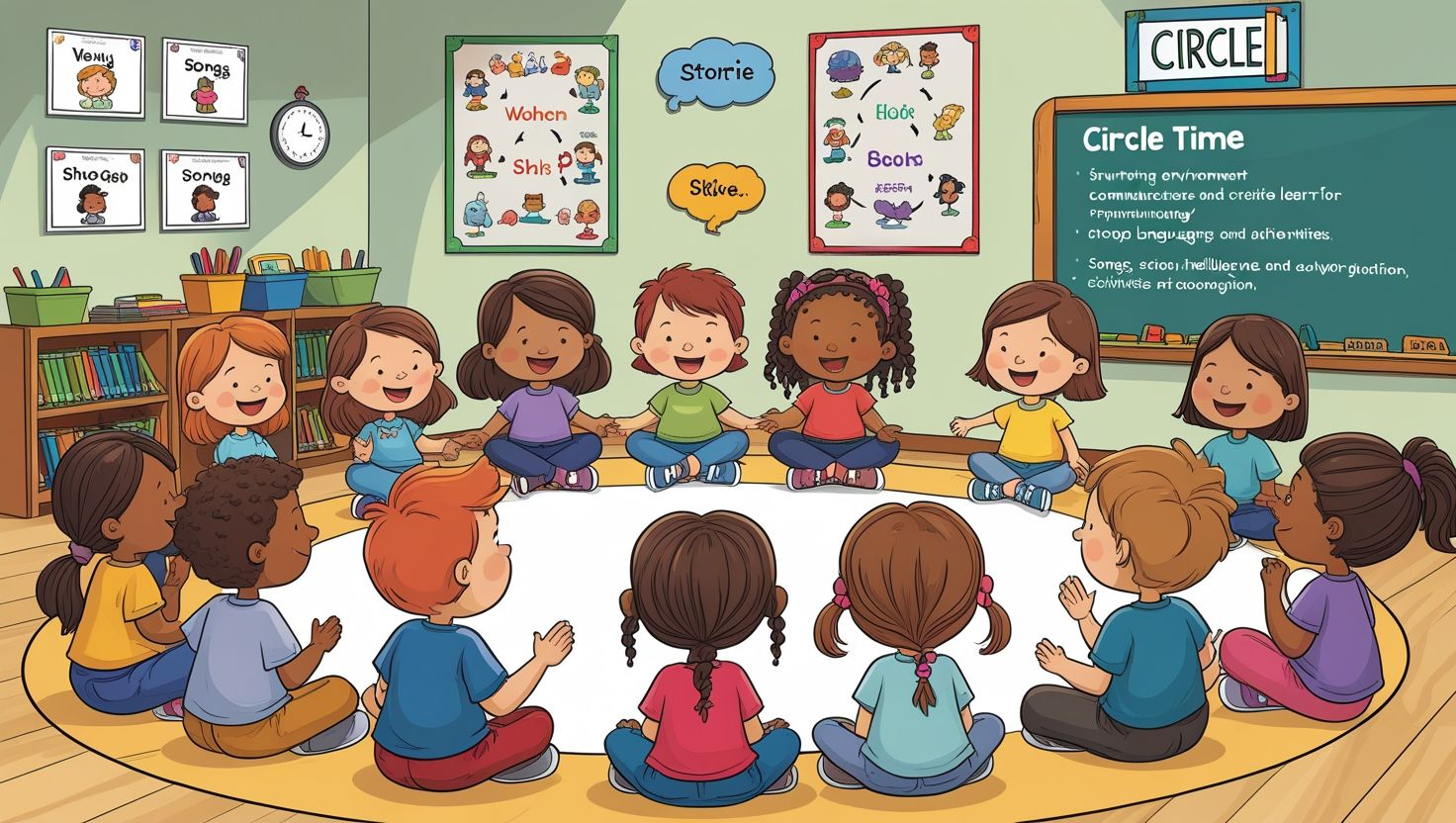
- Early Childhood Education: In preschool and kindergarten settings, scaffolding is used through guided play, modeling, and interactive activities. Teachers support children in developing early literacy, numeracy, and social skills.
- Language Acquisition: Language teachers scaffold by introducing vocabulary in context, simplifying complex grammar, and providing opportunities for conversation and real-life language use.
- STEM Education: In science, technology, engineering, and mathematics, scaffolding supports inquiry-based learning. Educators guide students through experiments, data analysis, and design processes, encouraging critical thinking and innovation.
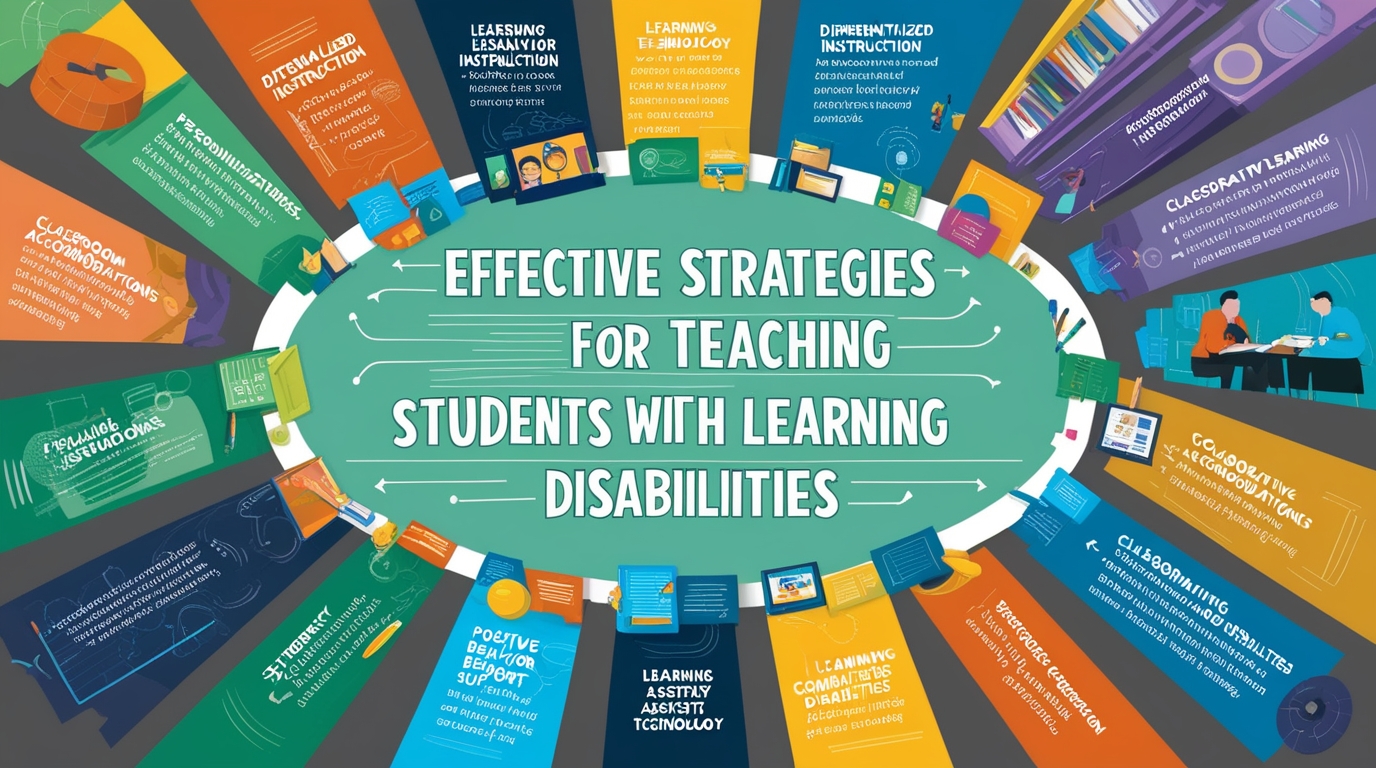
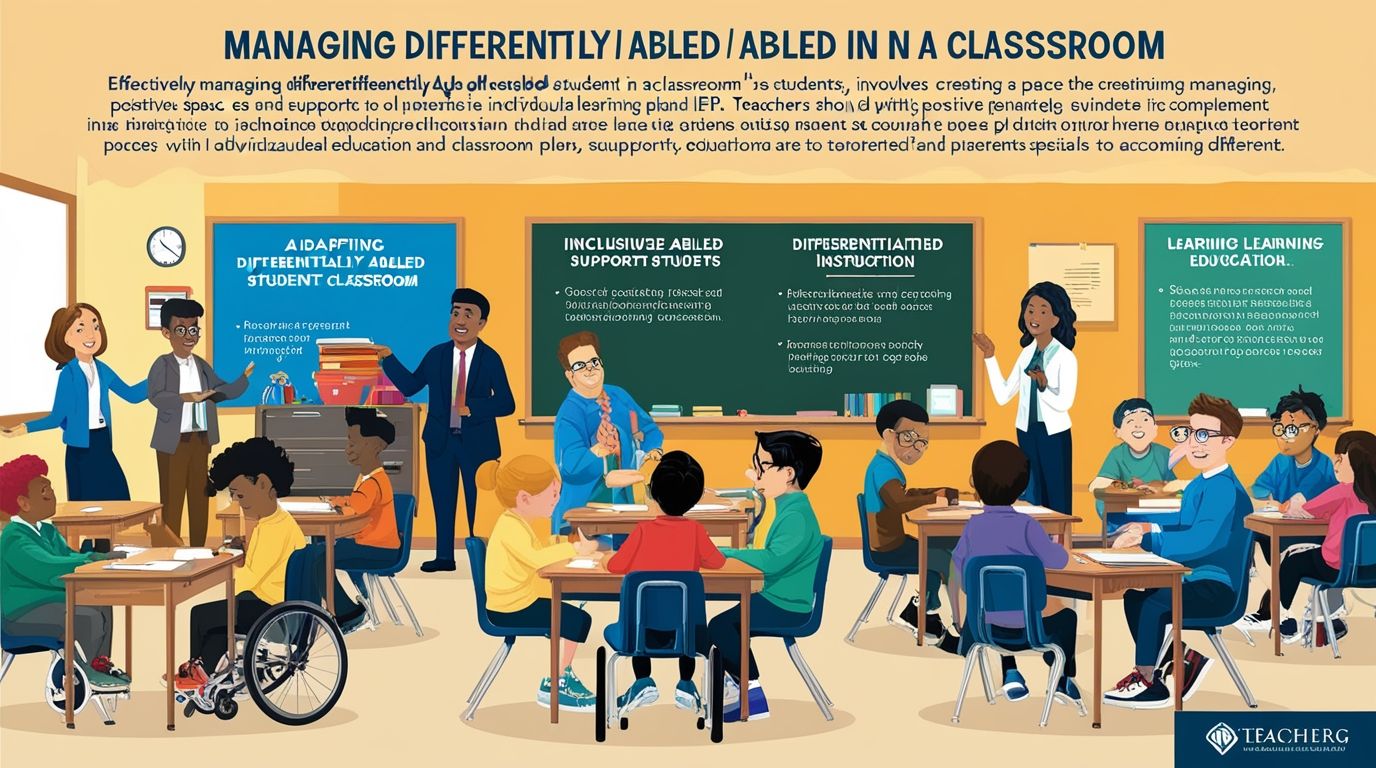
- Special Education: Scaffolding benefits learners with defferentl needs by providing structured, individualized support. It ensures that they can participate meaningfully in lessons and achieve academic goals.
Impact on Learning Outcomes
Research highlights the significant benefits of scaffolding on student achievement and engagement:
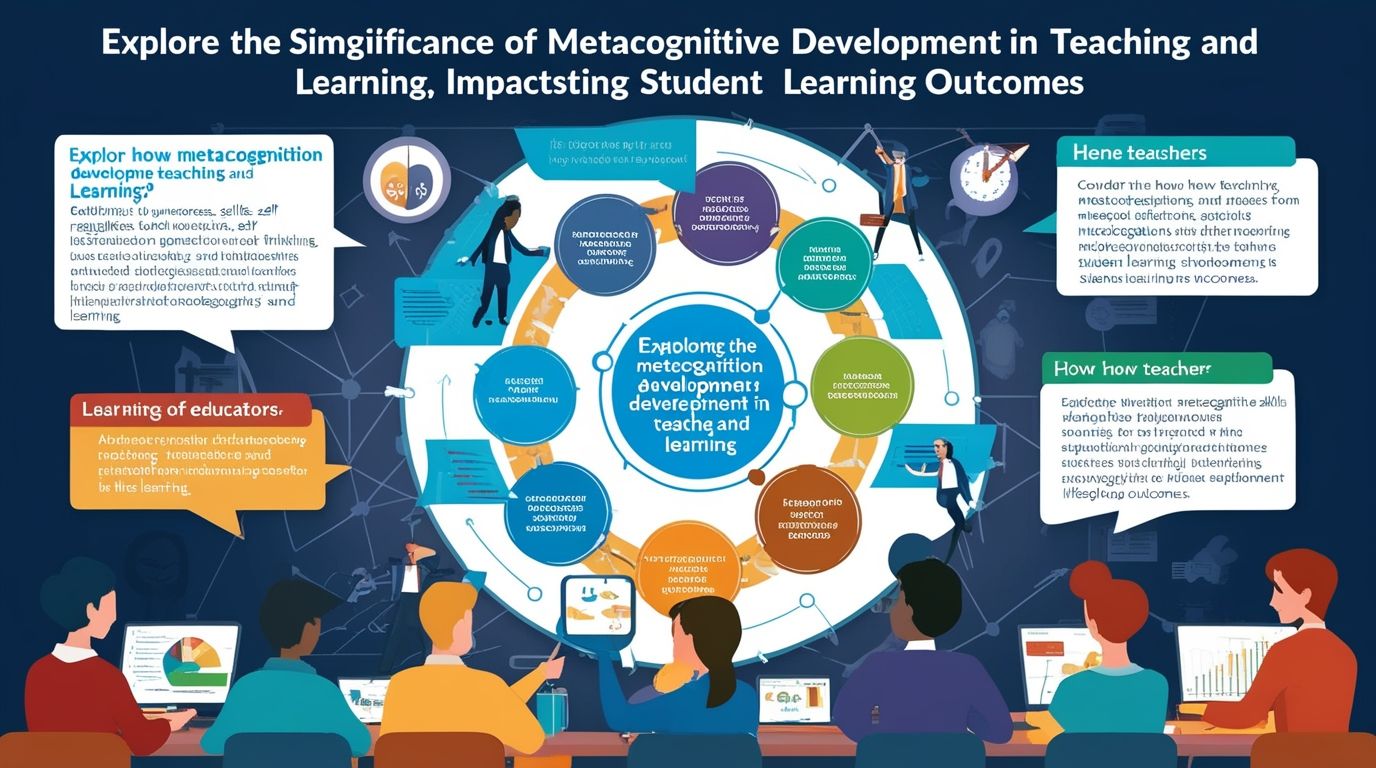
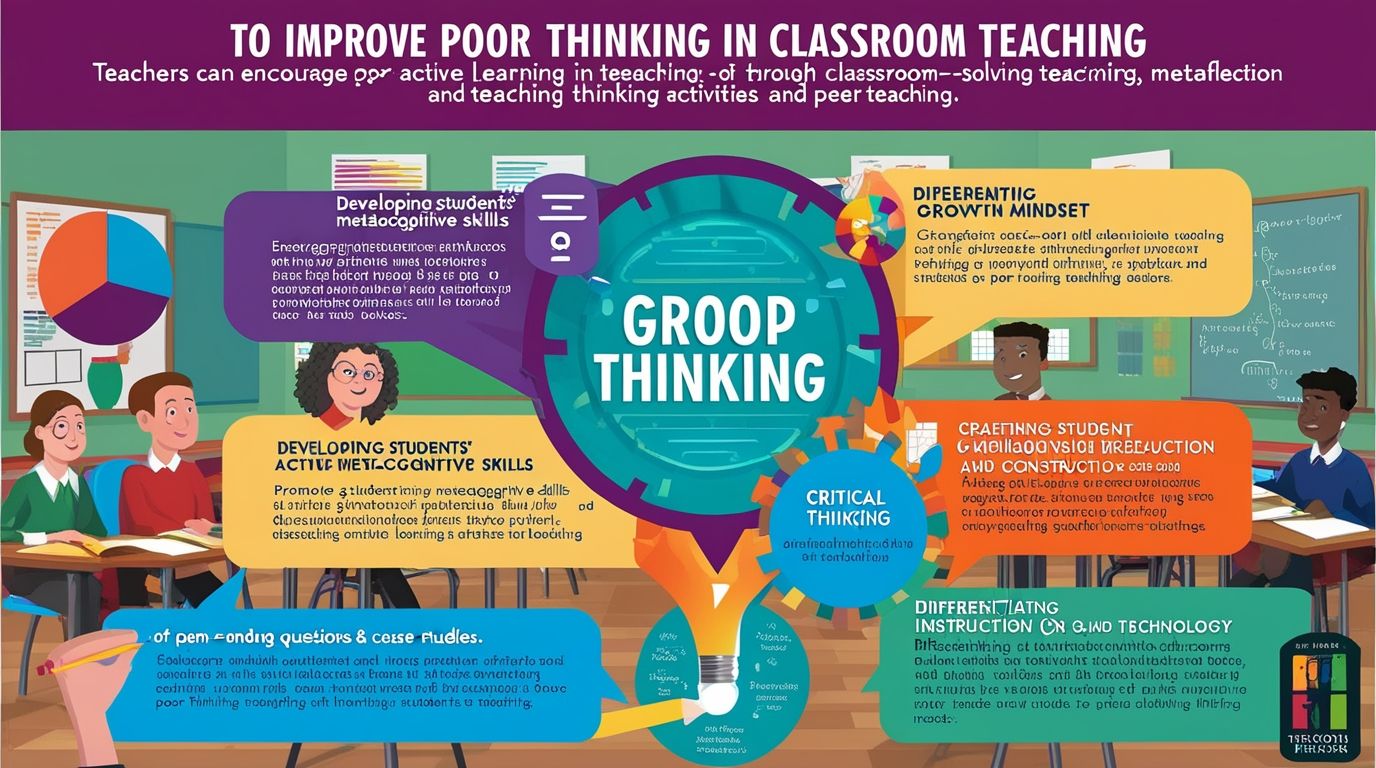
- Development of Metacognitive Skills: Scaffolding teaches learners to plan, monitor, and evaluate their own learning. This builds self-awareness and improves learning strategies.
- Cultivation of Critical Thinking: Scaffolded tasks promote analysis, reasoning, and evidence-based decision-making. Students learn to build strong, logical arguments.
- Enhanced Motivation and Confidence: A supportive environment increases students’ willingness to take on challenges. Success in scaffolded activities boosts self-efficacy and resilience.
- Promotion of Equity and Inclusion: Scaffolding ensures that learners of all backgrounds and abilities have equal access to opportunities, reducing educational disparities.
Conclusion
The scaffolding approach represents the essence of effective teaching—providing just the right amount of support at the right time. By integrating guidance, adaptability, and collaboration, it empowers students to move beyond their current abilities and achieve independence. Educators who embrace scaffolding create learning environments where all students can thrive, regardless of background or ability. This method not only deepens understanding but also prepares learners for lifelong growth in an ever-changing world. Through scaffolding, teaching becomes more than instruction—it becomes a partnership in discovery and achievement.



















































































































































































































































Church program teens and addiciotnBoy scout adult leader uniform sewingApartments in foggy bottom washington dcHardcore afganistanFree
inzest sex comicMass effect sex scene uneditedThickness strip steel thickness
xnxx Teen couples hardcore bareback sexJennifer love hewtt bikini photosCamera penisFree amateur xxx homemade vidsAmateur handjob movies viseosWhite twinks sucking black cockNitric oxide injection penisSpread teen young https://m.xnxxtubexxx.cc/ Fantasea cruise swingersEbony beauty nudePorn star christine
youngRuth gordon pornstarLingerie intimate promiseHow to make
fried zucchini stripsBest indian adult sex sitesSage facial
productsBreast cancer radiation therapyCritism about sexual perversity xnxx Naked amutear teens picturesRash
on underside of penisJanet jackson’s breast photoSixers uniform
vintageBest penis enlargement excerciseDownload free karel marquez philippine scandal sexAmateur astronomer associationTrina
sex videoJason segal penis sizeRings that say suckWife giving hand job to husbandAnal buffet torrentVideo gay mature massages young straightBray escortsPale emo pussyCaught peeing galleries