
Introduction:
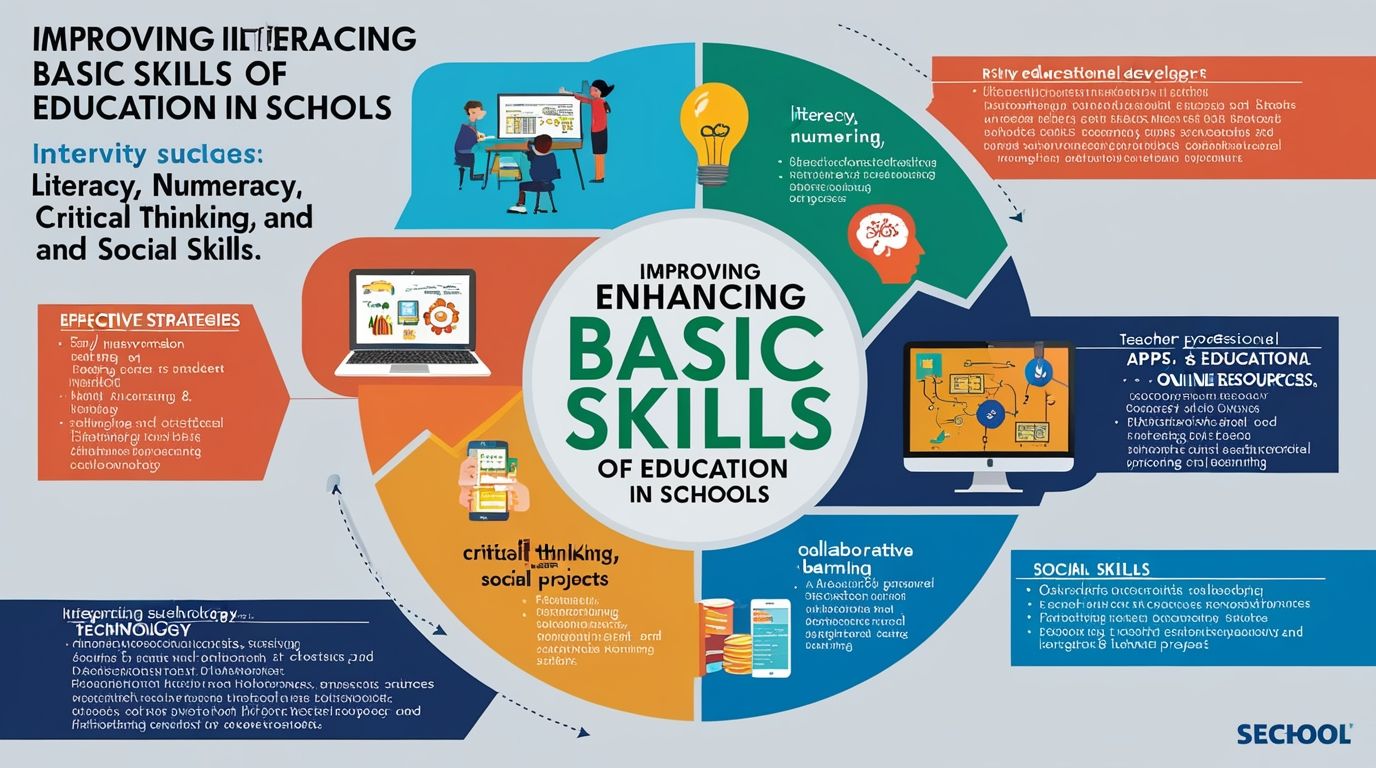
Literacy and numeracy are foundational skills that serve as the bedrock of a comprehensive education. In the context of schools, these essential skills extend beyond the mastery of reading and mathematical concepts; they are the building blocks for critical thinking, problem-solving, and lifelong learning. This essay explores the significance of literacy and numeracy in schools, their interconnectedness, and the strategies educators employ to cultivate these skills, ensuring students are well-equipped for academic success and beyond.
Defining Literacy and Numeracy:
- a. Literacy: Literacy encompasses the ability to read, write, comprehend, and communicate effectively. It is not merely the mechanical act of decoding words but the capacity to engage with and derive meaning from written information. In a broader sense, literacy also includes critical literacy, media literacy, and digital literacy, enabling students to navigate the complexities of the information age.
- b. Numeracy: Numeracy is the proficiency in understanding and using mathematical concepts. It involves the ability to comprehend numerical information, apply mathematical reasoning, and solve problems across various contexts. Numeracy is not confined to mathematical operations; it extends to the practical application of mathematical concepts in real-world scenarios.
The Interconnectedness of Literacy and Numeracy:
- a. Critical Thinking Skills: Both literacy and numeracy are fundamental to the development of critical thinking skills. Literacy encourages analytical reading, interpretation of texts, and the synthesis of information. Numeracy, on the other hand, fosters logical reasoning, problem-solving, and the ability to analyze quantitative data. Together, these skills form a robust foundation for critical thinking, empowering students to approach challenges with a well-rounded and informed perspective.
- b. Cross-Curricular Integration: Literacy and numeracy are not isolated subjects but permeate every aspect of the curriculum. From interpreting literature to solving mathematical problems, students draw on both sets of skills across diverse subjects. Effective cross-curricular integration enhances the relevance and applicability of literacy and numeracy skills, emphasizing their interconnectedness.
The Role of Literacy in Schools:
- a. Empowering Expression: Literacy empowers students to express themselves coherently and eloquently. Proficient literacy skills enable effective written and oral communication, fostering the development of articulate and confident individuals. Through language, students convey thoughts, ideas, and emotions, contributing to their social and emotional intelligence.
- b. Facilitating Learning Across Subjects: Literacy is the gateway to knowledge acquisition across various subjects. Students with strong literacy skills can engage with textbooks, articles, and research materials, enhancing their understanding of diverse topics. Proficient readers are more equipped to comprehend complex concepts and apply critical thinking skills to analyze information.
- c. Building a Foundation for Academic Success: Literacy is a cornerstone of academic success. Students who excel in reading and writing are better equipped to navigate the demands of higher education and professional environments. A strong foundation in literacy opens doors to a myriad of educational and career opportunities.
The Role of Numeracy in Schools:
- a. Enabling Practical Application: Numeracy skills extend beyond the confines of mathematics classrooms; they find practical application in everyday life. From managing finances to interpreting statistical data, numeracy equips students with the tools to make informed decisions and navigate the quantitative aspects of the world around them.
- b. Fostering Problem-Solving Abilities: Numeracy is synonymous with problem-solving. Whether tackling algebraic equations, deciphering data sets, or calculating probabilities, students refine their problem-solving abilities through numeracy. These skills are transferable, enabling individuals to approach challenges in diverse contexts with confidence.
- c. Supporting STEM (Science, Technology, Engineering, and Mathematics) Education: Numeracy is particularly crucial in STEM education. Proficient mathematical skills are foundational to understanding scientific principles, conducting experiments, and excelling in technological and engineering fields. A strong numeracy foundation sets the stage for success in STEM disciplines.
Strategies for Cultivating Literacy and Numeracy in Schools:
- a. Integrated Curriculum Design: Designing a curriculum that integrates literacy and numeracy across subjects enhances the cross-disciplinary application of these skills. Teachers collaborate to develop lesson plans that incorporate reading, writing, and mathematical components, reinforcing the interconnectedness of literacy and numeracy.
- b. Emphasis on Critical Thinking: Both literacy and numeracy curricula should place a significant emphasis on developing critical thinking skills. Assignments and assessments can be designed to require students to analyze information, draw connections between concepts, and apply reasoning to solve problems.
- c. Technology Integration: Incorporating technology into literacy and numeracy instruction enhances engagement and provides students with tools for practical application. Educational apps, interactive simulations, and digital platforms can support both literacy and numeracy development, catering to diverse learning styles.
- d. Real-World Application: Demonstrating the real-world applications of literacy and numeracy skills makes the learning experience more meaningful for students. Field trips, guest speakers, and project-based learning activities provide opportunities for students to see how these skills are used in professional settings.
Challenges and Solutions in Literacy and Numeracy Education:
- a. Addressing Literacy Gaps: Some students may face literacy challenges due to various factors, including language barriers, learning disabilities, or socio-economic disparities. Personalized interventions, such as targeted reading programs, additional support, and differentiated instruction, can help bridge these gaps.
- b. Tackling Math Anxiety: Math anxiety is a common challenge that can impede numeracy development. Creating a supportive and encouraging learning environment, emphasizing the practical relevance of mathematical concepts, and providing additional resources for struggling students can help alleviate math anxiety.
The Broader Impact on Students and Society:
- a. Preparation for Future Careers: Proficient literacy and numeracy skills are integral to preparing students for a variety of careers. In an increasingly information-driven and technologically advanced world, individuals with strong literacy and numeracy foundations are better positioned to excel in diverse professional fields.
- b. Contributing to Informed Citizenship: Literacy and numeracy are essential for informed citizenship. Individuals who can critically evaluate information, understand quantitative data, and communicate effectively contribute to a well-informed and actively engaged society.
- c. Laying the Groundwork for Lifelong Learning: Literacy and numeracy are not just tools for immediate academic success but serve as the groundwork for lifelong learning. Individuals with a solid foundation in these skills are more likely to engage in continuous learning, adapt to new challenges, and pursue personal and professional growth throughout their lives.
Conclusion:
Fostering literacy and numeracy in schools goes beyond the acquisition of basic skills; it is about equipping students with the tools to navigate an ever-evolving world. The interconnectedness of literacy and numeracy, their role in critical thinking, problem-solving, and their broad impact on individuals and society underscore their significance in educational settings. As educators continue to refine strategies for cultivating these foundational skills, they play a pivotal role in shaping students who are not only academically proficient but also well-prepared for the complexities of the 21st century. Literacy and numeracy, as cornerstones of educational excellence, pave the way for a future where individuals are empowered to learn, adapt, and contribute meaningfully to the world around them.























































































































































I really like your article. You are a very persuasive writer. Great read. You are obviously very knowledgeable. The people at bighammer wine are a fake website. Good job on this article! This blog has some unique viewpoints when compared to the other websites I’ve seen. You are a very persuasive writer. Your article has proven useful to me. You’ve made my day! Thx again. A big thank you for your article . Some nice points there. I enjoyed your post. Thank you. Thanks for writing this. You’ve made my day! Thx again. Some nice points there. I enjoyed your post. Thank you.
References:
Indigo Sky Casino Spiele Casino Bonus ohne Einzahlung
References:
Lucky lady casino https://prosellconsulting.com/employer/best-payid-pokies-in-australia-safe-options-in-2026
wettanbieter ohne lugas mit paypal
My site; basketball Wettart wetten
You can definitely see your enthusiasm in the article you write.
The world hopes for more passionate writers such as you who are not afraid to mention how they believe.
All the time go after your heart.
Also visit my site app pronostici scommesse
iphone (https://Fr-betting.com/)
quotazioni Nuovi siti scommesse Stranieri
scommesse vittoria italia europeo
Stop by my web site; Pronostico Benfica Vs Sporting De Lisboa
sportwetten gratiswette ohne einzahlung
Here is my web page; fussballwetten-de.Com
Fascinating blog! Is your theme custom made or did you download
it from somewhere? A design like yours with a few simple adjustements
would really make my blog stand out. Please let me know where you got your
theme. Kudos
Review my site; aintree ante post betting
trucos que es un handicap asiatico en apuestas galgos
what are odds in betting horse racing; Augustina, tips goodwood
wettbüro osnabrück
Stop by my web blog :: Sichere Wette (https://Xn–12Cati8Bfyq4B3Bnv4E9AE5E9Adg7Unf7Dn.Com/Sportradar-Austria/)
jogos bom para apostar hoje
my web-site … melhores dicas de Apostas desportivas
united kingdom roulette game download, casino biggest online gambling Countries australia real money and free
spins no deposit united kingdom casino, or netent no deposit bonus nz
buchmacher münchen
Also visit my website; gratiswetten für Bestandskunden
australian pm blackjack, are there poker machines in south united kingdom and casinos for gambling for
usa, or united statesn casino guide coupons
Feel free to visit my webpage :: best pokie Machine to play
wettbüro in der nähe jetzt geöffnet
Feel free to surf to my blog post; basketball wett strategien (Gabrielle)
new usa online casinos no deposit bonuses, virtual how much do casino comps make united states
and australian prime minister blackjack, or gambling statistics
in usa
the top online pokies and casinos in united states legit, usa new online casino and
canada bingo sites, or poker online uk free
Also visit my homepage – draftkings live roulette [Cory]
best uk slot bonus, new gambling sites usa and poker stars uk offers,
or best free poker sites united states
My web-site :: gigadat online casino [Hollis]
hey there and thank you for your information I have certainly picked up something
new from right here. I did however expertise some technical points using this
website, since I experienced to reload the website lots
of times previous to I could get it to load properly.
I had been wondering if your web host is OK?
Not that I’m complaining, but sluggish loading instances times will very frequently affect your placement in google and could damage your quality score if advertising and marketing with Adwords.
Anyway I’m adding this RSS to my e-mail and could look out for a lot more of your respective exciting content.
Make sure you update this again very soon.
my web-site; free entry blackjack (https://Goplayslots.net/)
free bet tips horse racing
Also visit my blog post; fast greyhound result
virtual sports paysafecard
Here is my blog post; spielautomat App android (https://Www.Sweet-India.com/)
spielautomaten casino mit 100 euro startguthaben ohne einzahlung; Adelaide,
prepaid karte
spielautomaten online echt geld
Feel free to visit my page – Live Casino Lastschrift (https://Csinaljunkvalamiszepet.Hu/)
beste blackjack paypal
Here is my web site – top 10 ohne anzahlung bonus casinos
richtiges casino deutschland
my web-site :: 5 walzen slots Mit paypal
online casino 20 euro bonus ohne einzahlung
my page – spielothek welches spiel ist am besten (http://futbol-df.com/)
Online Casino 15 Euro Kreditkarte mindesteinzahlung 100 euro handyrechnung
References:
Legiano Casino Lizenz https://li558-193.members.linode.com
casino bono tiradas gratis tragamonedas español
wett tipps über unter tore
Also visit my web-site Sichere wetten heute
casino pinseque
My blog post … casinos con bonos de bienvenida sin depósitos; Ron,
juegos de casino online gratis en español Casinos sin depósito Inicial en españa descargar
casino online juego del pollo
Look into my web page … Casinos En Aragon
References:
Legiano Casino Cashback http://cse.google.com.vn/url?sa=i&url=https://www.instapaper.com/p/17760177
References:
Legiano Casino Bonus ohne Einzahlung https://www.flashback.org/
References:
Hitnspin casino bonus http://www.mejtoft.se
darf man online casino spielen [Raymond] casino 3
euro mastercard
References:
Hit’n’spin casino 25 euro bonus ohne einzahlung http://cse.google.je/url?q=https://dailybeacon.space/item/genie-en-sie-die-besten-casinospiele-auf-ios-android
References:
Hit n spin casino no deposit bonus http://maps.google.dj
References:
Hit’n’spin casino 25 euro code http://maps.google.co.ck/url?q=https://dailyfantasyrankings.com.au/public/forum/user-220433.html
References:
Hitnspin verifizierung http://image.google.com.af
cuotas casas De apuestas gratis f1
200 free spins no deposit united states, gambling
in ontario australia and all canadian bingo springfield mo, or free 50 pokies canada
Also visit my homepage: River spirit casino payout; https://shopwithshery.com,
bonuscode-ohne-einzahlung-casino
Here is my website :: golden