
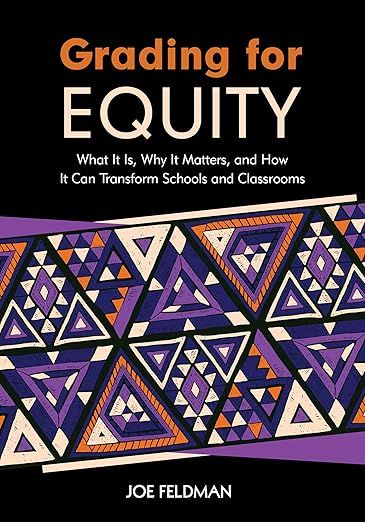
Book Review: Grading for Equity by Joe Feldman, In Grading for Equity: What It Is, Why It Matters, and How It Can Transform Schools and Classrooms, Joe Feldman delivers a deeply reflective, research-grounded, and passionately argued manifesto for reimagining how schools assess student learning. This book is not merely a critique of traditional grading systems; it is a blueprint for equitable educational practice—targeted at educators who recognize that the justice of school systems is inseparable from how we evaluate and talk about student work.
Feldman’s work arrives at a moment when educators, policymakers, and communities are increasingly confronting systemic inequities. Grading for Equity positions itself at the intersection of research, classroom practice, and equity work, offering a compelling case that traditional grading practices often mirror and amplify the very disparities schools claim to address.
1. What Is Grading for Equity Trying to Do?
At its core, Grading for Equity interrogates the hidden assumptions beneath conventional grading: that grades are neutral measures of ability, that they motivate students to work harder, and that they fairly differentiate between learners. Feldman dismantles these assumptions with a combination of empirical evidence and practitioner insight.
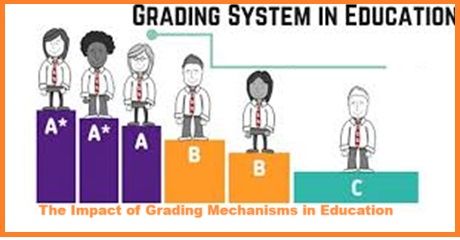
His central claim is clear: traditional grading practices often disadvantage students who already face systemic barriers—including students of color, multilingual learners, students with disabilities, and students from lower socioeconomic backgrounds. Rather than merely penalize poor performance, Feldman urges educators to treat grades as communication tools that reflect learning progress and mastery, not compliance, behavior, or attendance.
This paradigm shift reframes grading from a punitive system to one that is student-centered, growth-oriented, and equitable.
2. Structure of the Book
Feldman organizes the book into three sections:
- Conceptual Foundations – Why grades matter and how traditional grading reinforces inequity.
- Principles and Practices – The core values that underpin equitable grading and how to implement them.
- Practical Implementation – Case studies, sample tools, and strategies for change at classroom and school levels.
This structure effectively scaffolds the reader’s understanding—from big ideas to actionable steps—allowing teachers and leaders to connect philosophy to practice.
3. Summary of Key Concepts
A. Traditional Grading Is Flawed
Feldman begins by critiquing traditional grading practices that blend academic achievement with non-academic factors such as behavior, effort, participation, and compliance. He explains that when these factors are scored and averaged into a grade, they:
- Mask true learning
- Punish students who lack privilege or external support
- Reward conformity to norms that don’t reflect mastery
For example, a student who has inconsistent attendance due to family responsibilities might be penalized with a lower grade—not because they don’t learn material, but because traditional grading conflates attendance with academic achievement.
Feldman argues that this conflation is inherently inequitable.
B. Grades Should Communicate Mastery
One of the book’s strongest pillars is the idea that grades should communicate learning, not compliance. According to Feldman, grades represent a message about what a student understands and can do. If they serve other purposes, they distort this message.
To illustrate this point, Feldman draws on both research and classroom narratives showing how grades often fail to provide clear, actionable feedback. Instead of telling students where they are and how to grow, grades traditionally tell them whether they passed or failed.
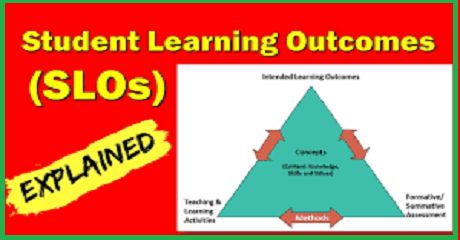
Feldman pushes for standards-based or competency-based grading—systems where students are evaluated against clearly defined learning targets. In such systems:
- Grades reflect what students know and can do
- Teachers provide descriptive feedback
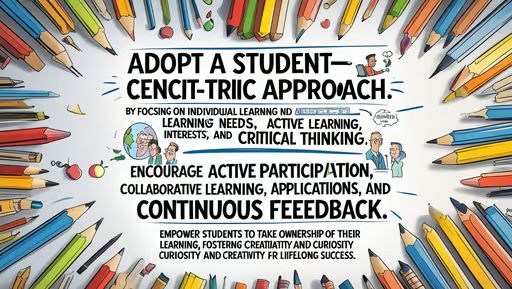
- Students are encouraged to take ownership of their learning
C. Core Principles for Equitable Grading
Feldman identifies six core principles of equitable grading:
- Grades should be based on evidence of mastery – Schools should only include academic achievement in grades.
- Grades should be accurate – Teachers should use multiple opportunities and varied assessments to determine understanding.
- Grades should support growth – They should communicate where learners are and what they need next.
- Grades should be transparent – Students should understand how grades are determined.
- Grades should be fair and bias-resistant – Designed to minimize inequity and reflect student learning, not relative performance.
- Grades should encourage student agency – Students take an active role in tracking and improving learning.
These principles are not abstract. Feldman shows how they can reshape day-to-day instructional decisions, from how tasks are scored to how feedback is given.
D. Practical Tools and Strategies
Feldman does more than theorize; he provides tools that educators can use immediately, including:
- Rubric design
- Learning scales
- Re-assessment policies
- Communication templates
- Data tracking methods
He also addresses common challenges and resistance, such as concerns about rigor, workload, and parent expectations. By anchoring his recommendations in real classroom scenarios and leader testimonials, Feldman acknowledges the complexity of change while maintaining a hopeful tone.
4. Strengths of the Book
A. Grounded in Clear, Inclusive Language
Feldman writes with clarity and respect for readers’ intelligence. The book avoids jargon without sacrificing depth, making it accessible to both novice and experienced educators. His voice combines scholarly rigor with practical wisdom.
B. Equitable Lens Throughout
Unlike texts that treat equity as an add-on, Feldman embeds it in every chapter. This is not a book about “diversity initiatives” or “inclusive culture”—it focuses precisely on how grading itself can reinforce or dismantle inequity. For educators committed to justice, this focus is both refreshing and necessary.
C. Practical Relevance
The tools and examples are concrete rather than abstract. Feldman anticipates real classroom dilemmas: What do we do with late work? How do we handle students who don’t show mastery on the first attempt? How do we communicate changes to families? These pragmatic touches increase the book’s usability.
D. Evidence and Research Support
Feldman supports his claims with research from cognitive science, assessment theory, and equity studies. He effectively synthesizes large bodies of work into digestible insights without oversimplifying.
5. Areas Where Readers Might Push Back
A. Implementation Challenges
While Feldman offers strategies, the actual shift to equitable grading requires systemic change. Teachers may find it difficult to implement in isolation. District policies, report card systems, standardized testing pressures, and entrenched mindsets can make reform feel overwhelming.
Feldman acknowledges these barriers but perhaps underestimates how entrenched traditional grading is in school culture. Some critics might want even more guidance on how to navigate resistant systems or to see stronger case studies from schools that have fully operationalized equitable grading.
B. Ambiguity Around Assessment Tools
Although Feldman provides examples, some educators might crave more concrete templates or technology tools for scoring and tracking mastery. Translating conceptual principles into daily classroom workflows can be challenging without additional resources.
6. Why This Book Matters in Today’s Educational Landscape
In an era marked by growing awareness of systemic inequities, Grading for Equity is timely and essential. Traditional grading has been normalized for generations, yet few educators have critically examined its consequences.
Feldman’s work pushes readers to ask fundamental questions:
- What are grades really telling us?
- Do our grading practices reflect student learning or student opportunity?
- How can we rebuild grading to honor every learner’s potential?
These questions resonate today because education is increasingly asked to do more than transmit knowledge—it is asked to be a vehicle for social justice and opportunity.
7. The Equity Imperative: More Than a Trend
One of Feldman’s most compelling contributions is the way he reframes grading as justice work. Equity isn’t treated as a buzzword—it is the lens through which every aspect of grading is evaluated. This sets the book apart from many assessment texts that focus purely on technical fixes.
Feldman asserts that equitable grading:
- Reduces bias and subjectivity
- Supports student motivation and engagement
- Builds trust between teachers and students
- Helps close opportunity gaps
This equity framing shifts the stakes of grading from administrative convenience to moral imperative.
8. Teacher Agency and Student Voice
Throughout the book, Feldman highlights the importance of student voice and agency. Rather than seeing grades as something done to students, he encourages educators to see grades as a shared dialogue about learning.
He argues for practices such as:
- Co-creating success criteria with students
- Allowing multiple assessment attempts
- Providing meaningful descriptive feedback
- Helping students set learning goals
These practices not only clarify expectations but also help students engage as partners in their education.
9. Leadership and System-Level Change
Feldman doesn’t stop at classroom walls. He also speaks to school and district leaders about aligning policy with equitable grading:
- Redesigning report cards
- Adjusting grading policies
- Providing professional development
- Engaging families and communities
This broader perspective is vital because equitable grading, if it is to endure, must be supported by policy and culture—not just isolated classroom efforts.
10. What Educators Will Take Away
By the end of Grading for Equity, educators should be able to:
- Critically analyze their current grading practices
- Identify inequitable patterns in grades
- Use equitable grading principles to design assessment systems
- Communicate about learning in more meaningful ways
- Support students on their learning trajectories instead of sorting them
The book empowers teachers to be change agents, not just technicians of grading.
11. Who Should Read This Book?
Grading for Equity is essential for:
- Classroom teachers at all levels
- School and district leaders
- Curriculum specialists
- Professional development facilitators
- Pre-service educators
While some content focuses directly on K-12 contexts, the principles are broadly applicable to higher education, adult learning, and professional training settings.
12. A Final Assessment
Joe Feldman’s Grading for Equity is a game-changer. It reframes long-held assumptions about grades in a way that is both practical and ethical. It is not a quick fix, and it does not promise overnight transformation, but it does offer a coherent vision supported by research and grounded in classrooms.
If you are an educator who has ever been troubled by grade disparities, who has questioned whether your grading practices align with your values, or who wants to help every student succeed, this book offers both clarity and courage.
Feldman invites educators to believe that equitable grading is not just possible—it is imperative. And in doing so, he rekindles an essential truth: how we evaluate learning matters deeply, and we have both the agency and responsibility to make it fairer.

















































































































































































































































































































































































































Tôi rất thích giao diện và nội dung của trang netmirror .com TONY09-29