
Introduction
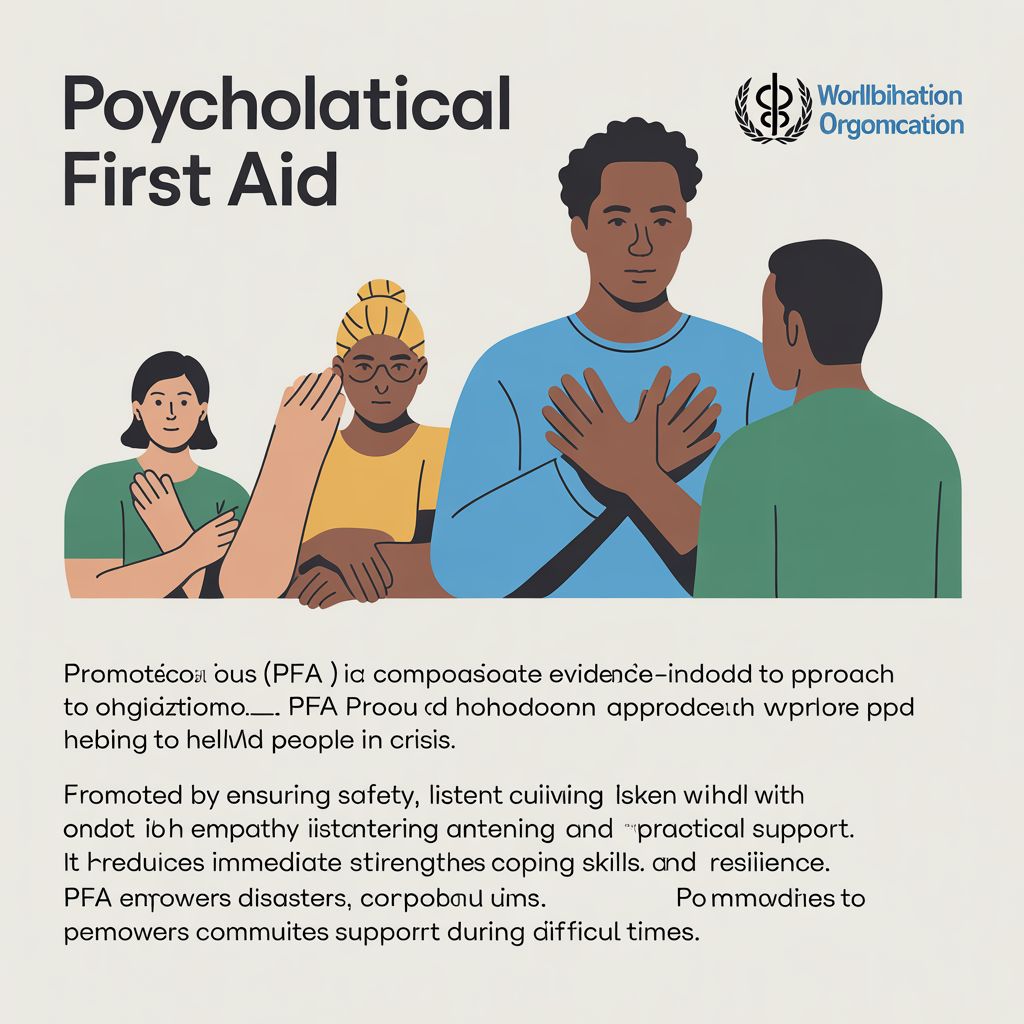
Psychological First Aid Guide to Supporting People in Crisis, Emergencies, disasters, violence, accidents, pandemics, and personal losses can overwhelm a person’s ability to cope. In the immediate aftermath of such events, individuals may experience shock, fear, confusion, anger, grief, or emotional numbness. While some reactions are natural and resolve over time, early compassionate support can significantly reduce distress and promote healthy recovery. This is where Psychological First Aid (PFA) plays a vital role.
Psychological First Aid is an evidence-informed approach designed to help people in the immediate aftermath of crisis situations. It does not involve diagnosing mental illness or providing formal therapy. Instead, it focuses on humane, supportive, and practical assistance. PFA can be delivered by trained professionals, volunteers, teachers, community leaders, or even peers—anyone who is prepared to respond appropriately in times of crisis.
International organizations such as the World Health Organization, International Federation of Red Cross and Red Crescent Societies, and UNICEF have promoted Psychological First Aid as a core component of emergency response worldwide. Their guidelines emphasize that early psychosocial support can strengthen resilience and reduce the risk of long-term psychological difficulties.
This article explores the foundations, principles, steps, and applications of Psychological First Aid, along with practical examples and ethical considerations.
What Is Psychological First Aid?
Psychological First Aid is a supportive response to a person who is suffering and may need help after a distressing event. It is based on the understanding that most people recover naturally if they feel safe, connected, calm, and hopeful.
PFA aims to:
- Reduce initial distress
- Promote short- and long-term adaptive functioning
- Support coping and resilience
- Connect individuals to practical help and social support
- Prevent further harm
Importantly, PFA is not psychotherapy. It does not require clinical training and does not involve probing for traumatic details. Instead, it is grounded in respect, empathy, and practical assistance.
Core Principles of Psychological First Aid
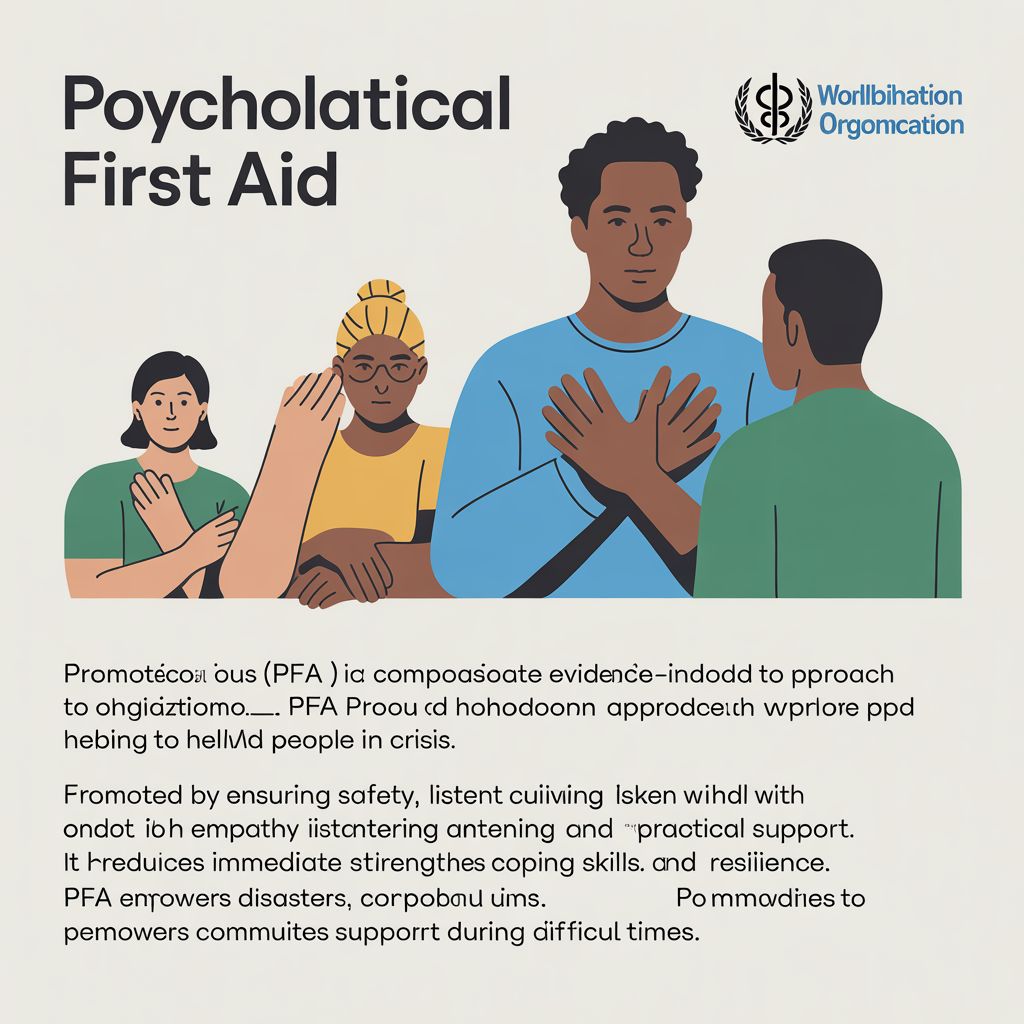
The widely accepted framework for PFA is built around three simple action principles:
1. Look
Observe the situation and identify:
- Who needs help?
- Are there immediate safety risks?
- Who appears especially vulnerable (children, elderly, injured, disabled individuals)?
- What urgent basic needs exist (food, water, shelter, medical care)?
2. Listen
Approach people respectfully and:
- Introduce yourself
- Ask if they would like support
- Listen actively without pressuring them to talk
- Validate their feelings
- Remain calm and non-judgmental
3. Link
Help connect individuals to:
- Basic services and accurate information
- Loved ones and social support networks
- Coping strategies
- Professional services if needed
This “Look–Listen–Link” model is simple but powerful, making PFA accessible across cultures and contexts.
Psychological Reactions to Crisis
Understanding common stress reactions helps responders provide appropriate support. After traumatic events, individuals may experience:
Emotional Reactions
- Fear, anxiety, sadness
- Irritability or anger
- Emotional numbness
- Guilt or shame
Cognitive Reactions
- Confusion
- Difficulty concentrating
- Intrusive thoughts or memories
- Disbelief
Physical Reactions
- Fatigue
- Headaches
- Rapid heartbeat
- Sleep disturbances
Behavioral Reactions
- Withdrawal
- Restlessness
- Changes in appetite
- Increased use of substances
These reactions are normal responses to abnormal situations. PFA does not attempt to “fix” these reactions but supports individuals as they regain equilibrium.
Key Elements of Psychological First Aid
1. Ensuring Safety
The first priority is physical and psychological safety. People must feel protected from further harm. This may involve:
- Moving them away from danger
- Providing clear information
- Helping locate missing family members
- Reassuring them about available support
Without a sense of safety, recovery becomes difficult.
2. Promoting Calm
People in crisis may feel overwhelmed. Techniques to promote calm include:
- Speaking slowly and clearly
- Encouraging slow breathing
- Offering a quiet space
- Normalizing stress reactions
Simple grounding exercises can help individuals feel more in control.
3. Fostering Connection
Human connection is one of the strongest protective factors after trauma. Encouraging contact with family, friends, and community members supports emotional recovery.
Social support:
- Reduces feelings of isolation
- Enhances coping ability
- Strengthens resilience
4. Supporting Self-Efficacy
Empowerment is central to PFA. Instead of taking over, responders should:
- Offer choices
- Encourage small decisions
- Reinforce strengths
- Help individuals identify coping strategies that have worked in the past
This restores a sense of control, often lost during traumatic events.
5. Instilling Hope
Hope is a critical component of recovery. This does not mean offering false reassurance, but rather:
- Emphasizing that distress usually decreases over time
- Highlighting available resources
- Reinforcing strengths and survival
Application of Psychological First Aid in Different Settings
1. Natural Disasters
After earthquakes, floods, hurricanes, or wildfires, PFA helps survivors cope with loss of homes, possessions, and loved ones. Responders in shelters can:
- Provide orientation
- Share reliable information
- Help reunite families
- Offer emotional support
2. Conflict and Violence
In areas affected by war or community violence, PFA can be delivered by humanitarian workers and trained volunteers. It is especially useful in refugee settings where individuals may have experienced extreme trauma.
3. Healthcare Settings
During pandemics or mass casualty events, PFA supports:
- Patients
- Families
- Healthcare workers
During the COVID-19 pandemic, for example, many institutions adopted PFA-based approaches to support frontline staff.
4. Schools
Teachers and school counselors can use PFA to help students following:
- Natural disasters
- Community tragedies
- Sudden death of a classmate
- Incidents of violence
Children require age-appropriate explanations, reassurance, and consistent routines.
5. Workplace Crises
Following accidents, layoffs, or traumatic incidents, employers can implement PFA principles to support employees, maintain morale, and encourage mental well-being.
Psychological First Aid for Children
Children may express distress differently from adults. Signs include:
- Clinginess
- Bedwetting
- Aggression
- Withdrawal
- Regression to earlier behaviors
PFA for children includes:
- Providing comfort and reassurance
- Using simple language
- Encouraging play
- Supporting caregivers
Caregivers play a central role in children’s recovery. Supporting parents indirectly helps children.
Ethical Considerations in Psychological First Aid
When providing PFA, responders must:
- Respect dignity and culture
- Maintain confidentiality
- Avoid discrimination
- Avoid forcing people to talk
- Recognize their own limits
PFA providers must also practice self-care to prevent burnout and secondary trauma.
What Psychological First Aid Is Not
It is important to clarify misconceptions. PFA is not:
- Professional therapy
- A detailed trauma debriefing
- Psychological diagnosis
- Pressuring someone to relive traumatic experiences
- Giving empty reassurance such as “Everything will be fine”
Research has shown that compulsory psychological debriefing immediately after trauma may sometimes increase distress. PFA avoids such approaches by emphasizing voluntary support and natural coping.
When to Refer for Professional Help
While many individuals recover with social support and time, some may require professional mental health care. Warning signs include:
- Persistent inability to function
- Severe depression
- Suicidal thoughts
- Psychosis
- Extreme substance misuse
- Prolonged severe anxiety
In such cases, linking individuals to trained mental health professionals is crucial.
Benefits of Psychological First Aid
Research suggests that PFA:
- Reduces initial distress
- Strengthens coping skills
- Encourages adaptive functioning
- Supports community resilience
- Reduces stigma around mental health
Its simplicity makes it scalable in large emergencies.
Limitations of Psychological First Aid
While PFA is beneficial, it is not a cure-all. It:
- Cannot prevent all long-term mental health conditions
- Does not replace therapy
- Requires proper training to avoid unintentional harm
- Depends on available resources and services
Implementation quality matters greatly.
Training and Implementation
PFA training programs typically include:
- Understanding stress and trauma
- Communication skills
- Cultural sensitivity
- Ethical guidelines
- Self-care strategies
Organizations such as the World Health Organization and the International Federation of Red Cross and Red Crescent Societies provide manuals and training materials freely accessible worldwide.
Training ensures that helpers are prepared, confident, and sensitive to cultural contexts.
The Role of Culture in Psychological First Aid
Cultural beliefs influence:
- Expression of distress
- Help-seeking behavior
- Social support systems
- Coping mechanisms
Effective PFA respects local customs, language, religious practices, and community structures. Cultural humility strengthens trust and effectiveness.
Self-Care for Providers
Those offering support may experience:
- Emotional exhaustion
- Secondary traumatic stress
- Burnout
Self-care strategies include:
- Taking regular breaks
- Debriefing with colleagues
- Setting boundaries
- Maintaining healthy routines
- Seeking supervision when needed
Caring for caregivers ensures sustainable support systems.
Building Community Resilience
Psychological First Aid contributes not only to individual recovery but also to community resilience. Communities that:
- Share accurate information
- Encourage social cohesion
- Provide accessible services
- Promote collective coping
tend to recover more effectively from crises.
Community leaders, religious institutions, schools, and workplaces can all integrate PFA principles into preparedness planning.
Conclusion
Psychological First Aid represents a compassionate, practical, and accessible approach to supporting individuals in the aftermath of crisis. By focusing on safety, calmness, connection, empowerment, and hope, PFA aligns with the natural human capacity for resilience.
Its strength lies in its simplicity. Anyone trained in its principles can provide meaningful support without needing advanced clinical skills. Promoted globally by organizations such as the World Health Organization and the UNICEF, Psychological First Aid has become a cornerstone of modern humanitarian response.
In a world increasingly affected by natural disasters, conflict, public health emergencies, and personal crises, the ability to respond with empathy and practical support is more important than ever. Psychological First Aid reminds us that human connection, respect, and compassion are often the first and most powerful steps toward healing.
Ultimately, while crises may disrupt lives, supportive relationships and informed responses can help restore stability and foster recovery. Psychological First Aid is not merely an intervention—it is a humane approach to caring for one another when it matters most.



































































































































































































































































































































































































References:
Online spielhalle Casino Heidelberg Spiele