

Introduction to Academic Stress
Academic Stress and Its Remedies, Academic stress has become a common challenge for students in modern education systems. They face pressure from exams, assignments, competition, and expectations. Although learning should be joyful, excessive stress can reduce motivation. Moreover, it can disturb physical and emotional well-being. Today’s students deal with multiple demands. Therefore, they often struggle to balance studies and personal life. Academic pressure increases when results are highlighted more than learning. Consequently, students feel overwhelmed. This stress affects performance and self-confidence. However, understanding academic stress is the first step toward reducing it. Schools and parents must recognize the signs early. When stress is managed properly, learning becomes more productive. Hence, addressing academic stress is essential for meaningful education and healthy development.
Causes of Academic Stress
There are several causes of academic stress. High expectations from parents, teachers, and society push students beyond their comfort zones. Moreover, strict deadlines and heavy workloads create pressure. Many students also struggle with time management. Consequently, unfinished tasks multiply, increasing stress. Some learners fear failure, which affects their confidence. In addition, peer competition makes them feel insecure. Fear of disappointing others adds emotional burden. Even school environments sometimes become highly competitive, leaving little room for relaxation. Technology-driven learning, although beneficial, also brings distractions. Instead of focusing, students often feel overwhelmed by information overload. Thus, multiple factors combine to create academic pressure. Understanding these causes helps schools design better support systems. As a result, students can learn in healthier and more balanced environments.
Impact of Academic Stress on Students
The impact of academic stress on students is wide and serious. It affects their physical health, emotional stability, and learning capacity. Students may experience headaches, fatigue, and poor sleep. Moreover, stress reduces concentration, making studies difficult. Emotional effects include anxiety, frustration, and low self-esteem. In many cases, stress leads to poor academic performance. Instead of improving, results decline. Additionally, stressed students may withdraw from social activities. They feel isolated and lose interest in hobbies. Over time, this can lead to burnout. Continuous stress also affects relationships with family and peers. Therefore, ignoring the signs of stress is dangerous. Schools and families must provide timely support. A stress-free mind learns faster and performs better. Hence, reducing academic stress should be a priority for all educational institutions.
Role of Parents in Reducing Stress
Parents play a vital role in reducing academic stress. Their support and understanding can make a big difference. When parents set realistic expectations, students feel relaxed. Moreover, open communication encourages children to share their problems. Parents should avoid comparing their children with others. Comparisons create insecurity and frustration. Instead, parents must appreciate effort and encourage progress. Additionally, a peaceful home environment helps students focus better. Parents should guide children in managing time and organizing study routines. Furthermore, emotional support is essential. It gives students confidence to face challenges. Parents need to understand that every child learns differently. Therefore, providing love, guidance, and patience reduces stress significantly. When families work as a team, students feel motivated and secure.
Teacher’s Role in Managing Academic Stress
Teachers can help manage academic stress effectively. They observe students daily, so they can identify stress early. Moreover, teachers should create supportive classrooms where students feel safe. Encouraging questions, discussions, and mistakes reduces pressure. Teachers must also design balanced workloads and meaningful assignments. In addition, clear instructions help students complete tasks without confusion. Teachers can integrate relaxation activities such as group work and creativity-based tasks. Furthermore, offering constructive feedback boosts confidence. Educators should avoid harsh criticism. Instead, they must motivate students to improve. When teachers build strong relationships with learners, students feel comfortable seeking help. Therefore, the teacher’s role is essential for reducing stress and promoting healthy learning habits.
Effective Remedies for Academic Stress
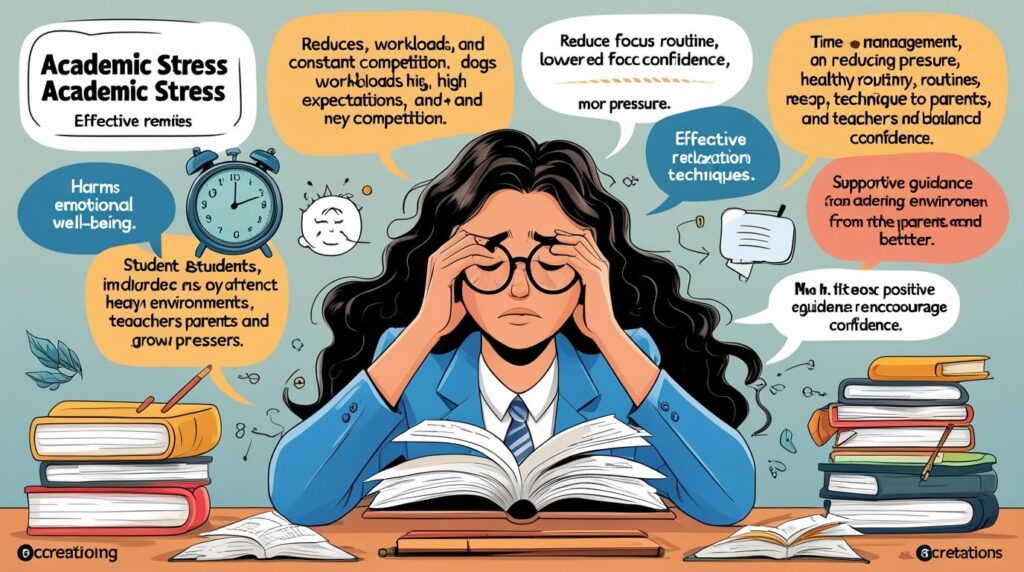
Several remedies for academic stress can help students stay calm and productive. Time management is one of the most effective strategies. Students should plan their study hours and break tasks into smaller steps. Moreover, regular breaks improve focus. Physical activities such as walking or sports release stress naturally. Deep breathing and meditation help relax the mind. Additionally, balanced nutrition and proper sleep contribute to better performance. Students should also avoid multitasking, as it reduces efficiency. Talking to teachers, parents, or counselors provides emotional relief. Peer discussions also help students realize they are not alone. Creative hobbies such as art or music refresh the brain. Using these remedies, students develop resilience and confidence. Consequently, academic performance improves while stress levels decrease.
Creating Healthy Learning Environments
A healthy learning environment reduces academic stress significantly. Schools must ensure that classrooms are friendly and supportive. Moreover, teachers should encourage collaboration instead of unhealthy competition. Flexible teaching methods help students learn at their own pace. Additionally, schools can organize workshops on stress management. Counseling services also assist students in managing emotional challenges. Creating spaces for play, creativity, and relaxation is important. Parents and teachers should work together to build positive learning cultures. Technology should be used wisely so students do not feel overwhelmed. Regular feedback, encouragement, and appreciation uplift students’ confidence. When learning becomes enjoyable, stress naturally decreases. Thus, a positive environment plays a key role in maintaining academic well-being.
Conclusion
Academic stress is a growing concern in modern education. However, it can be managed through effective strategies. Parents, teachers, and schools must work together to reduce stress and create supportive learning environments. Moreover, students need to learn healthy habits such as time management, physical activity, and emotional expression. When pressure decreases, learning becomes meaningful. Consequently, students perform better and gain confidence. Therefore, addressing academic stress is essential for building strong, motivated, and successful learners.
tours to malta Madison G. Balloon ride was so smooth and scenic — we saw dozens floating around us. https://www.facebook.com/travelshopbooking/?locale=ps_AF
I do agree with all the ideas you have introduced on your post They are very convincing and will definitely work Still the posts are very short for newbies May just you please prolong them a little from subsequent time Thank you for the post