
Introduction
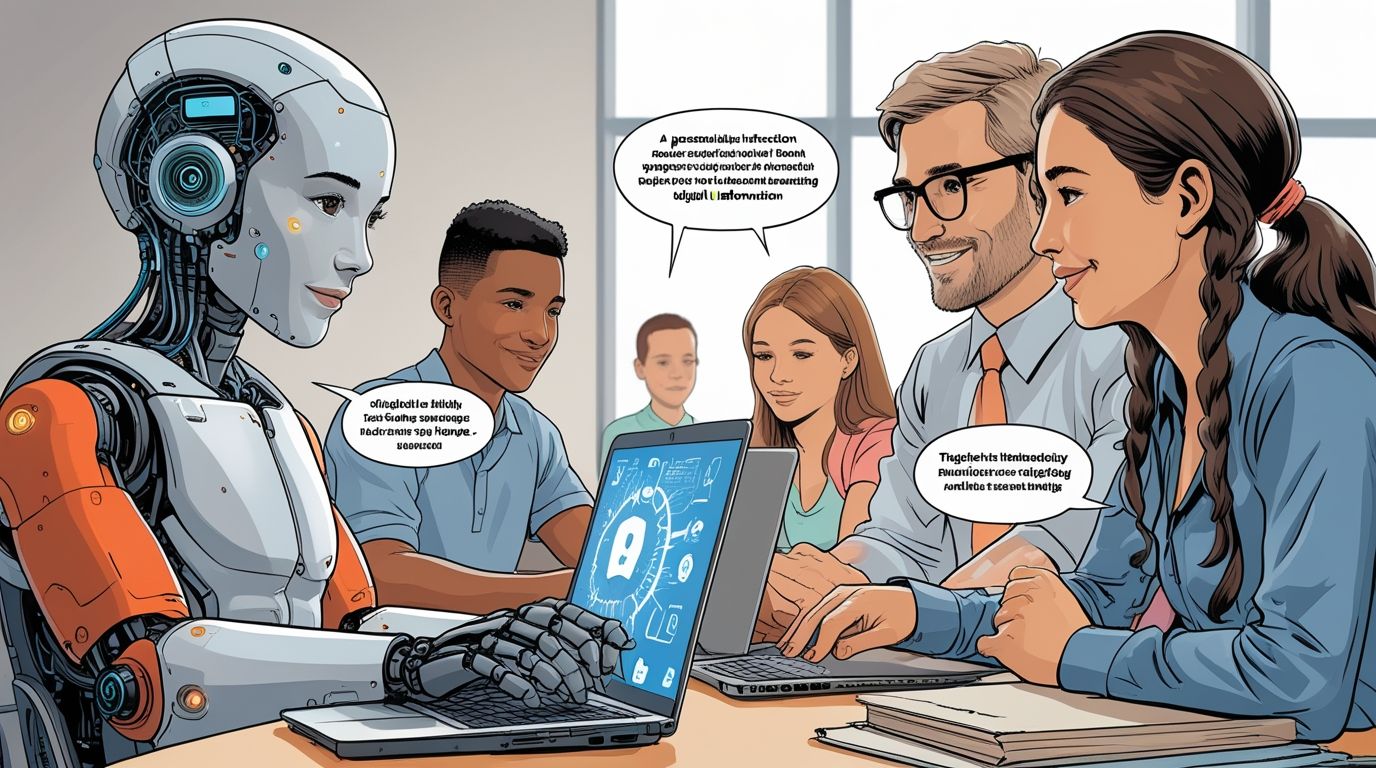
Artificial Intelligence (ai) And Digital Literacy In Education, Artificial Intelligence (AI) and digital literacy in education are reshaping how teaching and learning occur in modern classrooms. Today, schools are no longer limited to textbooks and chalkboards. Instead, they rely on smart tools, data-driven platforms, and interactive digital resources. Therefore, learners must understand not only how to use technology but also how it works and how it influences decisions. AI-powered systems personalize learning, support teachers, and improve assessment practices. Meanwhile, digital literacy equips students with critical thinking, ethical awareness, and responsible online behavior. Together, these two forces prepare learners for a rapidly changing world. Moreover, they support equity, inclusion, and lifelong learning. As education systems move toward digital transformation, the integration of AI with strong digital literacy becomes essential. Consequently, educators, students, and policymakers must work collaboratively. In short, AI and digital literacy are no longer optional skills. Rather, they are foundational competencies for success in the 21st-century education system.
Understanding Artificial Intelligence in Education
Artificial Intelligence in education refers to computer systems that can perform tasks requiring human intelligence. These include learning, reasoning, problem-solving, and decision-making. In classrooms, AI appears through adaptive learning software, chatbots, automated grading, and intelligent tutoring systems. As a result, instruction becomes more personalized and efficient. For example, AI tools analyze student data to identify strengths and weaknesses. Then, they adjust content accordingly. Moreover, teachers benefit from reduced administrative workload. Consequently, they gain more time for student engagement. However, AI is not meant to replace teachers. Instead, it supports and enhances their role. Furthermore, AI encourages data-informed decisions in curriculum planning and assessment. Therefore, understanding AI helps educators use it wisely and ethically. In essence, AI serves as a powerful assistant that improves learning outcomes when applied responsibly and thoughtfully.
Concept of Digital Literacy in Education
Digital literacy in education goes beyond basic computer skills. It includes the ability to access, evaluate, create, and communicate information using digital tools. Today’s learners interact with vast amounts of online content. Therefore, they must learn how to identify credible sources and avoid misinformation. Additionally, digital literacy promotes safe and ethical technology use. For instance, students learn about privacy, cyberbullying, and digital footprints. Moreover, digital literacy supports creativity through multimedia projects, coding, and online collaboration. Consequently, students become active creators rather than passive consumers. Teachers also require digital literacy to design engaging lessons and manage virtual classrooms. Thus, digital literacy is a core life skill. It empowers learners to participate confidently in digital societies and knowledge-based economies.
The Relationship Between AI and Digital Literacy
AI and digital literacy are deeply interconnected in modern education. While AI provides advanced tools, digital literacy enables users to understand and control those tools. Without digital literacy, AI systems may be misused or misunderstood. Therefore, students must learn how AI algorithms work, how data is used, and how biases can occur. At the same time, AI can support digital literacy by offering personalized tutorials and instant feedback. Moreover, AI-driven platforms help learners practice research, communication, and problem-solving skills. Consequently, the combination of AI and digital literacy creates informed, critical, and empowered learners. This relationship ensures that technology serves educational goals rather than controlling them. Hence, balanced integration is crucial for meaningful learning.
Role of AI in Personalized Learning
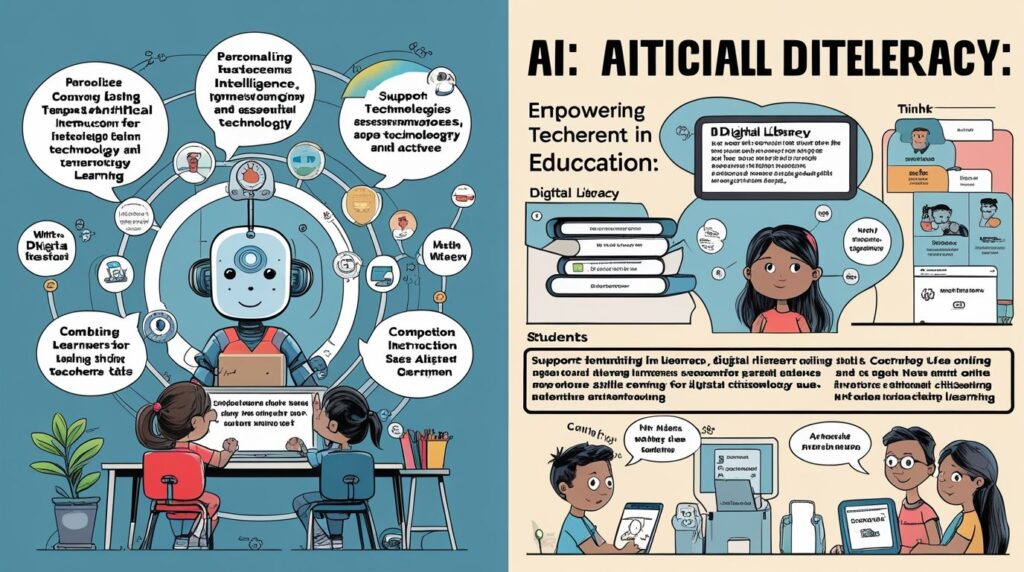
Personalized learning through AI is one of the most significant educational advancements. AI systems adapt lessons based on individual learning pace and style. As a result, slow learners receive extra support, while advanced learners face greater challenges. Furthermore, AI tracks progress in real time. Therefore, feedback becomes immediate and specific. This improves motivation and engagement. Additionally, personalized learning reduces dropout rates and learning gaps. Teachers can also use AI-generated insights to refine instruction. However, personalization must respect student privacy and data security. Thus, ethical use remains essential. Overall, AI-driven personalization supports inclusive and learner-centered education.
Enhancing Teaching Practices with AI
AI enhances teaching practices by automating routine tasks and providing instructional support. For example, AI can grade objective tests quickly and accurately. Consequently, teachers save valuable time. Moreover, AI tools assist in lesson planning by suggesting resources and strategies. Virtual teaching assistants answer student queries outside class hours. Therefore, learning continues beyond the classroom. Additionally, AI helps identify at-risk students early. This allows timely intervention. However, teachers must remain central to decision-making. AI should support professional judgment, not replace it. In this way, AI strengthens teaching quality and effectiveness.
Importance of Digital Literacy for Students
Digital literacy is essential for students’ academic and personal growth. It enables learners to navigate digital platforms confidently. Moreover, it supports critical thinking and informed decision-making. Students learn to evaluate online information, collaborate virtually, and present ideas creatively. Consequently, they become independent learners. Digital literacy also prepares students for future careers that demand technological competence. Furthermore, it encourages ethical behavior and respect in digital spaces. Therefore, schools must integrate digital literacy across all subjects. This ensures holistic development and responsible citizenship in the digital age.
Digital Literacy for Teachers and Educators
Teachers’ digital literacy directly impacts teaching quality. Educators must understand digital tools to design engaging lessons and assessments. Moreover, they need skills to manage online classrooms and blended learning environments. Digital literacy also helps teachers evaluate educational technologies critically. Consequently, they can select tools that align with learning objectives. Professional development programs play a vital role here. Therefore, continuous training is necessary. When teachers are digitally literate, they model responsible technology use for students. This creates a culture of effective and ethical digital learning.
Ethical Considerations of AI in Education
Ethics in AI-driven education is a critical concern. AI systems rely on data, which raises issues of privacy and security. Therefore, institutions must protect student information. Additionally, AI algorithms may contain biases. This can lead to unfair outcomes. Hence, transparency and accountability are essential. Students should also learn about ethical AI use. Moreover, clear policies and guidelines must govern AI implementation. When ethical principles guide practice, AI becomes a trustworthy educational tool. Thus, responsible use ensures equity, fairness, and human dignity.
Challenges in Integrating AI and Digital Literacy
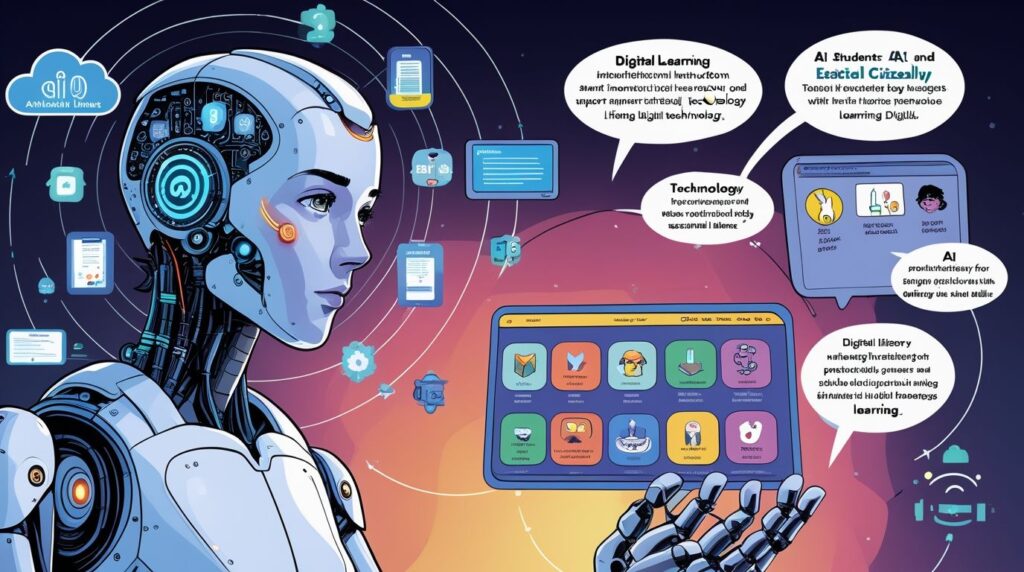
Integrating AI and digital literacy in education presents several challenges. Limited infrastructure and funding restrict access in many regions. Moreover, lack of training hinders effective use. Resistance to change also slows adoption. Additionally, ethical and legal concerns create uncertainty. However, strategic planning and policy support can address these issues. Governments and institutions must invest in resources and professional development. Furthermore, collaboration between educators and technologists is necessary. By overcoming these challenges, education systems can fully benefit from AI and digital literacy.
Future of AI and Digital Literacy in Education
The future of education is increasingly AI-driven and digitally literate. Emerging technologies will further personalize learning and expand access. Virtual reality, intelligent analytics, and adaptive platforms will become common. Therefore, digital literacy frameworks must evolve continuously. Education will focus more on creativity, problem-solving, and ethical reasoning. AI will support lifelong learning and skill development. Consequently, learners will be better prepared for global challenges. With thoughtful integration, AI and digital literacy will transform education into a more inclusive, efficient, and innovative system.
Conclusion
Artificial Intelligence and digital literacy in education are powerful drivers of educational transformation. Together, they enhance learning experiences, support teachers, and prepare students for the future. However, success depends on ethical use, proper training, and inclusive policies. Therefore, education systems must balance innovation with responsibility. When AI tools are combined with strong digital literacy skills, learners become informed, critical, and capable individuals. In conclusion, embracing AI and digital literacy is essential for building resilient, future-ready education systems.
References
- UNESCO. (2021). Artificial Intelligence and Education: Guidance for Policy-makers.
- OECD. (2022). Digital Education Outlook.
- World Economic Forum. (2020). Schools of the Future.
- European Commission. (2020). Digital Education Action Plan.
- Holmes, W., Bialik, M., & Fadel, C. (2019). Artificial Intelligence in Education. Harvard Education Press.
Bei der Registrierung erhalten Sie oft Freispiele oder Echtgeld-Boni, die Ihnen den Einstieg
erleichtern und Ihnen die Möglichkeit geben, Ihr Glück ohne finanzielles Risiko zu testen. Diese Boni bieten nicht nur eine risikofreie
Gelegenheit zu spielen, sondern auch die Chance, das Casino und seine Spiele genauer kennenzulernen.
Im Pandido Casino spielen Sie alle Casinospiele ohne Limits und Pausen online.
Sichern Sie sich bis zu 3000 € Willkommensbonus, 350 Freispiele sowie einen BonusCredit und starten Sie mit Echtgeld
ab 20 € Mindesteinzahlung durch.
Wenn Sie diesem Casino über unseren Link beitreten, können Sie von 50 Freispielen ohne Einzahlung profitieren, wenn Sie über Ihre Android-App beitreten. Diese Boni ermöglichen es dir,
sofort nach der Registrierung echtes Geld oder Freispiele zu
erhalten – ohne eigenes Geld einzuzahlen. Überprüfen Sie regelmäßig, wie oft und wie lange Sie spielen, um
potenzielle Probleme frühzeitig zu erkennen. Demnach ist es für Minderjährige nicht möglich einen solchen Bonus
im Online Casino zu spielen. So testen Neuspieler
die Casino-Funktionen und Spielangebot risikofrei.
Lest unseren OnlyWin Testbericht und holt euch auch den Willkommensbonus von 100% bis zu 400 € + 100
Freispiele.
Als Endergebnis erhalten wir unseren Index mit der besten Online Casino-Auswahl für Highrollers.
Die besten Online Casinos sind allerdings bestrebt, Ihnen endlose Unterhaltung zu bieten und alles andere so
fair wie möglich zu gestalten. Das Haus, auch bekannt als Casino, wird
auf lange Sicht hin immer gewinnen.
References:
https://online-spielhallen.de/vulkan-vegas-casino-deutschland-ihr-spielerlebnis-im-detail/
Du wirst keines Deiner Lieblingsspiele vermissen, unabhängig davon, ob
du Spielautomaten oder Tischspiele bevorzugst. Zum Einstieg gibt
es einen 200% bis 5.000 Euro Golden Panda Casino Willkommensbonus, der mit Eigengeld-Umsätzen freigespielt wird.
Das Spielangebot wurde im Vergleich zum Start stark erweitert, so dass jeder User seine Lieblingsspiele findet.
Der Online Spielanbieter sammelt direkt mit seiner modernen Webseite und der einfach bedienbaren Web
App Pluspunkte.
Zusätzlich erhalten Sie 250 Free Spins. Der maximale Betrag für den 300
% Willkommensbonus beträgt 2500 EUR. Diese Website ist
für Sie kostenlos nutzbar, wir können jedoch
eine Provision von den Unternehmen erhalten, die auf dieser Seite vorgestellt werden. Casinos ohne Verifizierung bieten oft schnelle und unkomplizierte Auszahlungen. Casinos ohne
Verifizierung bieten Spielern in Deutschland eine
attraktive Option für anonymes Spielen.
Spieler schätzen die Möglichkeit, ihre Gewinne zügig und unkompliziert zu erhalten. Ob
Sie sich für ein Paysafecard Casino ohne Verifizierung entscheiden oder in Richtung Kreditkarte gehen – beide bieten Vorteile
in Bezug auf Geschwindigkeit und Anonymität. Online Casinos ohne Verifizierung bieten verschiedene Zahlungsmethoden an, die
schnelle und anonyme Transaktionen ermöglichen. Seriöse Online Casinos ohne
Verifizierung bieten verschiedene Zahlungsoptionen an. Die Mindesteinzahlung beträgt in der Regel zwischen 10 € und 20 €.
References:
https://online-spielhallen.de/posido-casino-erfahrungen-ein-detaillierter-erfahrungsbericht-aus-spielersicht/