
Introduction
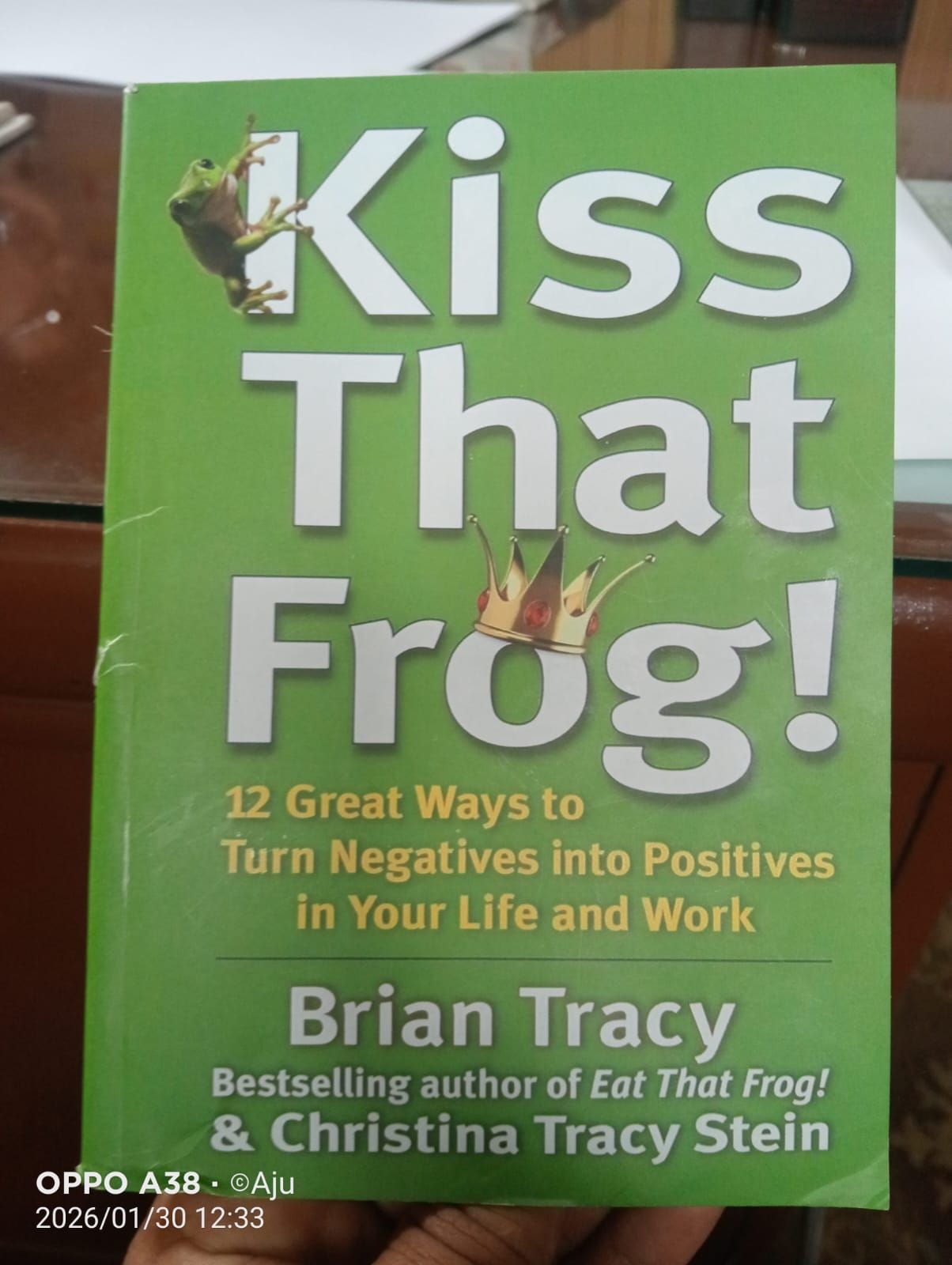
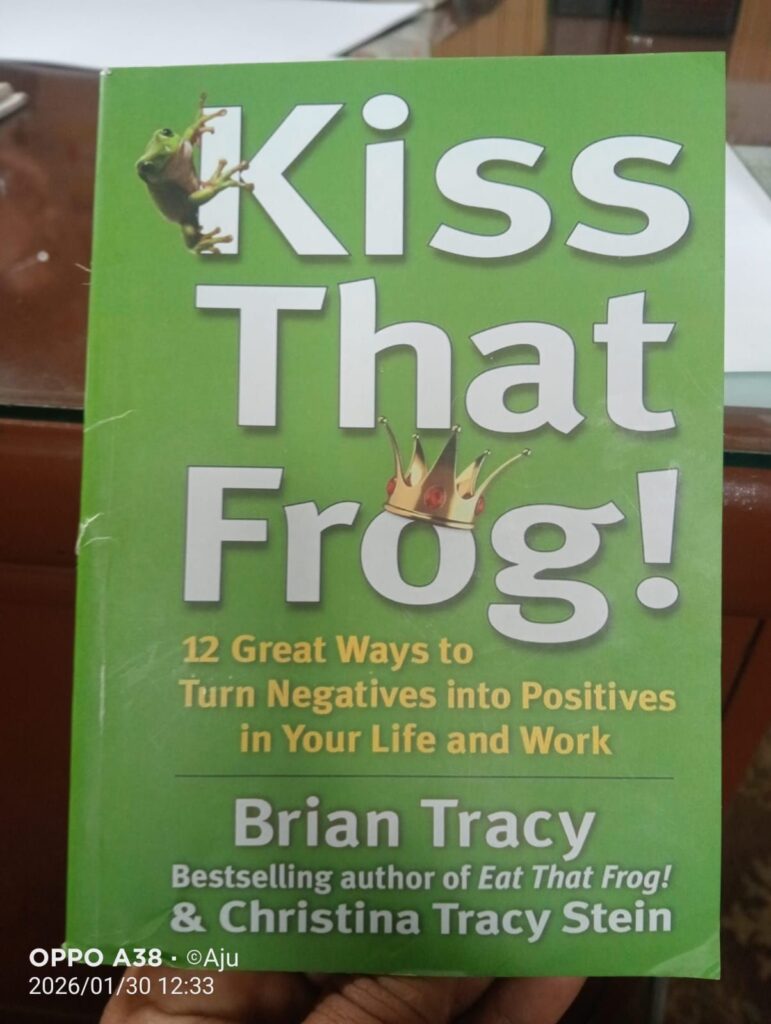
Book Review: Kiss That Frog! by Brian Tracy, Kiss That Frog! 12 Great Ways to Turn Negatives into Positives in Your Life and Work is a motivational and self-development book written by Brian Tracy, one of the world’s most recognized personal success coaches. First published in the early 2000s, the book focuses on practical strategies to overcome negative thinking, emotional setbacks, and mental barriers that prevent individuals from achieving success and happiness. Drawing inspiration from the classic fairy tale in which a frog transforms into a prince after being kissed, Tracy uses this metaphor to encourage readers to confront and transform life’s difficulties instead of avoiding them.
The central premise of Kiss That Frog! is simple yet powerful: every negative situation holds the potential for growth, learning, and positive transformation if approached with the right mindset. Brian Tracy argues that success is not determined by external circumstances alone but largely by how individuals think, respond, and act when faced with adversity. Through twelve actionable principles, Tracy provides readers with tools to replace fear, doubt, anger, and frustration with optimism, confidence, and purpose.
This book review examines the key ideas presented in Kiss That Frog!, evaluates its strengths and limitations, and discusses its relevance in personal and professional life.
Overview of the Book
Kiss That Frog! is structured around twelve principles, each addressing a specific form of negative thinking or emotional challenge. Tracy’s writing style is direct, motivational, and practical, making the book accessible to a broad audience. Each chapter focuses on a particular mental obstacle—such as fear of failure, self-doubt, resentment, or pessimism—and offers step-by-step strategies to overcome it.
Unlike purely theoretical self-help books, Tracy emphasizes action. He believes that positive thinking alone is not enough; it must be combined with disciplined behavior, clear goals, and personal responsibility. Throughout the book, Tracy reinforces the idea that individuals are fully responsible for their thoughts, emotions, and reactions, regardless of circumstances.
The book’s core message is that by consciously choosing positive responses, individuals can turn obstacles into opportunities and setbacks into stepping stones for success.
Key Themes and Concepts
1. The Power of Attitude
One of the most important themes in Kiss That Frog! is the power of attitude. Tracy asserts that attitude determines outcomes more than talent, intelligence, or luck. According to him, two people can experience the same event, yet their results may differ drastically depending on how they interpret and respond to it.
Tracy explains that negative emotions such as anger, fear, guilt, and resentment are learned responses—and therefore can be unlearned. By choosing optimism, gratitude, and solution-oriented thinking, individuals can significantly improve both their performance and quality of life.
This concept is especially relevant in professional environments, where stress and competition often trigger negative reactions. Tracy encourages readers to remain calm, constructive, and future-focused, even in difficult situations.
2. Personal Responsibility
A recurring idea throughout the book is personal responsibility. Brian Tracy strongly believes that accepting full responsibility for one’s life is the foundation of success. He argues that blaming others, circumstances, or past experiences only reinforces negative thinking and prevents growth.
In Kiss That Frog!, Tracy introduces the idea that successful people see themselves as the “cause” rather than the “effect” of their lives. This means taking ownership of mistakes, learning from failures, and actively seeking solutions instead of excuses.
While this message can feel challenging—especially to readers facing serious personal or systemic difficulties—Tracy presents it as empowering rather than judgmental. He emphasizes that responsibility equals control, and control leads to confidence and freedom.
3. Overcoming Fear and Self-Doubt
Fear is identified as one of the most destructive emotions limiting human potential. Tracy highlights common fears such as fear of failure, fear of rejection, and fear of criticism, explaining how they often originate in early experiences and negative conditioning.
To overcome fear, Tracy recommends taking deliberate action despite discomfort. He introduces techniques such as positive self-talk, visualization, and setting small achievable goals to build confidence. By repeatedly facing fears, individuals gradually weaken their emotional power.
This practical approach makes the book particularly valuable for people struggling with career advancement, public speaking, entrepreneurship, or personal growth.
4. Goal Setting and Mental Discipline
Brian Tracy is widely known for his work on goal setting, and this expertise is evident throughout Kiss That Frog!. He argues that clear goals act as an antidote to negativity. When individuals know exactly what they want and why they want it, they are less likely to be discouraged by temporary setbacks.
The book encourages readers to write down goals, visualize success, and review objectives daily. Tracy also stresses the importance of aligning goals with personal values, as this creates internal motivation and resilience.
Mental discipline—controlling thoughts and emotions—is presented as a skill that improves with practice. Tracy compares the mind to a muscle that strengthens with consistent training.
5. Transforming Adversity into Opportunity
Another key theme is the transformation of adversity into opportunity. Tracy challenges readers to view problems as lessons and setbacks as preparation for greater success. He suggests asking constructive questions such as, “What can I learn from this?” or “How can this situation make me stronger?”
This mindset shift helps individuals maintain emotional balance during crises and develop long-term resilience. Tracy supports this idea with anecdotes from business leaders, entrepreneurs, and historical figures who achieved success after repeated failures.
The metaphor of “kissing the frog” becomes especially powerful here, symbolizing the courage to face unpleasant realities in order to unlock hidden potential.
Writing Style and Structure
Brian Tracy’s writing style is clear shown straightforward, motivational, and instructional. He avoids complex language and academic jargon, making the book accessible to readers from all educational backgrounds. Each chapter follows a consistent structure: identifying a negative pattern, explaining its causes, and offering practical solutions.
The repetition of key ideas—such as responsibility, positivity, and action—helps reinforce learning, though some readers may find it repetitive. However, this repetition is intentional, as Tracy believes consistent reinforcement is essential for lasting change.
The use of real-life examples, exercises, and affirmations makes the book interactive rather than passive. Readers are encouraged to reflect, write, and act, which enhances the book’s effectiveness.
Strengths of the Book
One of the greatest strengths of Kiss That Frog! is its practicality. The strategies offered are simple, actionable, and applicable to everyday life. The book does not promise instant success but emphasizes consistent effort and mental discipline.
Another strength is its universal relevance. The principles discussed apply to personal relationships, career development, emotional well-being, and leadership. Whether a reader is a student, professional, entrepreneur, or homemaker, the lessons remain applicable.
Brian Tracy’s emphasis on emotional control and responsibility also makes the book particularly valuable in today’s fast-paced, high-stress environment. The message that happiness and success are largely internal processes resonates strongly with modern readers.
Limitations and Criticism
Despite its many strengths, Kiss That Frog! has some limitations. One common criticism is that the book oversimplifies complex emotional and psychological challenges. Issues such as trauma, mental illness, or systemic inequality are not deeply addressed, which may make some advice feel unrealistic to certain readers.
Additionally, the book relies heavily on positive thinking and self-discipline, which may not appeal to readers seeking more scientific or psychological explanations. Critics may argue that Tracy’s approach places excessive responsibility on individuals while underestimating external factors.
However, it is important to note that the book is intended as a motivational guide rather than a clinical or sociological analysis. When understood within this context, its advice remains valuable and effective.
Relevance in the Modern Context
Even decades after its publication, Kiss That Frog! remains highly relevant. In an era marked by uncertainty, competition, and rapid change, the ability to manage negativity and maintain a positive mindset is more important than ever.
The rise of stress-related issues, burnout, and anxiety in professional environments makes Tracy’s emphasis on emotional control particularly timely. The book’s focus on resilience, adaptability, and goal orientation aligns well with modern self-development practices.
Moreover, the principles of responsibility and proactive thinking are especially valuable in a digital age where distractions and external pressures constantly challenge focus and motivation.
Conclusion
Kiss That Frog! by Brian Tracy is a powerful and practical guide to overcoming negativity and unlocking personal potential. Through twelve clear principles, Tracy demonstrates how individuals can transform challenges into opportunities by changing the way they think and act.
While the book may not address every complexity of human experience, its core message—that mindset shapes destiny—is both inspiring and empowering. Its emphasis on responsibility, discipline, and optimism makes it a valuable resource for anyone seeking personal or professional growth.
Ultimately, Kiss That Frog! encourages readers to face their fears, confront their challenges, and take control of their lives. By “kissing the frog” instead of avoiding it, individuals can discover the hidden prince within themselves—the confidence, clarity, and success they seek.
i really enjoyed your article, keep it like that, google will love it and rank it high, i am now a follower, my site https://topseofreelancerberlin.de/ the best seo freelancer in berlin and germany, check it out
hollywood casino md
References:
https://bookmarking.stream/story.php?title=mro-casino-faq-bonuses-games-quick-withdrawals-explained