
Introduction
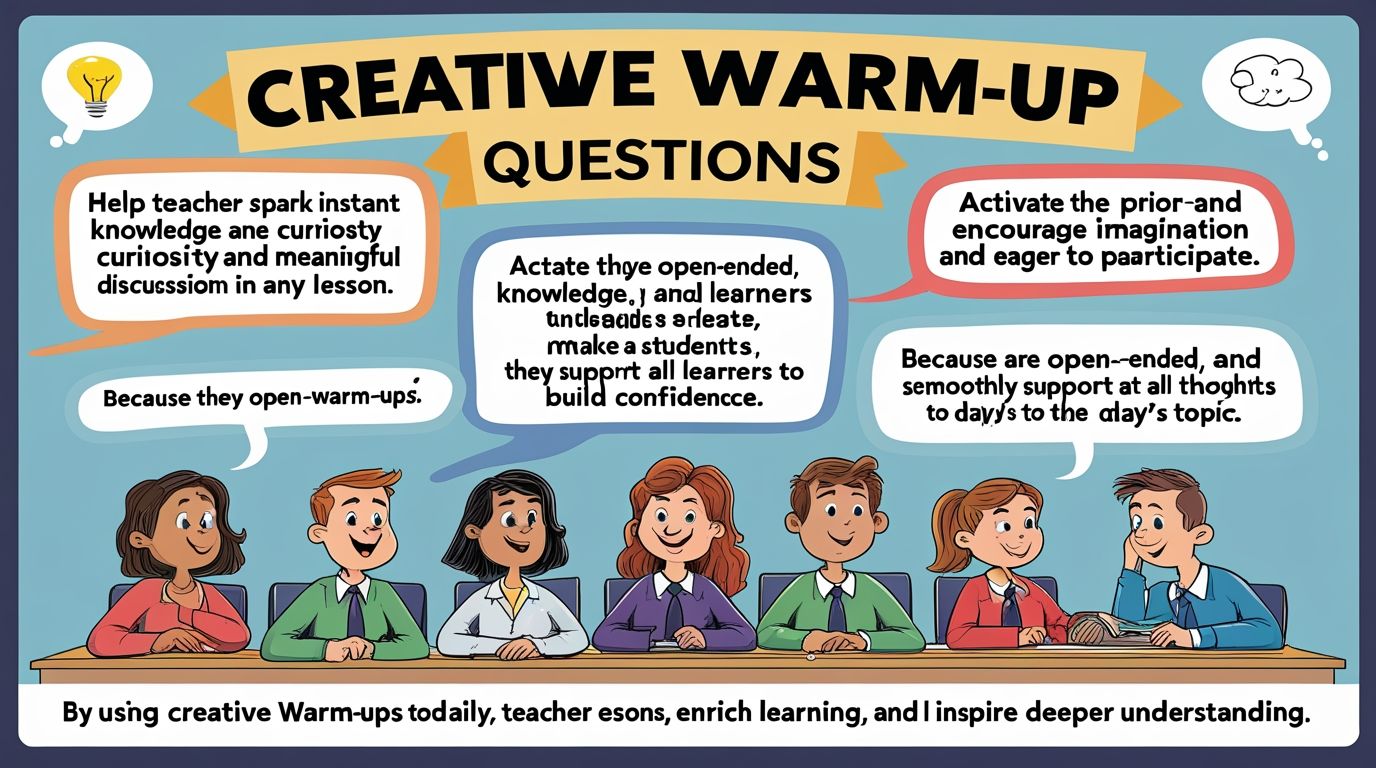
Creative Warm-Up Questions on Lesson Topic, Teachers often look for smart ways to begin their lessons with energy, curiosity, and engagement. Although many strategies exist, creative warm-up questions remain one of the simplest yet most effective tools. These questions immediately activate students’ thinking. They also help set the tone of the lesson. Moreover, they encourage learners to connect their previous knowledge with new ideas. Because warm-up questions are flexible, teachers can use them in any subject or grade level. They work well in English, science, math, social studies, and even arts. Furthermore, they help students feel comfortable sharing their thoughts. As a result, classrooms become more interactive and responsive. Therefore, creative warm-up questions are essential for building a positive learning environment. This article explores their benefits, types, uses, and examples teachers can apply anytime to spark meaningful discussions.
Importance of Creative Warm-Up Questions
Creative warm-up questions play a vital role in learning. They prepare students for deeper thinking. They also help teachers understand students’ readiness and mood. Because they are simple to ask, teachers can use them daily without extra preparation. Additionally, warm-up questions reduce fear and hesitation among students. This is because they invite opinions and ideas rather than correct answers. Students feel safer sharing thoughts. Moreover, they improve participation. Even shy students begin to speak when they feel their ideas matter. Furthermore, warm-up questions stimulate curiosity, which naturally leads to better engagement. When students are curious, they listen more, question more, and think more. Therefore, the importance of creative warm-up questions cannot be overstated. They shape the atmosphere of the lesson and help teachers build active classrooms.
How Warm-Up Questions Spark Student Discussion
Warm-up questions open the door to powerful classroom discussions. They encourage students to explore ideas. They also help them listen to one another. When teachers ask creative questions, students must think, compare, evaluate, and reflect. Consequently, this raises the level of interaction. In addition, warm-up questions allow students to express personal experiences, opinions, and imaginations. This makes discussions richer and more meaningful. These questions also help teachers transition smoothly into the main lesson. For instance, a simple “What would happen if…?” question can lead directly to the concept being taught. Because of this, discussions become more organic. Not only that, but students also learn communication skills, such as respecting others’ views. Therefore, warm-up questions do more than just start conversations. They build collaborative learning cultures and set a constructive tone for every lesson.
Types of Creative Warm-Up Questions
Teachers can use many types of warm-up questions depending on their purpose. One common type is opinion-based questions, such as “What do you think about…?” These questions are simple, but they spark conversation quickly. Another type is prediction questions. These involve imagining future outcomes and connect well with science or reading lessons. There are also comparison questions. They help students analyze similarities and differences. Additionally, teachers can use creative-thinking questions, which begin with prompts like “If you could design…” or “Imagine a world where…”. These questions inspire imagination and high-level thinking. Furthermore, personal connection questions help students relate the lesson to their real-life experiences. Lastly, problem-solving warm-ups challenge students to think critically before learning new content. Because each type has a different purpose, teachers can mix them to keep lessons fresh and engaging.
Warm-Up Questions for Any Subject
Warm-up questions can be adapted for any subject area. In English, teachers may ask students to imagine alternate endings or describe characters in unique ways. In science, warm-ups might involve predicting outcomes of experiments. In math, warm-up questions can explore reasoning instead of answers, such as “Why do you think patterns exist?” Meanwhile, social studies questions can ask students to compare past and present events. Even in art or music, warm-ups help students connect creativity with emotions. Because these questions are flexible, teachers can adjust them based on grade level, lesson goals, and time available. Furthermore, they support differentiated instruction. Fast learners can give advanced answers, while developing learners can respond at their comfort level. Therefore, warm-up questions offer a universal strategy suitable for all subjects and learner types.
Examples of Engaging Warm-Up Questions
Teachers benefit from having a ready list of questions they can use anytime. Some powerful examples include:
- “If you could change one rule in the world, what would it be and why?”
- “Which invention do you think changed the world the most?”
- “What would happen if humans could read minds?”
- “Describe a challenge you solved recently. How did you do it?”
- “If today’s lesson was a movie, what would the title be?”
- “What is one question you wish you could ask the universe?”
These questions work because they are open-ended. They invite creativity and encourage discussion. Moreover, students enjoy them. They feel engaged and motivated. Teachers can modify these examples to match their lessons. Because the questions are versatile, they fit in any classroom and spark instant thinking.
How to Use Warm-Up Questions Effectively
Using warm-up questions requires strategy. First, teachers should choose questions that match the lesson goal. They must also keep them simple so every student can participate. Moreover, teachers should allow enough time for responses. They can use pair share, group discussion, or individual reflection. Additionally, it helps to vary the types of questions to maintain interest. Teachers should also encourage students to listen to one another. Another effective method is writing warm-up answers on sticky notes or digital platforms. These methods activate more students and create a collaborative classroom. Furthermore, teachers should connect the warm-up discussion to the main lesson. This strengthens understanding. When used effectively, creative warm-up questions become powerful teaching tools that elevate engagement and boost learning.
Benefits for Teachers and Students
Creative warm-up questions bring many benefits. For teachers, they provide quick insights into students’ thinking levels. They also help identify misconceptions before the lesson begins. This saves teaching time. For students, the benefits are even greater. They build confidence and communication skills. They also improve reasoning and creativity. Moreover, warm-up questions encourage teamwork and respect during discussions. As a result, classrooms become more supportive. These questions also awaken students’ thinking at the start of the day. That’s why they improve overall classroom energy. Because of their flexibility, warm-up questions support all learners, including those who struggle. Therefore, both teachers and students gain from using them regularly.
Conclusion
Creative warm-up questions are simple yet powerful tools that can transform classroom learning. They encourage thinking, discussion, and confidence. They also prepare students for deeper understanding. Because they work in any subject, teachers can use them daily. Moreover, they help build interactive classrooms where students feel valued. With the right approach, warm-up questions can turn ordinary lessons into inspiring learning experiences. Therefore, teachers should make them a regular part of their teaching strategy. When students begin lessons with curiosity and confidence, better learning always follows.
albania tour package Had an amazing experience with Travelshop Booking. Everything was well organized and stress-free. https://www.tumisyeri.com/travelshop-booking_1u-0212-529-77-08