
Introduction
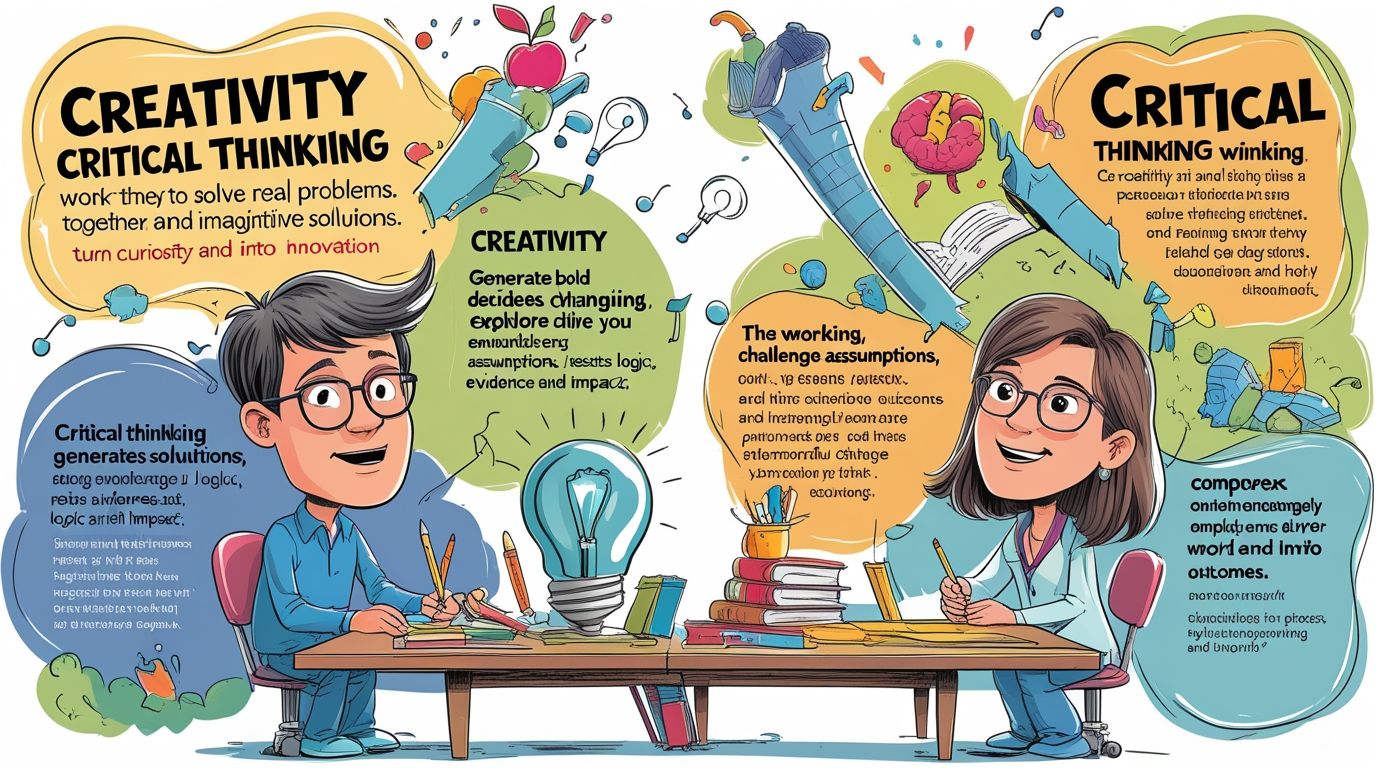
Creativity and Critical Thinking, ECD Education intentionally cultivates creativity and critical thinking through open-ended activities. Children are encouraged to ask questions, invent stories, build structures, and explore multiple solutions. Consequently, learning becomes dynamic rather than fixed. According to Dewey (1938), reflective thinking emerges when learners engage with real problems. Therefore, ECD environments nurture flexible minds capable of adaptation.
In contrast, Traditional Education often emphasizes single correct answers and predetermined outcomes. While this approach ensures clarity, it can restrict imagination. Furthermore, students may become dependent on external validation rather than internal curiosity. As a result, critical thinking may be delayed or underdeveloped.
Moreover, ECD integrates art, music, and movement as core components of learning. These modalities stimulate divergent thinking and emotional expression. Traditional systems, however, frequently treat creative subjects as supplementary. Consequently, intellectual growth may overshadow expressive development. Thus, ECD fosters innovation, whereas Traditional Education tends to prioritize conformity.
Assessment Practices
Assessment in ECD Education is primarily formative and observational. Teachers document children’s progress through portfolios, checklists, and narratives. Consequently, evaluation becomes continuous and holistic. According to Carr (2001), learning stories capture developmental growth more effectively than standardized tests. Therefore, ECD focuses on process rather than product.
Conversely, Traditional Education relies heavily on summative assessments, such as exams and grades. Although these tools offer measurable outcomes, they often fail to represent comprehensive learning. Furthermore, standardized testing can induce stress and narrow curricula.
Moreover, ECD assessment recognizes individual trajectories. Each child’s development is compared to their own progress rather than to peers. In contrast, traditional systems emphasize ranking and competition. As a result, learners may internalize failure early. Consequently, ECD supports confidence and resilience, while Traditional Education may inadvertently reinforce hierarchy.
Equity and Inclusion
ECD Education plays a vital role in promoting equity. Heckman (2006) demonstrated that early investment yields the highest social and economic returns, particularly for disadvantaged children. Consequently, ECD reduces achievement gaps before they widen.
Moreover, ECD classrooms accommodate diverse abilities, languages, and cultures. Teachers differentiate instruction and celebrate variation. Therefore, children feel valued regardless of background. In contrast, Traditional Education often expects uniform performance, which may disadvantage marginalized learners.
Furthermore, children with needs benefit from early intervention within ECD frameworks. Support is embedded naturally into play and routine. Traditional systems, however, frequently identify difficulties later, when gaps are harder to close. Consequently, ECD promotes inclusion and prevention, whereas Traditional Education often responds reactively.
Long-Term Outcomes
Research consistently links ECD Education to positive long-term outcomes. Participants demonstrate higher academic achievement, improved health, and reduced involvement in crime (Heckman, 2006). Moreover, early social-emotional skills predict workplace success and civic engagement.
In contrast, Traditional Education focuses primarily on short-term academic metrics. While students may perform well on tests, they may lack adaptability and emotional intelligence. Consequently, success becomes narrowly defined.
Furthermore, ECD cultivates lifelong learners. Children develop curiosity, confidence, and intrinsic motivation. Traditional models, however, often associate learning with external rewards. As a result, motivation may decline over time. Thus, ECD prepares individuals for complex, evolving societies, whereas Traditional Education primarily prepares them for examinations.
Global Perspectives
Globally, ECD Education is recognized as a human right. UNESCO (2021) advocates universal access to quality early learning. Countries such as Finland and New Zealand integrate play-based curricula with remarkable outcomes. Consequently, these systems demonstrate that academic excellence and child-centered learning can coexist.
In contrast, many traditional systems remain examination-driven. Cultural expectations often equate rigor with early academic pressure. However, evidence increasingly challenges this assumption. Moreover, international comparisons reveal that delayed formal instruction does not hinder achievement.
Therefore, global trends favor ECD integration within national frameworks. Governments increasingly acknowledge that early foundations determine later success. Consequently, reform efforts emphasize early learning as a cornerstone of sustainable development.
Challenges and Limitations
Despite its strengths, ECD Education faces challenges. Quality varies widely depending on teacher training and resources. Without skilled facilitators, play may become unstructured rather than purposeful. Therefore, professional development is essential.
Additionally, some critics argue that ECD lacks academic rigor. Parents may fear delayed literacy and numeracy. However, research indicates that foundational skills emerge naturally through play (Piaget, 1952).
Conversely, Traditional Education offers clarity, structure, and scalability. Large systems can implement standardized curricula efficiently. Nevertheless, rigidity may hinder responsiveness. Consequently, neither model is inherently flawless.
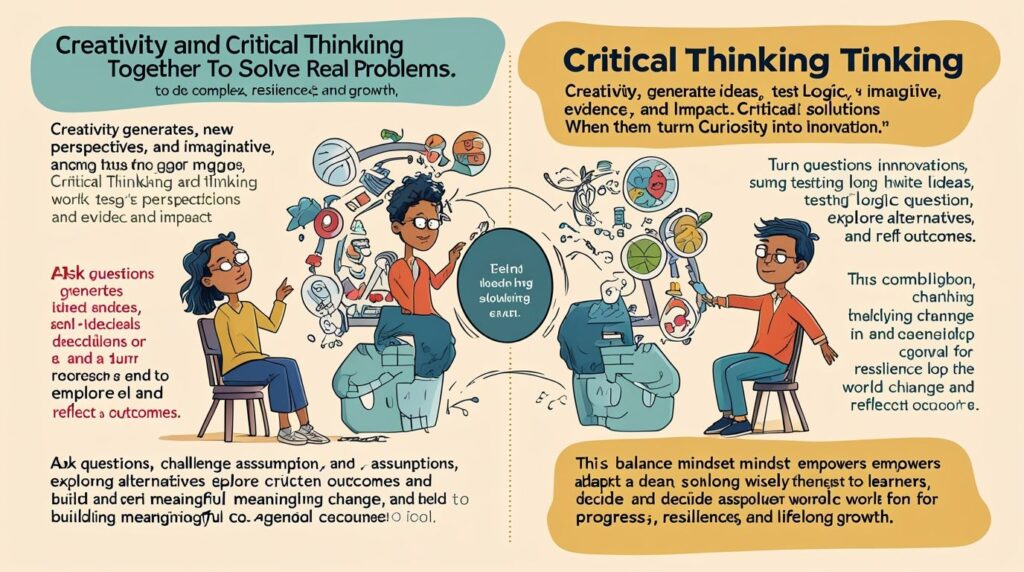
Thus, integration may offer the best path forward. Blending ECD principles with traditional frameworks can balance structure and flexibility.
Conclusion
The comparison between ECD Education and Traditional Education reveals fundamentally different visions of learning. ECD emphasizes holistic development, play-based exploration, and emotional well-being. In contrast, Traditional Education prioritizes structure, content delivery, and standardized outcomes.
Moreover, research consistently demonstrates that early experiences shape cognitive, social, and emotional trajectories (Heckman, 2006). Consequently, ECD offers a developmentally aligned foundation for lifelong learning. Traditional models, while efficient, often overlook readiness and individuality.
Therefore, educational systems must reconsider priorities. Integrating ECD principles into broader frameworks can humanize learning without sacrificing rigor. Ultimately, education should not merely produce test scores but cultivate capable, compassionate, and creative individuals.
References (APA Style)
Carr, M. (2001). Assessment in early childhood settings: Learning stories. Paul Chapman Publishing.
Dewey, J. (1938). Experience and education. Macmillan.
Heckman, J. J. (2006). Skill formation and the economics of investing in disadvantaged children. Science, 312(5782), 1900–1902. https://doi.org/10.1126/science.1128898
Montessori, M. (1967). The absorbent mind. Holt, Rinehart and Winston.
Piaget, J. (1952). The origins of intelligence in children. International Universities Press.
UNESCO. (2021). Right from the start: Building inclusive early childhood systems. UNESCO Publishing.
Vygotsky, L. S. (1978). Mind in society: The development of higher psychological processes. Harvard University Press.
Bạn có thể xem demo video hướng dẫn chơi từng slot tại khuyến mãi – học nhanh, chơi chuẩn, thắng dễ. TONY03-25