
Introduction
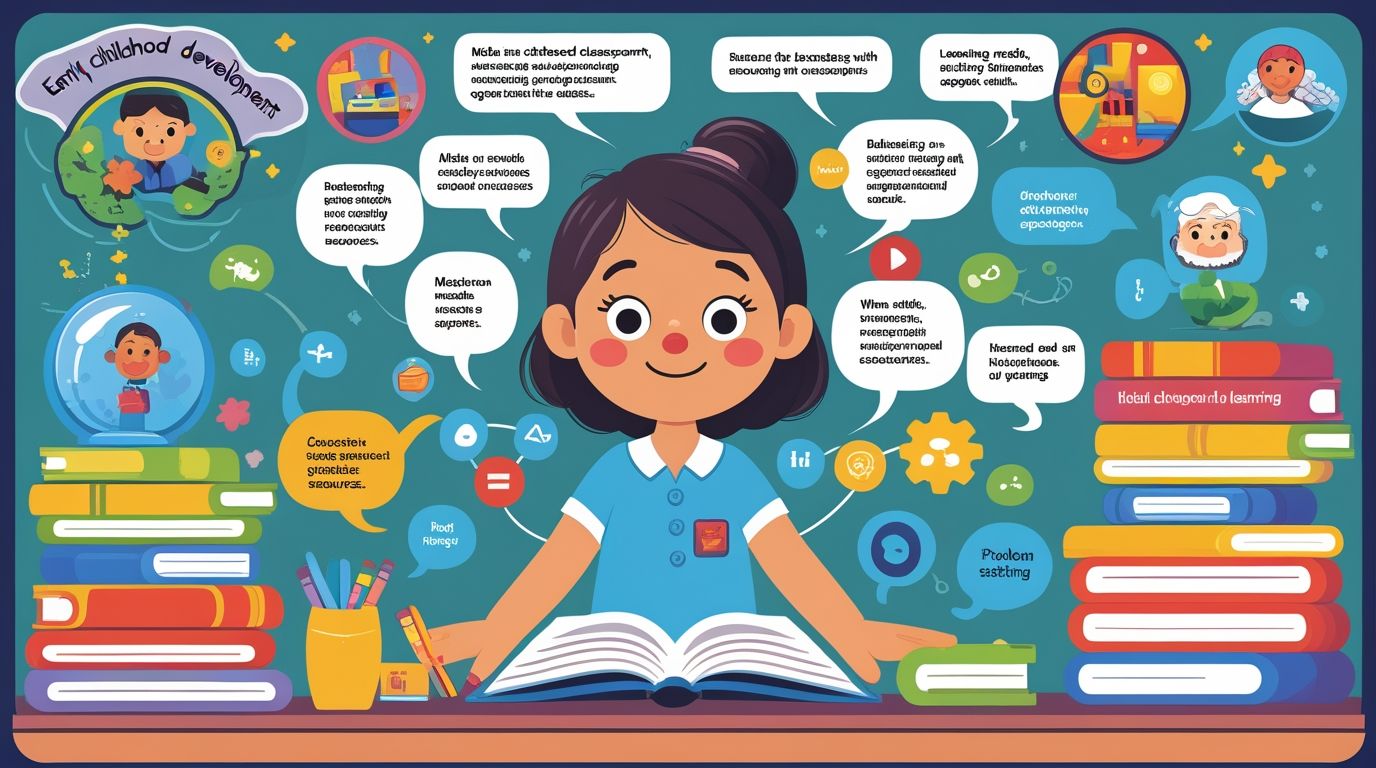
Early Childhood Development (ECD) represents a foundational phase in human learning, as it significantly shapes cognitive, emotional, and social growth. In recent decades, media integration in classrooms has increasingly transformed ECD education. Consequently, digital tools such as videos, interactive applications, and educational media have become central to early learning environments. Moreover, scholars argue that appropriate media use enhances engagement and supports developmental milestones when aligned with pedagogical goals (Piaget, 1952; Vygotsky, 1978). However, concerns regarding screen exposure and developmental appropriateness persist. Therefore, understanding the role of educational media in ECD classrooms is essential. This article critically examines how media supports early learning, explores theoretical foundations, evaluates benefits and challenges, and highlights best practices for educators. Ultimately, the discussion emphasizes balanced, developmentally appropriate media integration guided by research and educational theory.
The Concept of Early Childhood Development
Early Childhood Development encompasses the physical, cognitive, emotional, and social growth of children from birth to approximately eight years. According to UNESCO, this period is crucial because neural connections develop rapidly, influencing lifelong learning (UNESCO, 2015). Moreover, Bronfenbrenner’s ecological systems theory emphasizes that children’s development is shaped by interactions between home, school, and societal influences (Bronfenbrenner, 1979). Therefore, classrooms play a pivotal role in fostering holistic development. Additionally, ECD education prioritizes play-based, experiential learning, which aligns naturally with media-rich environments. However, without intentional planning, media use may conflict with developmental needs. Consequently, educators must understand how media fits within ECD frameworks. Thus, integrating media responsibly requires alignment with developmental principles and contextual awareness.
Theoretical Foundations of Media Use in ECD
Several educational theories provide justification for media integration in ECD classrooms. For instance, Piaget’s constructivist theory suggests children learn actively through exploration and interaction (Piaget, 1952). Consequently, interactive media supports discovery learning by allowing children to manipulate content. Similarly, Vygotsky’s sociocultural theory emphasizes learning through social interaction and scaffolding (Vygotsky, 1978). Therefore, collaborative media activities encourage guided learning within the zone of proximal development. Moreover, Bandura’s social learning theory highlights learning through observation, which media-rich environments naturally facilitate (Bandura, 1986). However, scholars caution that passive consumption undermines these theories. Thus, effective media use must be interactive, social, and intentional to support theoretical learning principles.
Types of Media Used in ECD Classrooms
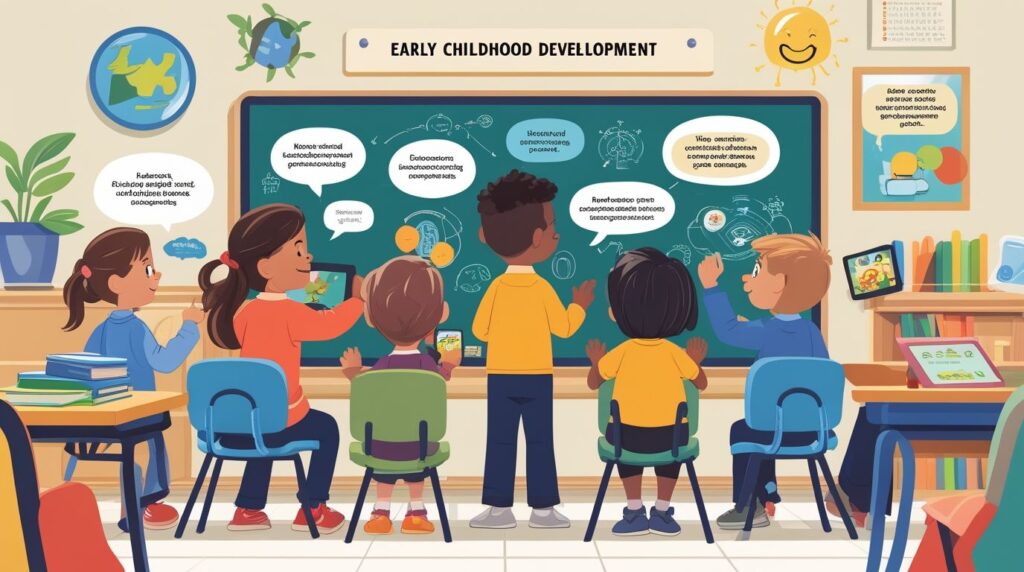
Media in ECD classrooms takes diverse forms, including digital media, print media, and audio-visual resources. For example, tablets and smartboards provide interactive learning experiences, while storybooks and posters reinforce literacy skills. Additionally, videos and animations help explain abstract concepts through visual storytelling. According to Mayer’s multimedia learning theory, combining visual and auditory information enhances comprehension (Mayer, 2009). Therefore, multimodal media supports diverse learning styles. However, educators must select age-appropriate content to prevent cognitive overload. Furthermore, culturally responsive media enhances inclusivity and relevance. Consequently, thoughtful selection of media types ensures alignment with learning objectives and developmental readiness.
Benefits of Media Integration in ECD Education
The integration of educational media offers numerous benefits for early learners. Firstly, media enhances engagement and motivation, making learning enjoyable and meaningful. Moreover, interactive tools support language development, numeracy, and problem-solving skills (Neumann, 2018). Additionally, digital storytelling promotes creativity and self-expression. Research indicates that guided media use improves early literacy outcomes (Hirsh-Pasek et al., 2015). However, benefits depend on adult mediation and instructional design. Therefore, teachers play a critical role in maximizing learning potential. Consequently, when media is embedded within play-based pedagogy, it strengthens developmental outcomes and fosters lifelong learning skills.
Media and Cognitive Development
Media significantly influences cognitive development during early childhood. For instance, educational applications support memory, attention, and reasoning skills. According to information processing theory, children learn by encoding and retrieving information through structured experiences (Atkinson & Shiffrin, 1968). Consequently, interactive media reinforces these processes. Moreover, simulations and games promote problem-solving and critical thinking. However, excessive or poorly designed media may hinder attention regulation. Therefore, balanced exposure is essential. Additionally, adult-guided discussions enhance comprehension and reflection. Thus, media serves as a cognitive tool when used intentionally and developmentally appropriately.
Media and Language Development
Language acquisition is a central focus of ECD education, and media plays a supportive role. Educational videos, audiobooks, and storytelling apps expose children to rich vocabulary and narrative structures. According to emergent literacy theory, early exposure to language-rich environments fosters reading readiness (Whitehurst & Lonigan, 1998). Therefore, media supplements traditional literacy practices. Moreover, interactive media encourages verbal responses and storytelling. However, passive viewing limits language interaction. Consequently, co-viewing and discussion are essential strategies. Thus, educators and caregivers must actively engage children during media use to enhance linguistic development.
Media and Social-Emotional Development
Social-emotional development is critical in early childhood, and media can support this domain when used responsibly. For example, educational programs model empathy, cooperation, and emotional regulation. According to social-emotional learning (SEL) frameworks, children learn behaviors through observation and practice (CASEL, 2020). Therefore, media characters serve as social models. Moreover, collaborative digital activities promote teamwork and communication. However, isolated screen use may reduce peer interaction. Consequently, educators must integrate media into group activities. Thus, balanced media use supports emotional awareness and social competence.
Challenges of Media Use in ECD Classrooms
Despite its benefits, media integration presents several challenges. Firstly, concerns about excessive screen time dominate discussions. The American Academy of Pediatrics recommends limited, high-quality media exposure for young children (AAP, 2016). Moreover, unequal access to technology creates digital divides. Additionally, poorly designed content may overstimulate or distract learners. Teachers may also lack adequate training. Therefore, professional development is essential. Consequently, addressing these challenges requires policy guidance, parental involvement, and informed pedagogical practices. Thus, media integration must be carefully managed to avoid developmental risks.
The Role of Teachers in Media Integration
Teachers play a pivotal role in guiding media use in ECD classrooms. Firstly, educators select appropriate tools aligned with curriculum goals. Moreover, they scaffold learning experiences and facilitate discussions. According to pedagogical content knowledge theory, effective teaching integrates subject knowledge with instructional strategies (Shulman, 1986). Therefore, teachers must understand both media tools and child development. Additionally, reflective practice ensures continuous improvement. Consequently, teacher training programs should emphasize digital literacy. Thus, empowered educators ensure meaningful and ethical media integration.
Parental Involvement and Media Literacy
Parental involvement enhances the effectiveness of media-based learning. When parents reinforce classroom experiences at home, learning becomes consistent and meaningful. Moreover, media literacy education empowers families to make informed choices. According to Livingstone (2014), media-literate parents support children’s critical engagement with content. Therefore, schools should collaborate with families. Additionally, workshops and communication platforms foster shared responsibility. Consequently, partnerships between educators and parents promote balanced media use. Thus, holistic support systems enhance developmental outcomes.
Policy and Curriculum Implications
Educational policies influence how media is used in ECD settings. National frameworks increasingly recognize digital competence as a key skill (OECD, 2019). Therefore, curricula integrate technology standards alongside developmental goals. However, policies must emphasize age-appropriateness and equity. Moreover, guidelines should support teacher training and infrastructure development. Consequently, evidence-based policies ensure responsible media integration. Thus, aligning policy with research strengthens early education systems.
Future Trends in ECD and Educational Media
Emerging technologies continue to shape future ECD classrooms. For instance, artificial intelligence, augmented reality, and adaptive learning platforms offer personalized experiences. Moreover, research explores how immersive media supports experiential learning. However, ethical considerations remain paramount. Therefore, future innovations must prioritize child well-being. Additionally, interdisciplinary research will guide best practices. Consequently, evolving media landscapes demand continuous evaluation. Thus, thoughtful innovation ensures sustainable and inclusive early education.
Conclusion
In conclusion, ECD education and media integration represent a dynamic intersection of pedagogy, technology, and child development. When guided by theory and research, media enhances cognitive, language, and social-emotional learning. However, challenges such as screen time and equity require careful management. Therefore, educators, parents, and policymakers must collaborate. Moreover, developmentally appropriate, interactive, and guided media use maximizes benefits. Ultimately, balanced integration ensures that media serves as a powerful tool supporting holistic early childhood development.
References
American Academy of Pediatrics. (2016). Media and young minds. Pediatrics, 138(5), 1–6.
Atkinson, R. C., & Shiffrin, R. M. (1968). Human memory: A proposed system and its control processes. Psychology of Learning and Motivation, 2, 89–195.
Bandura, A. (1986). Social foundations of thought and action. Prentice Hall.
Bronfenbrenner, U. (1979). The ecology of human development. Harvard University Press.
CASEL. (2020). What is SEL?
Hirsh-Pasek, K., et al. (2015). Putting education in “educational” apps. Psychological Science in the Public Interest, 16(1), 3–34.
Livingstone, S. (2014). Developing social media literacy. Journal of Communication, 64(1), 1–19.
Mayer, R. E. (2009). Multimedia learning. Cambridge University Press.
Neumann, M. (2018). Using tablets for early literacy. Computers & Education, 124, 1–12.
OECD. (2019). Future of education and skills 2030.
Piaget, J. (1952). The origins of intelligence in children. International Universities Press.
UNESCO. (2015). Early childhood care and education.
Vygotsky, L. S. (1978). Mind in society. Harvard University Press.
Whitehurst, G. J., & Lonigan, C. J. (1998). Child development and emergent literacy. Child Development, 69(3), 848–872.
I gotta bookmark this internet site it seems very beneficial very useful