
Abstract
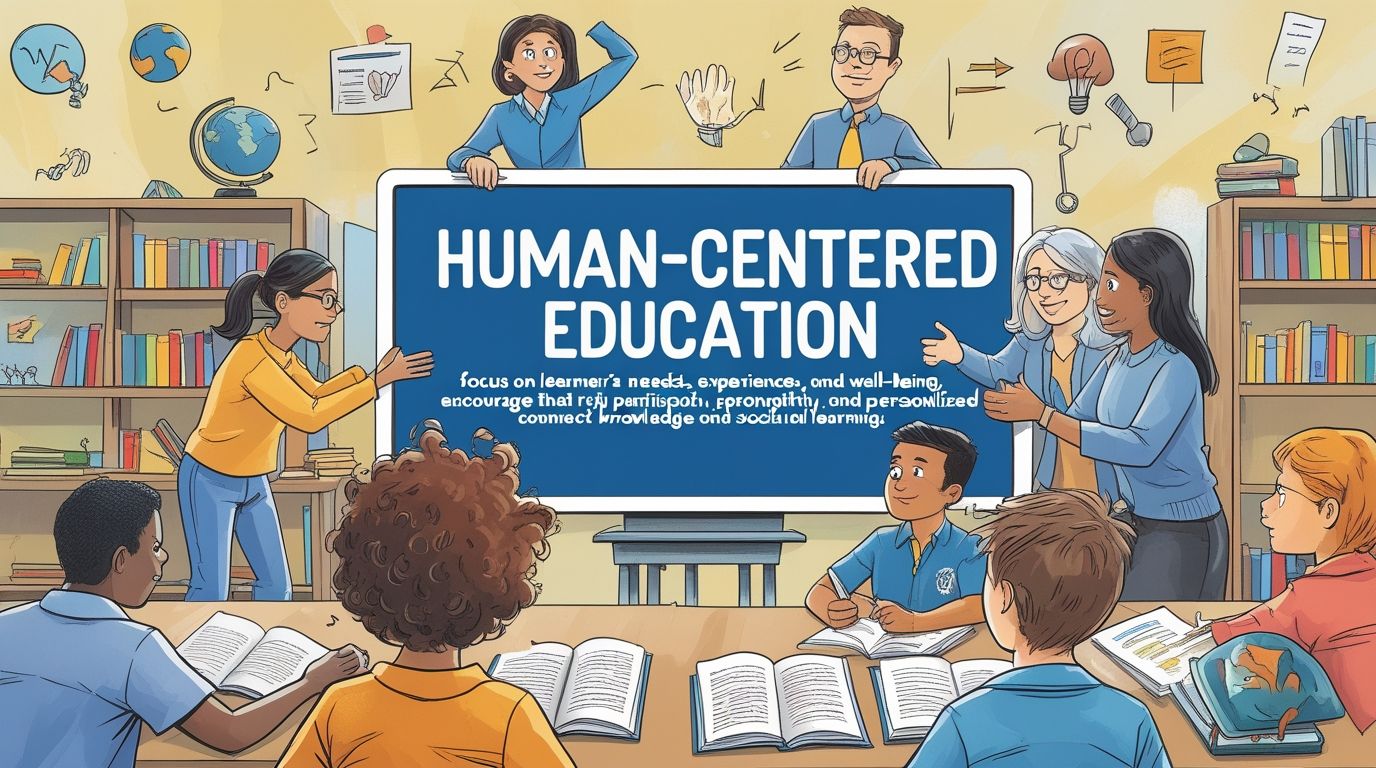
Human-Centered Education, Human-Centered Education (HCE) is an educational approach that places learners at the core of the teaching–learning process. Rather than focusing solely on content delivery or standardized outcomes, HCE emphasizes learners’ needs, emotions, abilities, cultural contexts, and real-life experiences. This approach aims to develop not only academic competence but also critical thinking, creativity, empathy, and lifelong learning skills. This article explores the concept, principles, importance, implementation strategies, and challenges of HCE.
1. Introduction
Education has traditionally been teacher-centered, with emphasis on curriculum completion, examinations, and memorization. However, rapid social, technological, and economic changes demand learners who are adaptable, self-directed, and emotionally intelligent. It responds to this need by shifting the focus from “what to teach” to “whom we teach and how they learn best.” It recognizes learners as active participants in knowledge construction rather than passive recipients of information.
2. Concept of Human-Centered Education
It is rooted in humanistic learning theories and learner-centered pedagogy. It prioritizes the holistic development of learners—intellectual, emotional, social, and ethical. In this approach, education is designed around students’ interests, strengths, learning styles, and lived experiences. Teachers act as facilitators and mentors, guiding learners through meaningful and relevant learning experiences.
3. Key Principles of Human-Centered Education
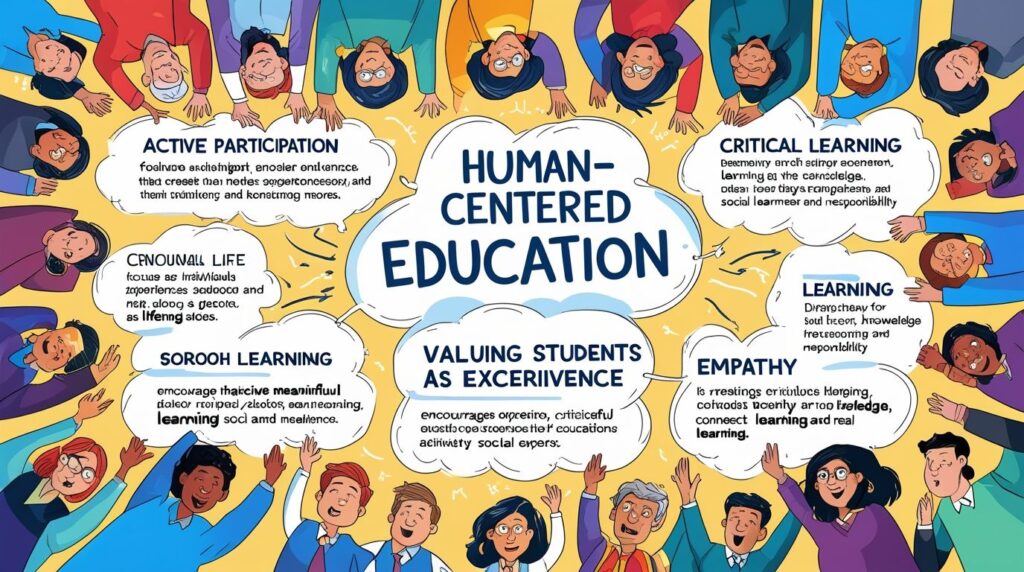
The core principles of HCE include:
- Learner Autonomy: Encouraging students to take responsibility for their own learning.
- Empathy and Respect: Valuing learners’ emotions, backgrounds, and perspectives.
- Active Learning: Promoting problem-solving, collaboration, and experiential learning.
- Personalization: Adapting instruction to meet individual learning needs and abilities.
- Real-World Relevance: Connecting learning to real-life situations and societal challenges.
- Inclusive Education: Ensuring equal opportunities for learners of all abilities and backgrounds.
4. Importance of Human-Centered Education
It plays a crucial role in modern education systems. It enhances student engagement and motivation by making learning meaningful and relevant. This approach supports the development of soft skills such as communication, empathy, teamwork, and adaptability. Additionally, it fosters mental well-being and confidence, creating a supportive learning environment where students feel valued and understood.
5. Implementation Strategies
Effective implementation of Human-Centered Education can be achieved through:
- Project-based and inquiry-based learning
- Collaborative group activities and discussions
- Use of formative assessments and constructive feedback
- Integration of technology for personalized learning
- Creating safe and inclusive classroom environments
- Encouraging reflection and self-assessment
Teachers and institutions must also invest in professional development to adopt learner-centered methodologies effectively.
6. Challenges in Human-Centered Education
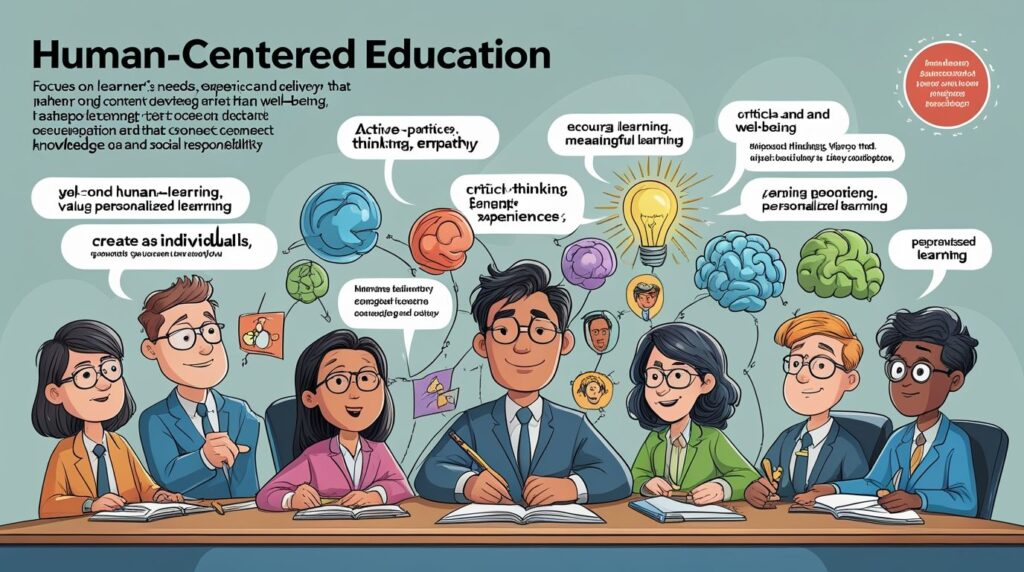
Despite its benefits, It faces several challenges. These include large class sizes, rigid curricula, examination-oriented systems, lack of teacher training, and limited resources. Resistance to change from traditional teaching practices can also hinder its implementation. Addressing these challenges requires systemic reforms, policy support, and institutional commitment.
7. Conclusion
Human-Centered Education represents a transformative shift in the way learning is designed and delivered. By placing learners at the heart of education, it nurtures well-rounded individuals capable of critical thinking, empathy, and lifelong learning. Although challenges exist, the long-term benefits of Human-Centered Education make it a vital approach for preparing learners to thrive in an ever-changing world.
This gave me a whole new perspective on something I thought I already understood. Great explanation and flow!
**finessa**
Finessa is a natural supplement made to support healthy digestion, improve metabolism, and help you achieve a flatter belly.