
Introduction
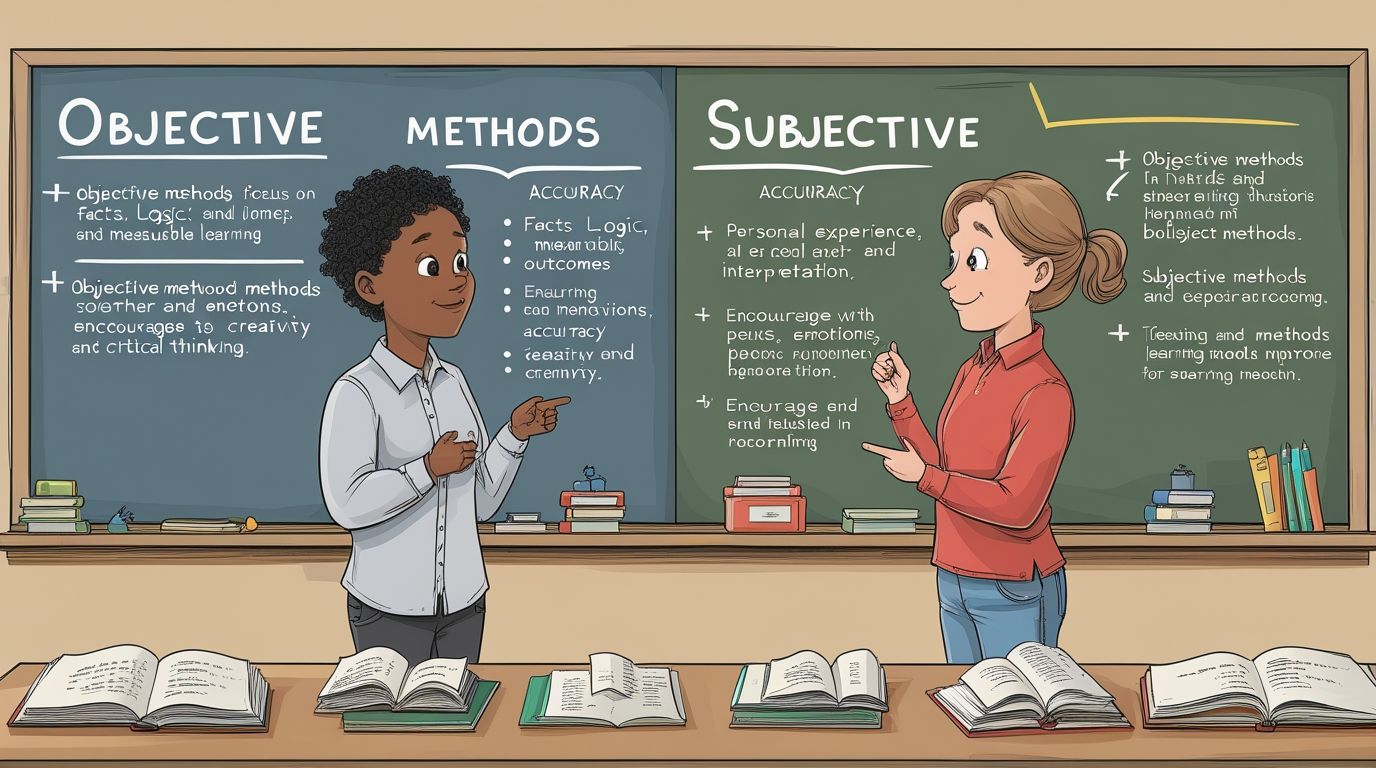
Objective And Subjective Method Of Teaching, Objective and Subjective methods of teaching play a vital role in shaping effective classroom instruction. In modern education, teachers are expected to address diverse learning needs, abilities, and interests. Therefore, relying on a single teaching approach is no longer sufficient. Objective methods emphasize facts, logic, observable outcomes, and measurable learning. In contrast, subjective methods focus on emotions, values, experiences, and personal understanding. Both approaches support learning in different ways. Moreover, when used together, they create balanced and meaningful instruction. Teachers who understand these methods can design lessons that are both structured and engaging. Consequently, students gain knowledge as well as deeper insight. In short, objective and subjective teaching methods are complementary. Their thoughtful integration enhances teaching quality and learning outcomes in today’s classrooms.
Understanding the Objective Method of Teaching
The objective method of teaching is based on facts, logic, and observable evidence. It focuses on clear learning objectives that can be measured and evaluated. Therefore, lesson outcomes are predefined and specific. Teachers using this method rely on demonstrations, experiments, data, and direct instruction. As a result, learning becomes systematic and structured. Moreover, this method promotes accuracy and clarity. Students are assessed through tests, quizzes, and assignments with definite answers. Consequently, evaluation becomes fair and consistent. Objective teaching is especially effective in subjects like mathematics, science, and technical education. However, it may limit creativity if overused. Thus, while it ensures precision and discipline, it should be balanced with other approaches for holistic learning.
Key Features of the Objective Method of Teaching
Objective teaching methods have distinct characteristics that support measurable learning. First, they emphasize clearly defined goals. Second, content is organized logically and sequentially. Third, teaching relies on factual information and evidence-based explanations. Moreover, student performance is assessed using standardized tools. Therefore, results are reliable and comparable. This method also minimizes personal bias in evaluation. Additionally, it supports large classrooms where uniform assessment is needed. However, it often overlooks emotional and social aspects of learning. Hence, understanding its features helps teachers apply it effectively without ignoring students’ individual differences.
Understanding the Subjective Method of Teaching
The subjective method of teaching focuses on learners’ feelings, experiences, opinions, and values. It recognizes that learning is personal and influenced by individual perspectives. Therefore, there may be multiple correct answers. Teachers encourage discussion, reflection, storytelling, and self-expression. As a result, students become active participants in learning. Moreover, this method fosters creativity, empathy, and critical thinking. Assessment is often descriptive and reflective rather than numerical. Consequently, students feel more engaged and motivated. Subjective teaching is commonly used in literature, social studies, ethics, and arts education. However, it may lack consistency in evaluation. Thus, it requires skilled teachers to maintain fairness and clarity.
Key Features of the Subjective Method of Teaching
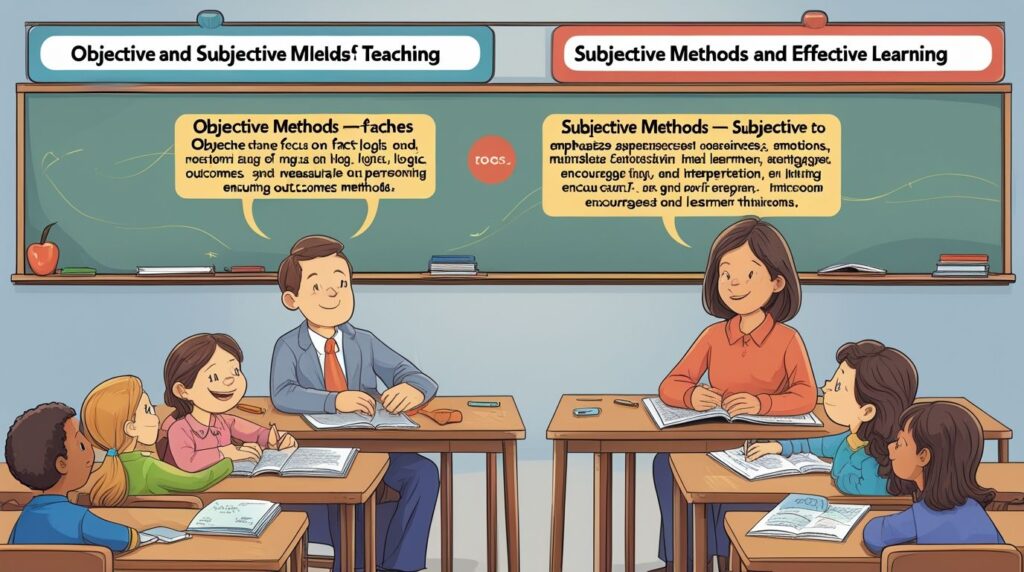
Subjective teaching methods emphasize flexibility and learner-centered instruction. First, they value personal interpretation and understanding. Second, classroom interaction and dialogue are central. Third, learning outcomes may vary among students. Moreover, assessment focuses on expression, reasoning, and depth of thought. Therefore, feedback is qualitative rather than purely quantitative. This method supports emotional intelligence and moral development. However, it may be challenging in large classes. Hence, teachers must apply it thoughtfully to ensure inclusivity and balance.
Differences Between Objective and Subjective Methods of Teaching
Objective and subjective methods differ in purpose and practice. Objective teaching emphasizes facts, accuracy, and measurable results. In contrast, subjective teaching values meaning, interpretation, and personal growth. Objective assessment uses tests with fixed answers. Meanwhile, subjective assessment relies on observation, discussion, and reflection. Objective methods reduce bias, while subjective methods allow individuality. Therefore, each method serves different educational goals. Understanding these differences helps teachers choose appropriate strategies according to subject matter and learner needs.
Advantages of the Objective Method of Teaching
The objective method offers several advantages in classroom teaching. It ensures clarity of instruction and learning outcomes. Moreover, assessment is transparent and reliable. Students understand expectations clearly. Consequently, academic standards are maintained. This method also supports accountability in education systems. Additionally, it saves time in evaluation. However, its effectiveness depends on proper implementation. When used appropriately, objective teaching strengthens foundational knowledge and skills.
Advantages of the Subjective Method of Teaching
The subjective method enhances deeper learning and personal engagement. It encourages creativity, self-confidence, and communication skills. Moreover, students learn to respect diverse viewpoints. Consequently, classroom learning becomes meaningful and interactive. This method also supports emotional and moral development. However, it requires careful guidance. When applied effectively, subjective teaching nurtures well-rounded learners.
Role of Teachers in Balancing Both Methods
Teachers play a crucial role in balancing objective and subjective methods. Effective educators select methods based on lesson objectives and student needs. For example, objective methods may introduce concepts, while subjective methods deepen understanding. Moreover, blending both approaches creates inclusive classrooms. Teachers must also design fair assessment strategies. Therefore, professional judgment and reflective practice are essential. A balanced approach leads to improved learning outcomes and student satisfaction.
Challenges in Using Objective and Subjective Methods
Both teaching methods present challenges in practical application. Objective methods may ignore individual differences. Subjective methods may lead to inconsistent assessment. Additionally, time constraints and large class sizes create difficulties. However, training and planning can reduce these challenges. Schools must support teachers through resources and professional development. Consequently, effective implementation becomes possible.

Modern Classroom Application of Both Methods
Modern classrooms require a blended teaching approach. Technology supports objective assessment through online quizzes and analytics. At the same time, digital platforms enable subjective learning through discussions and projects. Therefore, teachers can integrate both methods effectively. This combination supports academic achievement and personal growth. Hence, blended teaching aligns with 21st-century educational goals.
Conclusion
Objective and subjective methods of teaching are both essential for effective education. Objective methods provide structure, accuracy, and measurable outcomes. Subjective methods promote creativity, reflection, and emotional development. Therefore, neither method should be used alone. A balanced integration ensures holistic learning. In conclusion, thoughtful use of both approaches enhances teaching quality and prepares students for academic and life success.
References
- Aggarwal, J. C. (2010). Principles, Methods and Techniques of Teaching. Vikas Publishing.
- Bruner, J. (1966). Toward a Theory of Instruction. Harvard University Press.
- Bloom, B. S. (1956). Taxonomy of Educational Objectives. Longman.
- Joyce, B., Weil, M., & Calhoun, E. (2015). Models of Teaching. Pearson.
Very useful tips! I’m excited to implement them soon.