
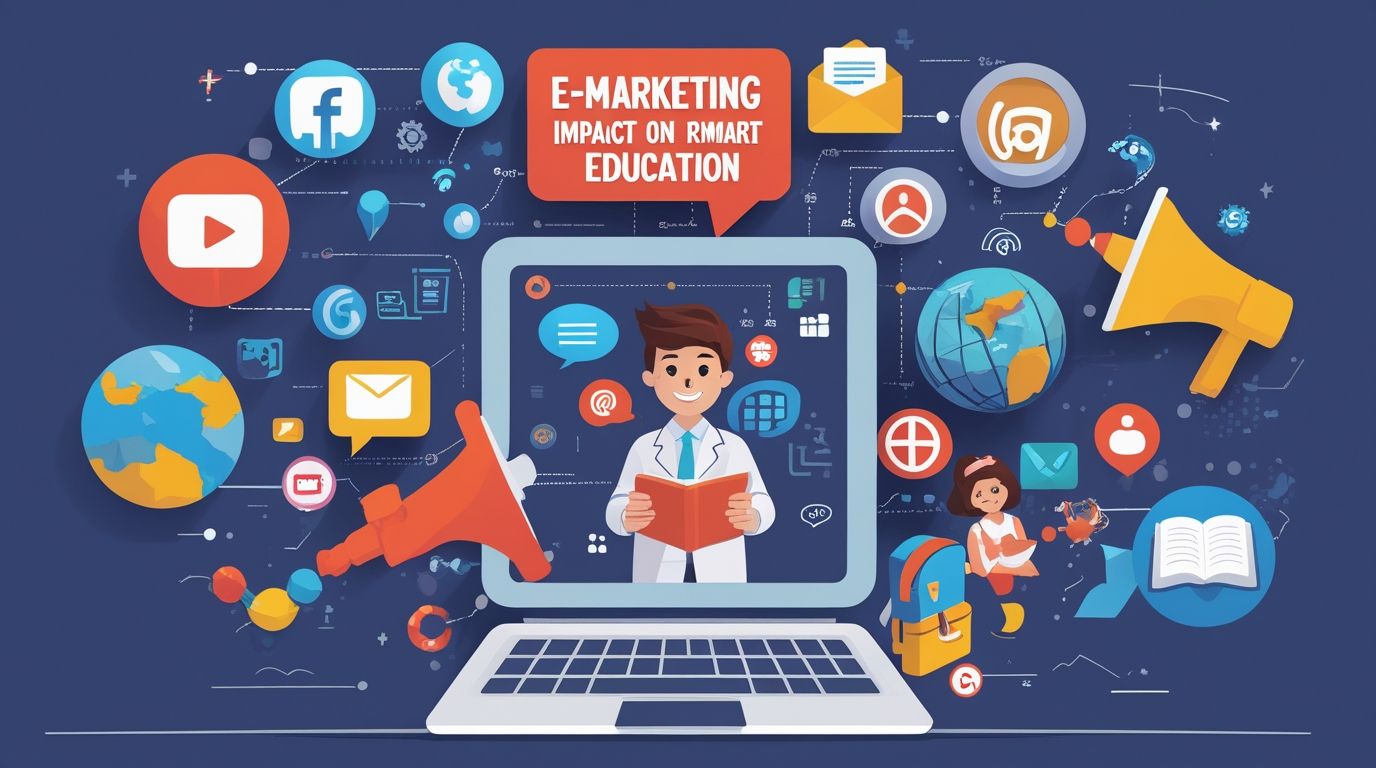
Introduction:
Power of E-Marketing Impact on Education, The rise of the internet has completely transformed how knowledge is shared and consumed. E-marketing, or electronic marketing, once focused mainly on business promotion, is now reshaping the educational landscape. Through the power of e-marketing, institutions connect with global learners, promote courses effectively, and build strong digital identities. Moreover, digital tools make education more accessible and personalized. Schools, colleges, and universities now use e-marketing strategies to attract students and build trust. Platforms such as social media, emails, and websites help promote learning opportunities efficiently. As a result, education marketing has become an essential pillar of institutional success. This shift bridges the gap between traditional marketing and the modern educational experience. Indeed, e-marketing empowers education to reach a broader audience, enhance visibility, and increase learning engagement like never before.
Understanding E-Marketing and Its Core Components
E-marketing, also known as digital marketing, involves using online tools and platforms to promote services or ideas. In education, it means promoting academic programs, online courses, and institutional values digitally. Major components include social media marketing, search engine optimization (SEO), email campaigns, and content marketing. These tools help schools target specific audiences effectively. For instance, universities use SEO to appear in top search results, attracting students worldwide. Social media platforms like Facebook, Instagram, and LinkedIn play vital roles in engagement. Moreover, content marketing—through blogs, webinars, and videos—creates educational value while building credibility. Email marketing also maintains continuous communication with students and parents. Therefore, the core elements of e-marketing allow educational institutions to maintain relevance, build reputation, and enhance learning through technology-driven promotion.
E-Marketing in Educational Institutions
Modern educational institutions increasingly depend on digital strategies to survive in a competitive environment. Through e-marketing, they promote new programs, announce scholarships, and highlight student achievements. Websites, online advertisements, and SEO-driven campaigns ensure a continuous flow of information. Universities use digital storytelling to share success stories that inspire and attract learners. Moreover, through targeted ads, schools can reach specific groups such as working professionals seeking online courses. E-marketing in education also supports transparency, helping institutions share curriculum updates, faculty profiles, and virtual tours. Additionally, with tools like Google Ads and Meta Campaigns, institutions can analyze user data to improve communication. This ensures that marketing efforts are not only broad but also measurable. As a result, educational e-marketing helps build meaningful relationships between institutions and potential learners across the world.
The Role of Social Media in Educational Promotion
Social media marketing is a powerful pillar of e-marketing in education. Platforms such as Facebook, Instagram, Twitter (X), and LinkedIn allow schools to reach millions in seconds. Through engaging posts, live sessions, and visual content, educational institutions create awareness and inspire learners. Students now prefer discovering institutions on social media before making decisions. Thus, social media presence becomes a mark of credibility and innovation. Additionally, universities run paid campaigns targeting students interested in specific fields. Through hashtags, influencers, and alumni stories, they increase brand visibility. Transitioning from print to digital spaces saves costs and builds stronger engagement. Social media marketing also supports online communities where students exchange experiences. Overall, the power of e-marketing through social media enhances communication, promotes inclusivity, and keeps institutions relevant in a fast-changing digital era.
Email Marketing as a Bridge Between Institutions and Learners
Email marketing remains one of the most effective e-marketing tools for educational institutions. It allows schools to maintain direct contact with current and prospective students. Personalized emails provide updates on admissions, fee deadlines, and course launches. Moreover, newsletters share success stories and achievements, building trust with readers. Emails also help in student retention by sending reminders and feedback requests. Unlike random social media messages, email campaigns can be segmented and targeted. Institutions analyze open and click rates to improve their strategies. Additionally, email automation saves time and ensures consistent communication. Educational e-marketing through emails enhances loyalty and transparency. Transitioning from physical letters to digital communication also reduces costs and environmental waste. Therefore, email marketing bridges communication gaps between educators, students, and parents, creating a sustainable channel for engagement and information sharing.
Search Engine Optimization (SEO) in Education
SEO plays a critical role in e-marketing strategies for education. It ensures that schools, colleges, and universities appear in online search results when potential students look for programs. By optimizing websites with relevant keywords, meta descriptions, and quality content, institutions increase visibility. SEO also improves website traffic, helping institutions reach international learners. Furthermore, SEO-driven content marketing, such as blogs about career guidance and admission tips, builds credibility. Educational platforms using SEO attract organic traffic, reducing dependency on paid ads. Transition words, backlinks, and user-friendly design enhance performance. Additionally, SEO analytics help schools understand what students are searching for. This data-driven insight allows them to tailor programs accordingly. Consequently, the power of e-marketing through SEO not only boosts institutional reputation but also transforms how learners discover educational opportunities in the digital age.
Influence of Content Marketing on Educational Growth
Content marketing has become a driving force behind digital education promotion. Educational institutions now create valuable online content to engage, educate, and inspire learners. Blogs, articles, videos, and webinars help students make informed choices. Through storytelling, institutions highlight their strengths and unique programs. Moreover, high-quality content builds trust, positioning schools as thought leaders in the education industry. Transitioning from mere advertising to educational content enhances long-term relationships. E-marketing through content creation ensures that learning extends beyond classrooms. Platforms like YouTube and podcasts allow interactive learning experiences. Additionally, content marketing supports SEO, improving visibility and reach. As education becomes more global, content acts as the bridge connecting diverse cultures and learners. Therefore, strategic content marketing not only attracts students but also strengthens institutional identity in a competitive educational market.
Impact of E-Marketing on Student Enrollment
E-marketing has revolutionized how students choose their educational paths. Previously, decisions were based on brochures and local advertisements. Today, students explore institutions through online campaigns, reviews, and virtual tours. With data-driven marketing, universities can target learners according to interests, locations, and academic goals. Moreover, personalized recommendations encourage higher enrollment rates. E-marketing in education simplifies decision-making through detailed course information and testimonials. Transitioning from offline recruitment to online strategies increases efficiency and transparency. Students feel more connected and confident when institutions interact digitally. Additionally, automation tools handle inquiries instantly, enhancing user experience. Therefore, the power of e-marketing has significantly boosted enrollment rates, especially in online education. It bridges gaps between institutions and global learners, creating opportunities for everyone regardless of geographical barriers.
Enhancing Learning Through Digital Engagement
Beyond promotion, e-marketing in education directly influences learning experiences. Through social platforms, webinars, and newsletters, students access educational content anytime. Institutions use digital campaigns to share learning materials, research updates, and virtual workshops. Moreover, interactive posts and quizzes increase participation. E-marketing strategies also promote self-paced learning through online platforms. Transition words like “additionally” and “furthermore” emphasize the continuity of learning through digital channels. This marketing-driven engagement motivates students to stay connected and explore more opportunities. Schools also use analytics tools to understand student preferences and improve curriculum design. In this way, digital marketing transforms education into an interactive and personalized experience. As a result, the power of e-marketing extends far beyond promotion—it becomes an essential element in modern learning environments.
Challenges of Implementing E-Marketing in Education
Although e-marketing offers vast potential, it also faces several challenges in the education sector. Many institutions struggle with limited budgets, lack of expertise, or outdated technology. Additionally, creating consistent and engaging content requires time and skill. Privacy concerns also arise when collecting student data for targeted campaigns. Moreover, competition among educational institutions online is intense. Transitioning from traditional methods to digital platforms can be complex and resource-intensive. Some educators also resist change due to unfamiliarity with marketing tools. Therefore, successful educational e-marketing requires proper planning, training, and ethical practices. Schools must prioritize transparency, consent, and digital literacy. By addressing these challenges wisely, institutions can harness the true power of e-marketing without compromising integrity or educational values.
Future Trends of E-Marketing in Education
The future of e-marketing in education looks promising and technology-driven. Artificial intelligence, machine learning, and data analytics will redefine how institutions promote learning. Personalized marketing will become more precise, offering tailored course suggestions to each student. Moreover, virtual and augmented reality will enhance online tours and interactive sessions. Social media influencers in the education field will gain more importance, guiding learners authentically. Blockchain may also help verify academic credentials shared through e-marketing platforms. Transitioning toward automation will make marketing faster and more cost-effective. Institutions will also focus on sustainability, using digital methods to minimize waste. Therefore, the power of e-marketing will continue shaping the educational ecosystem, ensuring that learning remains accessible, transparent, and globally connected in the years ahead.
Conclusion: Merging Marketing Power with Educational Purpose
In conclusion, the power of e-marketing has completely transformed the education industry. It connects institutions and learners more efficiently than ever before. From social media to SEO and content marketing, every tool enhances visibility and engagement. Moreover, these strategies promote transparency, diversity, and lifelong learning. While challenges exist, the benefits outweigh them when used ethically. E-marketing in education ensures that opportunities reach global learners, regardless of distance or background. As technology continues to evolve, the partnership between education and marketing will grow stronger. The future promises an inclusive, data-driven, and interactive learning experience supported by innovative marketing approaches. Thus, the impact of e-marketing on education is not just about promotion—it is about shaping a smarter, more connected world for learners everywhere.
References
- Kotler, P., & Armstrong, G. (2020). Principles of Marketing. Pearson Education.
- Chaffey, D., & Ellis-Chadwick, F. (2019). Digital Marketing: Strategy, Implementation and Practice. Pearson.
- Allen, I. E., & Seaman, J. (2017). Digital Learning Compass: Distance Education Enrollment Report 2017. Babson Survey Research Group.
- Hemsley-Brown, J., & Oplatka, I. (2015). Higher Education Consumer Choice. Palgrave Macmillan.
I loved as much as you will receive carried out right here The sketch is attractive your authored material stylish nonetheless you command get got an impatience over that you wish be delivering the following unwell unquestionably come more formerly again since exactly the same nearly a lot often inside case you shield this hike