
By Alvin Walkinns and Matt Silver
Introduction:
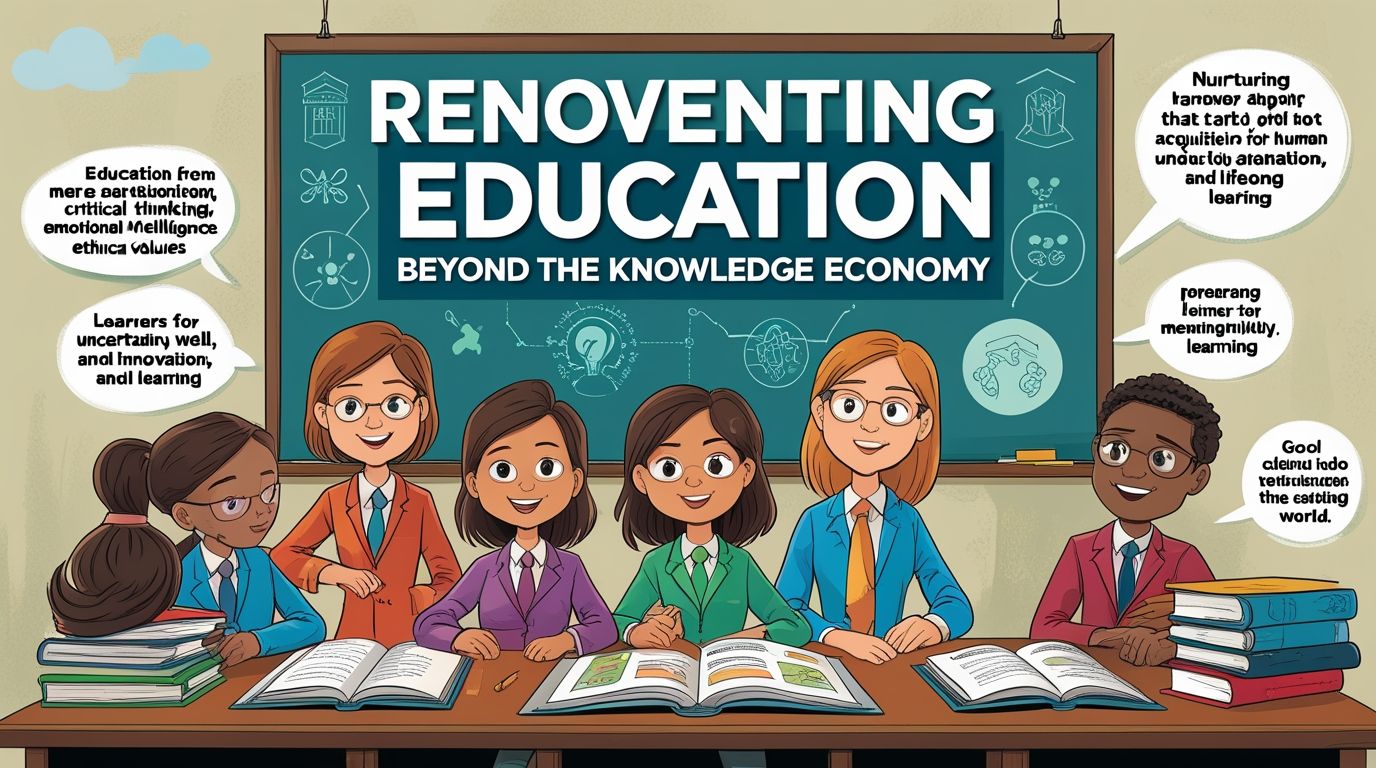
Reinventing Education: Beyond the Knowledge Economy, In recent decades, education systems around the world have undergone profound transformations shaped largely by economic imperatives. Governments, institutions, and policymakers have increasingly aligned schooling with labor market demands, technological innovation, and global competitiveness. Against this backdrop, Reinventing Education: Beyond the Knowledge Economy by Alvin Walkinns and Matt Silver offers a timely and critical intervention. The book challenges the prevailing assumption that education’s primary role is to fuel economic growth and produce employable workers. Instead, the authors argue for a broader, more humane vision of education—one that prioritizes personal development, social cohesion, and ethical responsibility alongside economic participation.
From the outset, Walkinns and Silver position their work as both a critique and a proposal. On one hand, they interrogate the limitations of the knowledge economy paradigm, exposing how it has narrowed educational aims and distorted learning priorities. On the other hand, they present a forward-looking framework for reimagining education in ways that respond to uncertainty, complexity, and global interdependence. Consequently, the book speaks not only to educators and policymakers but also to students, parents, and citizens concerned about the future of learning and society.
Understanding the Knowledge Economy
To fully appreciate the authors’ argument, it is essential to understand how they conceptualize the knowledge economy. Walkinns and Silver define the knowledge economy as an economic system in which intellectual capabilities, information processing, and technological expertise are the primary drivers of productivity and growth. Historically, this model emerged as societies transitioned away from industrial manufacturing toward service-oriented and technology-driven sectors.
At first glance, the knowledge economy appears to offer significant benefits. It rewards innovation, encourages lifelong learning, and creates opportunities for global collaboration. However, the authors caution that when education systems are shaped exclusively by this model, unintended consequences arise. Specifically, schools and universities begin to prioritize skills that are immediately marketable while devaluing forms of knowledge that contribute to cultural understanding, moral reasoning, and democratic participation.
As a result, education risks becoming reductive. Learning is framed as skill acquisition rather than intellectual exploration, and students are encouraged to view themselves primarily as future workers rather than as whole human beings. Walkinns and Silver argue that this shift undermines the deeper purposes of education and limits society’s capacity to address complex, non-economic challenges.
The Instrumentalization of Learning
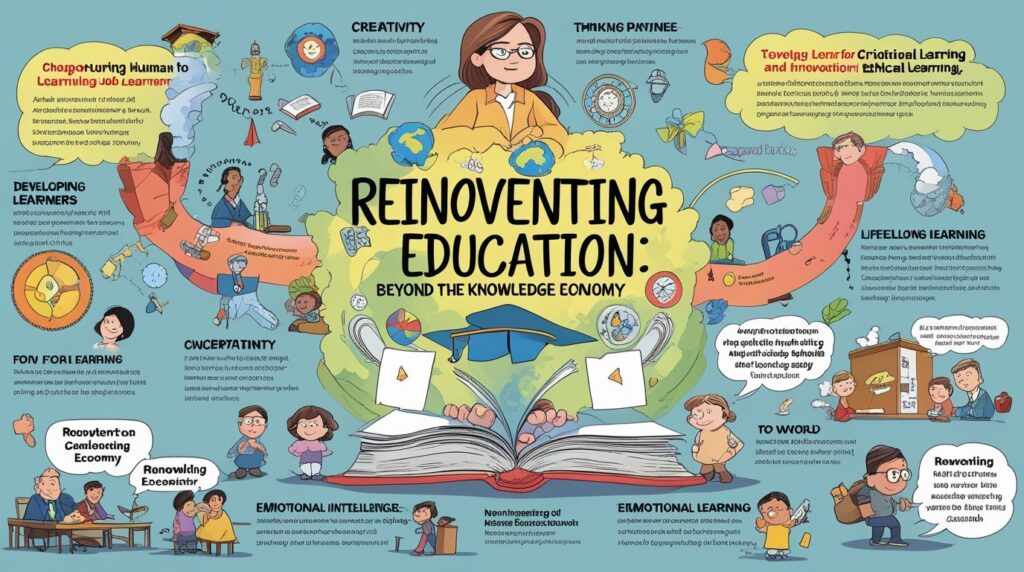
One of the central critiques advanced in the book concerns the instrumentalization of education. According to the authors, education systems increasingly treat learning as a means to an economic end rather than as an intrinsic good. Consequently, success is measured through standardized assessments, rankings, and performance indicators that reflect economic utility rather than intellectual growth or social contribution.
Moreover, Walkinns and Silver argue that this instrumental approach shapes how students perceive learning. When education is reduced to credentials and job prospects, curiosity and intrinsic motivation often decline. In turn, students may become risk-averse, focused on achieving measurable outcomes rather than engaging deeply with ideas. The authors contend that such environments discourage creativity, critical inquiry, and intellectual courage.
Furthermore, the book highlights how this trend affects teachers and institutions. Educators are pressured to “deliver outcomes” aligned with economic metrics, often at the expense of pedagogical autonomy. Thus, teaching becomes standardized and constrained, limiting opportunities for experimentation and innovation. Walkinns and Silver suggest that reclaiming education’s broader purpose requires resisting this narrow framing of value.
Human-Centered Education
In response to these challenges, Walkinns and Silver propose a human-centered model of education. This approach emphasizes the development of the whole person—intellectually, emotionally, socially, and ethically. Rather than asking how education can serve the economy, the authors encourage readers to ask how education can serve humanity.
Central to this vision is the idea that learning should cultivate meaning, agency, and belonging. Students should be empowered to understand themselves, engage with others, and contribute thoughtfully to their communities. Accordingly, education must foster emotional intelligence, moral reasoning, and social awareness alongside cognitive skills.
Importantly, the authors do not reject economic considerations outright. Instead, they argue for balance. Economic participation is a legitimate outcome of education, but it should not eclipse other dimensions of human development. By reframing priorities, Walkinns and Silver envision an education system that prepares individuals not only to work but also to live well.
Adaptability and Uncertainty
Another major theme in the book is the growing importance of adaptability in an uncertain world. Technological change, climate instability, and shifting geopolitical realities mean that future challenges cannot be predicted with certainty. Therefore, education systems designed around static bodies of knowledge are increasingly inadequate.
Walkinns and Silver argue that adaptability requires more than technical skills. It depends on critical thinking, reflection, and the ability to learn continuously. Thus, education must focus on “learning how to learn” rather than simply transmitting information. The authors emphasize metacognition as a foundational skill that enables individuals to navigate change effectively.
In addition, the book explores how adaptability is linked to resilience. Students who are encouraged to experiment, fail, and reflect are better equipped to cope with uncertainty. Consequently, the authors advocate for learning environments that value process over perfection and growth over performance.
Rethinking Pedagogy
Closely connected to adaptability is the authors’ critique of traditional pedagogy. Walkinns and Silver challenge the teacher-centered model that dominates many education systems, in which instructors transmit knowledge and students passively receive it. According to the authors, this model is ill-suited to contemporary needs.
Instead, they propose learner-centered pedagogies that emphasize inquiry, collaboration, and real-world problem-solving. Project-based learning, interdisciplinary curricula, and experiential education are highlighted as effective alternatives. These approaches, the authors argue, mirror the complexity of real-life challenges and encourage deeper engagement.
Moreover, the book stresses the importance of relationships in learning. Trust, dialogue, and mutual respect between teachers and students create conditions for meaningful education. Thus, pedagogy becomes not merely a technical practice but a relational one.
Technology: Tool or Tyrant?
Given the prominence of technology in modern education, Walkinns and Silver devote significant attention to its role. While acknowledging the potential of digital tools to expand access and personalize learning, the authors caution against technological determinism.
Specifically, they argue that technology should serve educational values rather than dictate them. When digital platforms are adopted solely to increase efficiency or reduce costs, they risk reinforcing the very problems the book critiques. Therefore, technology must be integrated thoughtfully, guided by pedagogical and ethical considerations.
Additionally, the authors raise concerns about data surveillance, algorithmic bias, and the commodification of student information. These issues, they argue, demand critical scrutiny if education is to remain aligned with democratic values.
Equity and Social Justice
A particularly compelling aspect of the book is its focus on equity and social justice. Walkinns and Silver argue that the knowledge economy has intensified educational inequality by privileging those with access to elite institutions, digital infrastructure, and cultural capital. As a result, education systems often reproduce rather than reduce social disparities.
To address this, the authors emphasize education as a public good. They argue that access to meaningful learning opportunities should not depend on socioeconomic status. Consequently, reinvention must involve redistributive policies, inclusive curricula, and community-based approaches.
Furthermore, the book highlights the importance of cultural relevance in education. Learning should reflect diverse perspectives and lived experiences, enabling students to see themselves as valued participants in knowledge creation.
Policy and Institutional Change
Transitioning from ideals to implementation, Walkinns and Silver examine the policy implications of their vision. They acknowledge that systemic change is complex and often resisted by entrenched interests. Nevertheless, they argue that incremental reform is insufficient.
Instead, the authors advocate for bold experimentation. This includes alternative credentialing systems, flexible learning pathways, and partnerships between schools, communities, and civic institutions. Importantly, they stress that reform must be guided by values rather than market logic alone.
Moreover, the book calls for greater democratic participation in educational decision-making. Students, teachers, and communities should have a voice in shaping learning systems. In this way, education becomes a shared social project rather than a top-down mandate.
Strengths of the Book
One of the book’s greatest strengths lies in its conceptual clarity. Walkinns and Silver articulate complex ideas in accessible language, making the book approachable without sacrificing depth. Additionally, the interdisciplinary perspective—drawing from philosophy, sociology, and education theory—enriches the analysis.
Another notable strength is the book’s ethical grounding. By consistently linking education to human flourishing, the authors provide a moral framework that transcends technical debates. This emphasis distinguishes the book from policy-oriented texts that focus narrowly on efficiency or outcomes.
Limitations and Critiques
Despite its many strengths, the book is not without limitations. At times, the argument would benefit from more empirical evidence. While the conceptual analysis is strong, readers seeking data-driven validation may find the discussion somewhat abstract.
Additionally, some proposals remain aspirational. Although the authors acknowledge implementation challenges, they offer fewer concrete strategies for navigating political and institutional constraints. Nevertheless, these limitations do not undermine the book’s overall contribution.
Relevance to Contemporary Debates
In the current global context, Reinventing Education is particularly relevant. Debates about artificial intelligence, climate education, and student mental health underscore the inadequacy of purely economic models. Therefore, the book’s call for a more expansive vision resonates strongly.
Moreover, the COVID-19 pandemic has exposed vulnerabilities in education systems and accelerated conversations about flexibility and well-being. Walkinns and Silver’s arguments align closely with these emerging concerns, reinforcing the book’s urgency.
Conclusion:
In conclusion, Reinventing Education: Beyond the Knowledge Economy is a thoughtful, provocative, and timely work that challenges readers to rethink fundamental assumptions about learning. Walkinns and Silver convincingly argue that education must serve not only economic needs but also human and societal ones.
Ultimately, the book invites educators, policymakers, and citizens to imagine an education system that fosters wisdom, compassion, and resilience. By moving beyond narrow economic metrics, the authors offer a vision of learning that is both hopeful and necessary in an uncertain world.
Really insightful post — Your article is very clearly written, i enjoyed reading it, can i ask you a question? you can also checkout this newbies in seo. thank you
After all, what a great site and informative posts, I will upload inbound link – bookmark this web site? Regards, Reader.
**finessa**
Finessa is a natural supplement made to support healthy digestion, improve metabolism, and help you achieve a flatter belly.