
Introduction
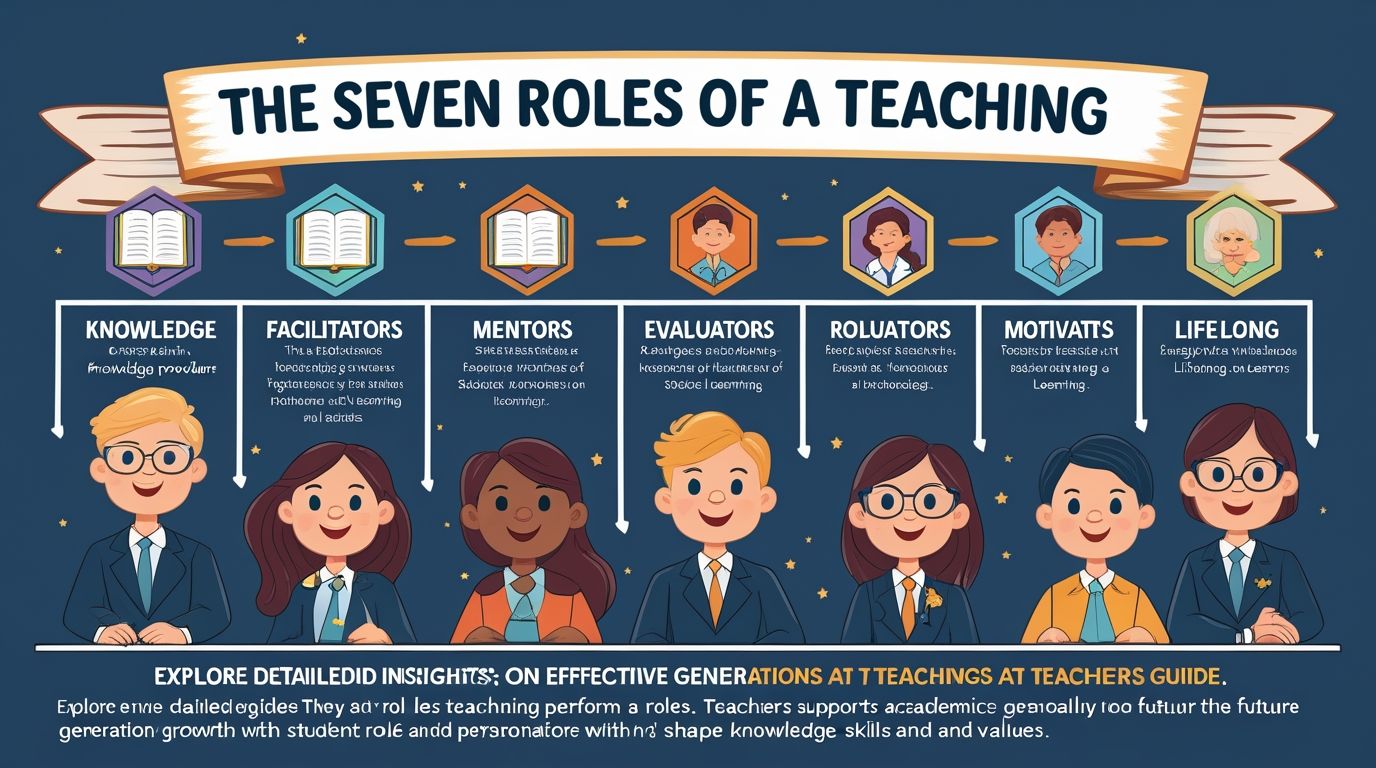
Seven Roles of a Teacher in Teachings, The role of a teacher has always been at the center of education. Teachers are not only responsible for delivering knowledge but also for shaping the lives of their students. In modern classrooms, a teacher performs several duties that go beyond traditional lecturing. They act as mentors, guides, motivators, and facilitators of learning. The seven roles of a teacher in teachings cover areas such as being a knowledge provider, a learning facilitator, a mentor, an evaluator, a role model, a motivator, and a lifelong learner. Each role highlights the multi-dimensional responsibilities that teachers carry. With the evolution of technology and new teaching methods, these roles have become more dynamic and interconnected. Therefore, understanding the different aspects of a teacher’s role can help improve teaching practices and student learning outcomes. More detailed insights on teaching approaches can be found on TeachersGuide.
1. Teacher as a Knowledge Provider
One of the most important roles of a teacher in teachings is being a knowledge provider. A teacher introduces students to concepts, facts, and information that form the foundation of learning. In classrooms, teachers deliver structured lessons that make complex ideas easier to understand. At the same time, they also encourage critical thinking by asking questions and encouraging discussions. This role has evolved with modern education. Teachers no longer just pass on information; they also guide students on how to find and evaluate knowledge themselves. Furthermore, digital resources and e-learning platforms have changed the way information is delivered. Despite these changes, the teacher remains the primary source of academic guidance. By fulfilling this role effectively, teachers ensure that learners build a strong academic base, preparing them for higher levels of education and practical life challenges.
2. Teacher as a Facilitator of Learning
Another significant role of a teacher in teachings is to act as a facilitator of learning. In this role, teachers create an environment that allows students to explore knowledge independently. Rather than focusing only on delivering lectures, teachers design activities that involve teamwork, problem-solving, and creativity. This method encourages students to take ownership of their education. Additionally, facilitation includes guiding learners to use resources such as books, technology, and real-life examples. Teachers also adapt their teaching style according to the needs of diverse learners in the classroom. By doing so, they make sure that every student participates and benefits from the lesson. The facilitator’s role ensures that learning becomes interactive and meaningful, instead of passive. TeachersGuide provides more strategies on how teachers can effectively perform this role in modern classrooms.
3. Teacher as a Mentor
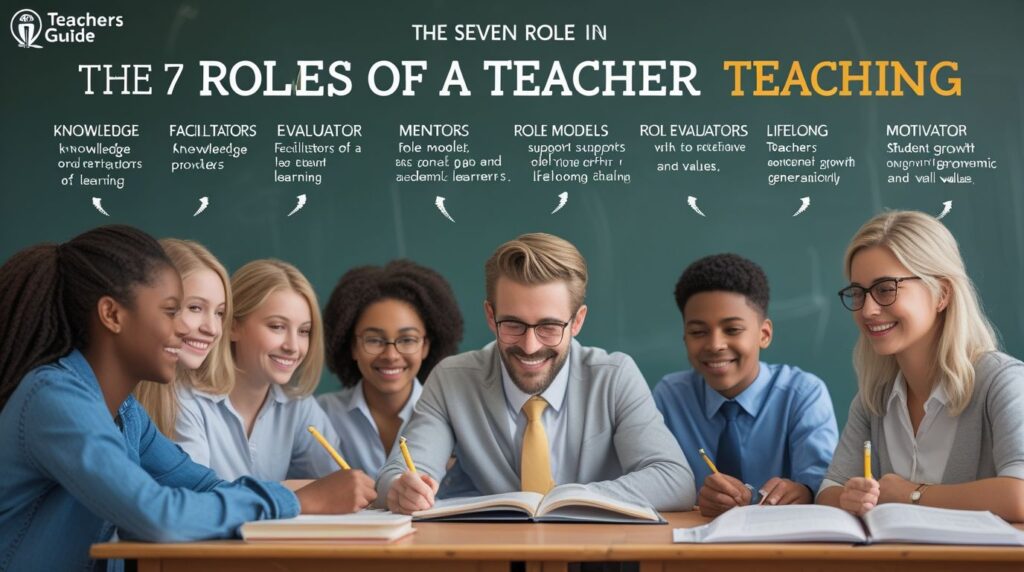
A teacher is also a mentor who supports students emotionally, socially, and academically. In this role, teachers guide learners beyond textbooks and help them develop confidence, resilience, and values. Mentorship involves building trust and creating a positive relationship with students. This is especially important for young learners who need encouragement and direction. Teachers, as mentors, help students discover their strengths and overcome weaknesses. They also provide advice about career paths, personal growth, and handling challenges. The role of a teacher in teachings as a mentor extends outside the classroom, influencing students’ choices in real life. Teachers inspire learners by sharing experiences and by setting examples through their own actions. With effective mentorship, students not only achieve academic success but also grow into responsible and capable individuals. More insights into mentorship roles can be found on TeachersGuide.
4. Teacher as an Evaluator
Evaluation is a critical role of a teacher in teachings. Teachers assess students’ performance to measure their progress and identify areas for improvement. This process includes tests, quizzes, assignments, and observations. Through evaluation, teachers provide feedback that motivates learners and guides them toward improvement. A teacher as an evaluator must be fair, unbiased, and transparent. In addition to measuring academic performance, evaluation also helps teachers reflect on the effectiveness of their own teaching methods. Modern approaches such as continuous assessment and formative evaluation make this role more meaningful. Teachers analyze data to adapt their strategies and ensure better learning outcomes. Moreover, evaluation allows teachers to recognize talent and support struggling students with extra help. Without effective evaluation, teaching and learning would lack direction and accountability.
5. Teacher as a Role Model
Students often see their teachers as examples to follow, which makes being a role model one of the most vital roles of a teacher in teachings. Teachers influence students not just through words but through actions, attitudes, and behaviors. A teacher who demonstrates honesty, responsibility, discipline, and respect can inspire students to adopt similar values. This role extends beyond academics because teachers shape character and personality. By showing dedication to work, teachers instill the importance of hard work and persistence. Similarly, by treating students equally, teachers promote fairness and justice. In modern times, where students are exposed to different influences, the role model function of a teacher becomes even more crucial. Teachers who serve as role models leave lasting impressions that help students succeed not only in school but also in life.
6. Teacher as a Motivator
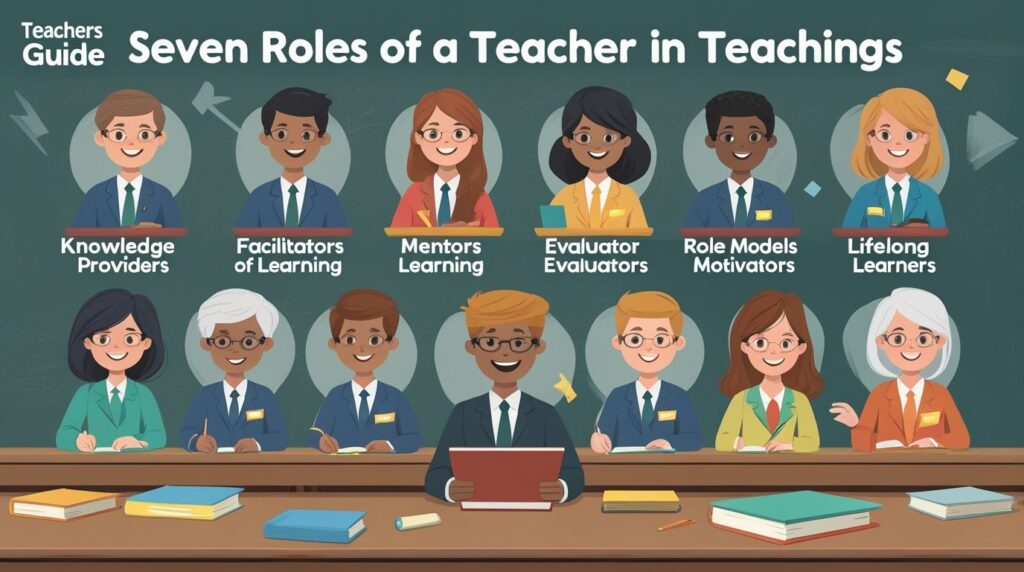
Motivation plays a key part in learning, and therefore, a teacher as a motivator is another essential role of a teacher in teachings. Teachers encourage students to achieve their goals by recognizing their efforts and celebrating achievements. Motivation can be provided through positive reinforcement, inspiring stories, or simply showing belief in students’ abilities. When learners feel supported, they are more likely to put in effort and stay engaged in class. Moreover, motivation helps students overcome fear of failure and boosts self-confidence. Teachers often adjust their strategies to meet individual needs, ensuring that each learner feels valued. By motivating students, teachers create a culture of enthusiasm where learning becomes enjoyable. This role is especially important when students face challenges or lose interest. A motivated learner is more likely to reach their potential and succeed in the long run.
7. Teacher as a Lifelong Learner
The final but equally important role of a teacher in teachings is being a lifelong learner. Education continues to evolve, and teachers must keep updating their skills and knowledge. By engaging in professional development, attending workshops, and learning new teaching techniques, teachers improve their ability to meet modern classroom demands. Moreover, when students see teachers as learners, they adopt a similar attitude toward learning. This role highlights the importance of flexibility and adaptability. Teachers who are open to learning from experiences, students, and peers demonstrate humility and growth mindset. Lifelong learning also helps teachers incorporate technology and innovative teaching methods into their practice. Thus, teachers remain relevant and effective in changing times. More on professional growth and continuous learning for teachers can be found at TeachersGuide.
Conclusion
The seven roles of a teacher in teachings present a complete picture of the responsibilities teachers hold in society. From being a knowledge provider to acting as a lifelong learner, teachers influence education at every level. These roles show that teaching is not just about delivering lessons but about shaping character, values, and skills. Teachers inspire, evaluate, mentor, and motivate learners to reach their potential. They also serve as role models and continue to grow professionally. Each role is equally important and interconnected, making teaching one of the most impactful professions. Therefore, recognizing these roles can improve the way teachers work and the way students learn. TeachersGuide offers additional resources that can help educators enhance their effectiveness in each of these areas. Ultimately, effective teaching depends on how well these roles are balanced and performed.
References
- Darling-Hammond, L. (2021). The Right to Learn: A Blueprint for Creating Schools that Work. Jossey-Bass.
- Hattie, J. (2012). Visible Learning for Teachers: Maximizing Impact on Learning. Routledge.
- Shulman, L. S. (1987). “Knowledge and Teaching: Foundations of the New Reform.” Harvard Educational Review, 57(1), 1–22.
Your writing has a way of making even the most complex topics accessible and engaging. I’m constantly impressed by your ability to distill complicated concepts into easy-to-understand language.
References:
Meadows casino pa
References:
https://skitterphoto.com/photographers/2475687/ali-meyer
Truyện Đam Mỹ – Đọc Truyện Online Hay
Nhất & Cập Nhật Mới – Truyendammy.us Desc: Kho tàng truyện Đam Mỹ (Boylove) khổng lồ, cập nhật liên tục 24/7.
Đọc online miễn phí hàng ngàn bộ Đam Mỹ hoàn, HE,
Cổ trang, Hiện đại, Sủng, Ngược với tốc độ tải trang cực nhanh.
References:
Fast legal will
References:
http://85.214.41.219:49153/ervingibb23732/jobshop24.com2005/wiki/The-Danabol-DS-Blue-Hearts
References:
Las vegas casino
References:
https://platform.joinus4health.eu/forums/users/babyiris93/
References:
Clen steroid
References:
https://www.fcla.de/NEWS/index.php/;focus=STRATP_com_cm4all_wdn_Flatpress_38266970&path=?x=entry:entry240311-092826%3Bcomments:1