
Introduction
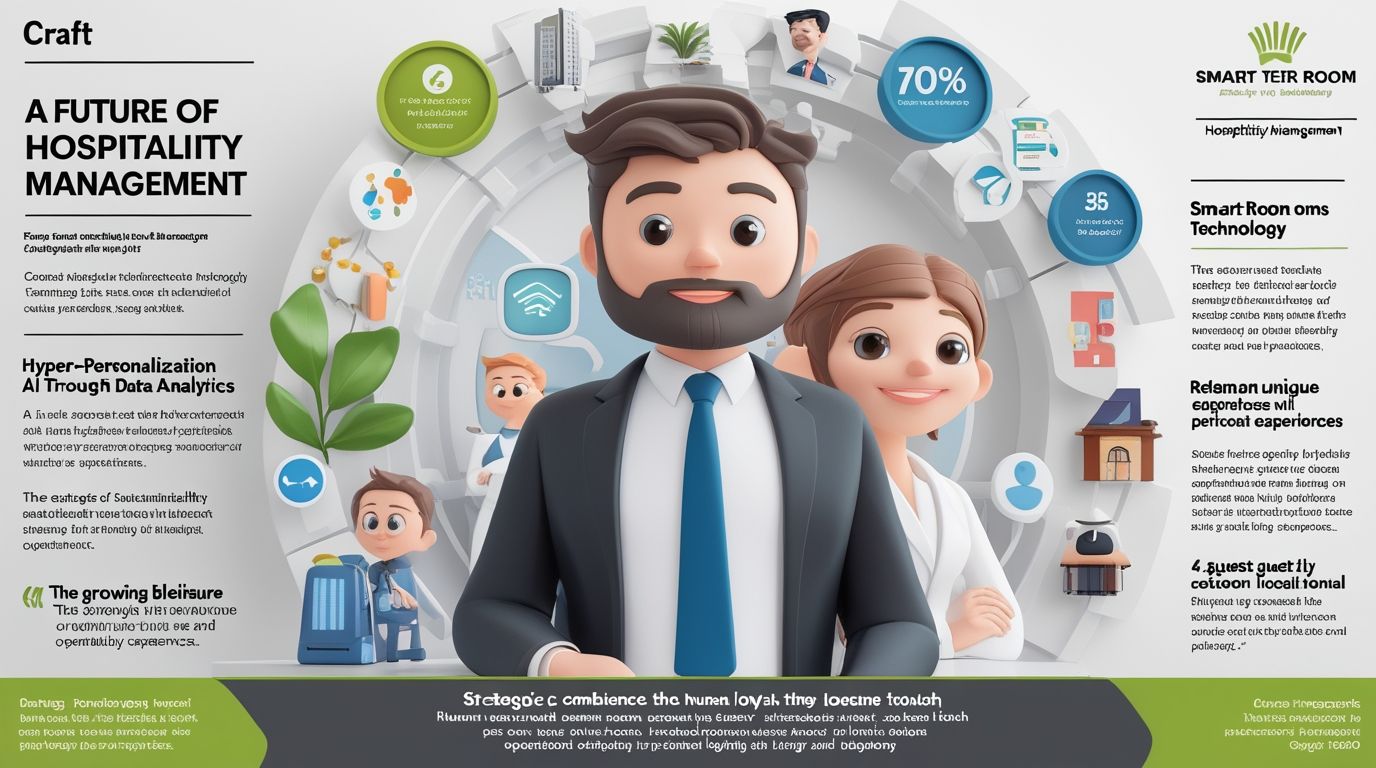
The Future of Hospitality Management, The global hospitality industry is undergoing a remarkable transformation, driven by technological innovation and changing guest expectations. Furthermore, the market has demonstrated strong growth, reaching nearly $4.9 trillion in 2024 . This expansion signals a vibrant recovery and a new era of opportunity for hoteliers and managers. Therefore, understanding the powerful trends shaping the landscape is no longer optional; it is essential for sustainable success. This article explores the pivotal forces—from artificial intelligence to sustainability—that are redefining hospitality management. Ultimately, embracing these changes will position forward-thinking businesses to thrive in a competitive and evolving marketplace.
Technological Innovation: Enhancing Operations and Guest Experiences
Technological innovation is fundamentally reshaping the hospitality landscape, seamlessly blending digital convenience with human service. Moreover, advancements in artificial intelligence (AI), the Internet of Things (IoT), and contactless systems are streamlining operations and elevating the guest experience . For instance, AI-powered chatbots now handle routine inquiries, while IoT-enabled smart rooms allow guests to control lighting, temperature, and entertainment via their smartphones or voice commands . Consequently, staff are freed from repetitive tasks to focus on delivering high-touch, personalized service. Hotels are also adopting contactless check-in and mobile key technologies, which significantly reduce wait times and enhance guest safety . Therefore, integrating these solutions is critical for improving operational efficiency and meeting the expectations of modern, tech-savvy travelers.
The Power of Artificial Intelligence and Data Analytics
Artificial intelligence is revolutionizing hospitality management by enabling data-driven decisions that boost revenue and personalize service. Specifically, AI algorithms analyze vast amounts of information to predict booking patterns, optimize dynamic pricing, and automate revenue management systems . For example, these tools can adjust room rates in real-time based on demand, local events, and competitor pricing, potentially increasing revenues by up to 20% . Furthermore, AI-driven analytics delve into guest preferences, allowing hotels to curate highly tailored offers and experiences. This capability transforms generic service into hyper-personalization, which is a key differentiator in today’s market. According to industry insights, a significant majority of hospitality companies now plan to use AI and analytics to power their personalization efforts . This strategic use of data ultimately fosters stronger guest loyalty and drives profitability.
Personalization: Crafting Unique Guest Journeys
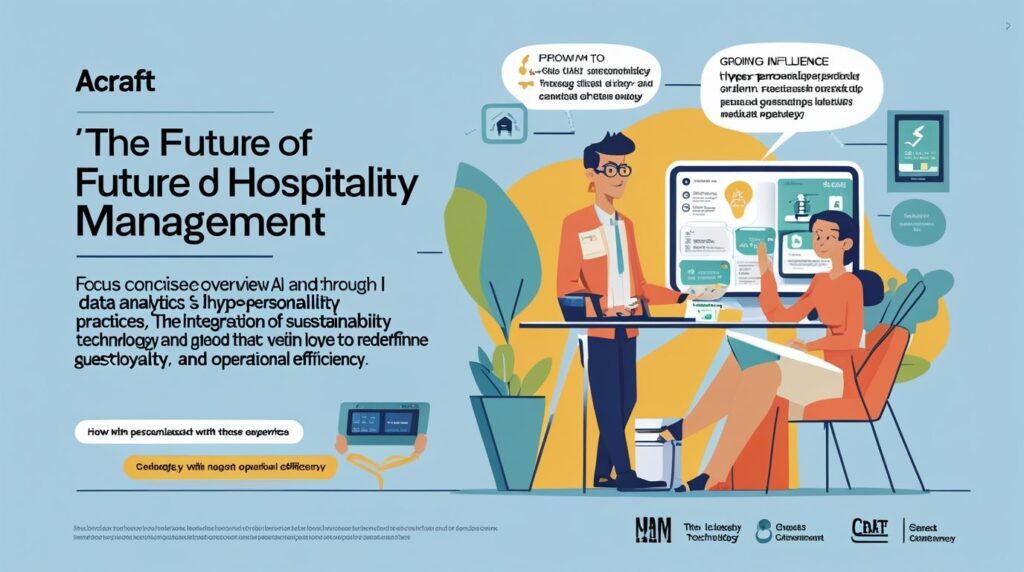
Personalization has evolved from a luxury perk to a standard expectation, with guests seeking experiences that feel uniquely tailored to their preferences. This trend, often called hyper-personalization, uses technology and guest data to customize every interaction, from booking to post-stay follow-up . For instance, hotels can now anticipate a returning guest’s room temperature preference or their favorite minibar items. Additionally, they can offer flexible check-in and check-out times, removing rigid deadlines that cause guest frustration . Research from PwC highlights that customers are willing to pay up to 25% more for a personalized stay, making this a powerful revenue driver . Therefore, successful hospitality management requires investing in systems that gather and analyze guest data. Ultimately, this enables the creation of memorable, individual journeys that encourage repeat business and positive reviews.
Sustainability: A Competitive Imperative
Sustainability has transitioned from a niche concern to a competitive imperative in the hospitality industry. Modern travelers are increasingly eco-conscious, with a notable percentage actively seeking out accommodations that demonstrate genuine environmental responsibility . Consequently, hotels are adopting a range of green practices, such as installing energy-efficient lighting and smart thermostats, reducing single-use plastics, and implementing water-saving measures . Furthermore, many are sourcing food locally and establishing composting programs to minimize their environmental footprint. These initiatives are not just about protecting the planet; they also result in significant operational cost savings over time. Therefore, a strong commitment to sustainability is a powerful tool for brand differentiation. It builds trust with guests, enhances a hotel’s reputation, and contributes directly to the bottom line.
Elevating Culinary and Beverage Experiences
Culinary experiences are a major focal point for innovation, as hotels and resorts use food and beverage to distinguish themselves in a crowded market. The farm-to-table movement remains highly influential, emphasizing fresh, locally sourced ingredients that support regional farmers and reduce carbon footprints . Simultaneously, the demand for plant-based options is skyrocketing, driven by health, ethical, and environmental considerations. Moreover, hotel bars are being transformed into vibrant social destinations through innovative beverages. This includes craft cocktails featuring local ingredients and sophisticated non-alcoholic mocktails that cater to all guests . Interactive elements, such as mixology classes and tableside preparation, further elevate the dining experience from a simple meal to an engaging event. Therefore, a dynamic and thoughtful F&B strategy is essential for attracting both guests and local patrons.
The Rise of Bleisure Travel and Workations
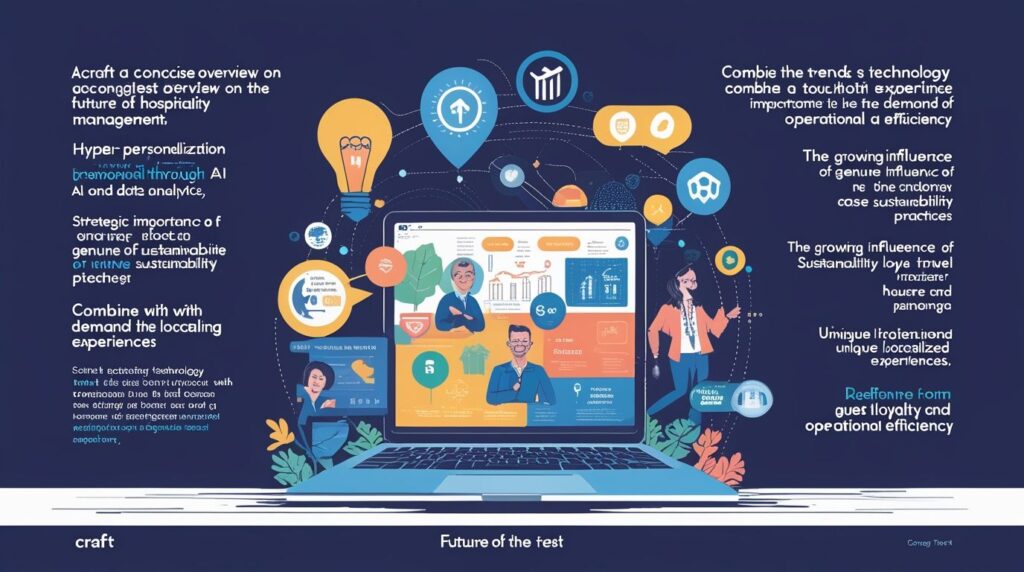
The traditional line between business and leisure travel has blurred, giving rise to the bleisure travel trend. This hybrid model, particularly popular among millennials and Gen Z, involves professionals extending business trips for leisure purposes . As a result, hospitality management must adapt to cater to these guests who seek a seamless blend of work and play. To accommodate this trend, hotels are enhancing their offerings with high-speed Wi-Fi, dedicated co-working spaces, and well-equipped business centers . Furthermore, they are designing packages that include both productivity-friendly amenities, like ergonomic in-room workstations, and leisure activities, such as local tours or wellness programs. By providing these tailored services, hotels can tap into the lucrative and growing market of remote workers and business travelers seeking a more balanced and extended stay.
Conclusion: Embracing the Future of Hospitality
In conclusion, the future of hospitality management is being shaped by the powerful convergence of technology, personalization, and sustainability. Furthermore, the rise of bleisure travel and evolving culinary expectations add further layers of complexity and opportunity. To succeed, hoteliers must be agile, embracing digital transformation to streamline operations and create unforgettable, personalized guest journeys . A commitment to authentic sustainability is also no longer optional but a core component of a strong brand identity. Therefore, the most successful hospitality businesses will be those that can balance high-tech solutions with the high-touch human element that lies at the heart of genuine service. Ultimately, by understanding and investing in these key areas, hotels and resorts can build lasting loyalty and ensure long-term profitability in an exciting new era.
You made some excellent points here. Well done!
seo hacklink buy buyhacklink.com hemen etkili buyhacklink.com https://ipektesisat.com
Great article! I really appreciate the clear insights you shared – it shows true expertise. As someone working in this field, I see the importance of strong web presence every day. That’s exactly what I do at https://webdesignfreelancerhamburg.de/ where I help businesses in Hamburg with modern, conversion-focused web design. Thanks for the valuable content!
Cappadocia luxury tour Alexander B. ★★★★☆ Sunset at Red Valley viewpoint was crowded. Guides should know secret photo spots. Otherwise flawless honeymoon package! https://tiesawards.com/istanbul-city-tours.html
Your writing always inspires me to learn more.
istanbul all inclusive holiday Jacob W. Hot air ballooning should be on everyone’s bucket list. https://www.getyourguide.com/tr-tr/travelshop-turkey-s1898