
Introduction
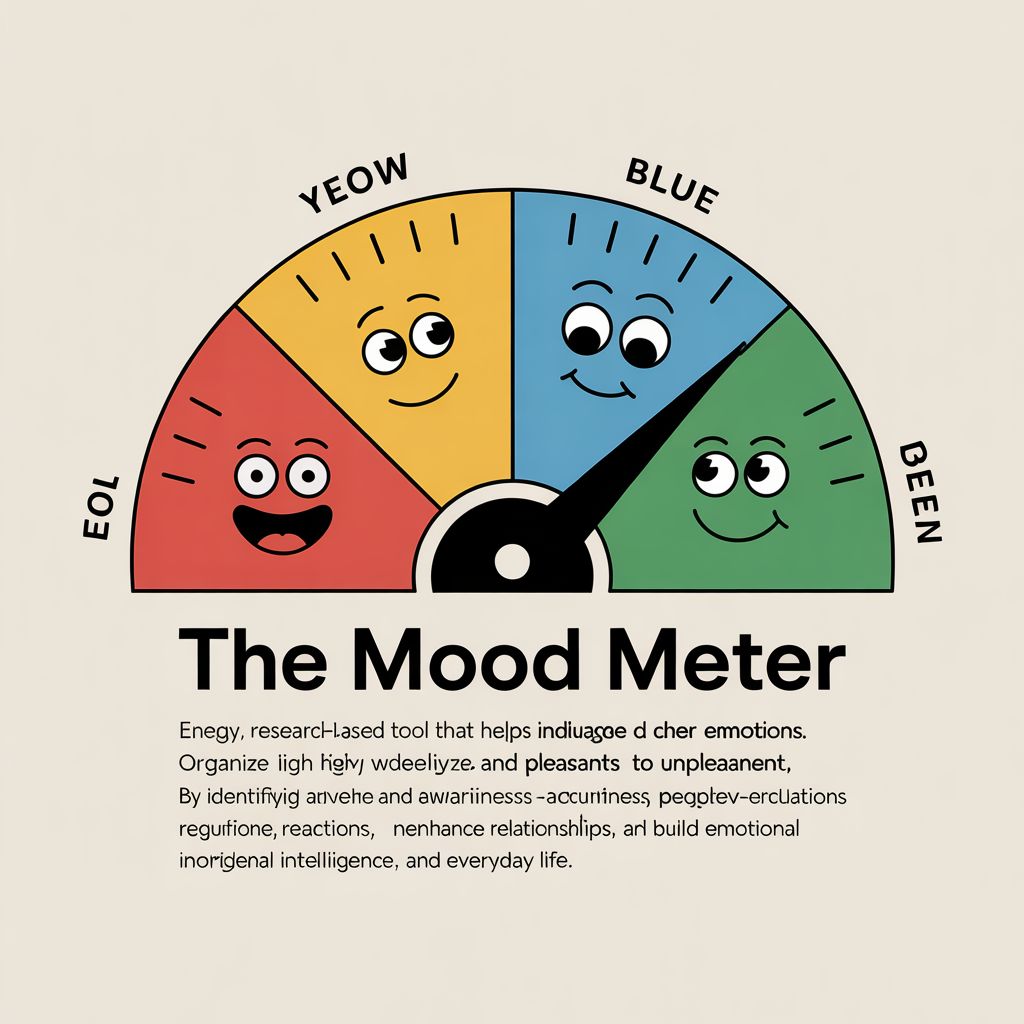
The Mood Meter: A Practical Framework for Managing Emotions, Emotions shape nearly every aspect of human life. They influence how we think, make decisions, interact with others, and respond to challenges. Yet, despite their importance, many people struggle to accurately identify and regulate their emotions. The Mood Meter offers a simple, research-based tool designed to improve emotional awareness and emotional intelligence. Developed as part of the RULER approach at the Yale Center for Emotional Intelligence, the Mood Meter helps individuals recognize, label, understand, express, and regulate their emotions effectively.
This article explores the concept of the Mood Meter, its theoretical foundations, its four quadrants, its applications in education and workplaces, and its significance in promoting emotional well-being.
What Is the Mood Meter?
The Mood Meter is a visual tool that organizes emotions along two core dimensions:
- Energy (high to low)
- Pleasantness (pleasant to unpleasant)
These two dimensions form a four-quadrant grid, with each quadrant representing different emotional states. By identifying where an emotion falls within this grid, individuals can better understand how they are feeling and how those feelings influence their behavior.
The Mood Meter is not about labeling emotions as “good” or “bad.” Instead, it encourages awareness and acceptance. All emotions serve a purpose, and recognizing them is the first step toward managing them effectively.
The Science Behind the Mood Meter
The Mood Meter is grounded in psychological research on emotions, particularly the circumplex model of affect proposed by psychologist James Russell. According to this model, emotions can be mapped based on two independent dimensions: arousal (energy) and valence (pleasantness).
This dimensional approach offers several advantages:
- It simplifies complex emotional experiences.
- It highlights the relationship between different emotions.
- It provides a practical structure for emotional reflection.
The Mood Meter integrates this research into an accessible framework suitable for children and adults alike. It is a core component of the RULER method, which stands for:
- Recognizing emotions
- Understanding emotions
- Labeling emotions
- Expressing emotions
- Regulating emotions
The Four Quadrants of the Mood Meter
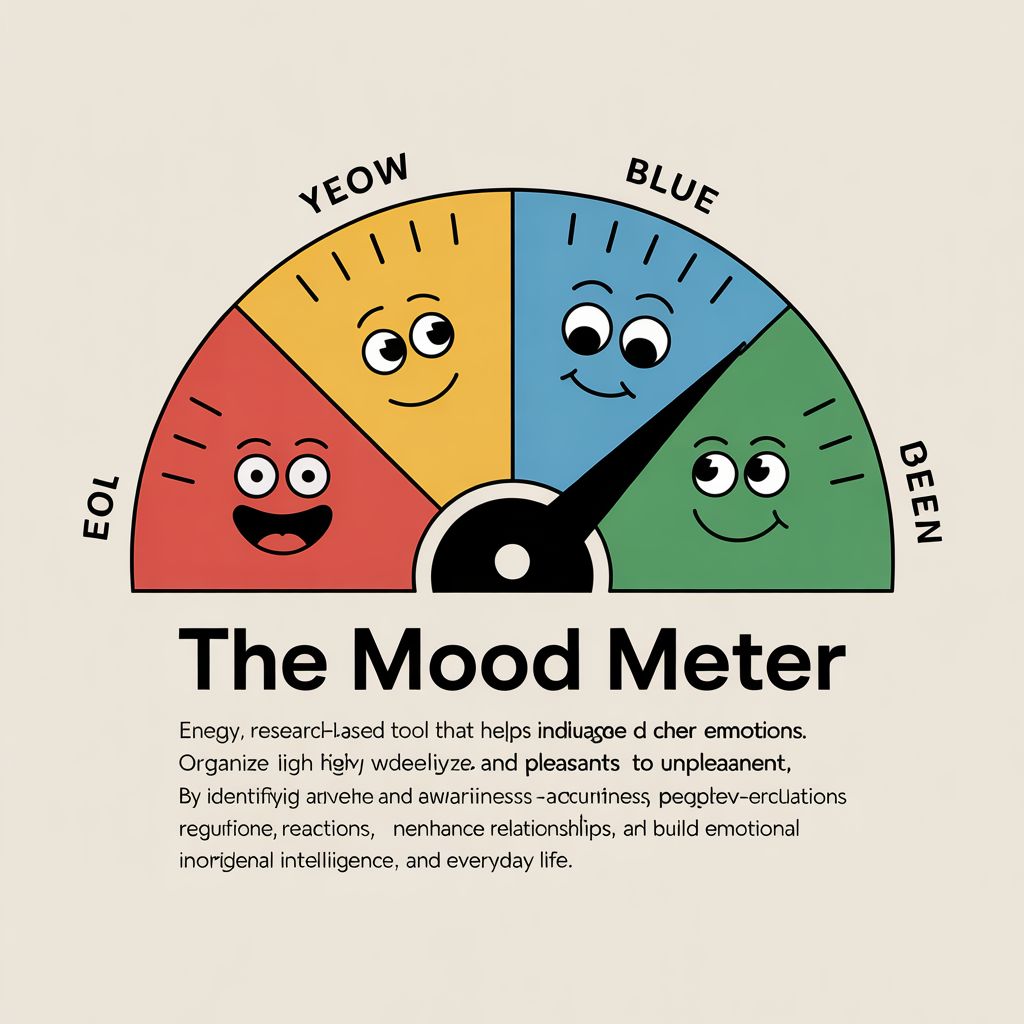
The Mood Meter is divided into four colored quadrants: Red, Yellow, Blue, and Green. Each represents a combination of energy and pleasantness.
1. Red Quadrant (High Energy, Unpleasant)
The Red quadrant includes emotions that are high in energy and unpleasant in feeling. Examples include:
- Angry
- Frustrated
- Anxious
- Overwhelmed
- Irritated
These emotions are often associated with stress or perceived threats. While uncomfortable, they can be useful. For example, anger can signal injustice, and anxiety can alert us to potential danger.
However, prolonged time in the Red quadrant can negatively impact physical health, relationships, and decision-making. Learning to manage these emotions is crucial.
2. Yellow Quadrant (High Energy, Pleasant)
The Yellow quadrant represents high-energy, pleasant emotions, such as:
- Excited
- Joyful
- Enthusiastic
- Optimistic
- Inspired
These emotions are often associated with creativity, motivation, and productivity. In classrooms and workplaces, Yellow emotions can enhance engagement and collaboration.
However, excessive time in this quadrant may lead to impulsivity or burnout if not balanced with rest and reflection.
3. Blue Quadrant (Low Energy, Unpleasant)
The Blue quadrant includes low-energy, unpleasant emotions like:
- Sad
- Disappointed
- Lonely
- Tired
- Discouraged
These emotions are often misunderstood as purely negative. Yet, they can serve important purposes. Sadness may signal loss and promote reflection. Disappointment can encourage reassessment and growth.
Recognizing Blue emotions allows individuals to seek support, rest, or problem-solve rather than suppressing their feelings.
4. Green Quadrant (Low Energy, Pleasant)
The Green quadrant consists of low-energy, pleasant emotions such as:
- Calm
- Content
- Relaxed
- Peaceful
- Satisfied
These emotions are often associated with balance and well-being. The Green quadrant is ideal for focused work, learning, and maintaining healthy relationships.
However, certain situations may require higher energy emotions. For example, public speaking might benefit from Yellow emotions rather than Green.
Why Emotional Awareness Matters
Emotional awareness is the ability to accurately identify and understand one’s own emotions and the emotions of others. Research consistently shows that emotional awareness is linked to:
- Better mental health
- Stronger relationships
- Improved academic performance
- Effective leadership
- Reduced stress
Without awareness, individuals may misinterpret their emotions. For example, someone feeling anxious may interpret it as anger, leading to conflict. The Mood Meter encourages precise labeling, which increases emotional clarity.
Studies show that people who use specific emotion words (e.g., “irritated” instead of “bad”) are better able to regulate their emotions. This process, sometimes called “emotional granularity,” enhances resilience and decision-making.
The Mood Meter in Education
One of the most significant applications of the Mood Meter is in schools. Educators use it to help students develop emotional intelligence from an early age.
Benefits for Students
- Improved self-regulation
- Better conflict resolution
- Increased empathy
- Enhanced academic engagement
- Reduced behavioral issues
Teachers often begin the day by asking students to identify where they are on the Mood Meter. This practice normalizes emotional discussion and builds a safe classroom environment.
When students learn that emotions are natural and manageable, they are less likely to act out and more likely to seek constructive solutions.
Creating Emotionally Intelligent Classrooms
Classrooms that incorporate the Mood Meter often display a large visual chart. Students may place a marker or state their emotional location. Teachers then guide students in reflecting:
- Why do you feel this way?
- How is this emotion influencing your learning?
- Do you want to stay in this quadrant, or shift?
Such discussions build lifelong emotional skills.
The Mood Meter in the Workplace
Emotional intelligence is increasingly recognized as a key leadership competency. Organizations that integrate emotional awareness tools like the Mood Meter often experience:
- Higher employee engagement
- Better teamwork
- Reduced burnout
- Improved communication
Leaders who understand their emotional states are less likely to make impulsive decisions. They also create psychologically safe environments where employees feel valued.
For example, a manager recognizing they are in the Red quadrant before a meeting might choose to pause and regulate their emotions rather than reacting harshly.
Similarly, teams that discuss emotional climate openly can prevent misunderstandings and increase collaboration.
Using the Mood Meter for Self-Regulation
The Mood Meter is not just about identifying emotions—it also supports regulation. Regulation does not mean suppressing emotions. Instead, it means managing emotions in ways that are helpful and appropriate.
Steps for Using the Mood Meter
- Pause and Reflect
Ask: How am I feeling right now? - Identify the Quadrant
Determine your level of energy and pleasantness. - Label the Emotion
Use specific language (e.g., “overwhelmed,” “content,” “hopeful”). - Understand the Cause
What triggered this emotion? - Choose a Strategy
Decide whether to maintain or shift your emotional state.
Regulation Strategies
Different quadrants call for different strategies:
- Red to Green: Deep breathing, taking a walk, reframing thoughts.
- Blue to Yellow: Listening to uplifting music, connecting with others.
- Yellow to Green: Mindfulness, slowing down.
- Maintaining Green: Gratitude practices, balanced routines.
The key is intentionality. The Mood Meter empowers individuals to choose rather than react.
Emotional Intelligence and Leadership
Effective leaders understand that emotions are contagious. Research on emotional contagion suggests that leaders’ moods influence team morale and productivity.
A leader consistently in the Red quadrant may create a culture of fear or stress. Conversely, leaders who demonstrate awareness and regulation foster trust and motivation.
By modeling emotional intelligence, leaders encourage openness and empathy within their teams.
Criticisms and Limitations
While the Mood Meter is widely praised, it is not without limitations.
- Simplicity
Some critics argue that emotions are more complex than two dimensions. - Cultural Differences
Emotional expression varies across cultures, which may influence interpretation. - Individual Differences
Not everyone experiences emotions in the same way.
However, the Mood Meter is designed as a practical tool rather than a comprehensive theory. Its simplicity is one of its strengths, making emotional awareness accessible.
The Long-Term Impact of Mood Meter Practice
Consistent use of the Mood Meter can lead to lasting change. Individuals develop:
- Greater emotional vocabulary
- Increased resilience
- Stronger interpersonal skills
- Better stress management
- Enhanced well-being
Over time, people become more proactive about their emotional health. Instead of being controlled by emotions, they learn to navigate them skillfully.
Research in emotional intelligence indicates that these skills contribute not only to personal happiness but also to career success and healthier communities.
Conclusion
The Mood Meter is more than a chart of emotions; it is a gateway to emotional intelligence. By organizing feelings along the dimensions of energy and pleasantness, it provides a clear and practical method for understanding emotional experiences.
In schools, it fosters emotionally intelligent students. In workplaces, it strengthens leadership and collaboration. In personal life, it promotes self-awareness and well-being.
In a world where stress, rapid change, and complex social interactions are the norm, tools that enhance emotional awareness are invaluable. The Mood Meter reminds us that emotions are not obstacles to success—they are sources of information and insight.
By learning to recognize, label, understand, express, and regulate emotions, individuals can lead healthier, more balanced, and more fulfilling lives. The simple act of asking, “Where am I on the Mood Meter?” can become a powerful habit—one that transforms not only how we feel, but how we live.
05zodo
Jogaobet is pretty good. User-friendly features and fast loading. Perfect for those looking for a new online experience. Check out jogaobet!