
Introduction
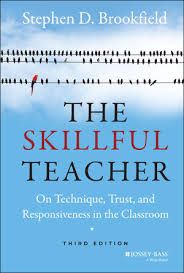
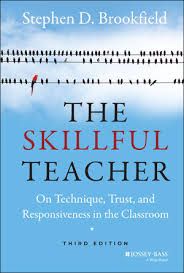
The Skillful Teacher – Review and Critical Analysis, Stephen D. Brookfield’s The Skillful Teacher stands as one of the most respected and influential texts in the field of adult education and higher teaching pedagogy. First published in 1990 and now in its fully revised third edition, this book compiles decades of Brookfield’s professional experience and research to offer a holistic, reflective, practical guide to the craft of teaching. It is equally valuable to novice instructors seeking grounding principles and seasoned educators wanting renewed insight into their classrooms.
The subtitle — On Technique, Trust, and Responsiveness in the Classroom — encapsulates the three foundational pillars that Brookfield believes define effective teaching: reliable instructional techniques, building authentic classroom trust, and the responsiveness needed to adapt to real learners in real time.
Over the course of roughly 336 pages, Brookfield provocatively intertwines theory, practice, reflection, and classroom narrative — blending them into an accessible, actionable framework.
Structure and Scope of the Book
Brookfield organizes the book into twenty chapters that move from broad philosophical inquiry to concrete pedagogical tactics:
- Chapter 1–5: introduce teaching as emotional, unpredictable, and deeply human.
- Chapters 6–14: explore the core techniques for lecturing, discussion, diversity, creativity, critical thinking, teaching in teams, and online teaching.
- Chapters 15–20: discuss evaluation, dealing with resistance, the politics of teaching, and sustaining professional sanity.
The third edition adds chapters on teaching critical thinking, using play and creativity, teaching about racism, teaching in teams, helping students take responsibility for learning, and exercising teacher power responsibly. These additions reflect Brookfield’s commitment to addressing contemporary challenges facing educators.
Author’s Contribution and Voice
Brookfield has taught in universities across several countries and has decades of experience as a teacher, researcher, and faculty developer. His voice is scholarly yet remarkably human: he does not claim to hold perfect answers, but invites teachers to engage in continuous critical reflection, asking questions like:
- What assumptions am I making about teaching and learning?
- How do students experience my classroom?
- What do learners value most from their teachers?
Rather than offering a rigid “model” or checklist, Brookfield encourages teachers to become reflective practitioners — teachers who continually assess and revise their classroom decisions. This emphasis on self-awareness grounds the book in a constructivist view of teaching, where learning results from iteration, empathy, and nuanced understanding.
Core Themes
✅ 1. Teaching as Human, Not Mechanical
One of the book’s earliest—and most powerful—points is that teaching is not a series of predictable technical tasks. It is messy, emotional, uncertain, and often unpredictable. Brookfield uses the metaphor of white-water rafting to describe teaching’s turbulence: calm moments are interspersed with tumultuous surprises that defy scripted procedures.
He dismantles the myth that good teaching consists of simply acquiring the right set of techniques or formulas. Rather, skillful teaching is about interpreting contexts, reading moments, and responding adaptively. This moves teaching from a reductive “technology of practice” into a creative, interpretive art form.
2. Technique and Critical Tools
Brookfield provides detailed analyses of instructional methods, including:
- Lecturing creatively – using storytelling, provocative examples, and active questions to engage learners.
- Facilitating discussion – not as loose dialogue but as structured inquiry, balancing participation and learner autonomy.
- Teaching in diverse classrooms – responding to cultural, experiential, and academic differences sensitively and thoughtfully.
- Online and hybrid environments – bridging distance with presence, presence with structure.
The book also dedicates significant attention to teaching critical thinking — showing how instructors can move learners beyond memorization toward reflective, analytical engagement. This includes scaffolding tasks, framing questions, and rewarding risks in thought processes — ideas that resonate with modern pedagogical research.
Brookfield’s techniques are rooted in active learning — not passive content delivery — a stance that underscores much contemporary educational scholarship.
3. Trust and Responsiveness
Brookfield asserts that trust between teachers and learners is the backbone of a productive classroom. Without psychological safety, students will not risk participation, ask questions, or challenge assumptions. The text highlights how teachers build trust through consistency, respectful inquiry, and openness to feedback.
Responsiveness means being attuned not only to curricular goals but to the real needs, misunderstandings, fears, and interests of students in the moment. Teachers must be willing to press pause, adjust plans, and sometimes discard prepared lessons in favor of emergent learning opportunities. This sensitivity requires emotional intelligence and reflective practice, not just pedagogical technique.
4. Power, Politics, and Professional Identity
Later chapters tackle resistance, power dynamics, and politics within educational settings. Brookfield explores how teachers can responsibly exercise authority without coercion — cultivating participation through invitation rather than imposition. He examines resistance not as a nuisance but as a significant source of teaching insight: where learners push back can often indicate poorly communicated expectations or unmet needs.
Equally important is Brookfield’s discussion about how teachers sustain themselves. Educators frequently face burnout, conflicting responsibilities, and institutional pressures to publish or standardize outcomes. His closing maxims on staying sane provide both concrete strategies and philosophical grounding for long-term teaching practice.
Critical Evaluation
⭐ Strengths
- Depth and Breadth: The book covers pedagogical theory, practical tools, and emotional aspects of teaching with equal attention, making it both rich and usable.
- Reflective Model: Encouraging teachers to think about how they think is one of Brookfield’s most valuable contributions — especially in an education culture that often privileges standardized measurement over reflective insight.
- Contemporary Relevance: The added chapters on critical thinking, creativity, and racism demonstrate an effort to update the text for modern education conversations.
- Inclusive Style: Brookfield writes in a conversational yet authoritative voice, making dense concepts accessible without sacrificing rigor.
Criticisms and Limitations
- Universality vs. Context: Some readers have noted that many examples and case studies derive from Western higher-education settings, which may feel less applicable to other educational contexts (e.g., primary schools or non-Western educational systems).
- Learning Styles Debate: Portions discussing “learning styles” have been critiqued as outdated or insufficiently supported by empirical research. Critics argue that teaching practices based on learning-styles categories may perpetuate unsupported assumptions.
- Density: While the book’s depth is a strength, some readers find sections dense and challenging to navigate in one sitting — recommending instead a chapter-by-chapter reading aligned with personal needs.
Who Should Read This Book?
The Skillful Teacher is not a “light read” but it is indispensable for:
- New educators seeking a grounded, reflective entry into professional teaching.
- Experienced teachers seeking renewal or deeper insight into classroom dynamics.
- Faculty developers and teacher educators who coach others in pedagogical practice.
- Graduate students in education or instructor preparation programs.
Even those outside formal classrooms — such as trainers, coaches, or facilitators — can benefit from Brookfield’s insights on human interaction, responsiveness, and trust in learning environments.
Conclusion
In a field where quick tips and superficial checklists abound, Stephen Brookfield’s The Skillful Teacher stands apart as a thoughtful, nuanced, and deeply human guide. This book does not promise a formula for perfect teaching; instead, it equips readers with both the mindset and the tools to become adaptive, reflective, compassionate educators. By aligning technique with trust and responsiveness, Brookfield reminds us that teaching is simultaneously an art, a craft, and a moral practice — one that thrives not in certainty, but in inquiry.
Whether you are stepping into your first classroom or seeking to revitalize decades of practice, The Skillful Teacher deserves a place on your desk and in your pedagogical repertoire.