
Intriduction
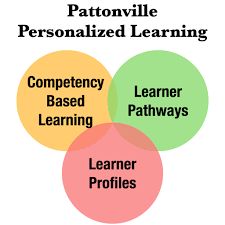
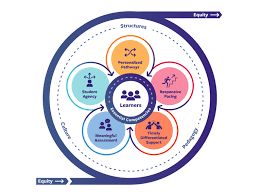
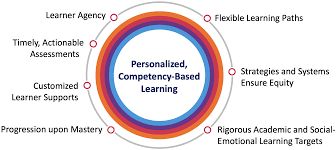
Competency-Based Learning and Personalized Pathways, Competency-based education (CBE) represents a major shift in schooling. Students advance only after demonstrating mastery, rather than spending a fixed amount of time in class. Seat time is no longer the benchmark—learning is.
Finland is leading this transformation by decentralizing its curriculum and replacing traditional subject divisions with phenomenon-based learning. Instead of studying disciplines in isolation, students investigate real-world topics—such as the European Union—through integrated perspectives like economics, history, and languages.
At the same time, micro-credentialing is reshaping secondary education in countries like Canada and Australia. Students earn verified badges for specific, practical skills—ranging from data literacy to carpentry—that are recognized by employers. This reflects a deeper understanding: learning is not linear but individualized and complex.
Despite these advances, challenges remain. Scaling such systems is difficult, and teacher training in adaptive technologies is inconsistent. Still, data-driven personalization is already a reality in forward-looking districts. The traditional bell curve is fading, replaced by the idea that each learner follows a unique developmental path.
AI and the Evolving Role of the Teacher
Artificial intelligence is now embedded in daily classroom practice—but effective systems enhance teachers rather than replace them. In countries like Singapore and the United States, intelligent tutoring systems such as Carnegie Learning’s MATHia provide real-time feedback, identifying misconceptions before they solidify. Meanwhile, generative AI tools assist teachers by drafting lesson plans, creating rubrics, and reducing administrative workload.
The UK has introduced AI-powered early warning systems that analyze attendance, assignment submissions, and engagement patterns. These systems can detect disengagement weeks before it becomes critical.
However, concerns about data privacy and algorithmic bias persist. In response, regulatory frameworks such as the European Union’s AI Act mandate transparency and human oversight. As a result, education is shifting from “teaching coding” to teaching with AI, emphasizing critical evaluation of AI-generated outputs.
Teachers are increasingly becoming curators of cognitive tools, guiding students in how to think, rather than what to think. This marks a profound professional evolution.
Mental Health and Social-Emotional Learning (SEL)
Mental health has become central to education in the post-pandemic era. Social-emotional learning (SEL) is now embedded as a core subject rather than treated as an add-on.
Countries like Sweden and the Netherlands have implemented universal mental health screening within schools, alongside accessible counseling spaces on campuses. Beyond support services, students are explicitly taught skills such as emotional awareness (emotional granularity) and coping strategies like distress tolerance.
New Zealand has replaced zero-tolerance discipline policies with restorative practices, focusing on resolving underlying emotional issues rather than punishing behavior. Evidence from Canadian pilot programs shows a significant reduction in classroom disruptions following structured SEL implementation.
Still, these changes place additional demands on teachers. As a result, recent reforms emphasize specialist training and support. Increasingly, well-being metrics are assessed alongside academic performance, redefining what it means to be a successful graduate.
Redesigning Learning Environments
Both physical and digital learning spaces are being reimagined. Traditional rows of desks are giving way to flexible, student-centered environments.
In countries like Japan and Germany, schools are adopting zoned learning spaces, including collaborative areas, quiet study pods, and movement-friendly zones. Environmental factors such as air quality, noise, and lighting are monitored using sensors to optimize learning conditions.
Digital environments are evolving as well. Digital wellness education, pioneered in South Korea, teaches students how to manage screen time and maintain focus. Meanwhile, augmented reality (AR) is enabling immersive learning experiences—for example, allowing students to explore human anatomy in 3D.
Equity remains a concern, as not all schools can afford advanced technologies. However, cost-effective solutions—like flexible seating and outdoor learning spaces—are becoming widely adopted.
Rethinking Assessment
The traditional high-stakes final exam is gradually being replaced by more holistic systems. Longitudinal assessment tracks student growth over time rather than relying on one-off tests. Finland has eliminated most standardized testing before age 16, favoring teacher-developed portfolios and project-based evaluations. In parts of the United States, narrative transcripts are replacing letter grades, offering detailed qualitative feedback.
Mastery-based systems allow students to retake assessments until they demonstrate proficiency, encouraging deeper learning. Research shows that such approaches improve long-term retention, even as critics question their rigor.
Ultimately, assessment reform is cultural. It separates self-worth from test scores and promotes resilience, curiosity, and intellectual risk-taking.
Strengthening Family and Community Engagement
Education systems are increasingly recognizing families as essential partners in learning. In the UK, structured family engagement initiatives involve co-creating learning plans with caregivers. Denmark’s community school hubs integrate education with social services, transforming schools into neighborhood centers.
Technology is also bridging gaps. Real-time translation tools enable communication with non-native-speaking parents, while home visit programs—such as those in parts of the United States—build trust and uncover hidden barriers to learning. These efforts acknowledge that student success depends on the broader ecosystem. When families are actively involved, attendance improves and motivation increases.
Climate Literacy and Sustainability Education
Climate education is now a core requirement in many countries. Students are expected not only to understand environmental issues but also to take action.
In New Zealand, students complete sustainability projects such as energy audits or biodiversity initiatives. Scotland integrates sustainability across all subjects, from math to literature.
Schools themselves are becoming teaching tools. For example, France requires new school buildings to meet high energy-efficiency standards, demonstrating sustainable design in practice. These reforms aim to equip students with systems thinking skills, transforming environmental awareness into informed action.
Inclusive Education and Neurodiversity
Education systems are moving toward Universal Design for Learning (UDL), where flexibility is built into instruction from the start.
Students are provided with multiple ways to access content and demonstrate understanding—through text, audio, video, and interactive formats—without requiring formal diagnoses. Tools like speech-to-text and customizable learning supports are becoming standard features.
This shift reframes neurodiversity as a strength rather than a limitation, expanding the definition of successful learning.
Bridging School and Work
The transition from school to employment is being restructured through career-connected learning. Germany’s dual system now includes digital portfolios that track skills in real time. In the United States, pathway-based programs allow students to graduate with both diplomas and industry certifications.
Singapore enables students to take university or vocational courses during secondary school, blurring traditional boundaries. AI-driven career guidance tools further align student learning with emerging job markets. These reforms position education as a launchpad for lifelong learning and adaptability.
Data Ethics and Student Privacy
As data becomes central to education, protecting student privacy is increasingly critical.
Countries are implementing strict regulations requiring transparent data use, parental consent, and the right to delete personal data. Students and families can now access dashboards showing what data is collected and how it is used.
Laws such as California’s SOPIPA restrict commercial exploitation of student data, while audit systems ensure accountability. These safeguards aim to maintain trust and ensure that technology supports learning without compromising privacy.
phim loạn luân Thầy ông nội với Diễm My không che siêu cuốn.
I’m definitely going to apply what I’ve learned here.