

Exam vs Test in Education, Education relies on several tools to measure learning, and two of the most common are exams and tests. Though these terms are often used interchangeably, they have different purposes, scopes, and implications. Understanding the distinction between an exam and a test is vital for both educators and students. This article explores their meanings, objectives, methods, and roles in assessing educational progress. By the end, readers will see how both tools work together to ensure learning quality and academic growth.
Understanding the Concept of Exam
An exam is a formal assessment conducted at the end of a learning period. It is designed to evaluate how much a student has learned throughout a course or term. Exams are usually structured and supervised, often contributing heavily to the final grade. They serve as summative assessments, meaning they measure the total knowledge gained over time. Typically, exams cover broader topics and require preparation. Moreover, exams often test critical thinking, problem-solving, and understanding rather than just memorization. Therefore, an exam not only measures knowledge but also determines a student’s readiness for advancement.
Understanding the Concept of Test
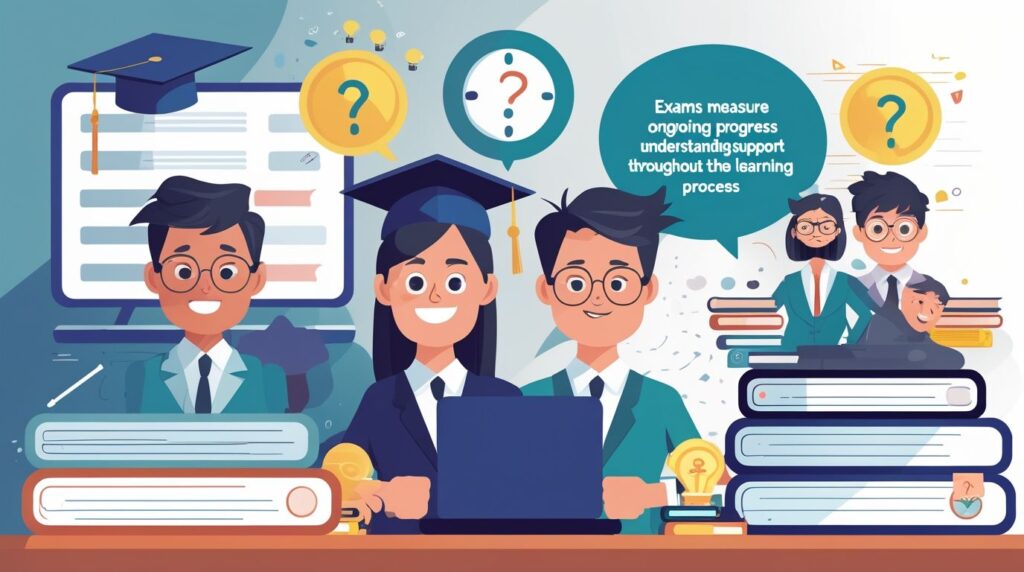
A test, on the other hand, is a smaller, more specific form of assessment. It is usually conducted during the learning process to measure understanding of a particular topic or lesson. Tests can be formative assessments, helping teachers identify where students need support. Unlike exams, tests are less formal and more frequent. They are used to track progress and ensure continuous improvement. Teachers often use test results to modify teaching strategies and assist struggling learners. Thus, while exams assess overall learning outcomes, tests help guide learning along the way.
Purpose and Function of Exams in Education
The main purpose of an exam is to measure cumulative knowledge. Exams determine whether educational goals have been achieved. They often occur at the end of a semester or academic year. Exams help in certifying competence and ensuring that students meet required standards before moving to the next stage. Furthermore, exams promote discipline and motivate students to review what they have learned. Because they summarize the learning journey, exams are used for grading, certification, and progression. In addition, they provide valuable feedback to educators about the effectiveness of their teaching methods.
Purpose and Function of Tests in Education
A test serves a different but equally essential function. Its goal is to monitor learning progress. By giving regular tests, teachers can quickly identify gaps in knowledge. This ongoing feedback allows for timely intervention. Tests also encourage active learning since students prepare more frequently. Moreover, they help build confidence through consistent evaluation. In classrooms, tests are diagnostic tools that improve learning outcomes. They can include quizzes, short written exercises, or oral questions. Because they are less stressful than exams, tests promote a more comfortable learning environment where students can practice without fear of failure.
Formality and Structure Differences
A clear difference between exams and tests lies in their level of formality. Exams are typically standardized, with specific rules and supervision. They are often administered by educational boards or institutions to maintain fairness and credibility. Tests, however, are more flexible and teacher-led. The structure of an exam includes a fixed format—such as essay questions, multiple-choice items, or practical components. Meanwhile, a test may take various forms depending on the subject and learning objectives. Because of this flexibility, teachers can design tests that suit individual classroom needs, while exams must follow a standardized format for evaluation.
Frequency and Timing of Assessment
Exams usually happen at the end of a course or term, making them summative assessments. They assess what has been learned over weeks or months. In contrast, tests are frequent and shorter. They are conducted weekly, monthly, or even daily in some cases. The frequency of tests helps in tracking students’ ongoing progress. While exams evaluate the final outcome, tests focus on the process of learning. This difference in timing affects how students prepare. Tests demand continuous effort, while exams require comprehensive revision at specific intervals. Therefore, both assessments complement each other in ensuring academic success.
Impact on Students’ Learning Behavior
The influence of exams and tests on student behavior is significant. Exams often cause anxiety due to their high stakes. Many students experience pressure to perform well since exam results influence grades and promotions. Tests, on the other hand, encourage consistent learning habits. Frequent testing motivates students to stay updated with their studies. Furthermore, tests provide ongoing practice that improves performance in final exams. However, when exams are combined with regular tests, students achieve a balanced approach—developing both short-term understanding and long-term retention. Hence, both play a psychological role in shaping study patterns and academic discipline.
Role of Exams in Measuring Educational Outcomes
Exams are essential for evaluating educational outcomes. They reflect the effectiveness of curriculum design and teaching methodologies. Educational institutions use exam results to compare performance across schools, districts, or regions. Moreover, exams act as accountability tools for teachers and administrators. High-quality exams ensure that students achieve expected learning standards. They also assist in policy-making by highlighting areas needing improvement. Therefore, exams are not just student assessments; they are also indicators of institutional and national educational performance. By maintaining rigorous exam standards, schools ensure fairness and maintain the credibility of their education systems.
Role of Tests in Enhancing Classroom Learning
In contrast to exams, tests enhance day-to-day classroom learning. They encourage interaction, feedback, and collaboration between teachers and students. Through tests, teachers identify learning difficulties and adapt teaching methods accordingly. This formative process helps students grasp concepts more effectively. Tests also create opportunities for personalized learning, where each student’s needs are addressed. Moreover, because tests are frequent, they strengthen memory retention through repetition. Regular testing helps students self-assess and take responsibility for their own learning. Therefore, while exams evaluate the result of learning, tests ensure that the learning process itself remains strong and effective.
Psychological Pressure and Student Well-being
While both exams and tests are crucial, their psychological effects differ. Exams often create stress due to their finality and impact on grades. Many students experience performance anxiety, which can affect results. Tests, being more informal, usually cause less pressure. They allow students to make mistakes and learn from them. However, excessive testing can also lead to fatigue. Therefore, a balanced approach is necessary. Educators should design assessments that promote learning without overwhelming students. When both exams and tests are managed effectively, they can improve academic confidence and emotional well-being, leading to healthier educational experiences.
Teacher’s Role in Managing Exams and Tests
Teachers play a vital role in balancing exams and tests. They plan, prepare, and administer these assessments strategically. For exams, teachers ensure that questions align with curriculum goals and learning outcomes. For tests, they focus on specific lessons and immediate learning objectives. Teachers also analyze test results to guide instruction and prepare students for exams. Their responsibility includes motivating students, reducing exam stress, and encouraging continuous effort. Effective teachers use both exams and tests as teaching tools rather than mere grading instruments. This balanced approach enhances both learning and evaluation in educational settings.
Technology’s Role in Modern Assessment
In today’s digital age, technology has transformed how exams and tests are conducted. Online platforms allow for computer-based testing, automatic grading, and instant feedback. Digital exams and tests save time, reduce human error, and offer flexible scheduling. Furthermore, technology enables adaptive testing, where question difficulty changes based on student performance. Teachers can analyze data to identify trends and learning gaps. However, digital assessments also require reliable infrastructure and cybersecurity measures. When used wisely, technology enhances fairness and accessibility, making both exams and tests more efficient and inclusive for diverse learners around the world.
Comparative Advantages and Disadvantages
Both exams and tests have their pros and cons. Exams provide a comprehensive view of learning but can be stressful and rigid. Tests, while flexible and frequent, may not fully measure deep understanding. Exams are excellent for final evaluations and certifications, whereas tests are ideal for daily learning checks. Each serves a distinct purpose in education. The key is to balance them effectively. A system that combines frequent tests with well-designed exams ensures both continuous improvement and reliable measurement. Therefore, neither should replace the other; instead, they should function as complementary tools in education.
Balancing Exams and Tests for Effective Education
For a successful learning environment, schools must balance exams and tests thoughtfully. Too many exams can cause stress, while too few tests can reduce engagement. An ideal approach includes periodic tests throughout the term and a final exam at the end. Tests guide learning, and exams validate it. Together, they create a comprehensive assessment framework. This balance encourages both consistent effort and long-term understanding. When used properly, exams and tests enhance the quality of education, ensuring that students are not only knowledgeable but also capable of applying what they learn in real-life situations.
Conclusion: The Interdependence of Exams and Tests
In education, the debate of exam vs test should not be about superiority but interdependence. Both are essential parts of the assessment process. Exams measure overall achievement, while tests monitor ongoing progress. Together, they ensure that learning remains dynamic, measurable, and meaningful. Students benefit from the motivation and feedback they provide, while teachers gain valuable insights for instructional improvement. Therefore, the integration of both assessments creates a balanced and effective educational system. Ultimately, exams and tests serve a shared purpose: to enhance learning, ensure fairness, and maintain the integrity of education.
References
- Black, P., & Wiliam, D. (2009). Developing the theory of formative assessment. Educational Assessment, Evaluation, and Accountability, 21(1), 5–31.
- Harlen, W. (2014). Testing and assessment in education: Principles and purposes. Routledge.
- Brookhart, S. M. (2017). How to create and use rubrics for formative assessment and grading. ASCD.
- Brown, G. T. L., & Abeywickrama, P. (2010). Language assessment: Principles and classroom practices. Pearson Education.
I loved as much as you will receive carried out right here The sketch is attractive your authored material stylish nonetheless you command get got an impatience over that you wish be delivering the following unwell unquestionably come more formerly again since exactly the same nearly a lot often inside case you shield this hike