

Introduction:
Inquiry-Based Teaching is a dynamic and student-centered approach that prioritizes curiosity, exploration, and discovery in the learning process. Rooted in the principles of active learning and constructivism, inquiry-based teaching empowers students. Ask questions, seek answers, and make connections through hands-on exploration and investigation. In this comprehensive exploration. We delve into the principles, strategies, and benefits of it, highlighting its transformative impact on student learning and engagement.

Understanding Inquiry-Based Teaching:
At its core, this is an approach to instruction that emphasizes the process of inquiry. The act of asking questions, investigating phenomena, and constructing knowledge through firsthand experiences. Rather than relying solely on lectures and textbooks, itinvites students to actively engage in the learning process, fostering a sense of ownership and agency over their learning. By posing open-ended questions, providing opportunities for exploration. And facilitating discussions, educators encourage students to think critically, solve problems, and make connections across disciplines.
Key Principles of Inquiry-Based Teaching:
Inquiry-based teaching is guided by several key principles that shape its implementation and effectiveness:
- 1. Curiosity and Wonder:It begins with a sense of curiosity and wonder, igniting students’ interest and sparking their desire to learn more about the world around them. Educators cultivate curiosity by posing thought-provoking questions, presenting intriguing phenomena, and encouraging students to explore topics of personal interest.
- 2. Student-Centered Learning: In it, students take center stage as active participants in the learning process. Educators serve as facilitators and guides, supporting students’ inquiries, providing resources, and scaffolding their learning experiences. Students drive their own learning by asking questions, conducting investigations, and generating hypotheses.
- 3. Authentic Experiences: This prioritizes authentic and meaningful learning experiences that connect classroom learning to real-world contexts. Students engage in hands-on activities, experiments, field trips, and projects. That allow them to apply their knowledge and skills in relevant and practical ways. Authentic experiences foster deeper understanding and long-term retention of content.
- 4. Critical Thinking and Problem-Solving: It cultivates critical thinking and problem-solving skills by challenging students to analyze information, evaluate evidence, and draw logical conclusions. Through inquiry, students learn to think critically, reason effectively, and approach complex problems with creativity and resilience.
- 5. Collaboration and Communication: It promotes collaboration and communication skills by encouraging students to work together, share ideas, and engage in meaningful discourse. Students collaborate on group projects, engage in discussions. And present their findings to peers, fostering a sense of community and collective inquiry.
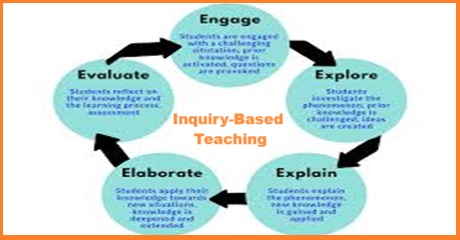
Strategies for Implementing Inquiry-Based Teaching:
Implementing inquiry-based teaching requires careful planning, preparation, and execution. Educators can employ various strategies to create an inquiry-rich learning environment:
- 1. Pose Open-Ended Questions: Begin lessons with open-ended questions that stimulate curiosity and invite inquiry. Encourage students to ask their own questions and explore possible answers through investigation and research.
- 2. Provide Authentic Contexts: Anchor inquiry-based learning in authentic contexts that resonate with students’ interests, experiences, and cultural backgrounds. Use real-world examples, case studies, and current events to make learning relevant and meaningful.
- 3. Offer Hands-On Experiences: Provide opportunities for hands-on exploration and experimentation to deepen students’ understanding of concepts and phenomena. Use laboratory experiments, simulations, and demonstrations to engage students in firsthand inquiry.
- 4. Facilitate Student-Led Investigations: Empower students to take ownership of their learning by designing and conducting their own investigations. Provide guidance and support as needed, but allow students the freedom to explore topics of interest and pursue their own inquiries.
- 5. Foster Inquiry Skills: Teach students how to ask questions, gather evidence, analyze data, and draw conclusions through structured inquiry activities. Scaffold inquiry skills gradually, providing support and feedback to help students become independent and proficient in their inquiry skills.
- 6. Encourage Reflection and Metacognition: Build in opportunities for students to reflect on their learning process and think metacognitively about their inquiry experiences. Encourage students to articulate their questions, observations, and insights, and to consider how their thinking has evolved over time.
- 7. Embrace Technology and Resources: Leverage technology and digital resources to enhance inquiry-based learning experiences. Use online databases, multimedia resources, and interactive simulations to support student inquiry and provide access to a diverse range of information sources.

Benefits of Inquiry-Based Teaching:
Inquiry-based teaching offers a multitude of benefits for students, educators, and the learning community as a whole:
- 1. Fosters Curiosity and Engagement: It ignites students’ curiosity and intrinsic motivation to learn, leading to increased engagement and enthusiasm for learning.
- 2. Develops Critical Thinking Skills: This cultivates critical thinking skills such as problem-solving, analysis, and evaluation, preparing students to think critically and analytically in diverse contexts.
- 3. Promotes Lifelong Learning: It instills a love of learning and a growth mindset in students, empowering them to become lifelong learners who are curious, resilient, and adaptable.
- 4. Enhances Content Mastery: Inquiry-based teaching promotes deeper understanding and long-term retention of content by engaging students in active learning experiences that connect theory to practice.
- 5. Supports Differentiated Instruction: Inquiry-based teaching allows for flexible and differentiated instruction that accommodates diverse learning styles, interests, and abilities, ensuring that all students have access to meaningful and relevant learning experiences.
- 6. Fosters Collaboration and Communication: Inquiry-based teaching fosters collaboration and communication skills by providing opportunities for students to work together, share ideas, and engage in meaningful discourse.
- 7. Encourages Creativity and Innovation: Inquiry-based teaching encourages creativity and innovation by challenging students to think outside the box, explore new ideas, and generate original solutions to complex problems.
Conclusion:
Inquiry-based teaching is a powerful pedagogical approach that empowers students to become active participants in their own learning journey. By fostering curiosity, critical thinking, and collaboration, inquiry-based teaching prepares students to thrive in an ever-changing world. Educators who embrace inquiry-based teaching create dynamic and engaging learning environments where students are inspired to explore, discover, and create knowledge. As we continue to innovate and evolve in the field of education, inquiry-based teaching remains a cornerstone of effective teaching and learning, shaping the future leaders, thinkers, and problem-solvers of tomorrow. More reading Clic here or Clic here
امینو، در واقع بلوکهای سازنده پروتئین در بدن انسان است که نقش حیاتی در رشد عضلات، ترمیم بافتها و تولید انرژی دارد.
Hi there, of course this piece of writing is in fact pleasant and
I have learned lot of things from it about blogging. thanks.
آمینو ماسل تک، یک فرمول پیشرفته از آمینو اسیدهای شاخهدار به همراه ترکیبات دیگری برای افزایش عملکرد ورزشی است.
آمینو اپتیموم، یک منبع غنی و فشرده از آمینواسیدهای ضروری و غیرضروری است که توسط برند معتبر اپتیموم تولید میشود.
What’s up, after reading this awesome post i am as well cheerful to share my
know-how here with mates.
آمینو اپلاید، یک مکمل پودری پیشرفته است که ترکیبی بهینه از آمینواسیدهای ضروری و آمینواسیدهای شاخهدار را در اختیار بدن قرار میدهد.
آمینو رول وان، یک ترکیب مهندسی شده از تمام ۹ اسید آمینه ضروری است که بدن انسان قادر به تولید آنها نیست.
Your article helped me a lot, is there any more related content? Thanks! https://accounts.binance.info/hu/register?ref=IQY5TET4
Excellent website. Lots of useful info here. I’m sending it to several buddies ans additionally sharing in delicious.
And obviously, thank you on your sweat!
گلوتامین، فراوانترین اسید آمینه آزاد در خون و عضلات اسکلتی انسان است که نقش بسیار مهمی در سنتز پروتئین، سلامت سیستم ایمنی و عملکرد رودهها ایفا میکند.
Hi just wanted to give you a quick heads up and let you know a few of the pictures aren’t loading correctly.
I’m not sure why but I think its a linking issue.
I’ve tried it in two different browsers and both show the same results.
گلوتامین الیمپ، یک راهکار مهندسی شده و پیشرفته برای جبران کمبود این اسید آمینه در جریان خون است.
Wonderful items from you, man. I’ve have in mind your stuff previous
to and you are just too excellent. I really like what you have bought right
here, really like what you’re stating and the way in which you say
it. You make it entertaining and you still take care of to keep it smart.
I cant wait to read far more from you. This is really a
tremendous website.
گلوتامین اپلاید، با بالاترین استانداردهای کیفی تولید شده و فرم میکرونایزد ان باعث میشود تا جذب آن در سیستم گوارش با سرعت بسیار بالایی انجام شود.
Magnificent goods from you, man. I’ve understand your stuff previous
to and you’re just extremely wonderful. I really
like what you have acquired here, certainly like what you are saying and the way in which you say it.
You make it entertaining and you still take care of to keep it smart.
I can’t wait to read much more from you. This
is actually a tremendous site.
گلوتامین ماسل تک، یکی از خالصترین و معتبرترین فرمهای این اسید آمینه در بازار جهانی است.
I love it whenever people come together and share views.
Great website, keep it up!