Introduction:
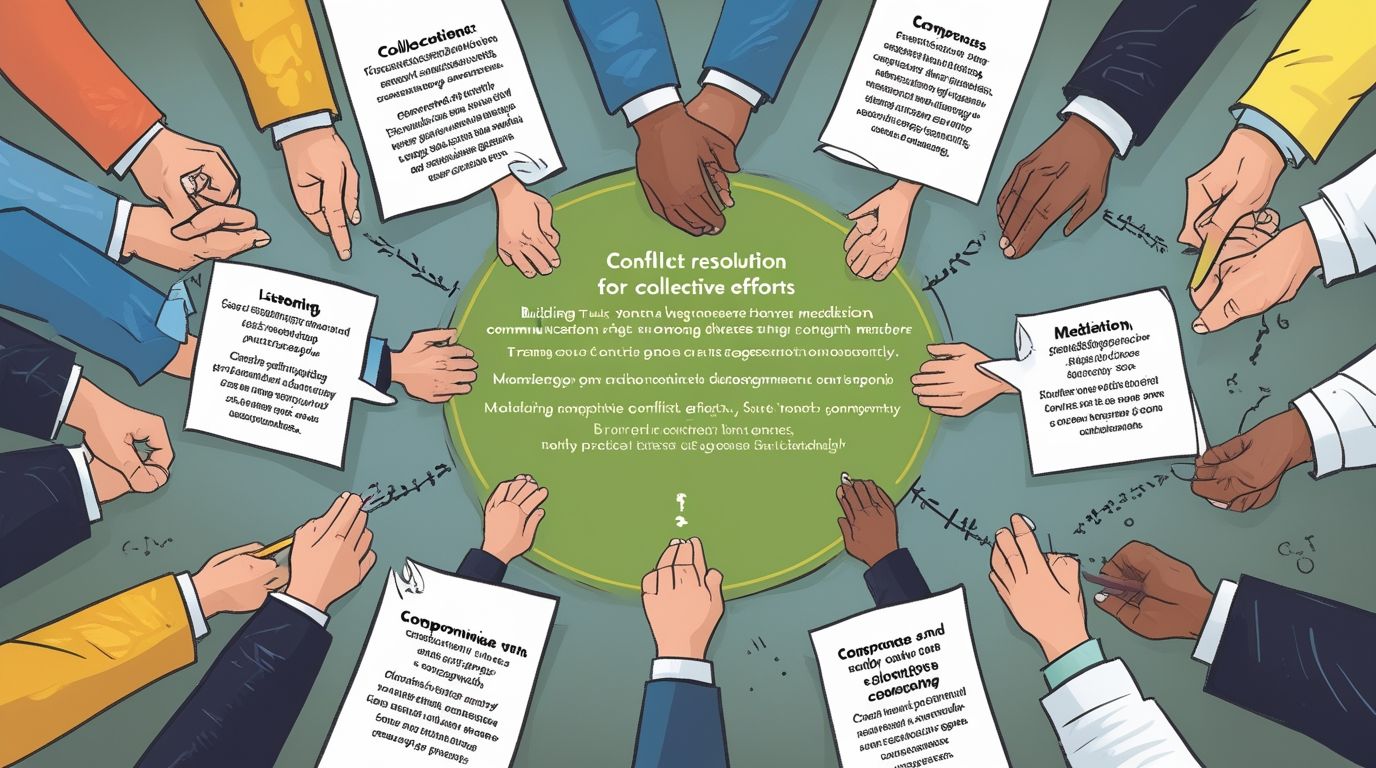
Conflict resolution strategies for collective efforts, In collective efforts, groups of people work together toward a shared goal. Because people bring diverse views, interests, and values, conflicts inevitably arise. Without clear methods to manage those conflicts, collective ventures may stall. Therefore, conflict resolution strategies are crucial. They help maintain trust, ensure fairness, and support sustained cooperation over time. In fact, handled well, conflict can become a resource: it can spur new ideas, surface hidden issues, and strengthen relationships. In contrast, poor conflict management leads to resentment, fragmentation, and wasted energy. In collective efforts—such as community projects, cross-sector coalitions, or collaborative networks—resolving conflict effectively is not optional; it is central. This article presents systematic strategies, steps, and tools for resolving conflict in collaborative settings. It shows how groups can move from friction to forward motion, together.
Understanding the Nature of Conflict in Collective Settings
Before applying strategies, a group must understand the nature of conflict. In collective settings, conflicts often stem from differences in goals, power imbalances, communication breakdowns, or resource constraints. Because multiple stakeholders are involved, disputes can be multi-dimensional and overlapping. Conflict may appear as disagreement over priorities, competition for limited resources, or clash of values. Moreover, conflicts may be hidden (latent) before they become open. Thus it is key to perceive early signs: tension, withdrawal, repeated disagreements. In addition, groups must recognize that conflict is not inherently negative. As long as it is constructive, it can drive innovation and deeper alignment. But unmanaged, it becomes destructive. Therefore, understanding origins, recognizing escalation patterns, and distinguishing between substantive and relational conflict are foundational for choosing good resolution strategies.
Core Principled Strategies for Conflict Resolution
Effective conflict resolution in collective efforts rests on several core principled strategies. First, open communication is essential: parties must feel safe to share their views. Second, listening actively matters: one must not only speak but hear others with empathy. Third, joint problem solving helps shift from adversarial stances to collaborative solutions. Fourth, mutual gains thinking encourages parties to look for options where all benefit. Fifth, neutral third-party facilitation or mediation can help when direct talks stall. Moreover, groups should emphasize transparency, fairness, and accountability throughout the process. These strategies align with the “collaborative conflict resolution” approach, which aims to let conflicting parties work toward practical solutions meeting all parties’ needs. UIC Human Resources Also, the mutual gains approach in negotiation encourages creating value rather than splitting fixed pie. Wikipedia In sum, principled strategies shift the focus from “winning” to “solving together.”
Conflict Resolution Styles and Their Use
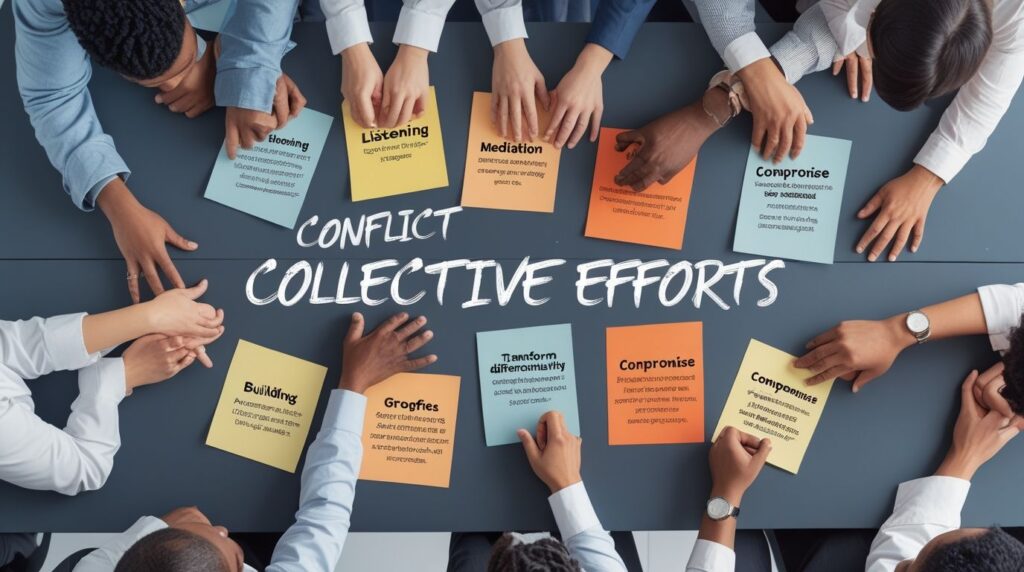
Different styles of managing conflict are well documented in the literature. The Thomas-Kilmann Conflict Mode Instrument identifies five styles: competing, accommodating, avoiding, compromising, and collaborating. BioMed Central+1 Each style suits some situations more than others.
- Competing is assertive, uncooperative: useful in emergencies but risky for relationships.
- Accommodating is cooperative, unassertive: useful when preserving harmony matters more than outcome.
- Avoiding ignores or sidesteps conflict: sometimes helpful when issue is trivial or cooling off is needed.
- Compromising gives both sides something: useful when stakes are moderate.
- Collaborating (or integrating) is both assertive and cooperative: aiming for win-win outcomes. Pon Institute
In collective efforts, collaborating tends to deliver better long-term trust and more sustainable agreements. But it is not always feasible: time constraints, high stakes, or power disparities may require compromising or mediated accommodation. Good practitioners recognize which style to use, and when to shift style dynamically. They also avoid rigid commitment to one style.
Step-by-Step Process for Collective Conflict Resolution
A systematic step-by-step process guides groups from conflict onset to resolution. Below is a recommended sequence:
- Acknowledge the conflict and set shared ground rules.
- Gather facts and perspectives. Invite each group or stakeholder to present how they see the issue.
- Surface interests (not just positions). Ask “why” behind each preference.
- Brainstorm options together. Generate multiple options before judging them.
- Evaluate options on objective criteria. Use fairness benchmarks or agreed standards.
- Select and commit to a solution. Choose the option with highest joint benefit.
- Design implementation and follow-up. Define responsibilities, timelines, review points.
Throughout these steps, transitional phrases (such as first, next, then, meanwhile, however, in contrast, therefore) help maintain clarity and direction. This process ensures fairness, clarity, and accountability.
Fostering Psychological Safety and Trust
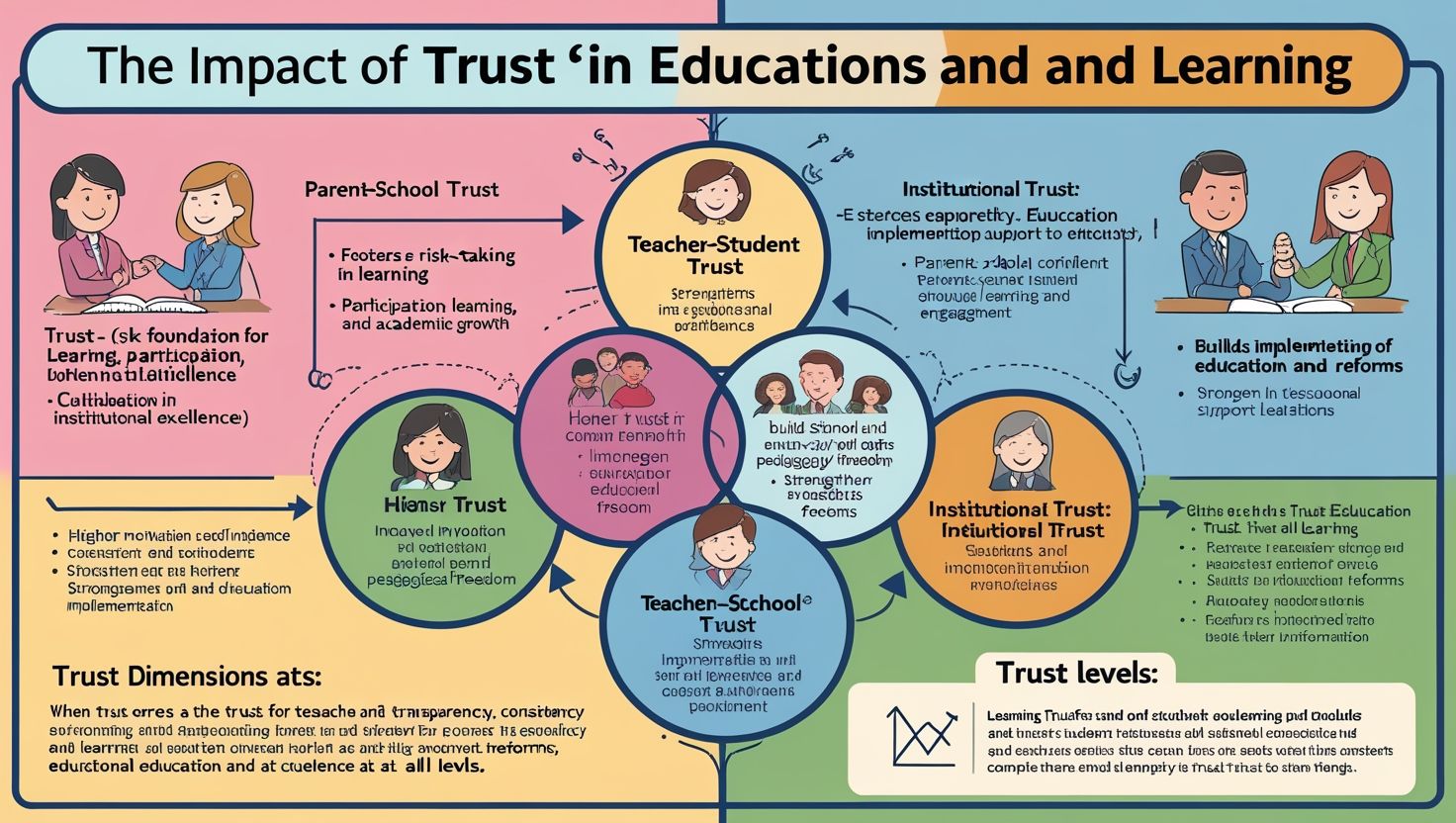
In collective efforts, psychological safety is a critical environment condition. Participants must feel safe to voice dissent, admit mistakes, or raise concerns without fear of retribution or shame. When trust is low, conflict resolution attempts often backfire or are sabotaged. Therefore, groups should invest in trust building: create small successful interactions, honor commitments, provide mutual support, and encourage vulnerability. Leaders or facilitators can model humility and openness. Moreover, use ground rules such as “listen to understand, not rebut,” “suspend judgement,” and “seek common ground.” Over time, repeated positive interactions create social capital and trust. When trust is high, even tough conflicts can be navigated more fluidly. Without trust, even well-designed processes struggle.
Use of Neutral Mediation and Facilitation
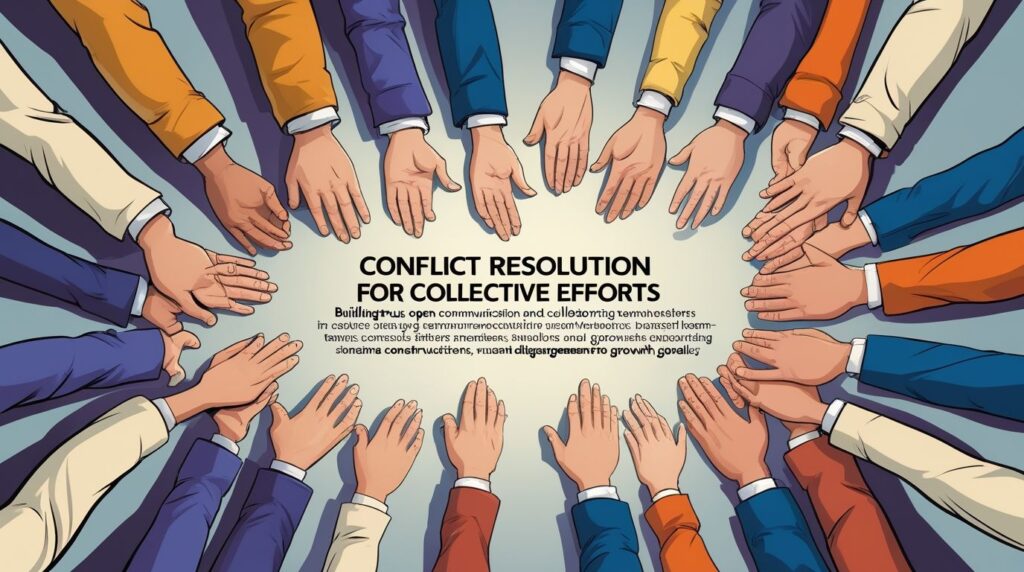
Often conflicts in collective settings escalate beyond what parties can resolve alone. Here, neutral mediation or facilitation plays a key role. A neutral third-party facilitator can guide discussion, help parties reframe issues, ensure fairness in speaking time, and maintain focus. The mediator does not impose a decision but helps the group find its own path. Facilitation may include structured dialogue, use of ground rules, and talking circles. In some community or intergroup work, dialogue facilitation is used to bridge divides among identity groups. Wikipedia Mediators must remain impartial, manage power asymmetries, and help parties reframe conflict from adversarial to collaborative. Their role is especially important in complex, multi-stakeholder contexts where direct negotiation is fraught.
Institutionalizing Conflict Management Systems
Conflict resolution should not remain ad hoc. To sustain collective efforts, groups should institutionalize conflict management systems. This means embedding processes, norms, and roles into the group’s design. For example, selecting conflict stewards, establishing a dispute resolution panel, or scheduling regular “conflict check-ins.” Also, writing clear conflict resolution policies, communication protocols, and escalation ladders helps manage disputes before they fester. Training group members in conflict skills is vital. Some organizations incorporate structured conflict management models that proactively detect tension. The goal is to make conflict resolution a predictable, accepted part of the system rather than a crisis intervention only. Over time, this institutionalization increases resilience and efficiency. SAGE Journals+1
Conflict Resolution in Large-Scale Collective Impact Initiatives
In large-scale collective impact initiatives (multi-organization, cross-sector), conflicts are more complex because of scale, diversity, and institutional inertia. Collective impact frameworks emphasize alignment, shared measurement, continuous communication, and backbone support. Wikipedia In such settings, conflict resolution strategies must scale: use multi-level mediation, data transparency, shared governance mechanisms, and adaptive learning loops. Conflicts often touch on power, equity, and resource distribution; thus, equity must be embedded as a guiding principle. Disputes should be addressed with inclusive processes, bringing marginalized voices forward. The backbone organization (serving the initiative) may house dispute resolution capacity or engage external mediators. Frequent check-ins, joint governance councils, and clear decision rules help resolve tensions. In sum, conflict resolution in large collective impact work requires both micro-level interpersonal skills and macro-level system design.
Communication Tools and Techniques
Communication is at the heart of conflict resolution. Several tools and techniques help groups manage discourse well:
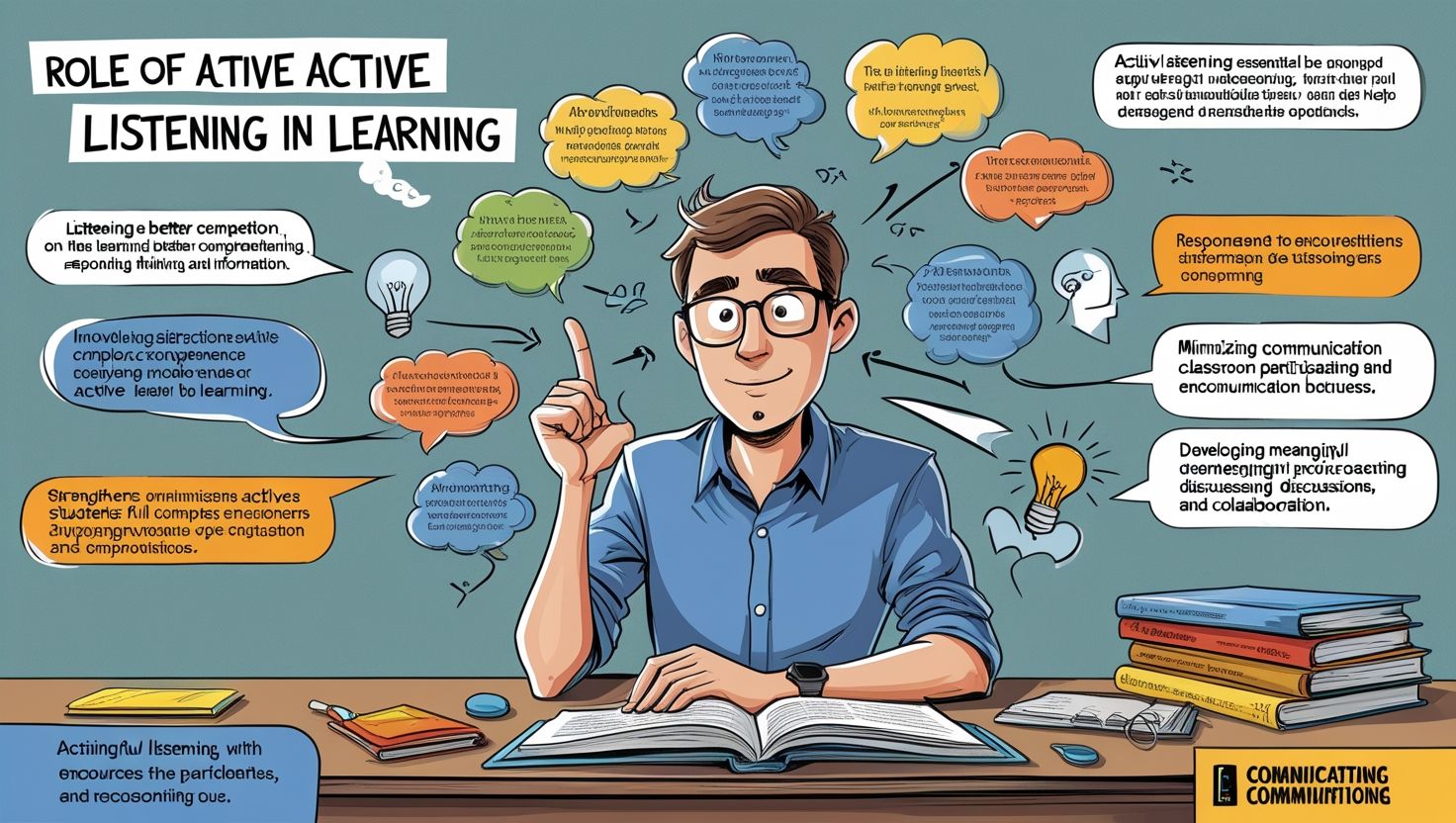
- Active listening: reflect back what you hear before responding.
- I-statements (“I feel… when… because…”) rather than accusatory “You” statements.
- Mirroring / paraphrasing to ensure understanding.
- Time-outs / cooling periods when emotions flare.
- Structured turn-taking so each party is heard.
- Use of visual tools (e.g. mapping interests, drawing conflict diagrams).
- Writing and journaling when spoken discussion is hard.
- Anonymous input or surveys when direct conversation is unsafe.
- Deliberative dialogue techniques, such as “pause, reflect, respond.”
Transitions (e.g. however, on the other hand, thus) help link statements and maintain flow. Good communicators slow down, check for mutual understanding, and invite clarification. Communication flaws often deepen conflict; strong methods help reduce misinterpretation, defensiveness, and escalation.
Dealing with Power Imbalances
In collective efforts, power imbalances often underlie conflict. Some stakeholders may have more resources, prestige, or influence. Such imbalances distort negotiation and may silence less powerful voices. Conflict resolution strategies must address that explicitly. One approach is power leveling: giving weaker parties extra time, voice, or advisory support. Another is facilitated consensus rather than majority rule. Also, mediators can monitor dominance and intervene when one side dominates. Use of anonymous input or smaller breakout groups helps mitigate intimidation. In addition, training all parties in power awareness and bias recognition helps. Groups should commit to equity norms as a principle. Without addressing power, agreements may be unsustainable or perceived as unjust, breeding future conflict.
Monitoring, Feedback, and Adaptation
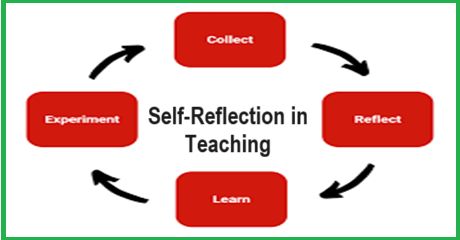
Resolution is not final; conflicts can reemerge or reveal deeper issues. Therefore, monitoring and feedback loops are crucial. After a resolution, groups should revisit outcomes at predetermined intervals. Use reflection sessions, performance indicators, and satisfaction surveys to assess how well the solution is working. If problems appear, return to the resolution process with adaptation. In addition, maintain open channels for dissent or new grievances. Use lessons learned reviews to improve the collective’s conflict protocols. Encourage continuous learning and flexibility. Because collective social systems evolve, conflict strategies must evolve too. This adaptive orientation helps ensure that resolution is not a one-off, but part of a resilient system.
Case Example: Collective Conflict Resolution in Practice
To make these concepts more concrete, consider a hypothetical case: a regional environmental coalition, with NGOs, municipal governments, and community groups, working on a watershed restoration. Disagreement arises over allocation of restoration funding: upstream vs downstream.
First, the coalition acknowledges conflict and sets ground rules. Then each group presents its perspective: upstream group requests more funding to control erosion; downstream group demands more for flood controls. Through facilitated dialogue, interests are surfaced: upstream wants long-term stability, downstream worries about immediate safety. They brainstorm joint options: phased funding, matched projects, rotating resource allotments. They evaluate options based on equity criteria and agree on a mixed plan. A mediation team facilitates fairness. The coalition builds in scheduled reviews, rotating leadership roles, and embedded conflict stewards. Over time, trust increases and subsequent disagreements are resolved more quickly.
This example illustrates how structured process, facilitation, interest-based dialogue, power sensitivity, and adaptation combine to enable effective collective conflict resolution.
Challenges and Pitfalls
While useful, conflict resolution in collective efforts faces many challenges and potential pitfalls. One is resistance to acknowledging conflict—people may pretend all is well. Another is escalation before process begins, making resolution harder. A third is message distortion in large groups, or poor facilitation. Time pressure often pushes toward quick but weak compromises. Also, parties may hide ulterior motives or use bad faith negotiation. Cultural differences can complicate communication norms. In addition, power holders might resist true equity. A further pitfall is overformalizing conflict systems so they become rigid and bureaucratic. Groups must avoid dogmatism—processes should stay responsive. Facilitators must also beware of undue influence or bias. By anticipating these pitfalls, collectives can guard against them and plan mitigation.
Principles for Long-Term Success
To sustain conflict resolution in collective efforts, certain principles for long-term success should guide the work:
- Equity as North Star: fairness must not be an afterthought.
- Shared ownership: all parties should feel co-responsible for process and outcomes.
- Transparency and accountability: open communication and tracking help legitimacy.
- Capacity building: invest in training of conflict and negotiation skills across members.
- Flexibility and adaptability: processes must evolve with contexts.
- Institutional memory: document agreements, protocols, and lessons.
- Regular check-ins and reflections: to catch new tensions early.
- Leadership that models conflict humility: leaders must show openness and vulnerability.
- Inclusion of marginalized voices: ensure that quiet or weaker actors are engaged.
These principles support continuity and trust. They help collective efforts move beyond crisis mode into a sustainable culture of healthy disagreement and shared problem solving.
Conclusion
Conflict is unavoidable in collective efforts. But when handled well, it becomes a source of growth, innovation, and stronger alignment. This article has laid out: (1) how to understand conflict in collaborative settings, (2) core principled strategies, (3) styles and how to choose among them, (4) a step-by-step process, (5) trust and psychological safety, (6) neutral mediation, (7) institutionalizing systems, (8) large-scale collective impact issues, (9) communication tools, (10) power imbalances, (11) monitoring/adaptation, (12) a case sketch, (13) pitfalls, and (14) guiding principles for long term success.
For collective efforts—whether in community initiatives, cross-sector alliances, or global networks—resolving conflict is not a sideline task: it is central to resilience, legitimacy, and sustained performance. Groups that learn and institutionalize effective conflict resolution will be better able to navigate complexity, maintain relationships, and achieve shared goals.
If you like, I can also prepare a summary, checklist, or infographic version of this article for you.
References
- Collaborative Conflict Resolution as a set of skills to create practical solutions UIC Human Resources
- The mutual gains approach in negotiation theory
- The Thomas-Kilmann conflict styles model and its application in conflict management research
- Conflict management strategies and improving team performance through collaboration and communication