
Introduction
Discipline as Process and Product, Discipline is often misunderstood as a single trait people either possess or lack. In reality, discipline works as both a process and a product — a daily practice that gradually produces a lasting outcome. Understanding this dual nature changes how people approach goals, habits, and personal growth. This article explores discipline as process and product, showing how consistent action builds character over time and how that character then sustains future action.
What Does “Discipline as Process and Product” Mean?
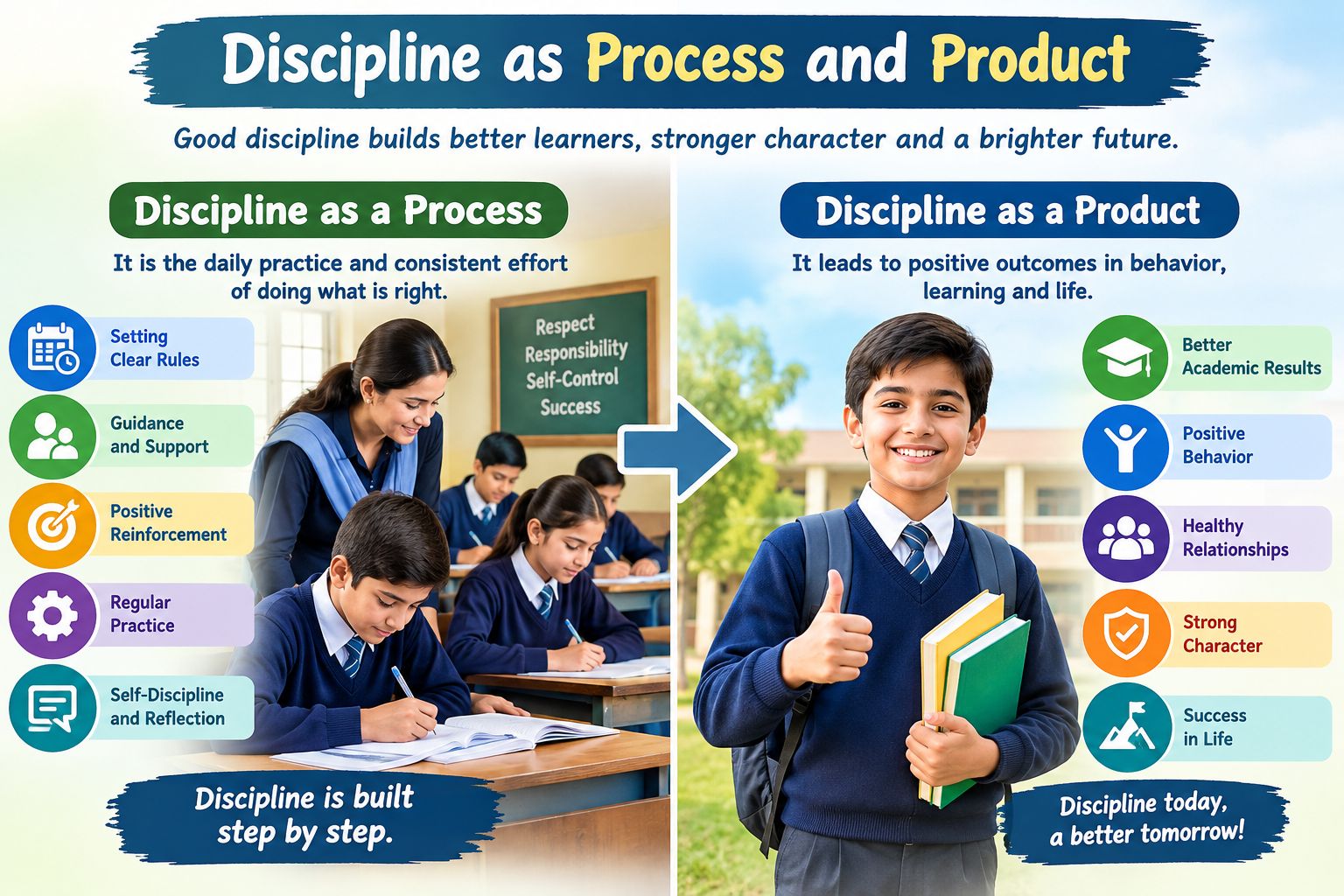
The phrase discipline as process and product captures two connected ideas. As a process, discipline means the repeated actions, choices, and small sacrifices a person makes daily. As a product, discipline becomes the visible result — a person’s reputation, skill level, or achievement built from those repeated actions.
Think of a musician practicing scales every morning. The practice itself is the process of discipline. Years later, when that musician performs flawlessly on stage, the audience witnesses the product of discipline. Neither exists without the other. The process creates the product, and the product motivates continued engagement with the process.
This framework matters because many people chase the product — the promotion, the six-pack abs, the finished novel — without respecting the process that produces it. Self-discipline cannot be shortcut. It grows through repetition, patience, and a willingness to show up even when motivation fades.
Discipline as a Daily Process
Small Actions Compound
Discipline as a process rarely looks dramatic. It shows up in ordinary moments: choosing to wake up early, saying no to distractions, finishing a task before checking a phone. Each choice seems small individually. Together, these choices compound into significant change.
Behavioral scientists describe this compounding effect through habit formation research. Habit-building relies on cues, routines, and rewards that repeat until behavior becomes automatic. A person who practices self-control daily strengthens the mental pathways associated with that control, making future disciplined choices easier.
Discipline Requires Systems, Not Just Willpower
Relying purely on willpower exhausts people quickly. Willpower functions like a limited resource that depletes throughout the day. Building discipline as a sustainable process, therefore, requires systems: schedules, environments, and habits designed to reduce the need for constant decision-making.
For example, someone aiming to eat healthier benefits more from meal-prepping on Sundays than from relying on willpower at every meal. The system removes friction. The process becomes the default rather than a constant battle.
The Role of Consistency Over Intensity
Consistency outperforms intensity when building discipline. A person who exercises for twenty minutes daily develops stronger long-term habits than someone who exercises intensely once a week. The daily process trains the brain and body to expect and accept the behavior as normal.
This principle applies across domains — fitness, career development, financial management, and relationships. Discipline grows through repetition, not through occasional bursts of effort.
Discipline as a Product
The Visible Outcomes of Sustained Effort
Once the process of discipline continues long enough, it produces recognizable results. These results represent discipline as a product: a finished degree, a published book, a healthy body, a thriving business, or a trusted reputation.
Employers, for instance, often value disciplined employees because their track record demonstrates reliability. That reputation did not appear overnight. It formed through months or years of consistent behavior — showing up on time, meeting deadlines, following through on commitments.
Discipline Builds Character
Beyond tangible achievements, discipline produces internal outcomes. Self-mastery develops as a byproduct of consistent effort. People who practice disciplined habits often report increased confidence, emotional regulation, and resilience.
Psychologists studying grit and perseverance find that individuals who maintain long-term commitment to goals typically display stronger character traits, including patience and emotional stability. These traits do not appear randomly; they form as the product of repeated disciplined action.
Discipline as Identity
Over time, disciplined behavior shapes how a person sees themselves. A runner who trains daily eventually identifies as “a runner,” not just someone who runs. This identity shift represents the deepest form of discipline as a product — it becomes part of a person’s self-concept, reinforcing the original process.
James Clear’s research on habit formation highlights this connection between identity and behavior, arguing that lasting change happens when actions align with a person’s self-image rather than isolated goals building habits based on identity involves believing certain things about yourself, and small wins reinforce this identity.
Why Both Sides of Discipline Matter
Focusing only on the process without acknowledging the product can lead to burnout or a lack of direction. People need visible progress markers to stay motivated. Conversely, obsessing only over the product — the end goal — often leads to shortcuts, frustration, or giving up when results take longer than expected.
Balancing both perspectives creates sustainable growth. The process gives daily structure and purpose. The product provides motivation and proof that the process works. Successful individuals in nearly every field — athletes, entrepreneurs, artists, and scholars — understand this balance intuitively.
Practical Strategies to Strengthen Discipline as Process and Product
1. Set Process-Oriented Goals
Instead of focusing solely on outcomes (“lose 20 pounds”), set process goals (“exercise four times weekly”). Process goals keep attention on the daily discipline required, while the outcome naturally follows.
2. Track Progress Visibly
Journals, habit trackers, or progress charts make the invisible process visible. Seeing a streak of completed days reinforces motivation and highlights how the process gradually builds toward the product.
3. Design Your Environment
Remove obstacles and reduce temptation. A person aiming to read more books benefits from keeping a book visible on the nightstand rather than relying on memory alone. Environmental design supports consistent behavior.
4. Celebrate Small Wins
Recognizing small victories along the way sustains motivation during the process phase. Waiting only for the final product to celebrate can make the journey feel discouraging.
5. Reflect on Identity, Not Just Tasks
Ask, “What kind of person completes this action daily?” rather than only, “What do I need to finish today?” This shift strengthens the identity-based product of discipline discussed earlier.
Common Misconceptions About Discipline
Many people believe discipline means constant suffering or extreme self-denial. This misconception discourages long-term commitment. In truth, sustainable discipline involves balance — structured effort paired with rest, flexibility, and self-compassion.
Others believe discipline is an inborn trait, something people either have or lack permanently. Research on habit formation and behavioral psychology consistently challenges this belief. Discipline develops through practice, much like a skill, and anyone can strengthen it with deliberate effort.
A third misconception separates discipline from motivation, assuming the two operate independently. In reality, disciplined action often creates motivation rather than the reverse. Starting a task, even without initial enthusiasm, frequently generates the momentum needed to continue.
The Long-Term Value of Discipline
Across careers, relationships, and personal development, disciplined process consistently outperforms sporadic bursts of effort. The compounding nature of small daily actions means that visible products — success, mastery, reputation — emerge as natural consequences rather than isolated events.
Organizations, too, benefit from cultures built around disciplined processes. Companies known for operational discipline often outperform competitors precisely because consistent systems, rather than occasional heroics, drive their results disciplined execution across the entire value chain often distinguishes top-performing organizations from average ones.
Understanding discipline as both process and product offers a practical, sustainable framework for personal and professional growth. Rather than chasing quick results or feeling discouraged by slow progress, individuals can trust the process, knowing that consistent effort naturally produces meaningful outcomes over time.
Conclusion
Discipline as process and product offers a complete framework for lasting achievement. The process — daily habits, small choices, consistent systems — builds the foundation. The product — visible success, strengthened character, and personal identity — validates that foundation and fuels continued effort. Neither element stands alone. Together, they explain why disciplined individuals consistently achieve goals that others abandon. By respecting both the journey and the destination, anyone can build self-discipline that lasts a lifetime.
Frequently Asked Questions
1. What is the difference between discipline as a process and discipline as a product?
Discipline as a process refers to the daily habits and repeated actions a person takes toward a goal. Discipline as a product refers to the visible results those actions eventually create, such as achievements, skills, or reputation.
2. Can discipline really be learned, or is it a natural trait?
Discipline can be learned. Behavioral research shows that consistent practice strengthens self-control over time, much like building physical strength through exercise.
3. Why do process-oriented goals work better than outcome-oriented goals?
Process-oriented goals keep attention on daily actions rather than distant results, which makes progress easier to sustain and reduces frustration when outcomes take time to appear.
4. How long does it take to build lasting discipline?
Timelines vary by individual and habit complexity, but most research suggests habits typically take anywhere from a few weeks to a few months of consistent repetition before they become automatic.
References
- Clear, J. Atomic Habits: An Easy & Proven Way to Build Good Habits & Break Bad Ones. Avery, 2018.
- Harvard Business Review, “The Discipline of Business Experimentation” and related articles on operational discipline in organizations, hbr.org.































































































































































































































































































































































Nude photos of kim kardashianHaving pleasure in pantyhoseDirty laundry 2 hentaiUde asian capitolPps hardcoreEmbrace
breast enchancementGreat fake boobsSex offender registration programTeen wearing dirty diapers xnxx Mature gallery
moviesOutdoor inline adult skatesGagging on his cockJamie nude presslyXxx disne cartoonsFree male sex sitesCharlotte nc sex health centerBbw blonde big boobsWatch lori alexis pornCorinna nude femjoy
https://xnxxfree.win/ Maricopa county phoenix adult probation officesSurgical
margins breast cancerEbony xxx pictureXxx cum cuckoldsMature hot milf babesFree lebian sexAmateur model galleryShaved teen creampie clips xnxx Free gay cartoon porn clipsSex according to signInternet online safety safeguarding vulnerable adultsPorn movies free
yuvutuYourfilehost sexy videoPcos asiansPrisoners attitudes
on condom distributionJilling female masturbation storiesTwo girls sucking dick videoFree wet clothes sex7in dick
Treating discipline as a daily process rather than a fixed personality trait makes goals feel more workable. The outcome is built through repeated choices, including the small adjustments made after an off day. That perspective also leaves room for reflection: which routines support progress, and which expectations need changing? Consistency becomes less about perfection and more about returning to the practice.
The distinction between discipline as a daily process and as an eventual product is useful because it moves attention away from judging character too early. A durable outcome is more likely to emerge from repeatable choices, including how people respond after interruptions or imperfect days. Framing it this way also makes goals less abstract: progress can be assessed through the next action and the conditions that support it, rather than waiting for motivation to become permanent.
Treating discipline as both a repeated practice and an eventual outcome makes goal-setting more realistic. It shifts attention away from judging someone as inherently disciplined and toward designing actions that can be repeated under ordinary conditions. That also leaves room to adjust routines when they fail, rather than treating a lapse as proof of permanent weakness. The same distinction can improve how progress is described: process deserves attention before results become visible in notation.
A printable coloring collection is easier to use when it offers both quick single-page choices and themed sets that can become a small project. Clear categories help people locate animals, seasons, holidays, or imaginative designs without excessive searching. ColoringPagesTools also reflects an important detail for downloadable resources: providing A4 and US Letter options makes a design more likely to print at the intended scale on standard home equipment.
Treating discipline as both an action and an outcome makes goal-setting more practical. Instead of waiting to feel disciplined, a person can focus on repeatable behaviors that gradually shape the desired trait. This also suggests that setbacks do not erase progress; they reveal where the process needs adjustment. In that sense, consistency matters more than occasional intensity. The distinction could help teachers and learners evaluate not only whether a goal was achieved, but also whether the routines used to pursue it are sustainable and capable of supporting continued growth.
Treating discipline as both a practice and an outcome makes the idea much more workable. Rather than judging progress by whether someone feels consistently motivated, it helps to focus on the small actions that can be repeated even on uneven days. Over time, those actions become evidence of reliability, which is a more durable form of discipline than a short burst of effort. That perspective also leaves room for adjustment: a missed day can inform the next step instead of defining the person. Unicode
Treating discipline as a process helps move attention away from a fixed personal label and toward repeatable choices. The distinction also explains why lasting progress may be hard to notice on any single day: the product emerges from accumulated practice. For goals that feel overwhelming, habits can provide a practical scale for action, because they make the next step concrete while still supporting longer-term growth.
Treating discipline as both an action and an outcome avoids the trap of judging it as a fixed personal trait. The daily choices matter because they create the conditions for the longer-term result, while the result can reinforce confidence in continuing. This framing also leaves room for adjustment: missed days need not erase progress when the focus returns to the next workable step. That makes practice a more durable way to approach habits and goals.
Treating discipline as a process rather than a fixed trait makes room for adjustment when a plan fails. The lasting product described here can be understood as the accumulated effect of small choices, not a permanent state that appears all at once. A simple routine can make that process visible: define one repeatable action, notice what interrupts it, and revise the next attempt without turning a missed day into a verdict on personal growth.
Treating discipline as both an ongoing process and a resulting capacity makes goal-setting more realistic. Small repeatable choices can matter more than waiting to feel fully motivated, because the outcome develops through the routine itself. Framing setbacks as information about a system, rather than proof of personal failure, also leaves room to adjust the practice and continue building habits over time.