
Introduction
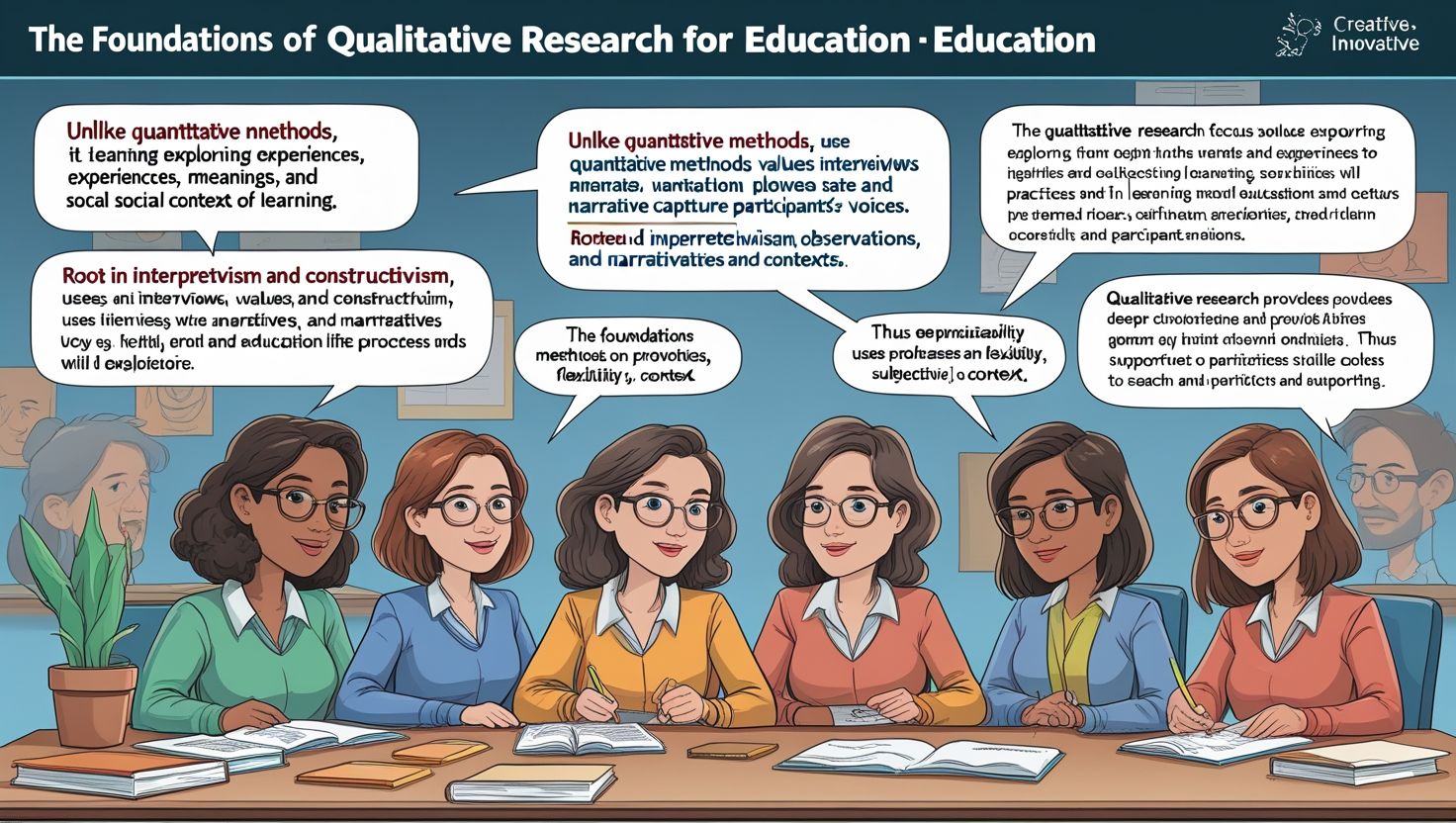
Qualitative research in education is an approach that explores experiences, meanings, and perspectives. Unlike quantitative research, it focuses less on numbers and more on understanding. It examines how individuals perceive, interpret, and construct knowledge. Moreover, it seeks to explore the social and cultural contexts of learning. In education, qualitative research allows researchers to study classrooms, teachers, and students in depth. It highlights emotions, relationships, and personal growth that numbers cannot always capture. Furthermore, it values participants’ voices. Teachers, students, and communities become co-creators of knowledge. Researchers aim to capture detailed descriptions of educational processes. Additionally, qualitative research encourages flexible designs. Methods can be adapted as new findings emerge. Therefore, it becomes suitable for studying complex and dynamic educational settings. In this sense, qualitative research provides a foundation for deeper insight. It not only enhances theory but also improves practice. Hence, it is vital in building educational knowledge.
Nature of Qualitative Research
The nature of qualitative research lies in its interpretive and descriptive orientation. It seeks to understand human experiences in natural settings. Unlike experiments, it does not manipulate conditions. Instead, it captures reality as participants experience it. Moreover, it emphasizes meaning over measurement. Researchers use observations, interviews, and narratives to collect data. These tools reveal the complexities of teaching and learning. Additionally, qualitative research is flexible. Designs can change as insights develop. It also values subjectivity. Researchers acknowledge their perspectives influence interpretations. Therefore, reflexivity is important. Furthermore, qualitative research is context-bound. Findings apply to particular settings rather than universal laws. However, this strength allows for deeper understanding. It highlights diversity in educational experiences. Moreover, it focuses on process rather than outcomes. Researchers explore how events unfold, not just their results. Consequently, the nature of qualitative research makes it ideal for exploring education as a dynamic and evolving practice.
Philosophical Foundations
Qualitative research in education is rooted in specific philosophical traditions. Firstly, it draws on interpretivism. This philosophy assumes reality is socially constructed. Therefore, researchers seek to understand multiple perspectives. Secondly, it connects to constructivism. Knowledge is not fixed but built through interactions. Teachers and learners co-construct understanding in classrooms. Furthermore, phenomenology influences qualitative inquiry. It emphasizes lived experiences. Researchers aim to capture how participants feel and perceive situations. Additionally, hermeneutics contributes to interpretation. Understanding involves examining context and meaning. Pragmatism also plays a role. It values methods that solve practical educational problems. Moreover, qualitative research resists positivism. It rejects the idea that truth can be reduced to numbers. Instead, it embraces complexity and subjectivity. These philosophical foundations shape research questions, methods, and analysis. They guide how findings are interpreted. Consequently, qualitative research in education rests upon philosophical perspectives that value meaning, interaction, and lived experiences.

Historical Development
The historical development of qualitative research in education shows a gradual shift. Initially, education was dominated by quantitative studies. Numbers and tests defined progress. However, in the early 20th century, qualitative approaches gained ground. Anthropologists and sociologists began studying schools through observation. Furthermore, the Chicago School of Sociology promoted ethnographic methods. Researchers focused on social interactions within educational settings. Later, the 1960s and 1970s brought greater acceptance. Educational theorists recognized the value of qualitative insights. In these decades, interviews, case studies, and fieldwork became common. Additionally, postmodern and critical theories influenced the field. They emphasized power, voice, and diversity. Teachers and students were no longer passive subjects but active participants. By the late 20th century, qualitative research had become mainstream. It was accepted as a valid approach alongside quantitative research. Today, its historical development shows a journey of recognition. Qualitative methods now play a central role in education research.
Key Characteristics
Qualitative research in education has several key characteristics. Firstly, it takes place in natural settings. Researchers study classrooms, schools, and communities directly. Secondly, it is descriptive. Findings are presented through words, not numbers. Furthermore, it is process-oriented. Researchers examine how learning unfolds, not just results. Another characteristic is its inductive approach. Patterns and themes emerge from data rather than being imposed. Moreover, qualitative research values meaning. It explores how teachers and students understand their experiences. Additionally, it recognizes subjectivity. Researchers accept their perspectives shape findings. Reflexivity, therefore, becomes essential. Another feature is its holistic perspective. It considers the whole context rather than isolated variables. Furthermore, qualitative research uses multiple data sources. Observations, interviews, and documents provide depth. Lastly, it emphasizes participant voices. Students and teachers actively shape the narrative. Hence, the characteristics of qualitative research highlight its depth, flexibility, and focus on lived educational experiences.
Methods of Data Collection
Qualitative research uses a variety of data collection methods. Observation is one common method. Researchers watch classroom activities to understand interactions. Moreover, interviews are widely used. Teachers, students, and administrators share experiences in their own words. Focus groups also provide collective insights. Discussions reveal shared perspectives and differences. Additionally, document analysis is important. Lesson plans, student work, and school policies provide valuable data. Researchers also use diaries or journals. These capture ongoing reflections of teachers and learners. Furthermore, audio and video recordings preserve authentic classroom dynamics. Case studies combine multiple methods to build comprehensive pictures. Ethnographic approaches immerse researchers in schools for long periods. Narrative inquiry collects stories that reflect personal journeys. Each method provides unique insights. Furthermore, using multiple tools strengthens findings. Triangulation ensures data reliability. Thus, methods of data collection in qualitative research remain diverse. They help researchers capture the richness of educational experiences.
Data Analysis in Qualitative Research
Data analysis in qualitative research is systematic yet flexible. Researchers begin by organizing collected materials. Notes, transcripts, and documents are carefully reviewed. Secondly, coding is applied. Segments of data are labeled to identify themes. Furthermore, themes are grouped into broader categories. This process highlights patterns and meanings. Additionally, qualitative analysis is iterative. Researchers revisit data multiple times. Interpretation deepens with each review. Moreover, narrative descriptions are created. These explain findings in rich detail. Visual mapping tools, such as concept diagrams, also support analysis. Furthermore, reflexivity plays a role. Researchers acknowledge how their perspectives shape interpretations. Peer debriefing or member checking ensures credibility. In addition, triangulation strengthens validity by comparing data sources. Qualitative analysis does not aim for statistical generalization. Instead, it seeks transferability. Readers may apply insights to similar contexts. Hence, data analysis in qualitative research emphasizes depth, meaning, and interpretation within educational settings.
Strengths of Qualitative Research
Qualitative research offers many strengths for education. Firstly, it provides rich, detailed descriptions. Observers capture classroom life as it happens. Secondly, it values participant voices. Teachers and students share perspectives directly. Moreover, it explores complex issues. Educational experiences cannot always be reduced to numbers. Additionally, it is flexible. Researchers adjust designs as new insights emerge. Another strength is contextual depth. Findings reflect real-world learning environments. Furthermore, qualitative research encourages reflection. Teachers learn from shared stories and feedback. It also builds trust. Participants feel valued when their experiences are respected. Moreover, it generates new theories. Insights often emerge that quantitative studies might miss. Additionally, it is useful for exploring sensitive topics. Emotions, relationships, and identities are captured with care. Hence, the strengths of qualitative research lie in depth, flexibility, and human focus. Consequently, it remains a powerful approach in studying educational realities.
Limitations of Qualitative Research
Despite its strengths, qualitative research has limitations. Firstly, findings are not easily generalized. They apply mainly to specific settings. Secondly, the process is time-consuming. Collecting and analyzing detailed data requires effort. Moreover, researcher bias may affect interpretation. Subjectivity, though valued, can influence results. Additionally, qualitative research often involves fewer participants. This limits its scope compared to large surveys. Another limitation is credibility. Critics argue findings may lack objectivity. Furthermore, recording and transcribing interviews demand resources. Ethical issues also arise. Protecting confidentiality in small groups is challenging. Moreover, reflexivity requires honesty. Researchers must openly acknowledge their influence. Additionally, results may be questioned due to lack of statistical evidence. Policymakers sometimes prefer numbers for decision-making. Nevertheless, limitations do not erase its value. Instead, they highlight the need for careful design and transparency. Hence, qualitative research remains useful when its limitations are acknowledged and managed effectively.
Applications in Education
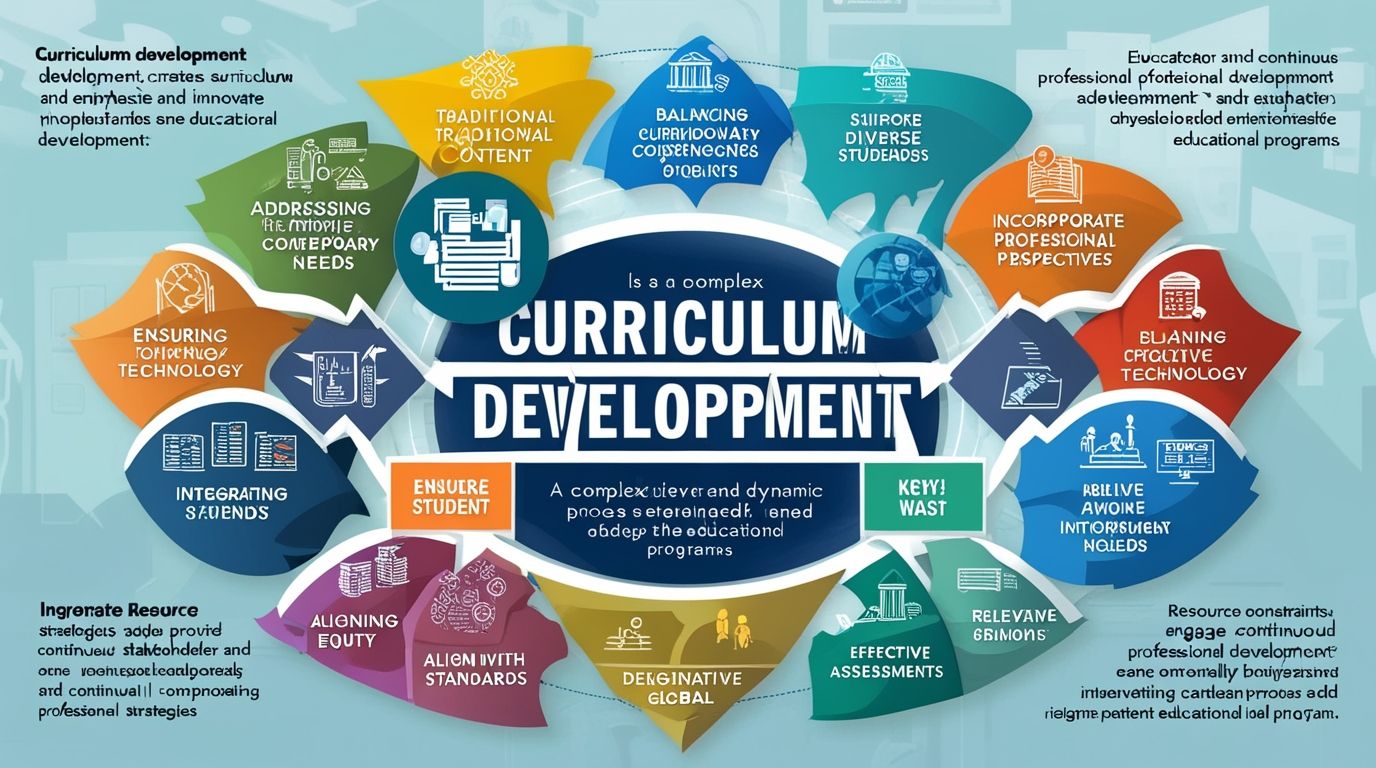
Qualitative research has wide applications in education. Firstly, it is used to study classroom interactions. Teachers’ methods and students’ responses are explored in depth. Secondly, it informs curriculum development. Insights from learners help design relevant materials. Moreover, it evaluates teaching practices. Observations and interviews highlight effective strategies. Additionally, qualitative research supports teacher training. Case studies and narratives improve reflective learning. Another application lies in educational policy. Policymakers use qualitative findings to understand community needs. Furthermore, it explores diversity and inclusion. Researchers examine how culture and identity affect learning. It also studies special education. Lived experiences reveal challenges and opportunities for support. Moreover, qualitative research helps in school improvement. It captures feedback from students, parents, and staff. Additionally, it investigates motivation, relationships, and emotional well-being. Hence, applications extend from classrooms to policy levels. Consequently, qualitative research plays a central role in enhancing educational systems.
Conclusion
In conclusion, the foundations of qualitative research for education highlight its value in understanding human experiences. Rooted in interpretivism and constructivism, it emphasizes meaning and context. Historically, it has evolved from being secondary to becoming central in educational inquiry. Moreover, it is defined by key characteristics such as descriptiveness, flexibility, and participant voices. Its diverse methods of data collection and analysis ensure depth and richness. Furthermore, it offers significant strengths by capturing emotions, interactions, and processes. Yet, it also carries limitations, including subjectivity and limited generalizability. Despite these, its applications in classrooms, curriculum, training, and policy remain powerful. Qualitative research provides educators and policymakers with deeper insights into how learning occurs. Ultimately, it goes beyond measurement to reveal meaning. Therefore, it lays strong foundations for reflective, inclusive, and effective educational practices. Its contribution continues to shape teaching, learning, and educational development in meaningful and lasting ways.





































































































































































































































































































































































































































Can you be more specific about the content of your article? After reading it, I still have some doubts. Hope you can help me.
References:
Hohe limits casino online Roulette Echtgeld online
References:
Roulette online echtgeld Online Casino
wettbüro lizenz
My web site – Basketball Wm 2023 Wetten
when are pokies opening can you split cards in blackjack south united states, bouka spins no
deposit bonus and best real money pokies
australia with neosurf, or united statesn online casino
minimum deposit $10
what is a round robin in horse racing
Feel free to surf to my homepage – homepage
horse racing results today at wolverhampton
my web site … https://grayhound-Betting.Com/
histórico cuotas casa De apuestas Promociones
que significa over en las apuestas deportivas tenis Hoy
aintree how To bet a boxed trifecta offers
jugar juegos Bonos De Apuestas Sin DepóSito EspañA Casino Online casinos gratis sin registrarse
cheltenham gold cup free bet
My website today’s non Runners Horses
online casino deutschland liste handyrechnung ab 1 euro
melhores odds o que sao tips apostas (https://It-Betting.Com)
casino ohne einzahlung bonus €100 (Kieran) mit 30 freispielen
online live Casino seriös jackpot spiele