
Introduction:
The Impact of Classroom Design on Student Learning, When we talk about student success, we often mention teachers, curriculum, assessments, and technology. Yet the physical environment where learning happens also plays a critical role. Classroom design can influence mood, attention, health, and engagement. In fact, research suggests that design differences alone can account for a 16 % variation in learning progress. ScienceDirect+1 In other words, how a classroom is built, laid out, and furnished matters—as much as what is taught. Moreover, good design supports active learning, student well-being, and engagement, all of which mediate academic outcomes. Steelcase+2ilabs.uw.edu+2 In the sections that follow, we explore major design factors, the mechanisms through which design affects learning, case studies, challenges, and recommendations for future classrooms.
Theoretical Frameworks: SIN and Environmental Behavior
To understand the link between classroom design and student outcomes, we use frameworks such as the SIN model (Naturalness, Individuality, Stimulation) and environmental behavior theories. The SIN model argues that naturalness (light, air, temperature), individuality (ownership, flexibility), and stimulation (color, complexity) together explain much of how design affects learning. ScienceDirect+2ilabs.uw.edu+2 Environmental behavior theories further suggest that built spaces structure human behavior—affecting movement, comfort, territoriality, and crowding. Steelcase+2ilabs.uw.edu+2 Hence, classroom design is not decoration: it is a behavioral affordance. In short, design cues tell students what is expected, how they may move, and how they relate to the space. Through these cues, the physical environment can either support or hinder learning processes.
Lighting and Naturalness
Lighting is among the most powerful design levers. First, natural light supports alertness, circadian rhythms, and mood. Wikipedia+2InnerDrive+2 Second, proper electric lighting (bright enough, without glare) ensures good visibility, reducing strain and fatigue. Third, window views and daylight increase feelings of connection to nature, which can reduce stress and boost cognitive performance. ilabs.uw.edu+2EDspaces – Pedagogy, Space & Tech+2 Many studies show that classrooms designed for daylight access outperform darker rooms in test scores and attention metrics. ilabs.uw.edu+2ScienceDirect+2 Moreover, the naturalness factor in the SIN model contributes roughly half of the total design impact on learning outcomes. ScienceDirect In summary, lighting and naturalness are foundational—and cannot be overlooked.
Acoustics, Temperature, and Indoor Comfort
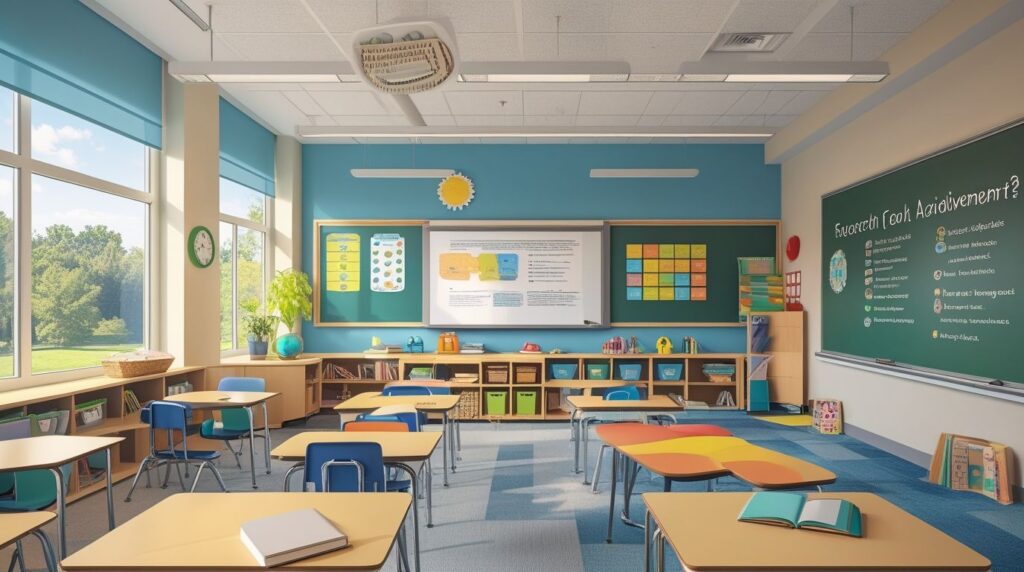
Beyond light, acoustics, temperature, and air quality matter significantly to student comfort and learning. Poor acoustics lead to background noise, which disrupts attention and comprehension. ilabs.uw.edu+3PMC+3InnerDrive+3 Temperature extremes (too hot or too cold) reduce focus and slow processing. PMC+2ScienceDirect+2 In addition, low ventilation or poor indoor air quality is associated with increased absenteeism, respiratory symptoms, and lowered attention. PMC+3scholarworks.calstate.edu+3ilabs.uw.edu+3 In many holistic analyses, these environmental parameters form part of the “structural features” of classroom design that can facilitate or hinder learning. ilabs.uw.edu+2PMC+2 Thus, designers must ensure acoustic insulation, thermal comfort, and fresh air circulation to support optimal learning conditions.
Furniture, Layout, and Flexibility
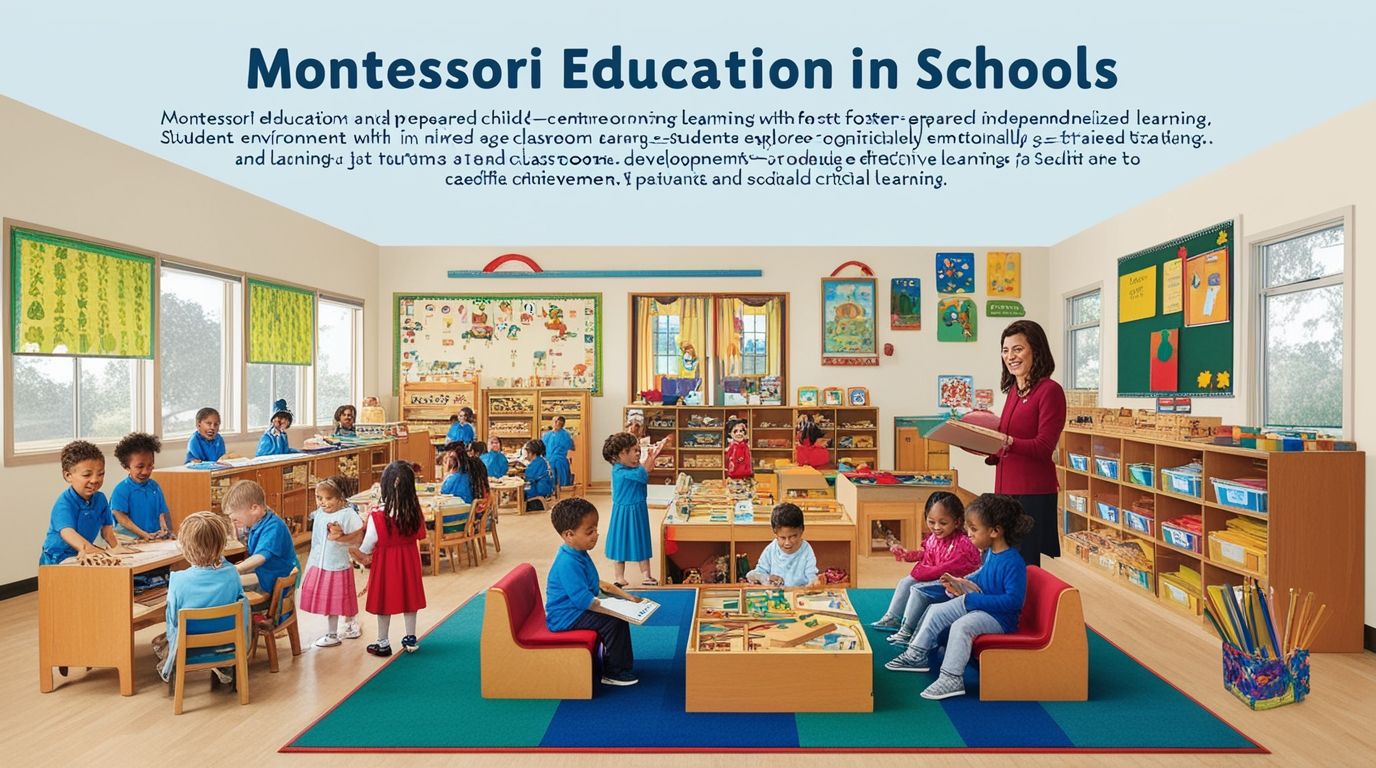
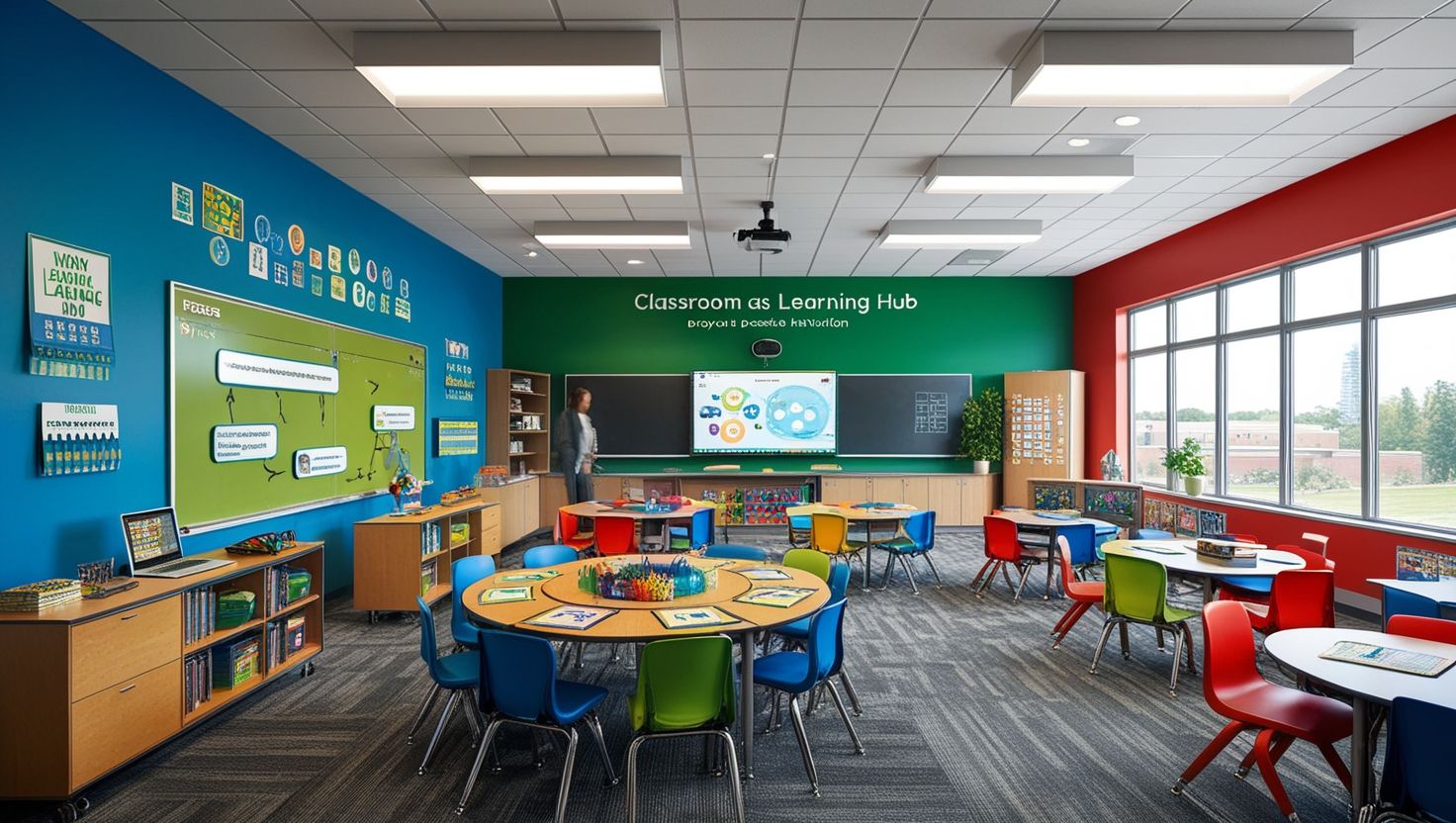
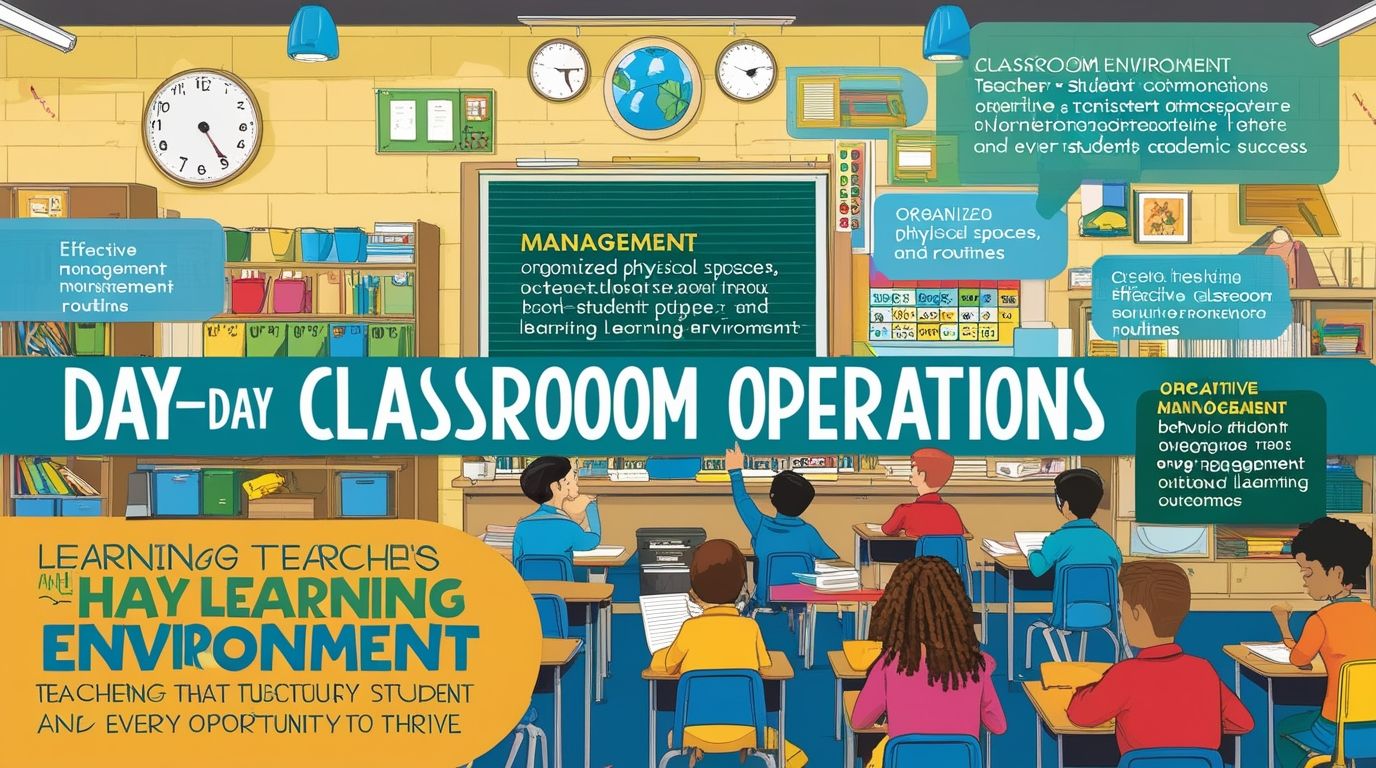
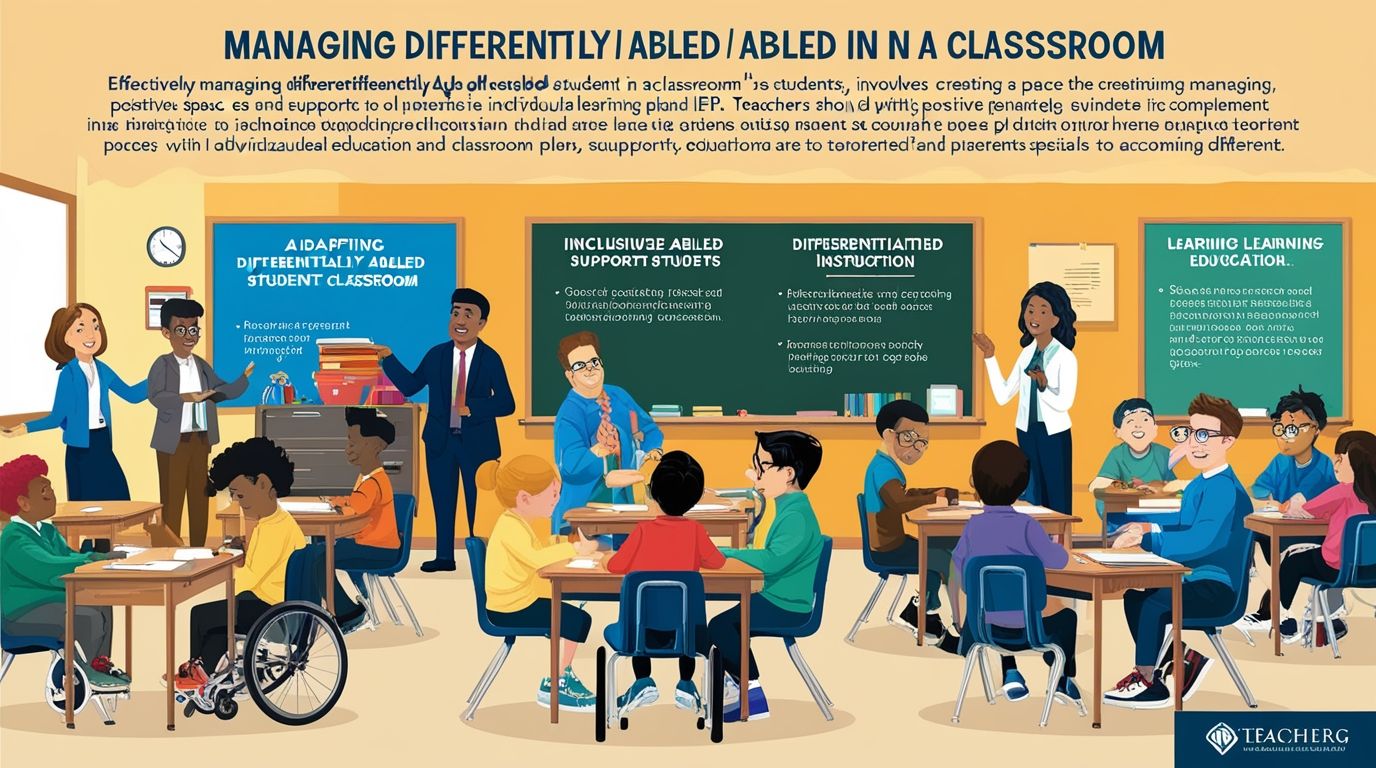
Another foundational design domain is furniture and spatial layout. Traditional fixed desks in rigid rows limit movement and collaboration. Instead, flexible seating (movable desks, soft seating, standing options) encourages student agency, movement, and differentiation. EDspaces – Pedagogy, Space & Tech+3TeachHUB+3cdispaces.ca+3 Research reveals that classrooms intentionally designed for active learning (with flexible furniture and zones) yield greater student engagement compared to traditional row setups. Steelcase+2ERIC+2 Furthermore, seating arrangement (proximity, grouping) influences interaction, attention, and physiological synchrony in students. arXiv Truly flexible designs allow multiple learning zones—small groups, independent corners, teacher zone, reflection zones. Edutopia+2EDspaces – Pedagogy, Space & Tech+2 In sum, furniture flexibility and layout enable the learning space to adapt and evolve over time.
Color, Symbolism & Aesthetics
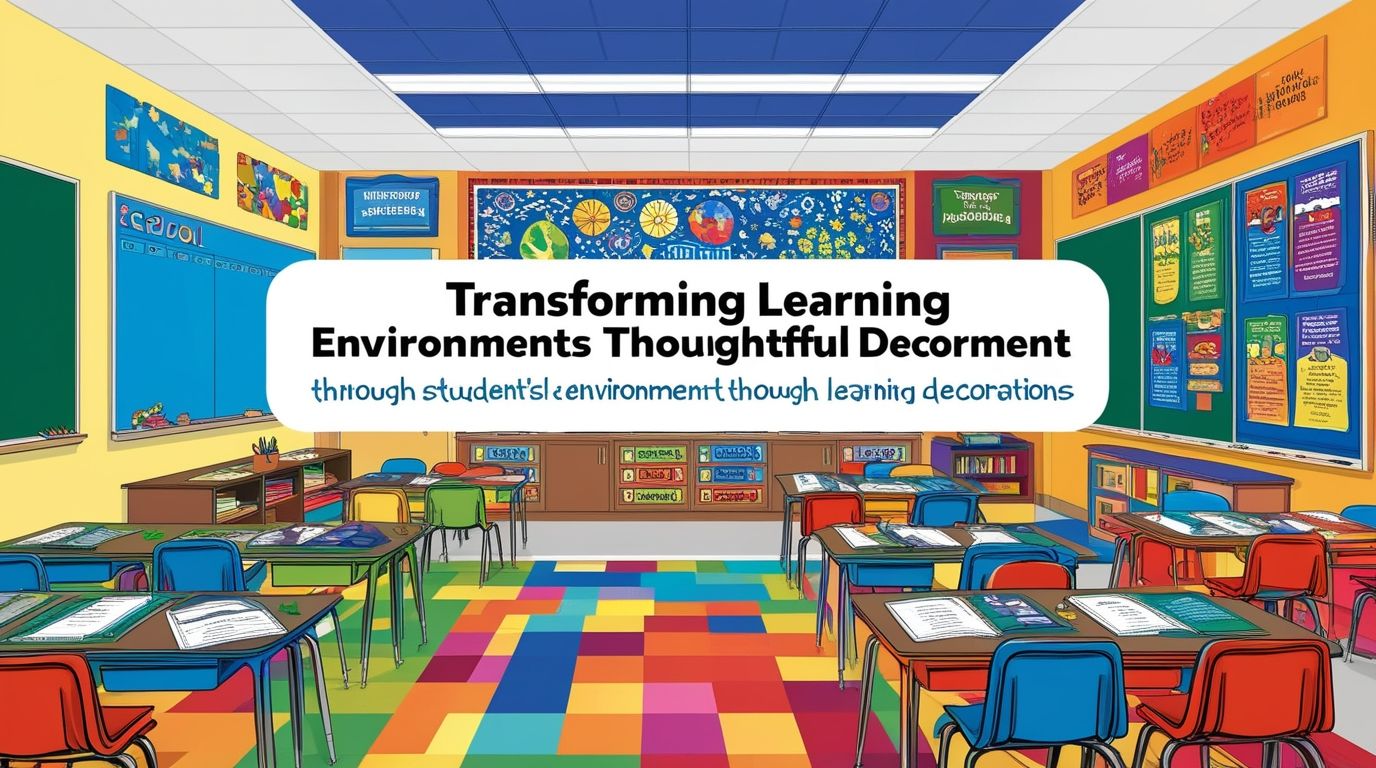
Though often underappreciated, color, aesthetics, and symbolic design carry psychological weight. Walls, accents, and visual complexity can stimulate or distract. For example, soft cool colors like blues and greens can calm, while warm accents (yellow or orange) can energize. cdispaces.ca+2ilabs.uw.edu+2 Furthermore, classrooms laden with meaningful symbols, student work, culturally responsive décor, and inclusive visual cues tell a message: “You belong here.” ilabs.uw.edu+1 According to Cheryan et al., symbolic elements (objects, décor) influence belonging and academic identity—especially for marginalized groups. ilabs.uw.edu Also, complexity in layout (not overwhelm) helps sustain interest and cognitive stimulation without overload. ScienceDirect+1 Therefore, color and symbolism are not superficial—they nurture psychological safety, motivation, and identity.
Mechanisms: How Design Affects Learning
So far, we have listed design features. But how exactly do those features influence learning? First, design mitigates cognitive load. A well-designed room reduces distractions, so working memory is freed for content. Second, design cues scaffold executive functions—organization, inhibition, task initiation. For example, labeled zones, routines, and clear layout reduce friction. Edutopia+2ilabs.uw.edu+2 Third, design influences motivation, belonging, and engagement—students feel safe, valued, and eager to participate. Fourth, design supports pedagogical shifts—active learning, group work, inquiry. If space allows, teachers can adapt methods more readily. Finally, design has physiological and psychological effects: comfort, air quality, lighting, and acoustics influence stress, fatigue, and health—all of which affect cognition. In sum, classroom design acts through cognitive, emotional, behavioral, and physiological pathways to shape learning.
Empirical Evidence and Case Studies
Several empirical studies and case evaluations back up the theoretical claims. For example, a multi-level study of 3,766 pupils across 153 classrooms showed that design factors explained 16 % of variation in learning progress. ScienceDirect In that analysis, naturalness accounted for half the impact, while individuality and stimulation accounted for the rest. Another study from Steelcase found that classrooms intentionally designed for active learning had significantly higher student engagement than traditional classrooms. Steelcase+1 A case study at Iowa State University examined redesign of a classroom into an active-learning space and found that design allowed better pedagogical strategies and increased student participation. ERIC In Cameroon, a narrative review of classroom design highlighted that temperature, acoustics, lighting, flexibility, and color are key levers for improving learning outcomes. ResearchGate Finally, an EEG-based experiment found that neural activity patterns differ under different virtual classroom designs—suggesting that brain states may be sensitive to design even if overt performance differences were subtle. arXiv Together, these studies reinforce that classroom design matters and merits careful attention.
Challenges, Trade-offs, and Constraints
Although the potential is clear, implementing ideal classroom design faces challenges. First, budget constraints limit what schools can do. Many schools operate under tight funding, making full redesign difficult. Second, legacy buildings have structural constraints (window placement, load, HVAC) that cannot be easily altered. Third, maintenance and durability: flexible furniture and interactive zones require upkeep; wear and tear or misuse becomes an issue over time. Fourth, teacher buy-in and training: if teachers do not adapt pedagogy, space alone won’t deliver outcomes. Fifth, equity concerns: wealthier schools tend to adopt better facilities, exacerbating inequalities. Finally, rigid policy and standards in some districts force uniformity and restrict innovation. Overcoming these trade-offs requires smart prioritization, phased upgrades, and alignment with pedagogy.
Guidelines for Future Classroom Design
To maximize impact, schools should follow evidence-based guidelines. First, begin with good lighting and daylight access, ensuring minimal glare and balanced electric lighting. Second, invest in acoustic treatment, thermal control, and fresh air systems. Third, choose flexible, modular furniture that teachers and students can reconfigure. Fourth, create learning zones (small group, independent, teacher zone) rather than a single fixed layout. Fifth, use inclusive décor and symbols that reflect student diversity and belonging. Sixth, integrate technology thoughtfully—power outlets, displays, wiring—without overwhelming physical layout. Seventh, involve stakeholders (teachers, students, architects) in co-design, and iterate over time. Eighth, plan for maintenance and sustainability: durable materials, easy cleaning, adaptability. Finally, evaluate and monitor outcomes—student engagement, feedback, performance—and adjust design accordingly. When design aligns with pedagogy and community needs, the effect is magnified.
Implications for Policy, Equity & Educational Leadership
The implications of classroom design extend beyond individual schools. At the policy level, ministries and school boards should allocate funding not only for textbooks and technology—but also for learning environment infrastructure. Evidence shows that poor facilities disproportionately affect underprivileged students; upgrading design can help narrow the achievement gap. ilabs.uw.edu+2EDspaces – Pedagogy, Space & Tech+2 Educational leaders must integrate building design into strategic planning, and adopt standards that allow flexibility and innovation, rather than rigid templates. As design becomes more central, designers, architects, educators, and neuroscientists should collaborate to produce evidence-based standards. Moreover, prioritizing retrofits and upgrades in lower-resourced schools can yield greater marginal gains in equity. Ultimately, classroom design should be a recognized factor in educational quality, included in assessment, accreditation, funding, and reform agendas.
Potential Future Directions and Research Gaps
While much has been learned, key gaps remain. First, more longitudinal impact studies are needed—tracking students across years in redesigned spaces. Second, research should explore neurodiverse and special-needs learners within different design contexts. One recent study already explores input from neuroatypical students to inform universal design. news.vt.edu Third, more brain imaging or physiological monitoring (e.g. EEG, eye tracking) can reveal subtle cognitive effects of design. arXiv Fourth, cost–benefit analyses and return-on-investment models will help policymakers decide where to invest. Fifth, adaptive or smart classrooms, responsive to occupancy, light, noise, can adjust design in real time. Sixth, cross-cultural studies are needed, since climate, culture, and pedagogy vary widely. Finally, investigating teacher adaptation and the human–space interaction in depth will help align design with use. In short, the field is promising—but more rigorous, interdisciplinary work is required.
Conclusion
In conclusion, the impact of classroom design on student learning is both profound and measurable. Good design supports engagement, cognition, well-being, belonging, and pedagogical flexibility. Features like lighting, acoustics, layout, color, and symbolic décor matter—not just as aesthetics, but as behavioral levers. Empirical studies show that design can explain a nontrivial share of learning variation (e.g. 16 %). However, challenges such as cost, structural constraints, teacher adoption, and equity must be addressed. The path forward lies in co-design, iterative evaluation, and policy alignment. Ultimately, in designing better classrooms, we design better learning—and better futures—for students.
References
- Barrett, P., Zhang, Y., Moffat, J., & Kobbacy, K. (2015). The impact of classroom design on pupils’ learning: Final results of a holistic, multi-level analysis. Building and Environment. ScienceDirect
- Rands, M. L., & Gansemer-Topf, A. (2017). The Room Itself Is Active: How Classroom Design Impacts Student Engagement. Journal of Learning Spaces. ERIC
- Steelcase Education. How Classroom Design Affects Student Engagement. Steelcase+1
- Cheryan, S., Meltzoff, A. N., & Plaut, V. C. (n.d.). Designing Classrooms to Maximize Student Achievement. I-LABS. ilabs.uw.edu


























































































































































































































































































































































































References:
Merkur online casino Online Casino Hamburg