1. The Digital Command Center for Today’s Classroom
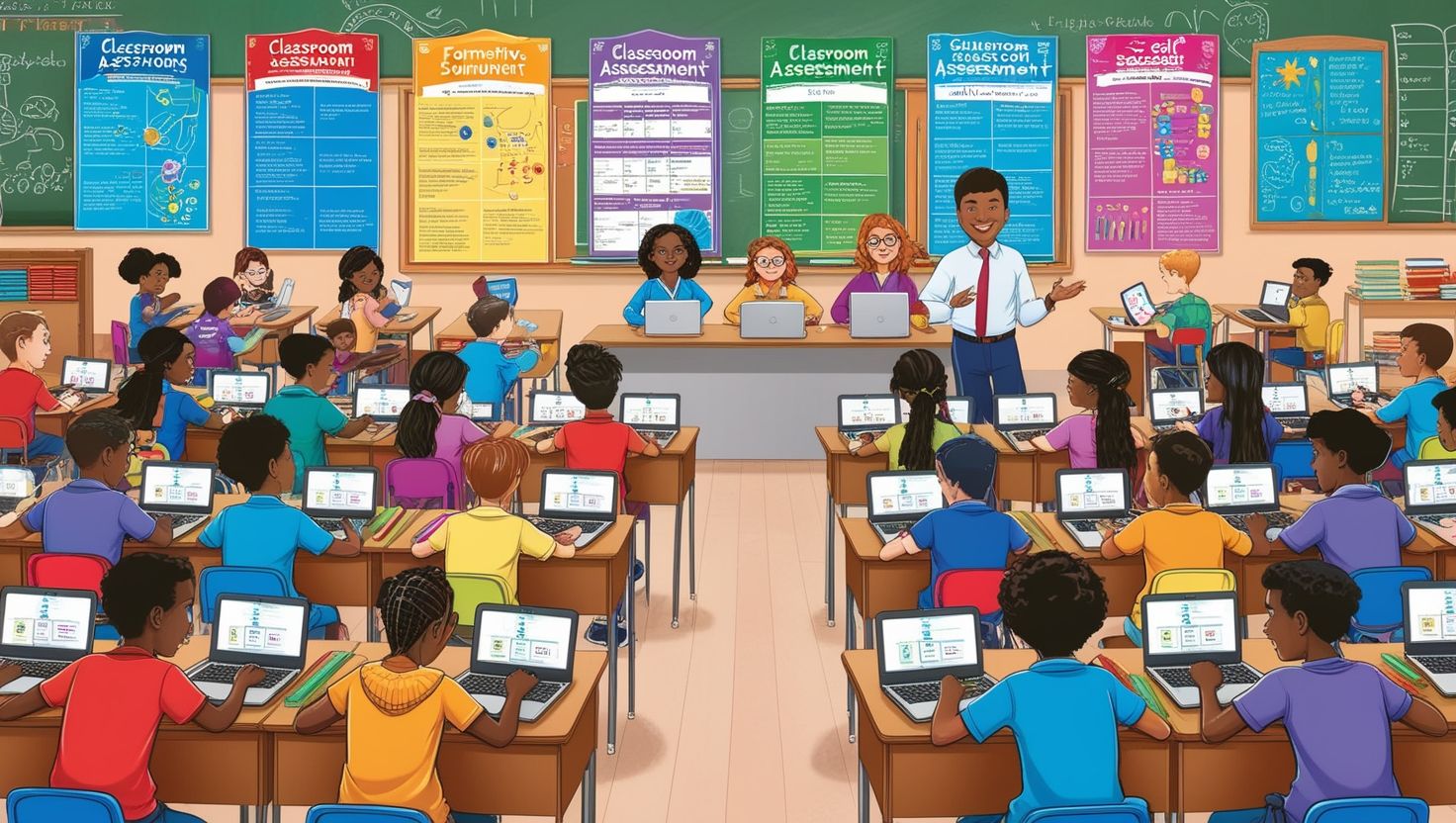
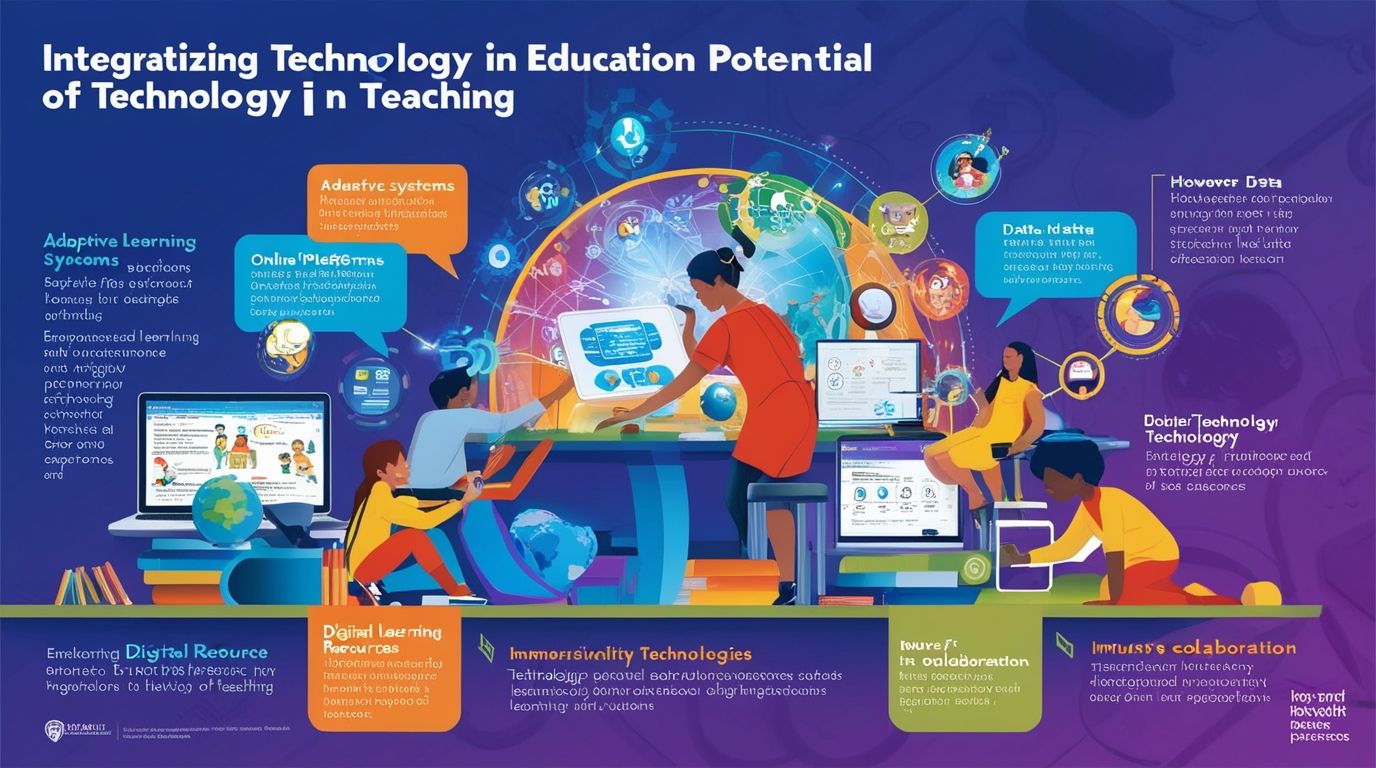
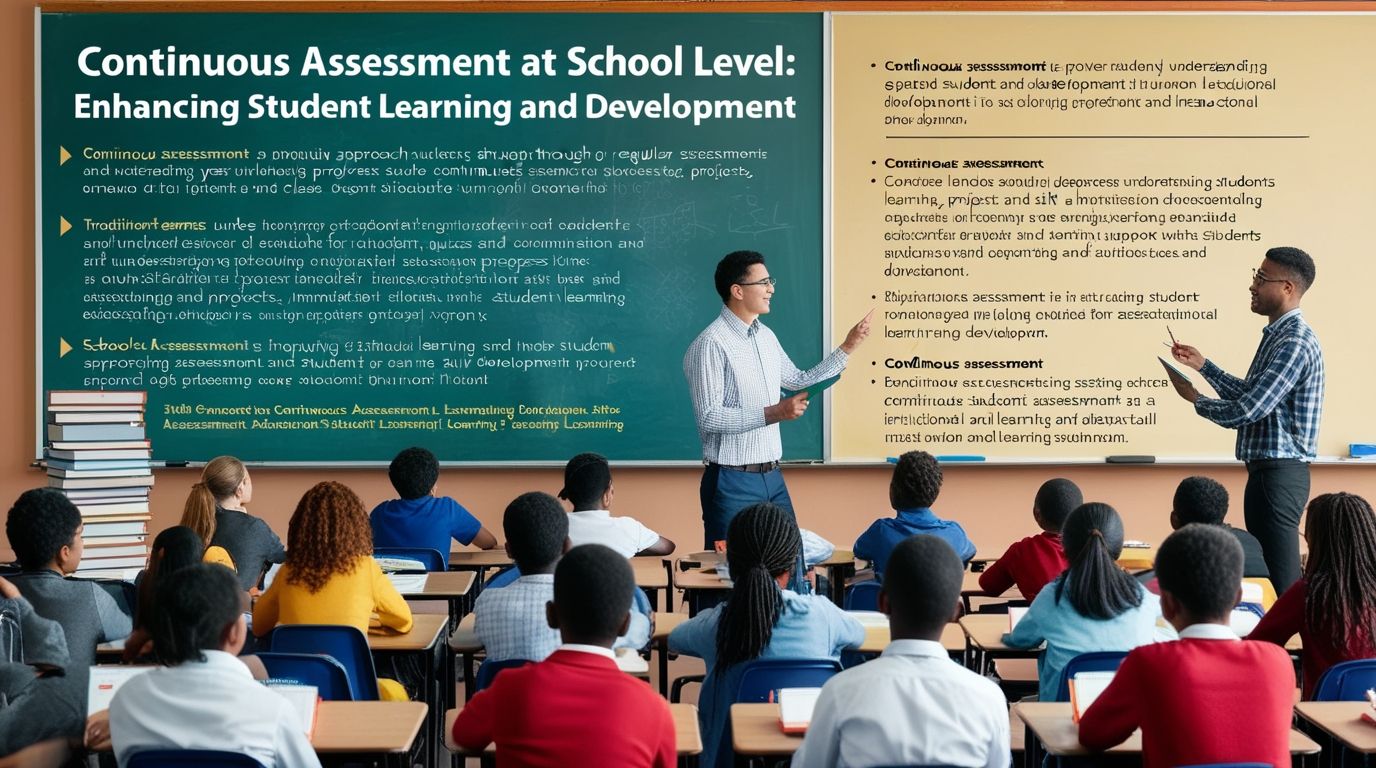
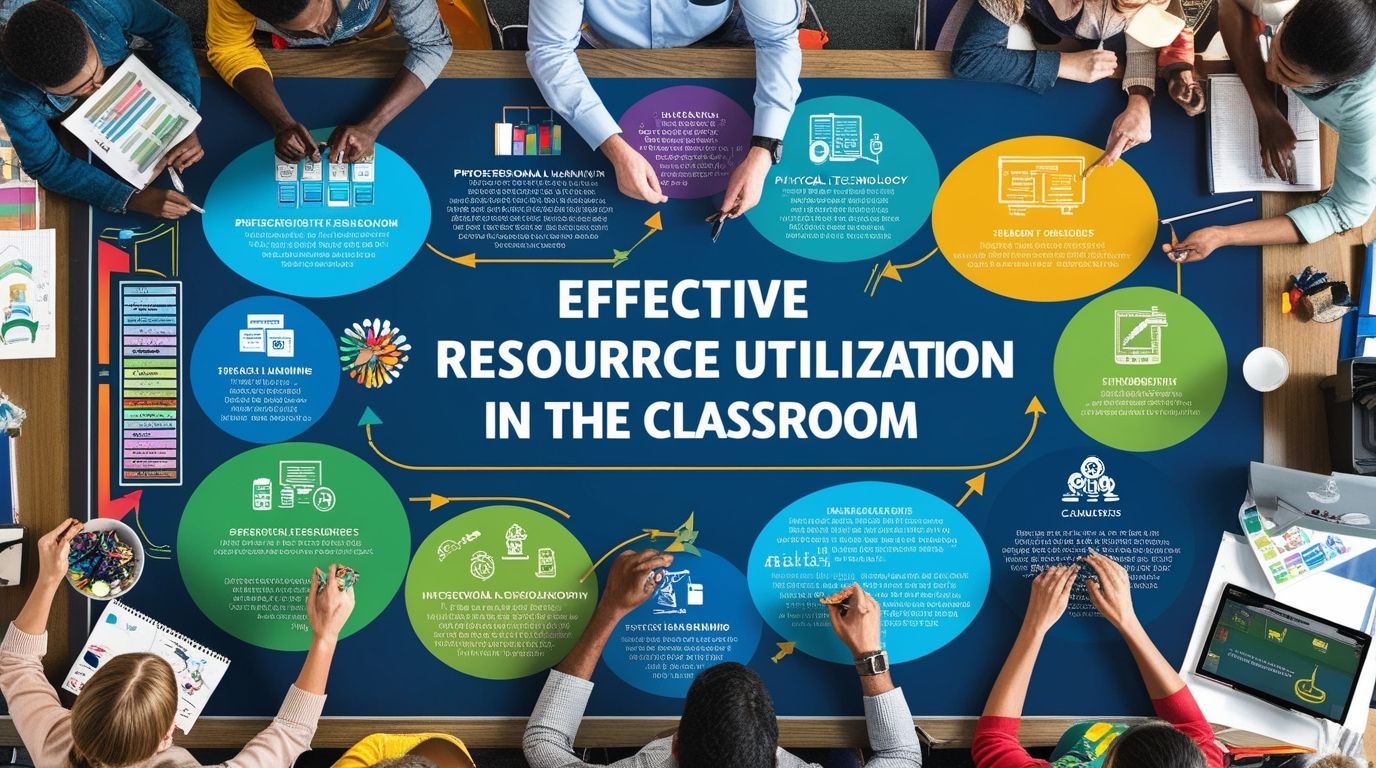
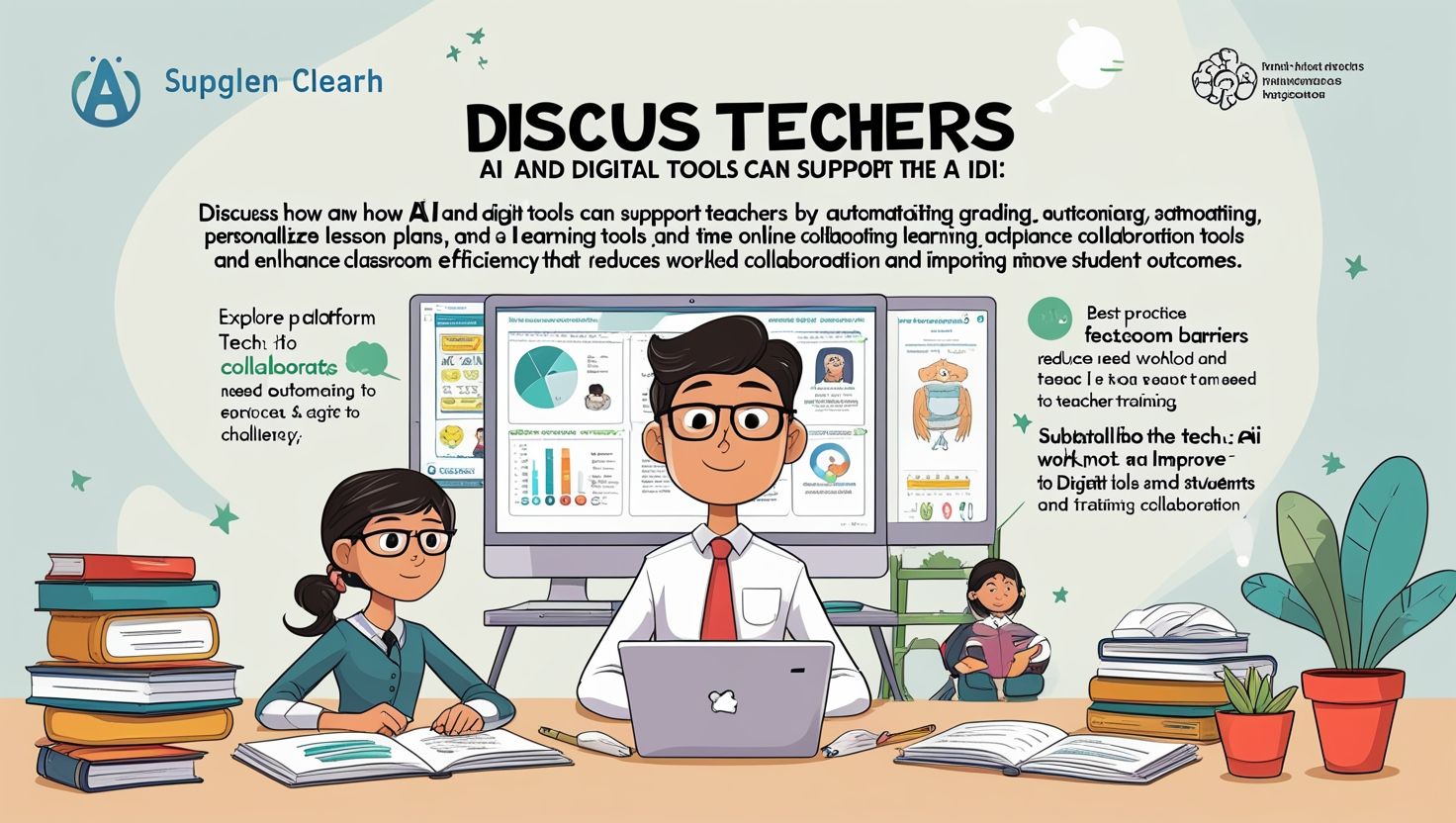
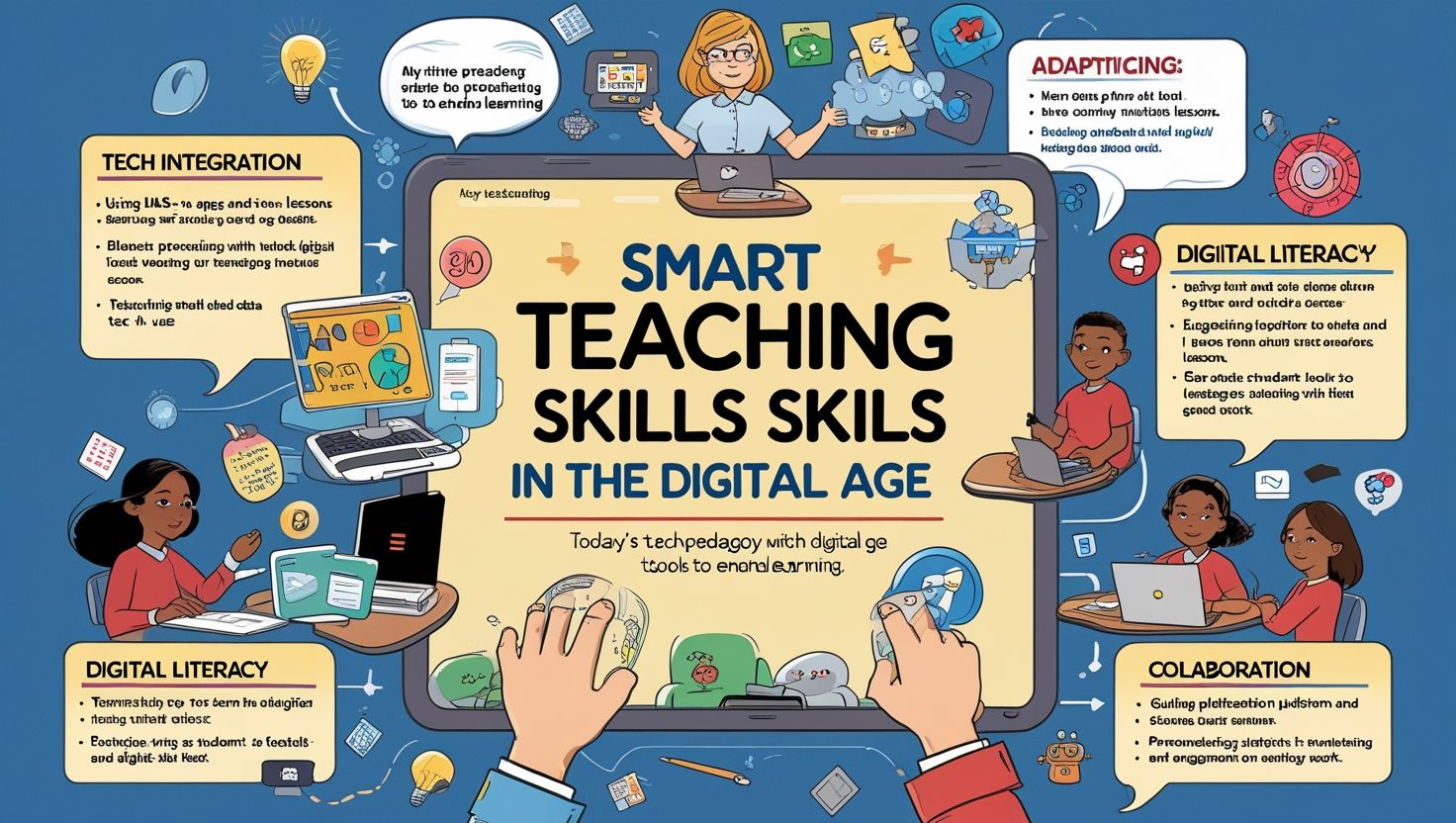
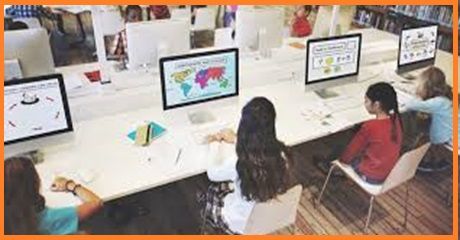
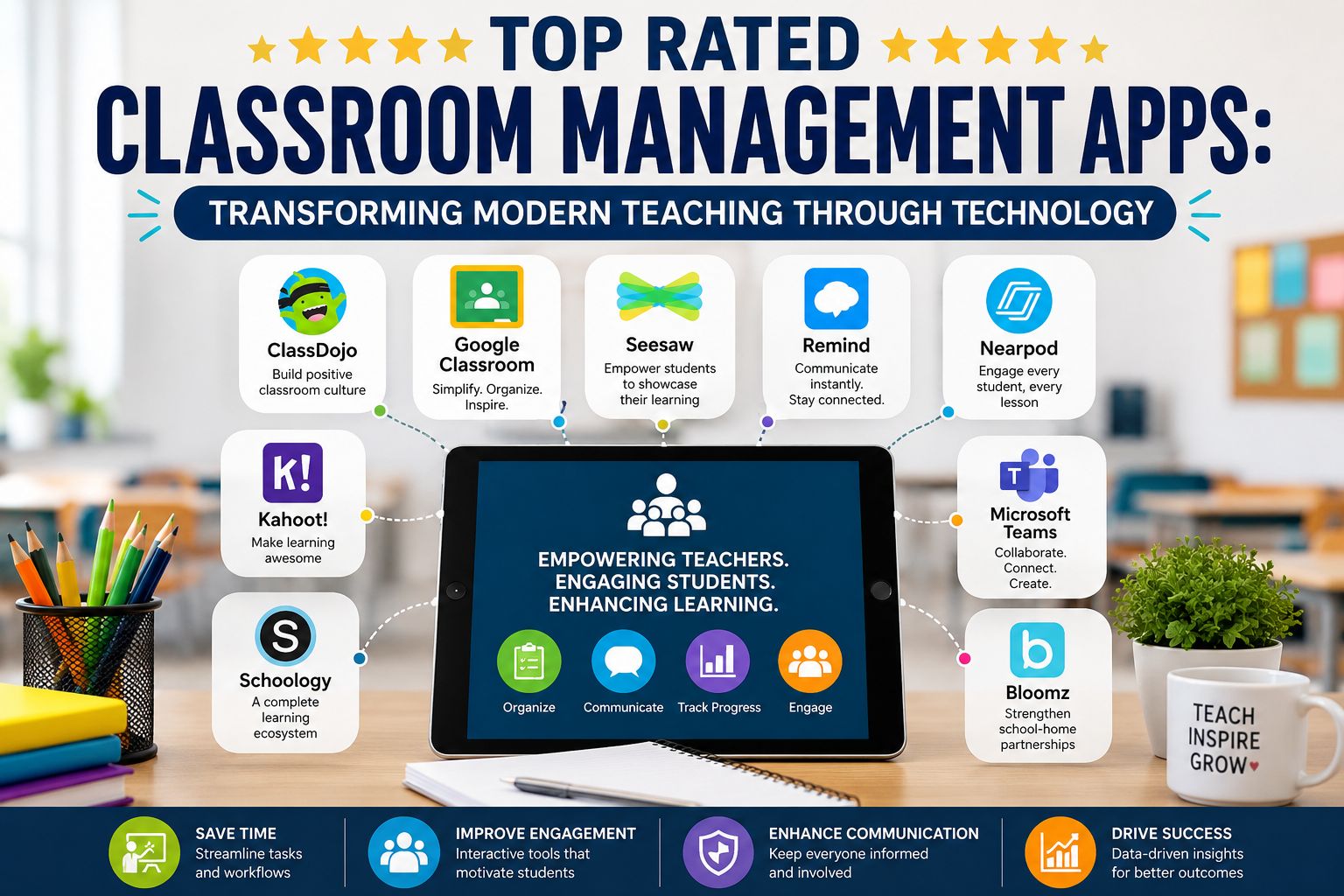
Top Rated Classroom Management Apps & Technology, Classroom management has evolved far beyond attendance registers, behavior charts, and paper planners. Modern educators face increasing demands to monitor student engagement, communicate with families, organize learning resources, and maintain productive learning environments. Classroom management applications have emerged as powerful solutions that help teachers streamline daily responsibilities while creating more engaging educational experiences. These tools combine communication, organization, behavior tracking, and instructional management into accessible digital platforms. By reducing administrative burdens, teachers gain more time to focus on meaningful instruction and student relationships. Schools across the world are adopting these technologies to improve efficiency, transparency, and student outcomes. The best classroom management apps offer intuitive interfaces, robust reporting features, and seamless integration with educational systems. As digital learning continues to expand, selecting the right classroom management application has become a strategic decision that influences teaching effectiveness, student participation, and overall classroom culture.
2. ClassDojo: Building Positive Learning Communities
Among the most highly rated classroom management applications, ClassDojo stands out for its emphasis on positive behavior reinforcement and family engagement. Teachers can award points for desirable behaviors such as collaboration, participation, responsibility, and perseverance. Students receive immediate feedback, encouraging consistent positive conduct. The platform also facilitates communication between teachers and parents through messaging features, classroom stories, and student portfolios. One of ClassDojo’s greatest strengths is its ability to create a sense of community that extends beyond classroom walls. Parents gain real-time insights into their children’s progress, while students remain motivated through recognition and achievement tracking. Teachers appreciate the user-friendly interface and flexibility in customizing behavior categories according to classroom needs. Because it combines behavior management with communication tools, ClassDojo has become a preferred choice for elementary and middle school educators seeking a balanced approach to student engagement and classroom culture development.
3. Google Classroom: Simplicity Meets Organization
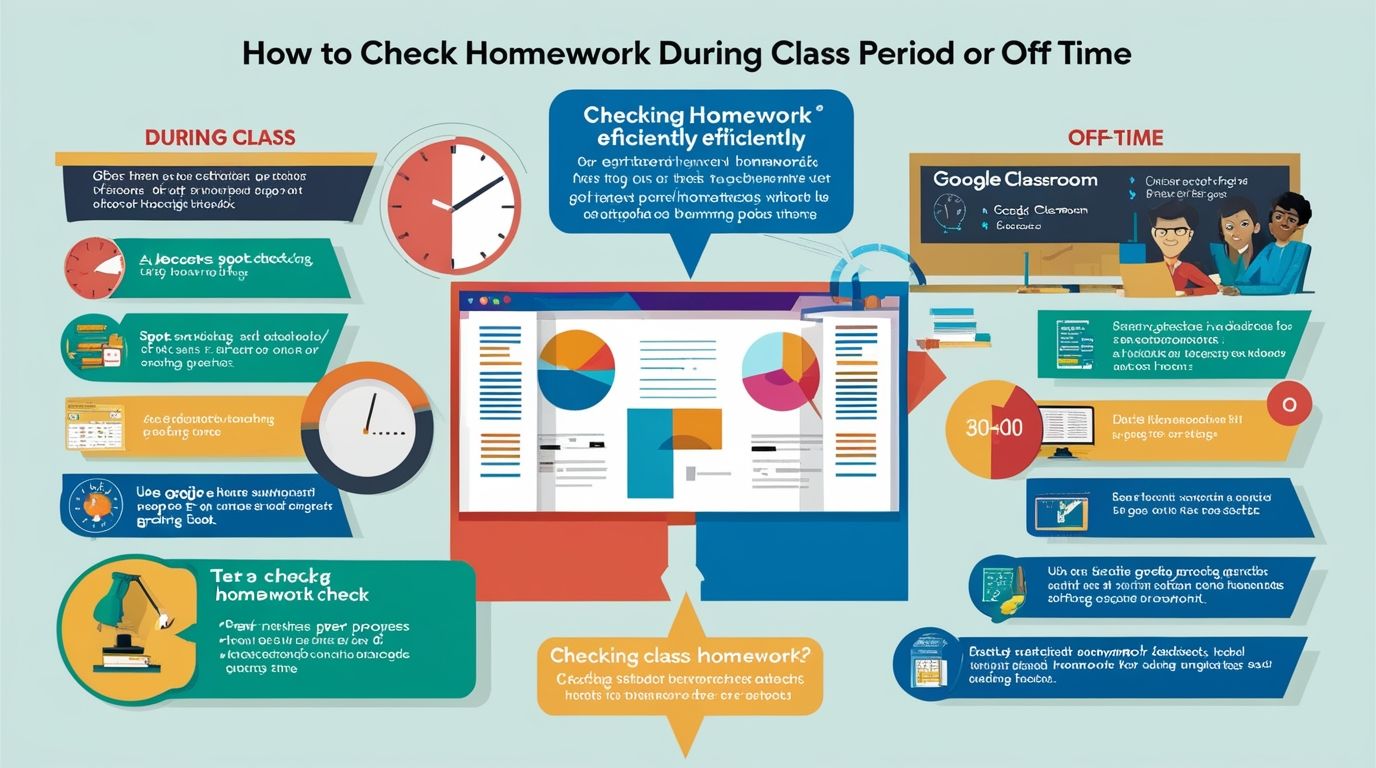
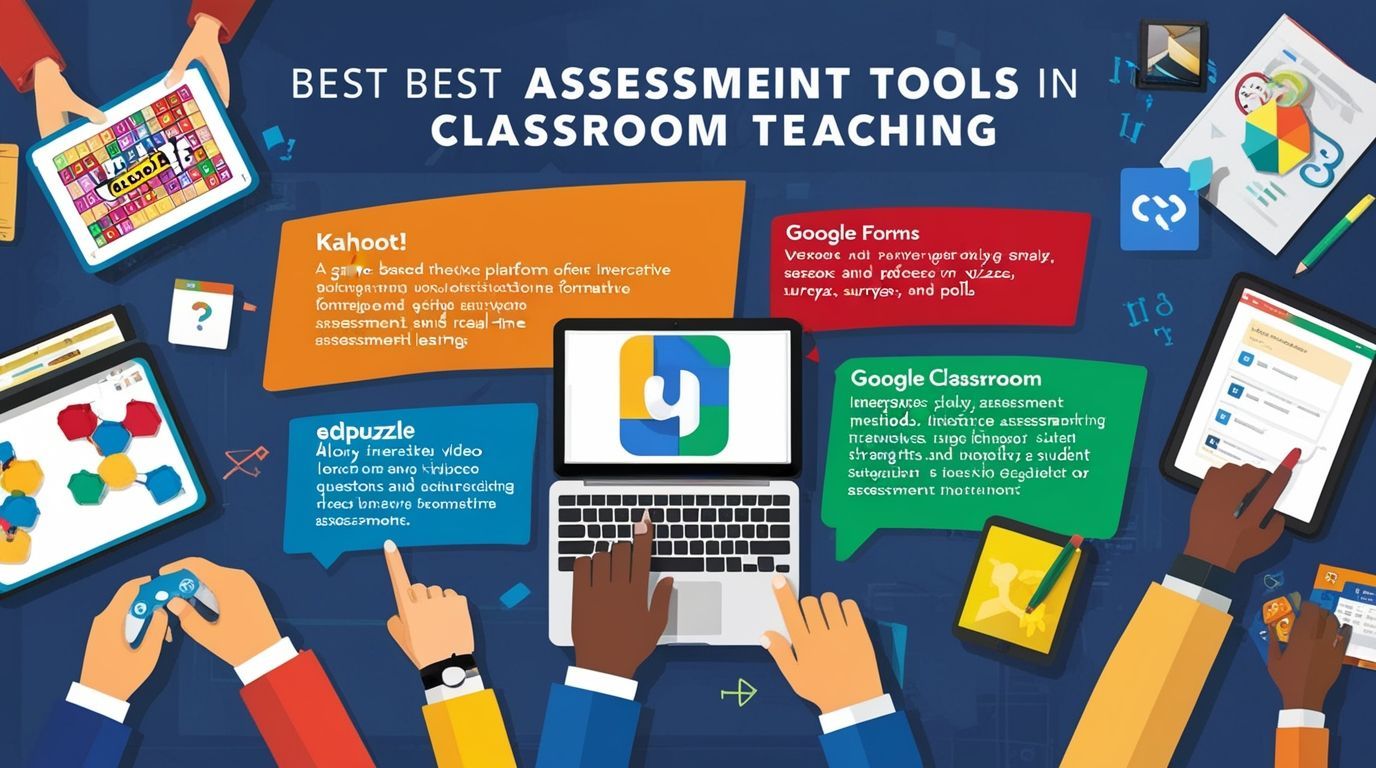
Google Classroom has become a cornerstone of digital classroom management due to its seamless integration with Google’s educational ecosystem. Teachers can create classes, distribute assignments, provide feedback, and organize learning materials within a single platform. Its straightforward design reduces the learning curve for both educators and students. One major advantage is the automatic organization of coursework, which minimizes confusion and improves accountability. Students can access assignments, submit work, and monitor deadlines efficiently. Teachers benefit from streamlined grading processes and centralized communication channels. Integration with Google Drive, Docs, Slides, and Forms enhances productivity while supporting collaborative learning experiences. Schools already using Google Workspace for Education find Google Classroom especially valuable because it connects multiple instructional tools into one coherent environment. As hybrid and online learning continue to influence education, Google Classroom remains one of the most reliable and scalable classroom management solutions available today.
4. Seesaw: Amplifying Student Voice and Creativity
Seesaw is widely recognized for empowering students to document and showcase their learning through multimedia portfolios. Unlike traditional classroom management systems focused primarily on assignments and behavior, Seesaw encourages students to express understanding through photos, videos, drawings, recordings, and written reflections. This approach promotes creativity while providing teachers with valuable insights into student thinking. Families can also access portfolios, strengthening home-school partnerships and increasing parental involvement. Teachers appreciate the platform’s ability to support formative assessment and individualized feedback. Younger learners particularly benefit from Seesaw’s intuitive interface and visual design. The application helps educators manage classroom activities while simultaneously fostering student ownership of learning. By creating a dynamic space where students can demonstrate knowledge in diverse ways, Seesaw transforms classroom management into a more learner-centered process. Its emphasis on reflection, communication, and creativity makes it a favorite among elementary educators worldwide.
5. Remind: Bridging the Communication Gap
Effective classroom management depends heavily on strong communication, and Remind excels in this area. The platform enables teachers to send announcements, reminders, assignments, and updates directly to students and parents without sharing personal contact information. Messages can be delivered through text messages, emails, or app notifications, ensuring broad accessibility. This consistent communication reduces misunderstandings, improves participation, and strengthens relationships among educators, students, and families. Teachers can schedule messages in advance, share resources, and provide important updates regarding classroom activities. Parents appreciate receiving timely information that helps them support their children’s learning. Remind also supports multilingual communication, making it particularly valuable in diverse educational communities. By keeping everyone informed and connected, the platform contributes significantly to classroom organization and student success. Schools seeking to improve engagement and transparency often consider Remind an essential component of their classroom management strategy.
6. Nearpod: Turning Engagement into Achievement
Nearpod combines classroom management with interactive instruction, creating an environment where student participation becomes central to learning. Teachers can deliver lessons that incorporate quizzes, polls, videos, virtual field trips, and collaborative activities in real time. The platform allows educators to monitor student responses instantly, helping them identify misconceptions and adjust instruction accordingly. This continuous feedback loop enhances both teaching effectiveness and classroom management. Students remain actively engaged because lessons require ongoing participation rather than passive observation. Teachers gain valuable data regarding attendance, engagement, and understanding. Nearpod supports in-person, hybrid, and remote learning environments, making it highly versatile. Its ability to merge instructional delivery with management functions distinguishes it from many traditional classroom tools. By transforming lessons into interactive experiences, Nearpod helps educators maintain attention, encourage participation, and foster deeper learning while simultaneously improving classroom organization and monitoring capabilities.
7. Kahoot!: Gamifying Classroom Motivation
Kahoot! has revolutionized student engagement by incorporating game-based learning into classroom management and instruction. Through competitive quizzes, challenges, and interactive assessments, teachers can transform routine learning activities into exciting experiences. Students eagerly participate because the platform introduces elements of competition, achievement, and immediate feedback. Teachers use Kahoot! not only for assessment but also for attendance checks, lesson reviews, and formative evaluations. The platform’s colorful design and interactive features contribute to a vibrant classroom atmosphere where students remain focused and motivated. Data generated through student responses helps educators identify learning gaps and monitor progress effectively. Kahoot! supports both individual and team-based activities, promoting collaboration alongside healthy competition. Its adaptability across grade levels and subject areas has contributed to its global popularity. By making learning enjoyable while providing valuable classroom insights, Kahoot! serves as both an engagement tool and a classroom management resource.
8. Schoology: A Comprehensive Learning Ecosystem
Schoology offers a comprehensive approach to classroom management by combining learning management functions, communication tools, assessment capabilities, and organizational features within a unified platform. Teachers can create courses, manage assignments, track attendance, and communicate with students and parents efficiently. Its structured environment supports consistency and accountability, which are essential components of effective classroom management. School administrators also benefit from robust reporting and data analysis features that facilitate informed decision-making. Students enjoy a centralized learning experience where resources, assignments, and feedback remain easily accessible. The platform’s collaborative tools encourage interaction among learners while maintaining clear expectations and organization. Schoology integrates with numerous educational applications, increasing flexibility and functionality. As schools increasingly seek comprehensive digital ecosystems rather than isolated tools, Schoology continues to earn recognition as one of the most effective solutions for managing both instruction and classroom operations.
9. Edmodo: Creating Safe Educational Networks
Edmodo has earned recognition for providing a secure social-learning environment that supports communication, collaboration, and classroom organization. Designed specifically for educational settings, the platform enables teachers to share resources, assign tasks, conduct discussions, and monitor student participation within a protected digital space. Students benefit from structured interaction opportunities that encourage collaboration while maintaining appropriate educational boundaries. Teachers can create polls, quizzes, and discussion forums that promote active learning and engagement. Parents also gain visibility into classroom activities and student progress. The platform’s familiar social-network style interface makes navigation intuitive for users while preserving educational focus. Edmodo’s emphasis on safe digital citizenship aligns with contemporary educational priorities. By blending communication, collaboration, and management tools within a secure environment, the platform supports both academic achievement and responsible technology use, making it a valuable addition to modern classroom management practices.
10. Microsoft Teams for Education: Collaboration at Scale
Microsoft Teams for Education extends classroom management beyond traditional boundaries by integrating communication, collaboration, assignments, and virtual meetings into a single platform. Teachers can organize classes, share resources, conduct discussions, and facilitate synchronous or asynchronous learning experiences. Integration with Microsoft Office applications enhances productivity and supports diverse instructional strategies. The platform allows educators to monitor participation, manage assignments, and provide individualized feedback efficiently. Students benefit from collaborative workspaces where they can communicate, share ideas, and complete group projects. Schools using Microsoft ecosystems often find Teams particularly effective because of its seamless connectivity with existing systems. The platform supports both classroom-based and remote learning environments, offering flexibility for evolving educational needs. By bringing together multiple management and instructional functions, Microsoft Teams helps educators maintain organization, foster collaboration, and ensure continuity of learning across different educational contexts.
11. Bloomz: Strengthening School-Home Partnerships
Bloomz has gained popularity because it places family engagement at the center of classroom management. Teachers can communicate with parents, schedule conferences, share updates, manage volunteer opportunities, and track student behavior through a single platform. This comprehensive communication system helps build trust and transparency between schools and families. Parents receive timely notifications regarding classroom events, assignments, and student achievements, enabling them to remain actively involved in their children’s education. Teachers benefit from reduced communication barriers and improved responsiveness from families. The platform also supports classroom organization through calendars, reminders, and behavior management features. By consolidating multiple communication channels into one accessible environment, Bloomz simplifies relationship management and administrative tasks. Schools seeking stronger partnerships with families often find Bloomz particularly effective because it encourages consistent interaction and shared responsibility for student success while supporting broader classroom management objectives.
12. Choosing the Right App for Your Teaching Context
Selecting the most appropriate classroom management app requires careful consideration of educational goals, student needs, technological infrastructure, and institutional priorities. No single platform serves every classroom equally well. Teachers focused on behavior management may prefer ClassDojo, while those prioritizing assignment organization might choose Google Classroom or Schoology. Educators emphasizing student creativity often find Seesaw especially valuable. Communication-centered environments may benefit most from Remind or Bloomz. Factors such as ease of use, accessibility, integration capabilities, data privacy, and cost should influence decision-making. Professional development and ongoing support also play important roles in successful implementation. Schools should involve teachers, administrators, students, and families when evaluating options to ensure alignment with community needs. A thoughtful selection process increases adoption rates and maximizes educational impact. Ultimately, the most effective classroom management application is the one that supports teaching objectives while enhancing learning experiences.
13. Future Trends Reshaping Classroom Management Technology
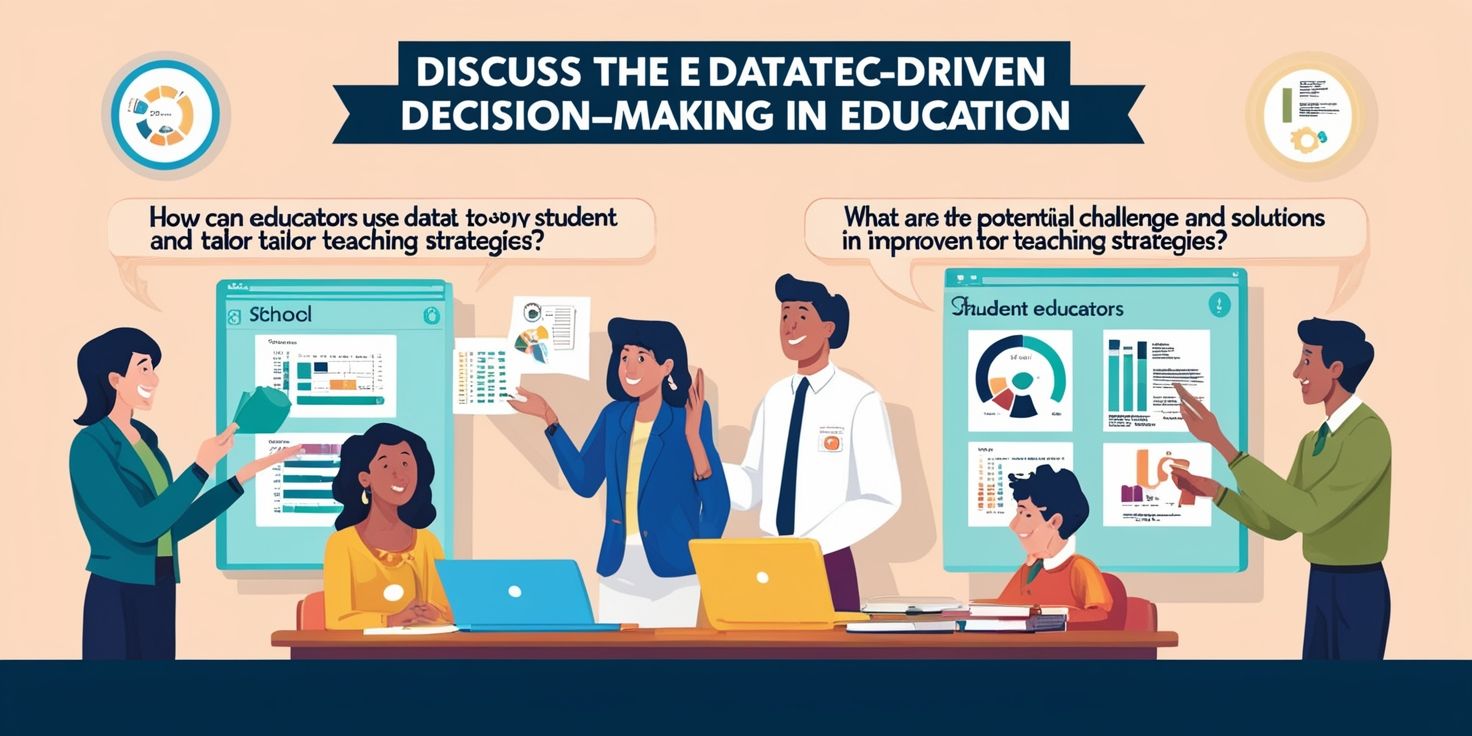
The future of classroom management applications will likely be shaped by artificial intelligence, predictive analytics, personalized learning, and enhanced automation. Emerging technologies are enabling platforms to provide deeper insights into student engagement, attendance patterns, academic performance, and behavioral trends. Teachers may soon receive proactive recommendations regarding interventions, instructional adjustments, and support strategies. Artificial intelligence can automate routine administrative tasks, freeing educators to focus more on teaching and mentoring. Enhanced analytics will help schools make data-driven decisions while supporting individualized learning pathways. Mobile accessibility, cloud-based services, and interoperability among educational tools will continue to improve user experiences. As digital citizenship and cybersecurity become increasingly important, developers will place greater emphasis on privacy protections and responsible technology use. These innovations promise to transform classroom management from reactive monitoring into proactive support systems that strengthen both educational outcomes and student well-being.
14. The Final Verdict on Educational Excellence
Top-rated classroom management apps are far more than digital conveniences; they are strategic tools that shape learning environments, strengthen relationships, and improve educational outcomes. Whether focusing on behavior management, communication, organization, collaboration, or engagement, each platform offers unique advantages that address specific classroom challenges. The most successful educators recognize that technology should enhance, rather than replace, meaningful human interaction. Effective implementation requires thoughtful planning, ongoing evaluation, and alignment with instructional goals. When selected and used appropriately, classroom management applications can increase efficiency, promote accountability, encourage participation, and foster stronger connections among teachers, students, and families. As education continues to evolve in response to technological advancements and changing learner needs, these platforms will play an increasingly significant role in supporting effective teaching practices. Investing in the right classroom management technology is ultimately an investment in student success, educational innovation, and long-term academic excellence.