Abstract
Lesson Plan Formats Across Different Universities, Lesson plan formats vary significantly across universities, but this variation is not merely a matter of arbitrary formal preference. It is deeply shaped by disciplinary cultures, institutional evaluation systems, and pedagogical traditions. Based on an analysis of teaching documents and teacher training materials from multiple universities, this article identifies three major types of lesson plan formats and the institutional logics underlying them: the “technical-rational” type centered on behavioral objectives, the “process-oriented” type focused on learning activities, and the “academic-autonomy” type in which course syllabi replace detailed lesson plans. These three formats correspond respectively to different teacher training traditions, disciplinary epistemologies, and institutional evaluation cultures. Understanding these differences is important for teacher development, cross-institutional teaching exchange, and the institutional safeguarding of teaching quality.
Keywords: lesson plan formats; university teaching; teacher education; curriculum design; institutional differences
I. Introduction
As a core document of instructional design, the lesson plan plays a key role at all levels of education. Yet when we turn our attention to the university level, a puzzling phenomenon emerges: different universities have vastly different requirements for lesson plans. Some universities require instructors to submit detailed templates containing precise time allocations, behavioral objectives, and assessment criteria; others require only a course syllabus, treating the lesson plan as a private working document of the instructor that does not enter any institutional review process.
This variation often simplistically attributed to “different management styles” or “varying degrees of teacher autonomy.” But a deeper question follows: do identifiable institutional logics underlie these format differences? Do different lesson plan formats reflect different understandings of what constitutes “good teaching”?
Search results indicate that research has explicitly noted: “Although the course syllabus widely recognized as the most important document in course preparation, no single format has gained widespread acceptance.” This observation applies equally to the lesson plan level. This article attempts to construct an analytical framework for understanding differences in university lesson plan formats through an analysis of existing literature and teaching documents.
II. Major Types of University Lesson Plan Formats
2.1 Behavioral Objectives-Oriented Lesson Plans
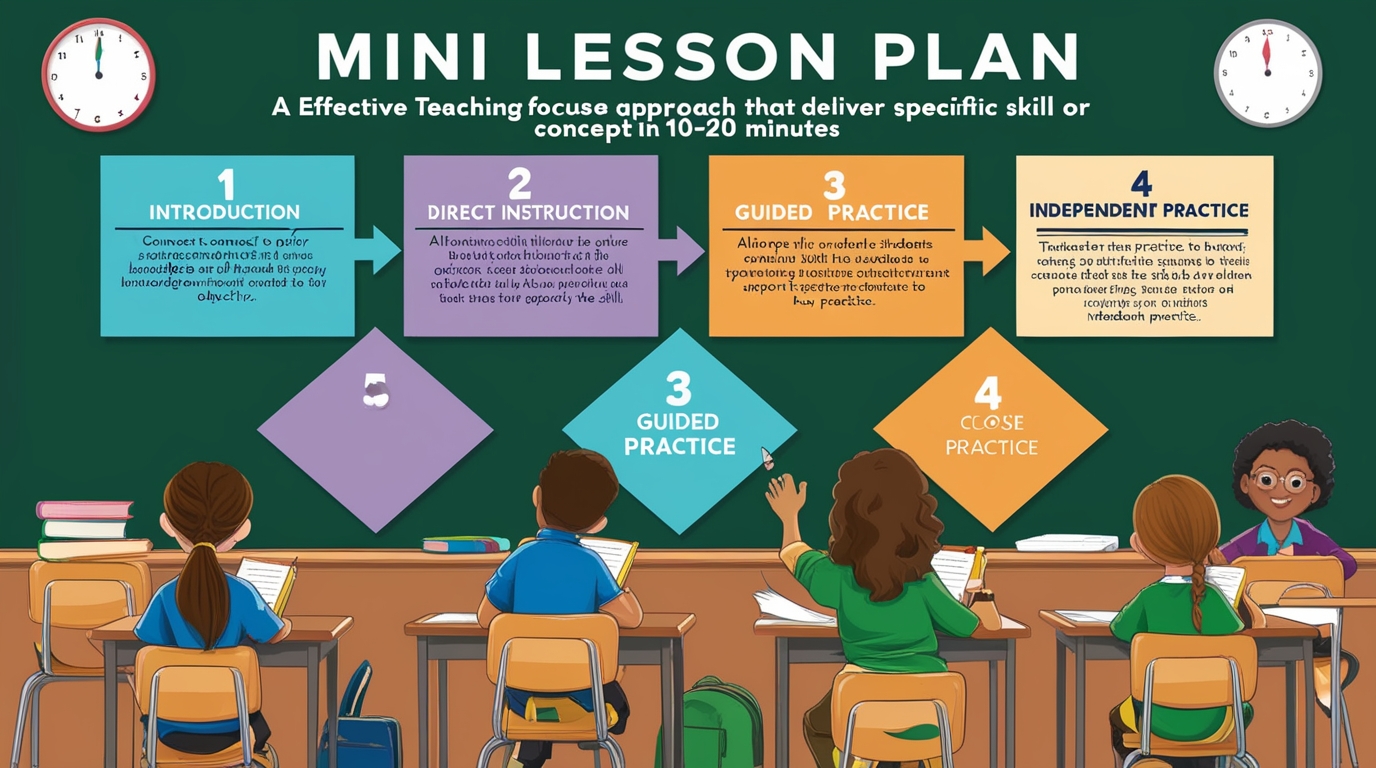
The behavioral objectives-oriented lesson plan is the most systematized and standardized format. Its typical features include: teaching objectives expressed with observable, measurable action verbs; the teaching process decomposed into clear step sequences; time allocations specified for each segment; and specific assessment methods and criteria included.
Taking the lesson plan template of Allama Iqbal Open University as an example, its evaluation dimensions include “lesson plan preparatory section,” “teaching objectives,” “introduction of the lesson,” “use of audio-visual aids,” “teaching methods,” “presentation of the lesson,” “recapitulation,” “homework,” “time management,” “confidence,” “interaction with the audience/students,” and “professional writing of the lesson plan.” The core idea of this format is that teaching is a process that can be precisely designed and controlled, and a good lesson plan should enable any competent teacher to “replicate” that process.
2.2 Process-Oriented Lesson Plans
Process-oriented lesson plans shift the focus from “what the teacher does” to “what students do.” Their typical structure revolves around learning activities, emphasizing student participation, interaction, and output.
A study on lesson plan quality in South Asia proposed a multidimensional evaluation framework, with key criteria including: “student output rather than merely listening,” “structured peer interaction,” “connection to the real world,” and “exit ticket tests at the end of class.” This framework reflects the core concern of process-oriented lesson plans: the starting point of instructional design should be students’ learning behavior, not the teacher’s teaching behavior.
2.3 Syllabus-Substitution Type
At a considerable number of universities, detailed lesson plans do not exist as an institutional requirement. Instead, a comprehensive course syllabus carries the core information of course objectives, teaching content, assessment methods, and reading materials, but does not prescribe the specific teaching process for each class session.
A typical course syllabus should include: the complete course name and number, instructor name and office hours, required textbooks and reading materials, course requirements and grading criteria, course objectives, specific assignments and projects, resource lists, and assessment plans. The assumption underlying this format is that university teachers, as disciplinary experts, possess the professional ability to translate a course syllabus into effective classroom teaching without process-based monitoring through lesson plan templates.
III. Institutional Logics: A Deeper Explanation of Format Differences
3.1 The Influence of Teacher Training Traditions
Differences in lesson plan formats are first and foremost closely related to teacher education traditions. In countries where the teacher preparation system emphasizes the “teaching technology” tradition, behavioral objectives-oriented lesson plans dominate. This tradition rooted in twentieth-century behaviorist educational psychology, which holds that teaching skills can be acquired through standardized training, with the lesson plan serving as the core vehicle of that training.
Taking teacher education in Pakistan as an example, the lesson plan template of Allama Iqbal Open University strictly follows a “preparation—presentation—recapitulation—homework” structure, requiring teaching objectives to be expressed with behavioral verbs and the teaching process to be presented in steps. Although the B.Ed. program of the University of the Punjab’s Faculty of Education underwent a transition from an annual system to a semester system, the lesson plan remained a constant core requirement of teaching practice. This continuity reflects the enduring influence of the “technical-rational” paradigm in the teacher training system.
By contrast, in countries where teacher preparation relies more on the disciplinary “apprenticeship” model, the standardization of lesson plans is noticeably lower. Future university teachers learn to teach by observing their mentors and imitating disciplinary practices rather than through systematic pedagogical courses. In this tradition, the lesson plan regarded as the product of individual professional judgment, and institutional norms often stop at the course syllabus level.
3.2 Differences in Disciplinary Epistemology
Different disciplines hold fundamentally different understandings of “knowledge” and “learning,” and these differences inevitably project onto lesson plan formats.
In mathematics and science education, lesson plans often emphasize “conceptual clarity,” “step-by-step calculation guidance,” “scientific inquiry questions,” and “connections to real life.” The knowledge structure of these disciplines is highly sequential and hierarchical, and instructional design tends to proceed step by step in logical order.
In language education, lesson plan formats place greater emphasis on the clarity of the “priority skill focus.” Taking Urdu language teaching as an example, an effective lesson plan requires a clear focus on a single literacy skill (such as phonological awareness, decoding and phonics, fluency, or comprehension) rather than addressing multiple skills simultaneously. This “single focus” principle reflects the inherent laws of language learning.
In the humanities and social sciences, lesson plan formats tend to be more flexible. Instructional design for Pakistan Studies courses recommends a combination of “inductive and deductive” methods, emphasizing guiding students to understand social, historical, and geographical phenomena through questions, discussions, and role-playing activities. This flexibility reflects these disciplines’ emphasis on multiple perspectives and critical thinking.
3.3 Differences in Institutional Evaluation Cultures
Another important determinant of lesson plan formats is the university’s evaluation culture. In institutions that base teaching quality assurance on “auditable evidence,” lesson plans become important material for teacher performance evaluation. A complete lesson plan can demonstrate that the instructor has carried out sufficient pre-class preparation, followed prescribed teaching procedures, and set clear learning objectives.
The template of Pakistan’s National Accreditation Council for Teacher Education (NACTE) requires teacher education institutions to maintain documents such as “teaching practice planners,” “lesson plans,” and “supervisor and cooperating teacher handbooks.” This institutional design incorporates lesson plans into the archival system of quality assurance, making them a tool of institutional accountability.
In contrast, some research universities tend to regard lesson plans as the domain of teachers’ “academic freedom.” The course syllabus, as a “contract” between the instructor and the institution, specifies the basic framework and quality standards of the course; specific instructional design falls within the instructor’s professional discretion. This arrangement reflects respect for university teachers’ academic autonomy, but it also means that teaching quality depends more on individual professional competence than on institutional safeguards.
IV. Comparative Analysis and Discussion
4.1 A Functional Explanation of Format Differences
From a functionalist perspective, different lesson plan formats serve different institutional needs. Behavioral objectives-oriented lesson plans facilitate quality monitoring in large-scale teacher training programs. Their standardized features allow teaching by different instructors to compared and evaluated within the same framework. Process-oriented lesson plans better suited to teaching reform agendas that emphasize student participation and deep learning. The syllabus-substitution type aligns with university teachers’ academic identity and autonomy traditions.
4.2 Power Relations Behind Formats
Differences in lesson plan formats also reflect power relations among different actors in the teaching field. When lesson plans are highly standardized and incorporated into evaluation systems, teachers’ teaching autonomy is constrained, but a baseline of teaching quality is guaranteed. When lesson plans are downgraded to private documents, teachers’ professional freedom is respected, but teaching quality may fluctuate due to individual differences among teachers.
Research in Pakistan found differences in future teachers’ understanding of the “importance of teaching objectives” under annual and semester systems (84% vs. 74.4%), with even more pronounced differences in understanding “how to use modern technology to support effective learning” (58.5% vs. 41.9%). This suggests that the institutional environment in which lesson plan formats are embedded may substantively influence teachers’ pedagogical beliefs.
4.3 The Possibility of Integration
Despite significant differences, different formats are not entirely incommensurable. One notable trend is that more and more lesson plan templates seek to balance “clarity of objectives” with “flexibility of process.” The lesson plan quality evaluation framework in South Asia requires both clear learning objectives and emphasizes “teachers’ professional discretion”—”word-for-word scripts are penalized in evaluation.” This “structured flexibility” may represent the direction of lesson plan format evolution.
V. Conclusion
The diversity of university lesson plan formats is rooted in differences in teacher training traditions, disciplinary epistemologies, and institutional evaluation cultures. The three major formats—behavioral objectives-oriented, process-oriented, and syllabus-substitution—each have their own institutional logic and conditions of applicability. Understanding these differences is important for promoting cross-institutional teaching exchange, designing effective teacher development programs, and balancing teaching quality assurance with teachers’ professional autonomy.
For Chinese universities, the implication of this comparative analysis is that the choice of lesson plan format should not be regarded as a purely formal matter, but should be understood as a concrete manifestation of the philosophy of teaching governance. In the process of promoting teaching quality improvement, how to find a balance point suited to one’s own institutional culture and disciplinary characteristics between institutional regulation and professional autonomy is a question worthy of deep reflection.
References
[1] ERIC. The Course Syllabus. ED428804.
[2] Taleemabad. Beyond Generation LLMs for South Asian Lesson Planning.
[3] Allama Iqbal Open University. Teaching Practice 1.
[4] ERIC. The Lesson Plan is a Must for All Teachers. ED428805.
[5] University of Education, Lahore. Effectiveness of Teacher Education Programs.
[6] NACTE. Teaching Practice and Internship File Template.
[7] AIOU. Pakistan Studies Teaching Methods.