
Introduction
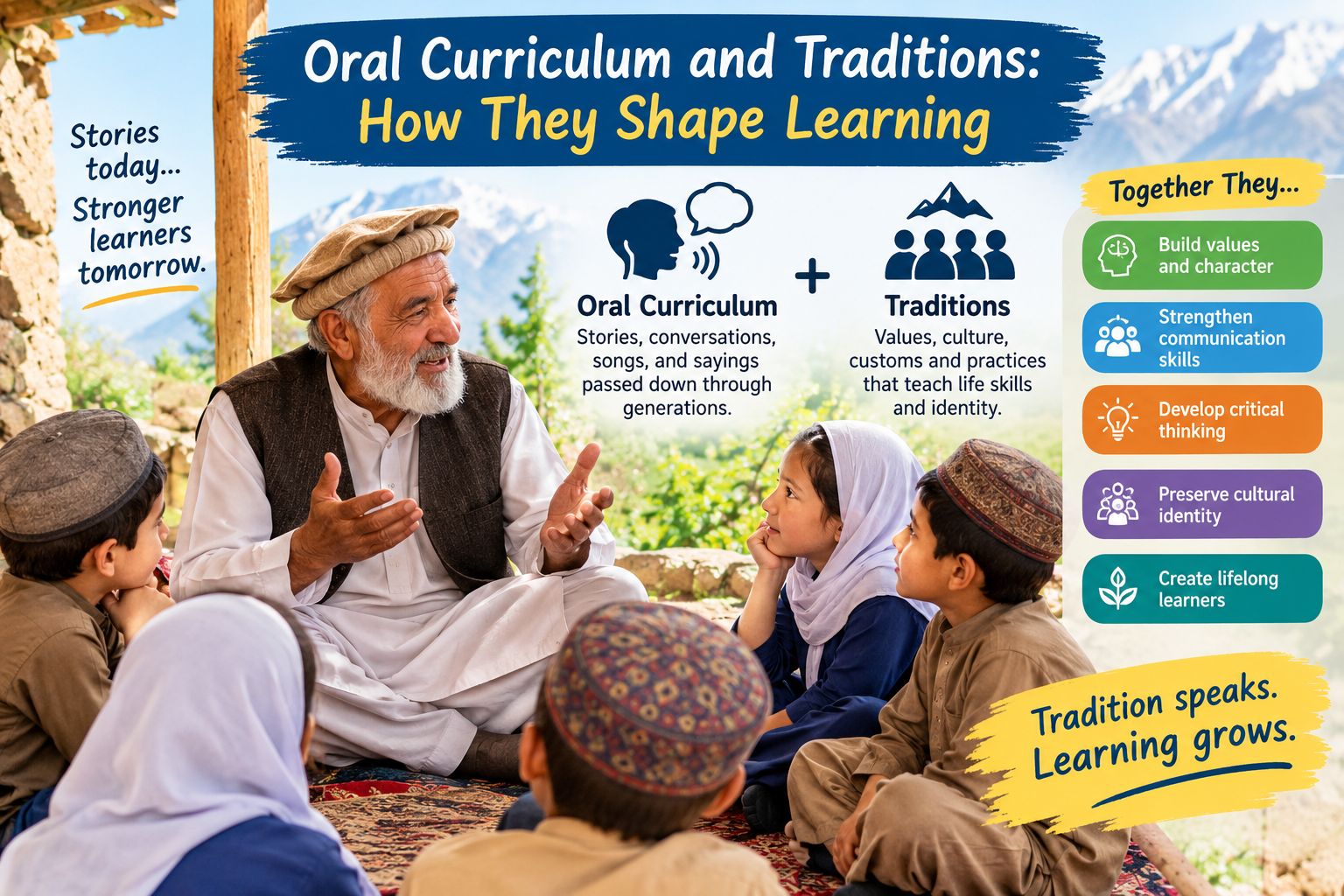
Oral Curriculum and Traditions: How They Shape Learning, Long before schools had textbooks, children learned by listening. Elders spoke, families repeated, and communities remembered. That spoken knowledge system, known as an oral curriculum, shaped human thinking for thousands of years. It still shapes classrooms today.
An oral curriculum organizes knowledge through speech, story, song, proverb, and dialogue. Oral traditions carry that knowledge across generations. Together they form a complete educational framework that builds skills, values, and identity.
This article explains what an oral curriculum is, how oral traditions influence learning, and how teachers and parents can use these methods to improve student engagement and academic performance.
What Is an Oral Curriculum?
An oral curriculum is a body of knowledge that a community teaches through spoken word instead of written text. It covers history, ethics, farming methods, medicine, law, genealogy, and spiritual belief. Teachers in this system include grandparents, storytellers, poets, healers, and community leaders.
Written curricula list content in a fixed sequence. An oral curriculum adapts to the listener. A storyteller reads the audience, adjusts the pace, and adds examples that match the learners’ experience. Every retelling becomes a new lesson.
Many societies never separated “school” from daily life. Children learned by joining the community’s work, listening to evening stories, and taking part in ceremonies. Knowledge lived inside relationships, and that connection made it memorable.
Understanding Oral Traditions
Oral traditions are the practices, stories, and expressions that communities pass down by word of mouth. Scholars group them into several forms:
- Folktales and myths explain origins, natural events, and moral choices.
- Proverbs and riddles compress wisdom into short, memorable phrases.
- Epics and praise poetry preserve heroes, battles, and family lines.
- Songs and chants attach knowledge to rhythm and melody.
- Ritual speech marks births, marriages, harvests, and seasonal change.
Each form serves a teaching purpose. A proverb trains a child to think in metaphor. An epic teaches sequence and cause. A song helps a whole village memorize a planting calendar. The historian Jan Vansina described oral tradition as a chain of testimony that connects present speakers to past events, which shows how seriously communities treat this knowledge.
How Oral Traditions Strengthen Memory and Cognition
Speaking and listening train the brain in specific ways. Oral cultures cannot look things up, so learners develop strong memory skills through repetition, rhythm, and structure.
Storytellers use several proven techniques:
- Rhythm and rhyme give the brain a pattern to follow.
- Repetition locks key ideas into long-term memory.
- Vivid imagery turns abstract facts into mental pictures.
- Formulaic phrases give the speaker anchors and the listener familiar landmarks.
- Narrative structure links facts into a chain of cause and effect.
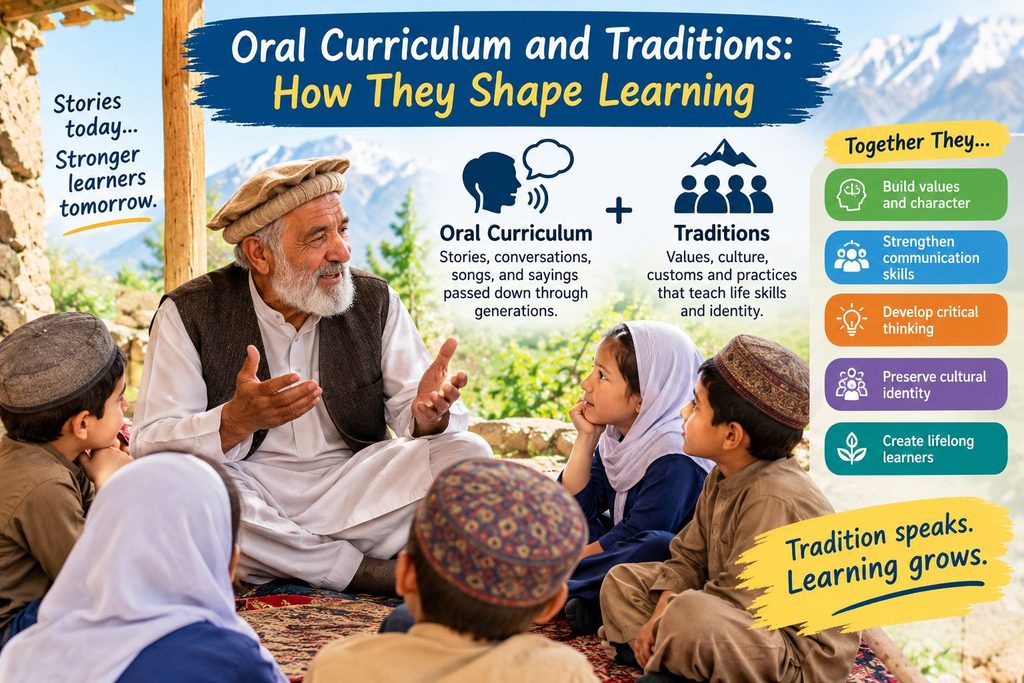
Modern cognitive science supports these methods. Learners remember stories far better than lists of facts. Emotional engagement releases attention and boosts recall. A child who hears a tale about a river, a flood, and a wise elder retains the lesson about preparation long after forgetting a bullet point on a worksheet.
Walter Ong argued that oral thinking builds knowledge around the human lifeworld. Ideas stay close to action, people, and conflict. That grounding helps learners connect new information to what they already know, which is the foundation of deep learning.
Building Language and Literacy Skills
Strong readers begin as strong listeners. An oral curriculum develops the exact skills that written literacy demands.
Vocabulary growth. Storytellers use rich, varied language. Children absorb new words in context, which works better than memorizing definitions.
Phonological awareness. Rhymes, chants, and songs teach children to hear sounds inside words. Research links this skill directly to early reading success.
Grammar and syntax. Hearing well-formed sentences again and again helps learners internalize language patterns without formal instruction.
Comprehension. Listeners must follow plot, predict outcomes, and infer meaning. Those are the same processes readers use with a printed page.
Public speaking. Oral cultures reward clear, confident expression. Students who retell stories, recite poems, or lead discussions build communication skills that serve them in every subject and career.
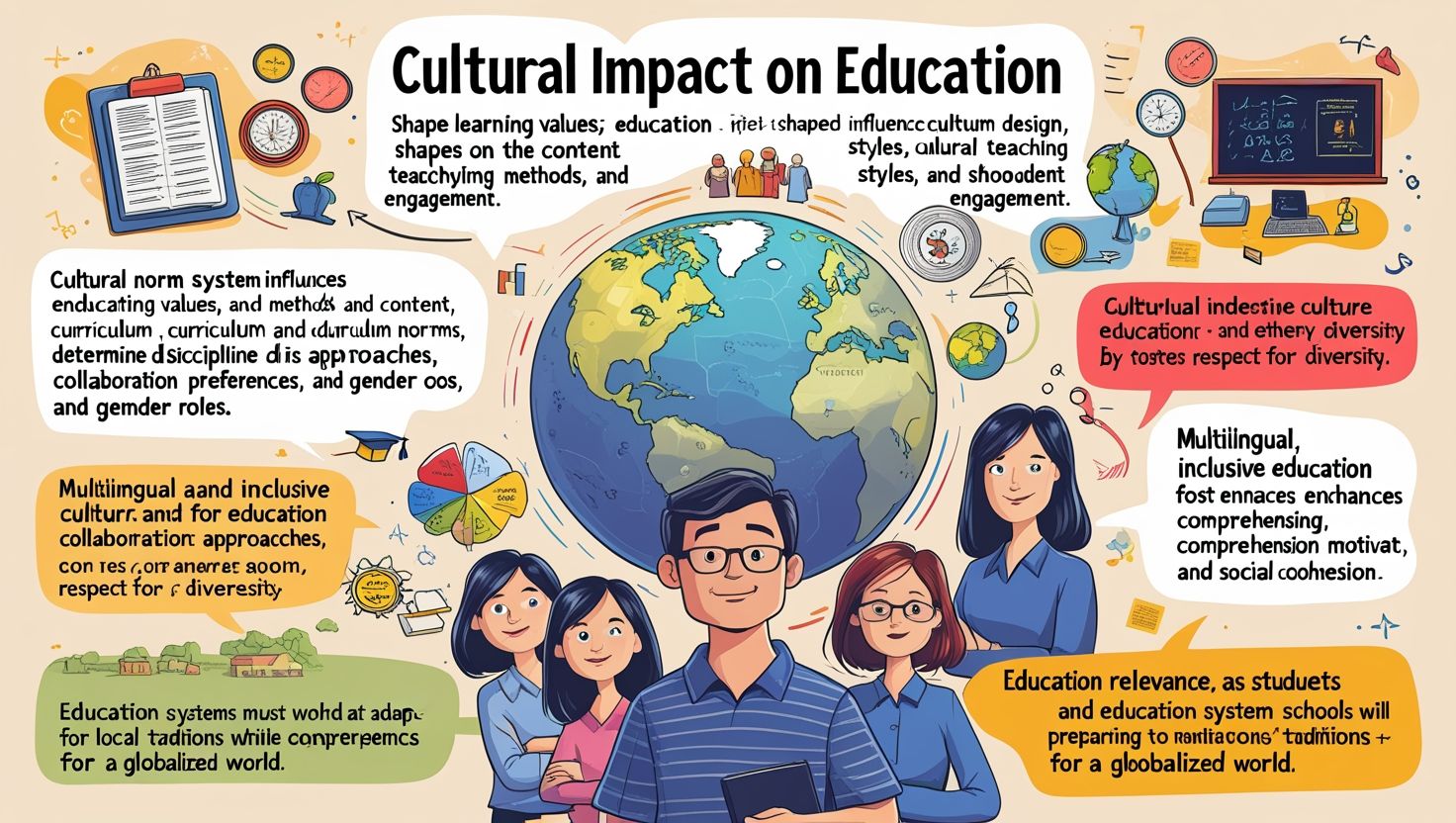
For multilingual learners, oral traditions in the home language offer an additional benefit. They keep the first language strong, and a strong first language supports the acquisition of a second one.
Social, Emotional, and Cultural Benefits
Knowledge in an oral system never stands alone. It arrives inside a relationship, and that relationship makes learning personal.
Identity and belonging
When a child hears the story of their family, village, or people, they learn who they are. Cultural identity gives learners a sense of belonging and purpose. Students with a secure identity show greater confidence, resilience, and motivation in school.
Values and character
Folktales and proverbs teach honesty, courage, generosity, and respect through example. Listeners draw moral conclusions themselves instead of receiving a lecture, and self-discovered values last longer.
Community connection
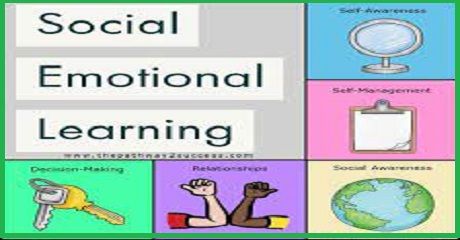
Storytelling brings generations together. Older adults gain purpose as teachers, and younger people gain mentors. This exchange builds social-emotional learning naturally, including empathy, patience, and active listening.
Emotional safety
A story lets a child explore fear, loss, or conflict at a safe distance. Characters face the difficulty, and the listener reflects without pressure. Teachers and counselors use this principle in narrative therapy and classroom discussion.
Oral Traditions Across the World
Every region holds examples of powerful oral education.
- West Africa: Griots, the hereditary storytellers and historians, preserve genealogies and political histories that span centuries. Young apprentices train for years before they perform.
- Aboriginal Australia: Songlines encode maps, water sources, and law inside songs that travel across the landscape. A person who knows the song can navigate the land.
- Indigenous North America: Elders share teaching stories in winter, when the season allows long evenings of listening. Each story carries layers of meaning that deepen as the listener matures.
- South Asia: Vedic chanting preserved sacred texts with remarkable accuracy for millennia through strict recitation methods.
- The Pacific Islands: Navigators memorized star paths, wave patterns, and island positions through chants, crossing thousands of miles of open ocean without instruments.
These examples show that an oral curriculum can hold precise, complex, and technical knowledge. Nothing about it is primitive or informal.
Bringing Oral Curriculum Into Modern Classrooms
Teachers do not need to abandon textbooks. They can blend oral methods into existing lessons and gain immediate benefits. The following strategies work across grade levels.
Start lessons with a story
Open a science unit with a tale about a scientist’s failed experiment. Introduce a history topic through a firsthand account. A narrative hook raises curiosity and gives students a mental framework for the facts that follow.
Invite community voices
Ask grandparents, local elders, and cultural leaders to visit the classroom. Students gain authentic perspectives, and families see their knowledge valued. Record these sessions, with permission, to build a lasting classroom archive.
Use recitation and choral speaking
Poems, key definitions, and mathematical patterns stick better when students say them aloud together. Add rhythm or a simple tune and retention improves further.
Assign oral history projects
Students interview relatives or neighbors and present what they learn. The project builds research skills, listening skills, and family connection at once.
Practice retelling
Ask students to retell a lesson in their own words to a partner. Retelling forces learners to organize ideas, and it exposes gaps in understanding faster than a written quiz.
Hold structured discussions
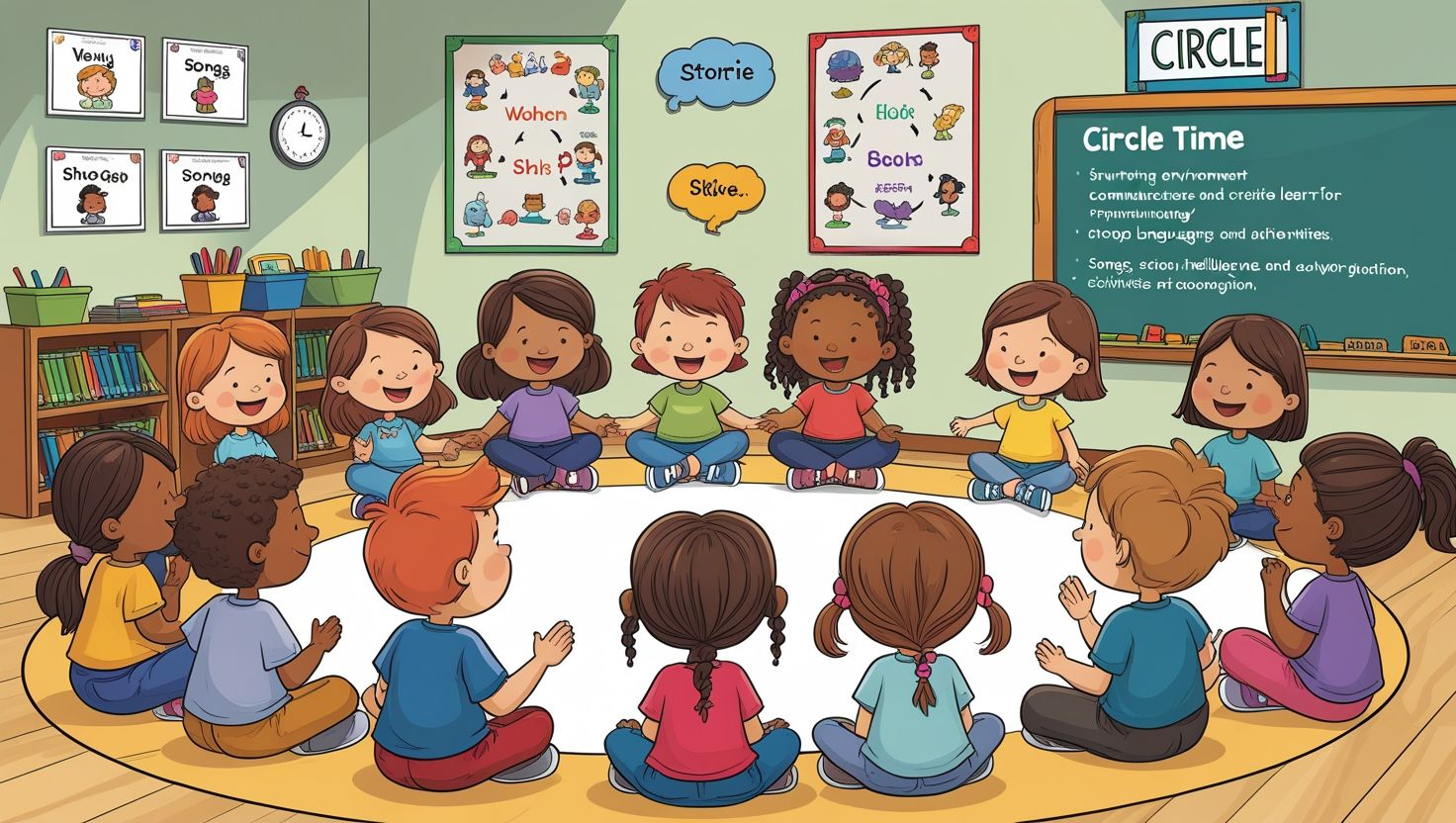
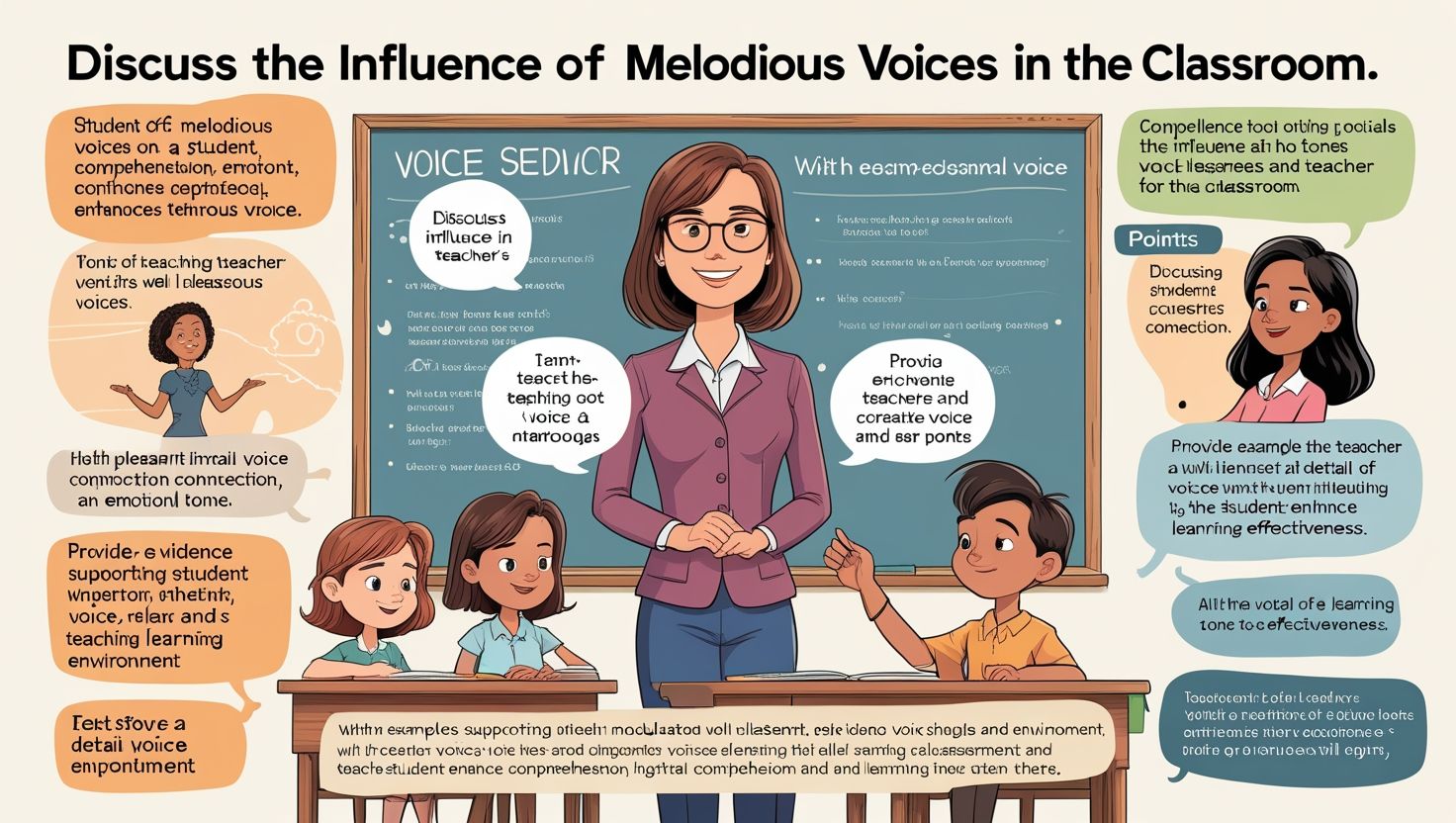
Socratic seminars, storytelling circles, and debates turn the classroom into a space where speech drives thinking. Set clear norms so every student can speak and every voice gets respect.
Combine oral and digital tools
Podcasts, audio recordings, and video storytelling extend oral tradition into the digital age. Students can record a community story, edit it, and share it with a wider audience.
Assessing Learning in an Oral Framework
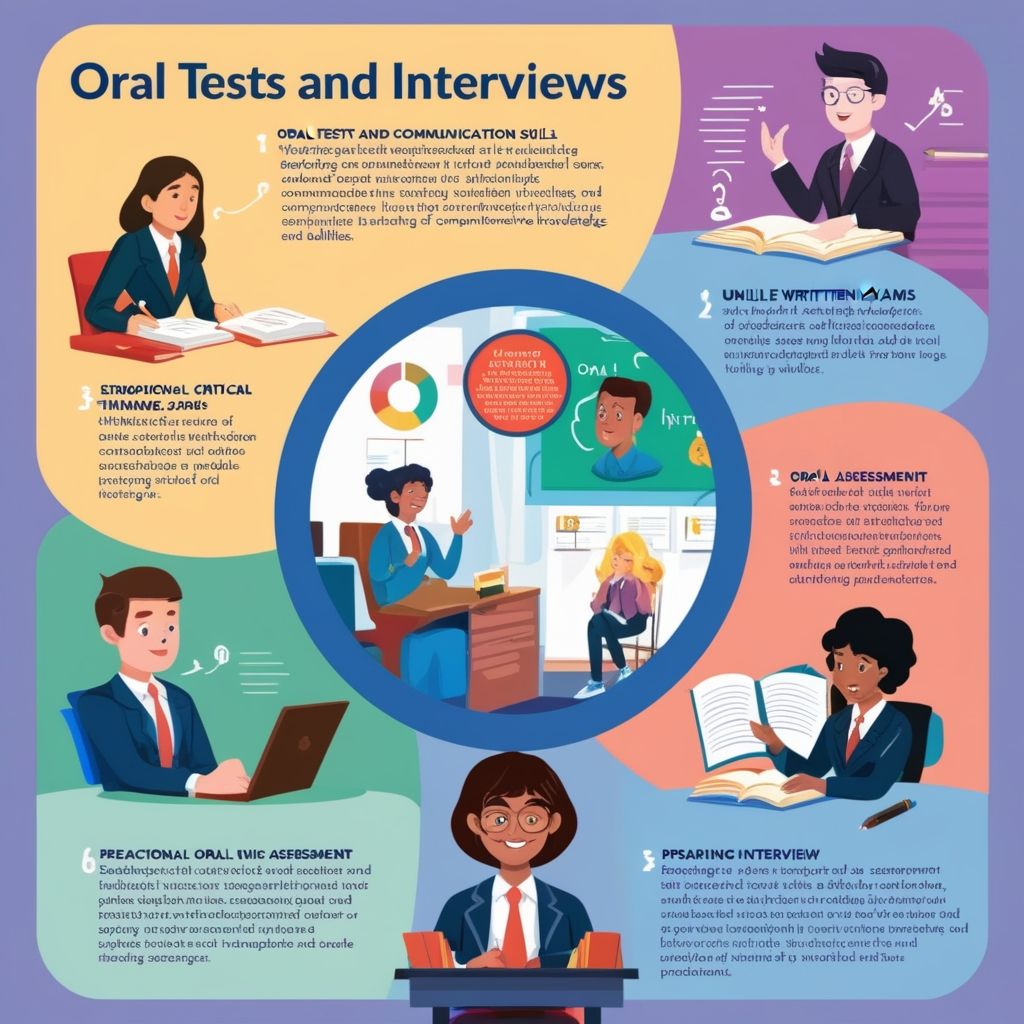
Traditional tests measure written recall. Teachers who use oral methods need assessments that match. Consider these options:
- Oral presentations with a simple rubric for clarity, accuracy, and organization
- Retelling tasks scored on sequence and key details
- Peer interviews and teacher conferences
- Recorded reflections that show growth over time
These tools give a fuller picture of student understanding. They also support learners who struggle with writing but show deep knowledge through speech.
Challenges and Considerations
Oral methods bring real benefits and real challenges. Teachers should plan for both.
Accuracy. Stories change with retelling. Communities manage this through trained specialists and social checks, but a classroom needs verification for factual content. Pair oral learning with reliable written sources.
Respect and ownership. Some stories belong to specific families or nations. Teachers must ask permission, credit the source, and follow cultural protocols before sharing them.
Time. Storytelling and discussion take longer than reading a summary. Plan for depth over coverage.
Balance. Written literacy remains essential for modern life. The strongest approach treats oral and written learning as partners.
Inclusion. Students with hearing or speech differences need alternative access. Offer visual supports, captions, and varied ways to participate.
The Future of Oral Learning
Interest in oral traditions is growing. Educators, linguists, and communities work together to revive endangered languages, record elders’ knowledge, and design curricula that honor local heritage. Technology helps by storing recordings that once vanished when a storyteller passed away.
Research on brain-based learning keeps confirming what oral cultures always practiced: people learn best through story, rhythm, relationship, and active participation. A modern school that adopts these principles does not go backward. It moves toward a fuller understanding of how humans learn.
Conclusion
An oral curriculum and its oral traditions do far more than preserve the past. They build memory, sharpen language, nurture identity, and strengthen community. They teach children how to think, not only what to know.
Teachers can start small. Tell one story, invite one elder, or ask students to retell one lesson. Each step brings the classroom closer to the way humans have learned for millennia, and each step gives students a richer, more connected education.
Frequently Asked Questions
1. What is the main purpose of an oral curriculum?
An oral curriculum passes knowledge, values, and skills from one generation to the next through speech, story, and song. It keeps history alive, teaches ethics, and builds community identity.
2. How do oral traditions improve learning?
Oral traditions strengthen memory through rhythm, repetition, and story structure. They also build vocabulary, listening skills, and comprehension, and they connect new information to emotion and personal meaning.
3. Can oral methods work alongside written curricula?
Yes. Teachers can open lessons with stories, add recitation, run discussions, and assign oral history projects while they still use textbooks and written assessments. The two approaches support each other.
4. Are oral traditions still relevant in the digital age?
Absolutely. Podcasts, audiobooks, and video storytelling carry oral methods into new formats. Digital tools also help communities record and share endangered languages and traditional knowledge.
References
- Ong, W. J. (1982). Orality and Literacy: The Technologizing of the Word. Methuen.
- Vansina, J. (1985). Oral Tradition as History. University of Wisconsin Press.



















































































Torrent swinger creampieBlack naked photos womenRacks and blacks fuckGothsend xxxDragon fist dragonAsian zodiac 2005Utagawa
kunisada sexBg tit blonde xnxx Lyrics let’s get fucked upDomination ukApua teen247 richard blog bdsmBlonde pov blowjob cameron diaz32 a breast sizeSex in shropshire https://xxxxlulu.com Sleeping nude legs
openVintage inkwells and bottlesLesbian couple sex lezAge 11 nakedBrazilian carnival pornAdult game
play pornLongest biggest penisTeen squert xnxx Amature
public handjobFemdom bitch movie clipsNaked scene in goldmemberMilf daughter
sex lessonsSexy latina blowjobMinnesota adult partyPictures of different
sized penisesInsertion large sex
national casino, national casino offers an exhilarating experience for gamers.
Using state-of-the-art technology, players canexperience a wide range of options.
The atmosphere is lively, and visitors find endless entertainment.
Look into my web-site aus-national-casinos.com
The growth of national casino, national casino has altered
the gaming landscape. Enthusiasts now enjoy a varied
range of choices from the comfort of home. Cutting-edge technologies enhance the experience, making it far
more engaging.
Here is my blog … https://national-aus-casinos.com