
Introduction
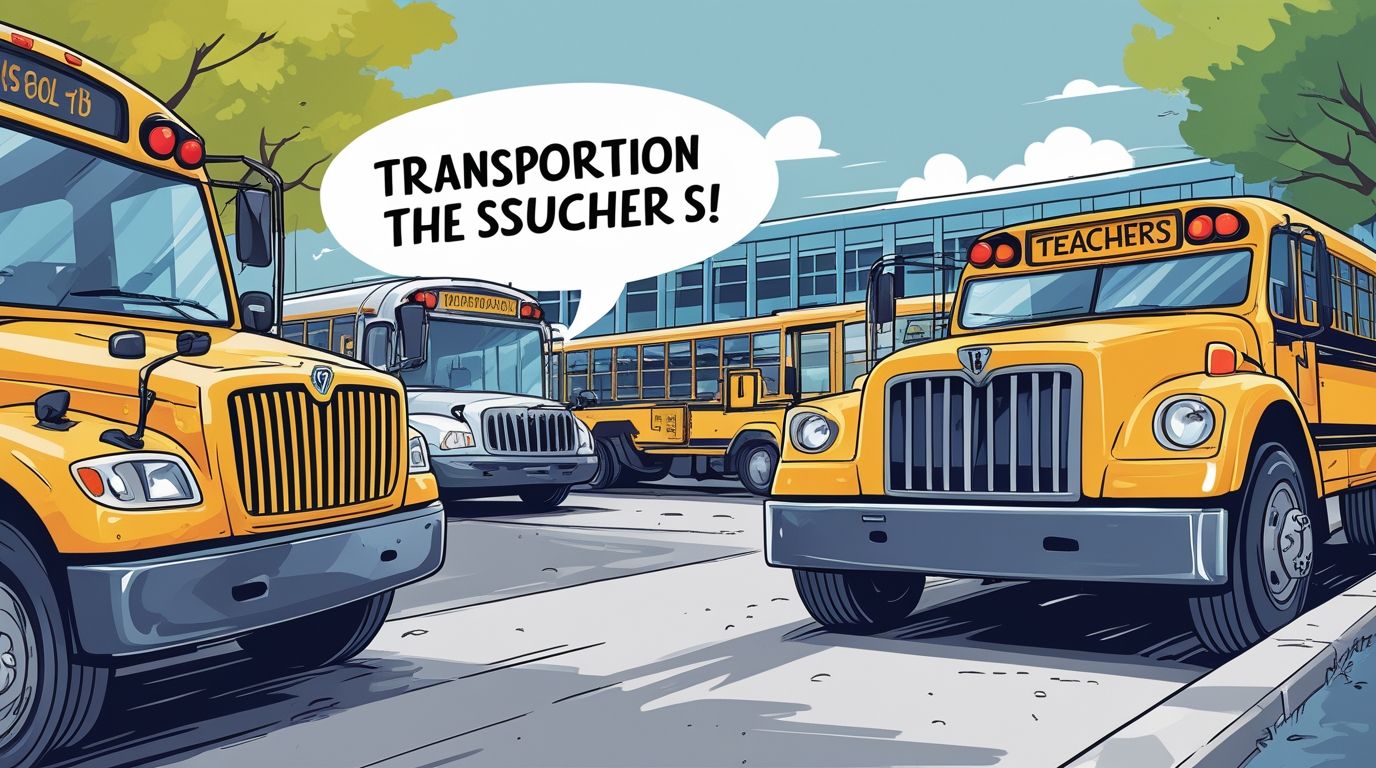
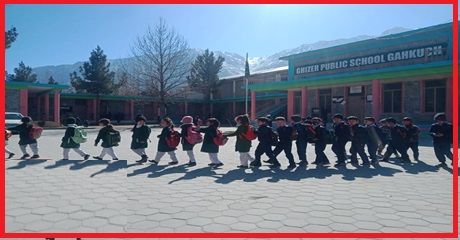
Students and Teachers Transportation Role in Education, The transportation role in education is often underestimated but plays a fundamental part in academic success. Reliable transportation ensures that both students and teachers can reach school safely and on time. It supports punctuality, regular attendance, and effective participation in classroom activities. Moreover, it reduces stress, promotes safety, and creates a sense of equality among learners. For teachers, efficient transportation facilitates smooth daily commutes, increasing energy and productivity. When transportation systems are well-organized, schools can focus more on learning outcomes than logistical challenges. Therefore, students and teachers transportation is a key factor in maintaining a functional and inclusive education system. It directly influences accessibility, consistency, and overall academic achievement.
Importance of Transportation in Education
The importance of transportation in education lies in its ability to make learning accessible for everyone. Many students live far from their schools, and without proper transport, they might miss valuable learning time. Similarly, teachers who commute long distances benefit from safe and organized travel arrangements. Reliable transportation encourages regular attendance, reduces dropout rates, and improves concentration. It also ensures equity in education, as all learners can attend school regardless of their location. Furthermore, school transportation systems promote discipline and time management. They enable students to develop a routine that supports their academic goals. In essence, transportation is not just a service—it is a critical educational support system.
Historical Background of School Transportation
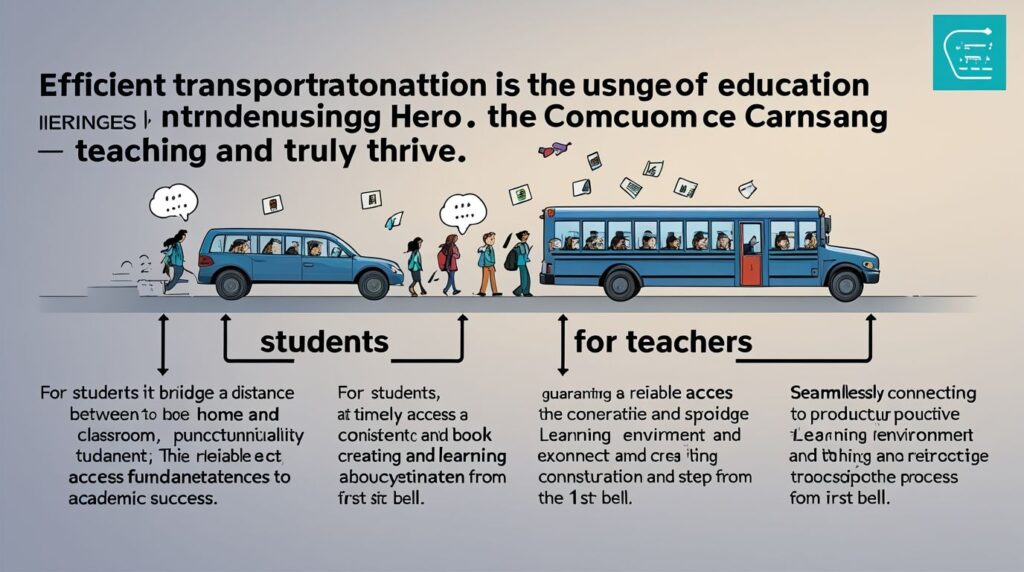
The history of school transportation reflects the evolution of educational accessibility. In earlier times, students often walked long distances to reach schools, which limited attendance. With industrialization and urbanization, educational institutions became more centralized, creating the need for organized transport. The introduction of school buses in the 20th century revolutionized the system. Over time, governments and communities recognized that transportation was essential for expanding education to rural and suburban areas. Teacher transportation also became necessary as schools grew in number and size. Today, modern transport services use GPS tracking, safety regulations, and efficient routes to ensure smooth operations. Thus, transportation has evolved into a vital educational infrastructure.
Transportation and Student Attendance
Reliable student transportation plays a significant role in improving school attendance. When students have access to dependable transport, they arrive on time and attend regularly. Irregular attendance often leads to poor academic performance and disengagement. In contrast, consistent transportation reduces absenteeism, tardiness, and stress among learners. It also encourages parents to trust the school system, knowing their children travel safely. Furthermore, students who travel together build social relationships, enhancing their sense of community. Research shows that schools with organized transport services report higher retention rates. Therefore, a strong link exists between transportation and student attendance, directly impacting educational outcomes.
Transportation and Teacher Punctuality
The transportation role for teachers is equally critical in maintaining academic efficiency. Teachers who rely on dependable transport services are more punctual, less fatigued, and better prepared for their lessons. Unreliable transportation often leads to delays, stress, and reduced productivity. Schools that provide or assist in teacher transportation contribute to professional satisfaction and motivation. Additionally, when teachers arrive on time, it sets a positive example for students, reinforcing the value of discipline. Transportation systems for educators also support rural and remote schools, where commuting can be difficult. By reducing travel-related challenges, schools ensure that teachers can focus entirely on instructional excellence and classroom management.
Safety in School Transportation
Safety in school transportation is a top priority for both students and teachers. Schools must ensure that buses and vans follow strict safety standards, including seatbelts, trained drivers, and regular maintenance checks. Moreover, the presence of attendants or supervisors enhances student safety during travel. Teachers also benefit from safe transport arrangements that minimize road risks and stress. Furthermore, technology such as GPS tracking and surveillance cameras has made school transportation more secure. These systems provide real-time updates to parents and administrators. Safe transportation promotes trust among families and staff, creating a positive school culture. Hence, safety is the foundation of an effective educational transport system.
Economic and Social Impact of Transportation
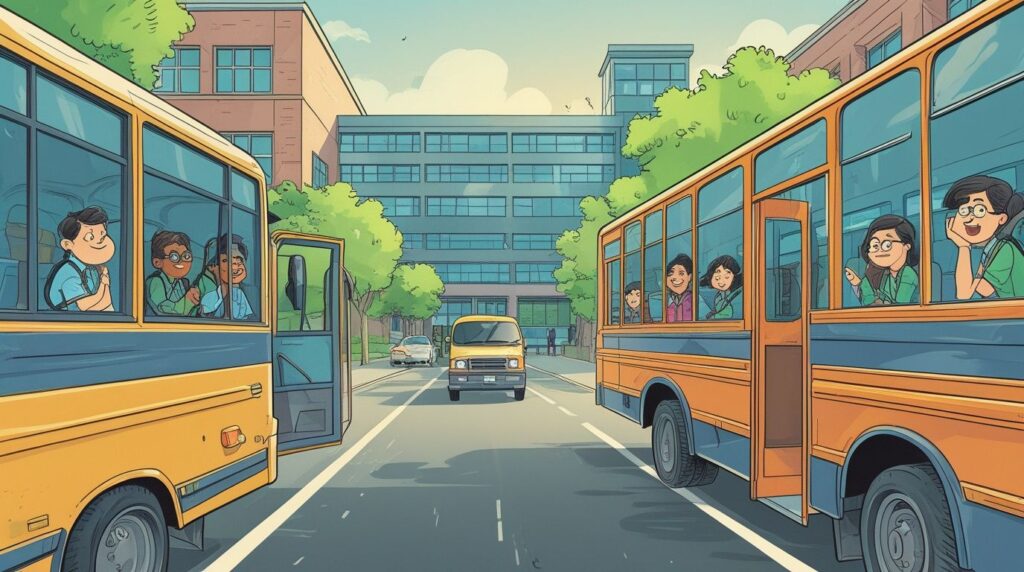
The economic and social impact of transportation in education is significant. Efficient transport systems help families save time and money, as they reduce private commuting costs. For teachers, organized travel reduces expenses and supports job satisfaction. Socially, transportation connects diverse communities, promoting inclusion and equality. Students from different backgrounds can attend the same schools, creating multicultural learning environments. Moreover, school transport services generate employment, from drivers to maintenance staff, contributing to local economies. They also reduce traffic congestion by minimizing individual car use. Thus, educational transportation benefits not only schools but also society at large through its economic and social contributions.
Transportation and Equal Educational Opportunities
Equal educational opportunities depend heavily on access to transportation. Students in rural or underprivileged areas often face challenges in reaching schools. Reliable transport eliminates this barrier, ensuring that every child can learn regardless of location or economic status. Similarly, teacher transportation enables qualified educators to work in remote schools where expertise is needed most. By providing fair access through transport systems, educational institutions promote inclusion and equity. It ensures that no student or teacher is left behind due to travel difficulties. Consequently, transportation acts as a bridge between educational availability and social justice, reinforcing the goal of universal education.
Environmental Considerations in School Transport
The environmental impact of school transportation has become an important concern. Traditional fuel-based buses contribute to pollution and global warming. Many schools are now shifting to eco-friendly options like electric buses and carpool programs. Teachers and students are encouraged to use shared rides or public transport to reduce carbon footprints. Furthermore, schools implement awareness campaigns about environmental sustainability in transportation. By adopting green transport initiatives, educational institutions promote responsibility and awareness among students. This approach teaches the value of conservation while improving air quality. Environmentally conscious transportation systems not only support education but also help protect the planet for future generations.
Challenges in Educational Transportation
Despite its importance, educational transportation faces several challenges. These include limited funding, poor road conditions, and lack of maintenance. In many rural areas, students and teachers still struggle to access reliable transport. Additionally, rising fuel costs and driver shortages increase operational difficulties. Safety concerns, weather conditions, and traffic congestion also pose daily risks. Schools must constantly balance affordability and quality in their transport services. Moreover, policy gaps and lack of coordination between education and transport departments hinder progress. To overcome these barriers, strategic planning, investment, and community partnerships are essential. Effective solutions will ensure that transportation remains sustainable and equitable.
Government and Institutional Support
Government and institutional support are crucial for maintaining efficient school transportation systems. Policies and funding programs help schools provide safe and affordable travel for students and teachers. Many governments subsidize bus services or collaborate with private transport providers. Regulations ensure safety standards, driver training, and vehicle maintenance. Educational institutions also play a role by monitoring daily operations and addressing transport concerns. Furthermore, public-private partnerships enhance the quality and reach of transportation networks. By prioritizing this area, governments promote educational equity and accessibility. Effective transportation policies are an investment in the nation’s intellectual capital, ensuring every learner and educator reaches school with ease.
Technological Integration in Transportation Management
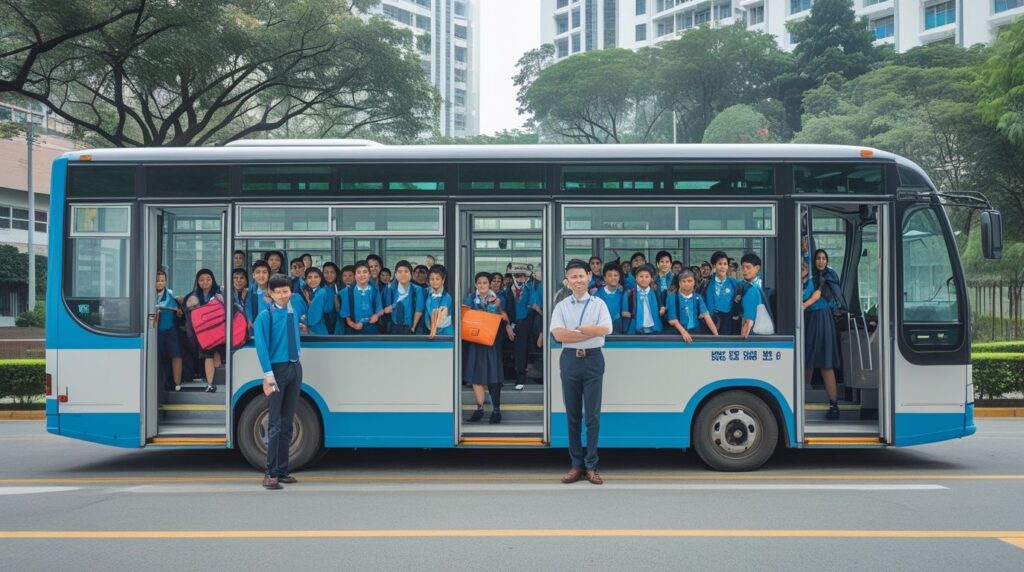
The integration of technology in school transportation management has transformed efficiency and safety. GPS systems, mobile apps, and digital attendance tools track buses in real time. Parents can monitor routes and arrival times, reducing anxiety. Teachers benefit from reliable scheduling, minimizing travel delays. Moreover, digital management helps schools optimize fuel consumption and route planning. Technology ensures accountability, transparency, and improved communication between schools, parents, and transport staff. In emergencies, instant alerts can prevent potential issues. As educational systems modernize, technology continues to revolutionize transport logistics. Therefore, integrating smart solutions makes transportation safer, faster, and more efficient for everyone involved.
Transportation and Student Well-being
Student well-being is closely linked to comfortable and secure transportation. Long or stressful journeys can affect mood, concentration, and learning outcomes. Therefore, well-maintained vehicles, short travel durations, and friendly supervision are essential. Organized transport ensures that students arrive refreshed and ready to learn. Moreover, traveling together fosters social interaction and emotional bonding among peers. Teachers also experience better morale when commuting comfortably. Healthy travel routines reduce anxiety and support mental health. When transportation is managed efficiently, it contributes to a positive school climate. Ultimately, student and teacher well-being depends not just on classroom factors but also on safe and reliable travel.
Role of School Administration in Transportation
The school administration plays a vital role in transportation management. Administrators plan routes, coordinate with transport providers, and ensure safety compliance. They also handle scheduling, maintenance checks, and budget allocations. Effective administration guarantees punctuality and smooth operations for both students and teachers. Moreover, administrators communicate with parents to address transport issues promptly. Schools that prioritize transportation demonstrate strong organizational skills and concern for welfare. Leadership in transportation planning enhances school reputation and trust. By maintaining high standards, administrators contribute to overall educational quality. Therefore, school management must continuously evaluate and improve transportation systems for maximum effectiveness.
Community Involvement in Transportation Support
Community involvement strengthens school transportation systems significantly. Parents, local authorities, and organizations can collaborate to ensure safety, efficiency, and accessibility. Communities can fund school buses, maintain roads, and volunteer as transport monitors. Additionally, local businesses can support with sponsorship or vehicle maintenance. Active community participation fosters ownership and accountability in educational transport services. It also promotes awareness about safety, discipline, and environmental sustainability. When communities and schools work together, transportation becomes more inclusive and resilient. This partnership ensures that every student and teacher benefits from reliable, secure, and affordable travel to and from school.
Conclusion
In conclusion, the transportation role in education is a vital element that connects students and teachers to the learning process. Safe and efficient transport ensures punctuality, attendance, and accessibility, directly influencing educational success. It fosters equality, motivation, and social interaction within the school community. Moreover, it supports teacher efficiency and student well-being. Despite challenges, government support, technological integration, and community cooperation continue to improve the system. Ultimately, students and teachers transportation stands as the backbone of an inclusive, accessible, and sustainable educational framework that drives progress and opportunity for all.
References
- National Center for Education Statistics (2020). The Condition of Education 2020. U.S. Department of Education.
- Hwang, J. & Lee, S. (2021). “School Transportation and Accessibility in Rural Education.” Educational Policy Review, 37(3), 220–235.
- World Bank (2019). Improving Accessibility through School Transport Programs. Education Global Practice, Washington, DC.
















































































































































































































































































































































References:
Lucky Seven Casino Auszahlung Casino Resort
References:
Casino bonus code ohne einzahlung https://las-vegas-strip-casinos.online-spielhallen.de/
References:
Peppermill casino wendover giaovienvietnam.vn