Introduction
Role and Impact of SRO that Shape Education Policies, Have you ever heard teachers or education officers talking about an “SRO” and wondered what it means? If you work in the Education Department or are preparing for a teaching job, understanding SROs is very important. Every year, governments issue many SROs that directly affect teachers, students, schools, promotions, transfers, salaries, recruitment, examinations, and educational policies.
In this detailed and easy-to-understand guide, we will explain the role and impact of SROs in the Education Department using simple language. Whether you are a teacher, school head, student, education officer, or someone preparing for government service, this article will help you understand why SROs are so important in the education system.
What is an SRO?
SRO stands for Statutory Regulatory Order. It is an official legal notification issued by the government under the powers given by an Act of Parliament or Provincial Assembly.
An SRO is used to implement new rules, amend existing regulations, provide exemptions, revise policies, or notify administrative decisions. Once issued by the competent authority and published in the official Gazette, it becomes legally enforceable.
In Pakistan, both the Federal Government and Provincial Governments issue SROs according to their constitutional powers. Simply put, an SRO is a government order that changes or explains how a law or policy should be implemented.
Why are SROs Important in the Education Department?
Education is one of the largest government sectors. Millions of students, teachers, administrators, and educational institutions depend upon clear rules and policies.
Instead of passing a new law every time a minor policy needs updating, governments issue SROs.
These notifications help:
- Implement educational reforms quickly.
- Clarify service rules.
- Update recruitment policies.
- Introduce new examination systems.
- Revise teacher promotion criteria.
- Improve school administration.
- Standardize educational practices.
- Ensure transparency in governance.
Without SROs, education departments would face confusion, delays, and inconsistent implementation of policies.
Objectives of Issuing SROs in Education
Governments issue SROs to achieve several important objectives.
1. Implementation of Government Policies
Whenever a new education policy is announced, SROs provide the detailed procedures for implementing that policy.
For example:
- New curriculum implementation
- Revised examination system
- Digital learning initiatives
- Teacher licensing
- School improvement programs
2. Administrative Efficiency
SROs reduce confusion by providing clear administrative instructions.
Education officers can perform their duties according to officially approved procedures rather than relying on verbal instructions.
3. Legal Protection
An SRO provides legal backing to administrative decisions. If any dispute arises regarding recruitment, promotion, transfers, or disciplinary action, the relevant SRO serves as an official legal document.
4. Uniformity Across Institutions
Government schools throughout a province or country follow the same rules because of officially issued SROs. This creates equality and consistency in educational administration.
Major Areas Where SROs Affect the Education Department
SROs influence almost every aspect of educational administration. Let us understand each area in detail.
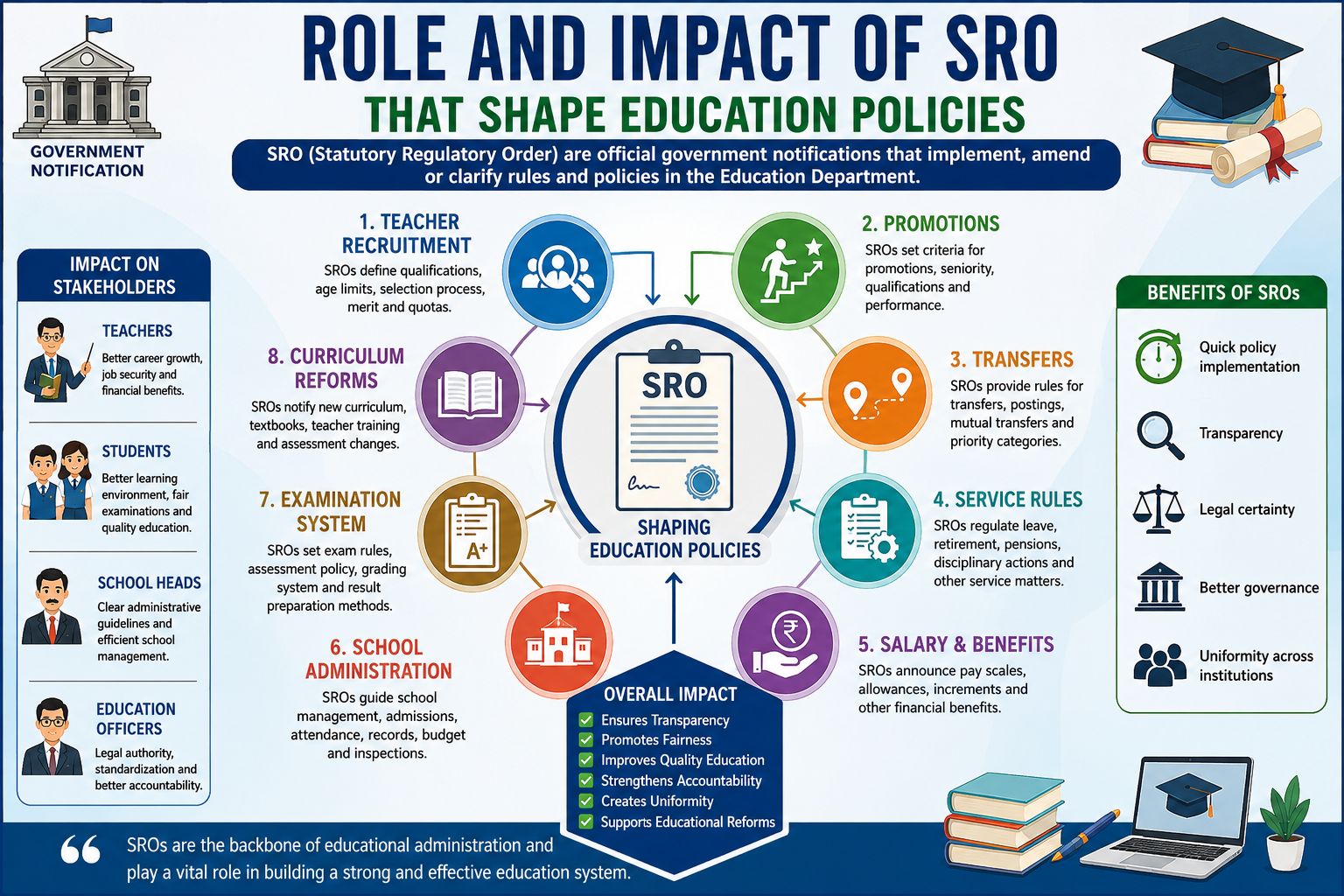
1. Teacher Recruitment
Teacher recruitment is one of the most common areas regulated through SROs. Government notifications specify:
- Required qualifications
- Age limits
- Recruitment procedure
- Written tests
- Interview policy
- Merit formula
- Quota system
- Professional qualifications
Whenever recruitment criteria change, an SRO is usually issued.
2. Teacher Promotions
Promotion rules frequently change to improve career progression.
SROs define:
- Length of service
- Qualification requirements
- Performance evaluation
- Promotion committees
- Seniority rules
- Departmental examinations
- Selection criteria
These rules ensure transparency and fairness.
3. Transfer and Posting Policy
Teachers often seek transfers due to family, health, or personal reasons.
Transfer-related SROs explain:
- Eligibility
- Mutual transfers
- Hard area postings
- Transfer schedules
- Online transfer systems
- Priority categories
This minimizes favoritism and promotes transparency.
4. Service Rules
Every government employee works under service rules.
Education Department SROs define:
- Leave rules
- Retirement benefits
- Pension regulations
- Medical leave
- Study leave
- Maternity leave
- Extraordinary leave
- Disciplinary procedures
These notifications protect both employees and departments.
5. Salary and Financial Benefits
Teachers closely monitor SROs because they often contain financial updates.
Examples include:
- Pay scale revisions
- Annual increments
- Special allowances
- Adhoc relief allowances
- Teaching allowance
- Utility allowance
- House rent revisions
- Medical allowance
Budget announcements are usually followed by SROs explaining implementation procedures.
6. School Administration
School heads also rely heavily on SROs.
They guide:
- School management
- Office procedures
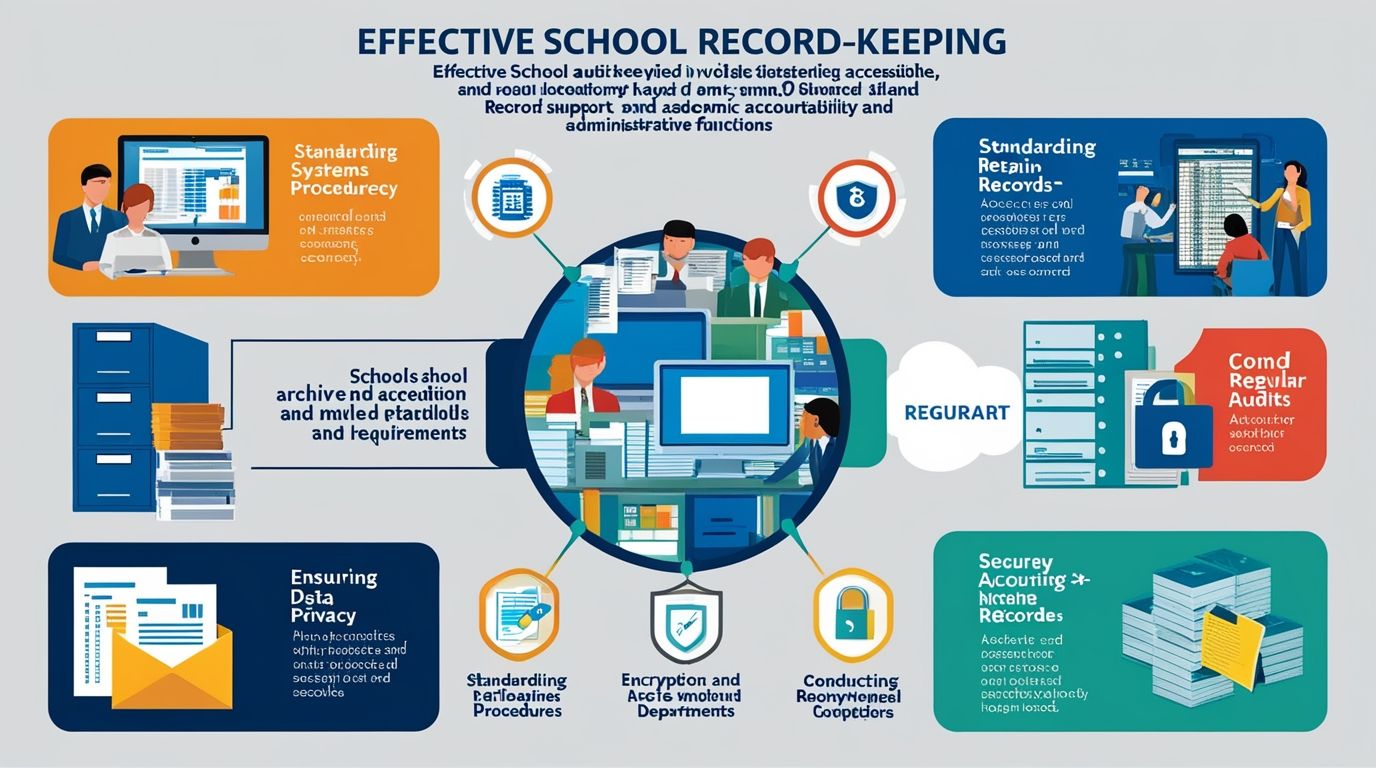
- Student records
- Admission policies
- Attendance rules
- Annual planning
- Budget utilization
- School inspections
These instructions improve administrative efficiency.
7. Examination System
Examination reforms are introduced through official notifications.
SROs may regulate:
- Passing criteria
- Assessment policy
- Internal evaluation
- Practical examinations
- Grading system
- Supplementary examinations
- Digital marking
- Result preparation
This helps maintain fairness in examinations
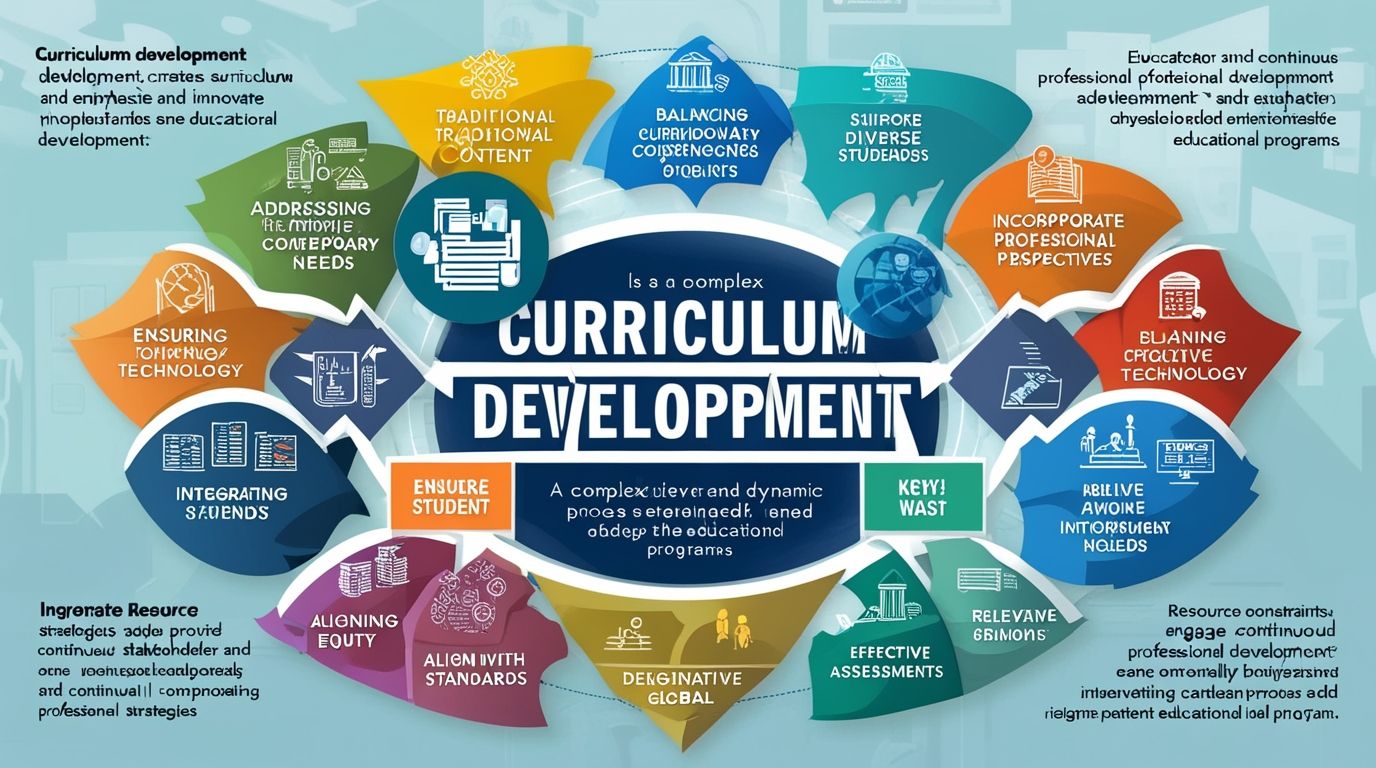
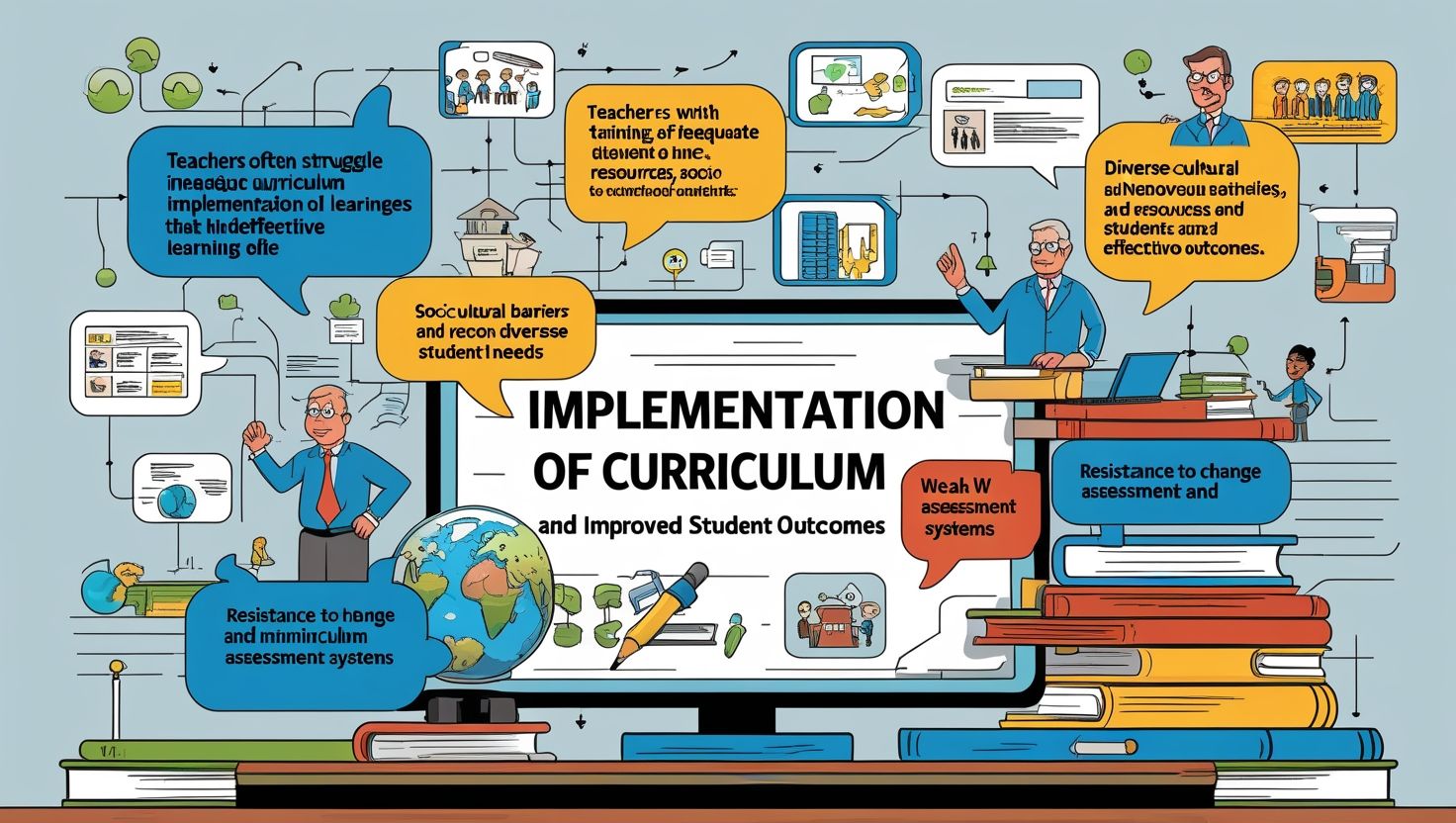
8. Curriculum Reforms
Whenever the government introduces a new curriculum, implementation begins through SROs. These notifications specify:
- Effective date
- New textbooks
- Teacher training
- Classroom implementation
- Assessment changes
Teachers receive official guidance through these notifications.
Impact of SROs on Teachers
Teachers are among the most affected stakeholders. Positive impacts include:
Career Growth
Promotion policies become transparent. Teachers understand the qualifications needed for higher positions.
Better Job Security
Service rules protect teachers from arbitrary administrative actions. Official procedures ensure fairness.
Financial Improvement
Many SROs introduce:
- Salary increases
- New allowances
- Pension improvements
- Incentives
These directly improve teachers’ financial well-being.
Professional Development
SROs often make professional training mandatory.
Teachers receive updated knowledge on:
- Modern teaching methods
- Digital education
- Classroom management
- Student assessment
Impact on Students
Although students rarely read SROs, they benefit greatly from them.
Examples include:
Better Learning Environment
Policies improve:
- Classroom facilities
- Teaching quality
- School management
Improved Curriculum
Updated curriculum ensures students learn modern knowledge and skills.
Fair Examinations
Transparent examination policies increase students’ confidence in the assessment process.
Better Qualified Teachers
Recruitment and training policies improve the quality of teaching.
Impact on School Heads
Headteachers and principals depend on SROs for daily administration.
They receive official guidance regarding:
- Staff management
- Financial powers
- School discipline
- Academic planning
- Procurement
- Performance monitoring
This reduces administrative uncertainty.
Impact on Education Officers
District Education Officers, CEOs, Directors, and Secretaries use SROs to implement government policies.
Benefits include:
- Standardized administration
- Legal authority
- Better accountability
- Transparent decision-making
- Improved monitoring
Without SROs, education administration would become inconsistent across districts.
Advantages of SROs in Education
There are numerous benefits.
Quick Policy Implementation
Government can implement reforms without lengthy legislative procedures.
Transparency
Official notifications reduce ambiguity.
Everyone follows the same written instructions.
Accountability
Officials become accountable because procedures are clearly documented.
Better Governance
Educational administration becomes more organized and professional.
Legal Certainty
Employees know their rights and responsibilities. Departments can defend their decisions legally.
Challenges Associated with SROs
Despite many benefits, challenges also exist.
Frequent Policy Changes
Too many amendments can confuse employees. Teachers sometimes struggle to keep up with frequent notifications.
Lack of Awareness
Many employees remain unaware of newly issued SROs. This causes implementation problems.
Misinterpretation
Some notifications contain technical legal language. Without proper explanation, different officers may interpret the same SRO differently.
Delayed Implementation
Sometimes an SRO is issued, but implementation is delayed due to administrative or financial constraints.
Importance of Reading SROs for Teachers
Every government teacher should regularly read new SROs. Doing so helps them understand:
- Promotion opportunities
- Service benefits
- Leave entitlements
- Transfer policies
- Retirement benefits
- Training requirements
- Examination duties
- Performance evaluation
Awareness protects employees from misinformation.
How Can Teachers Stay Updated About New SROs?
Teachers should adopt several habits.
- Regularly visit Education Department websites.
- Read official Gazette notifications.
- Follow School Education Department announcements.
- Join official teacher information groups.
- Attend departmental meetings.
- Participate in professional training sessions.
- Consult administrative officers when clarification is needed.
Staying informed helps teachers make better career decisions.
Digital Transformation and SROs
Modern governments increasingly publish SROs online.
Digital publication offers several advantages.
- Easy public access
- Faster implementation
- Reduced paperwork
- Greater transparency
- Permanent digital record
- Better public awareness
Many provinces now upload SROs on their official education department portals immediately after issuance.
Future Role of SROs in Education
Education systems continue to evolve.
Future SROs may increasingly focus on:
- Artificial Intelligence in education
- Digital classrooms
- Online teacher licensing
- Smart schools
- Competency-based curriculum
- Digital examinations
- School quality assurance
- Data-driven educational planning
As education modernizes, SROs will remain essential for implementing reforms efficiently and legally.
Best Practices for Effective Implementation of SROs
To maximize the benefits of SROs, education departments should:
- Use simple and clear language in notifications.
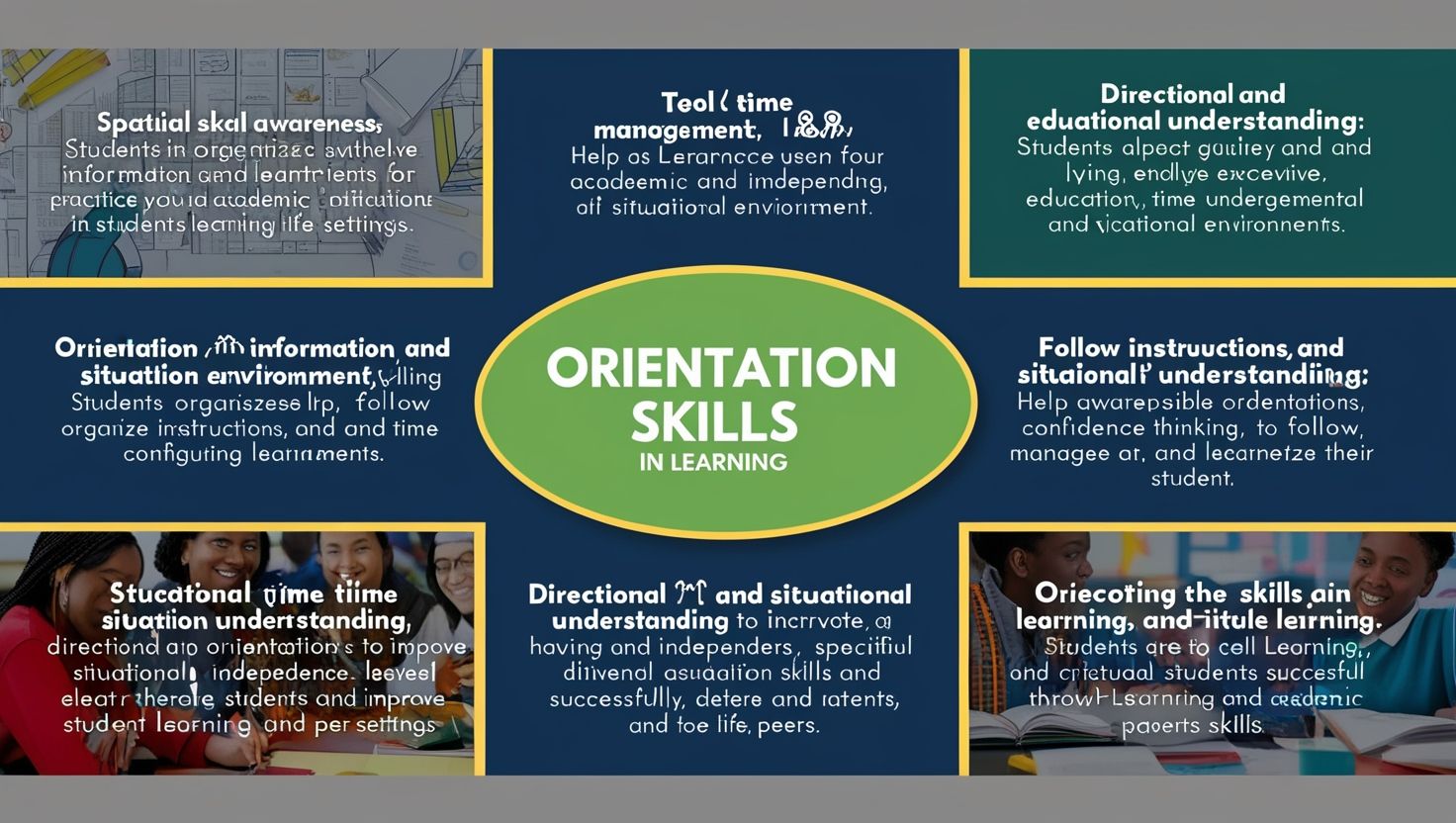
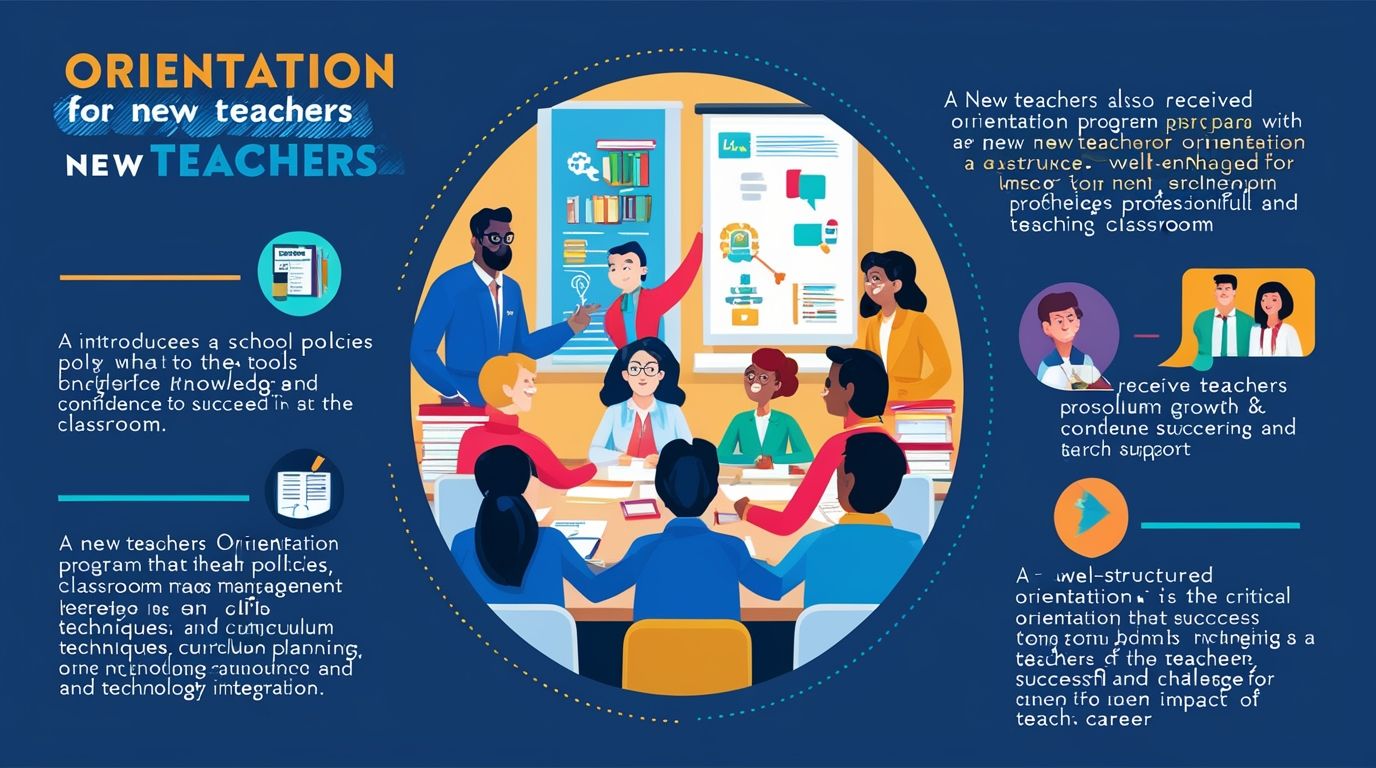
- Conduct orientation sessions for teachers and school heads.
- Provide official explanatory guidelines.
- Publish notifications promptly on official websites.
- Ensure timely implementation across all districts.
- Review outdated SROs periodically.
- Create digital archives for easy public access.
These practices improve compliance and reduce confusion.
Frequently Asked Questions (FAQs)
1. What does SRO stand for?
SRO stands for Statutory Regulatory Order, an official government notification issued under legal authority to implement or amend rules and policies.
2. Why are SROs important in the Education Department?
SROs provide legal instructions regarding recruitment, promotions, transfers, salaries, examinations, curriculum, service rules, and educational administration, ensuring uniform implementation across institutions.
3. Do SROs have legal status?
Yes. Once issued under the relevant law and published in the official Gazette, an SRO becomes legally enforceable within its scope.
4. Who benefits from Education Department SROs?
Teachers, students, school heads, education officers, administrative staff, and educational institutions all benefit from the clarity and consistency provided by SROs.
5. How can teachers stay informed about new SROs?
Teachers should regularly check official Education Department notifications, Gazette publications, departmental websites, official circulars, and professional communication channels to remain updated.
Summary
Statutory Regulatory Orders (SROs) are among the most important administrative and legal instruments used in the Education Department. They translate government policies into practical rules that guide recruitment, promotions, transfers, salaries, service conditions, examinations, curriculum reforms, and school administration. By providing clear legal directions, SROs strengthen transparency, accountability, and consistency across the education system.
For teachers and school leaders, understanding SROs is essential for protecting service rights, planning career progression, and complying with departmental regulations. Students also benefit indirectly through improved teaching quality, fair assessment systems, and better-managed schools. As education increasingly embraces digital technologies, competency-based learning, and data-driven governance, SROs will continue to play a central role in implementing reforms efficiently and ensuring that educational policies are applied uniformly. Staying informed about new SROs is therefore a professional responsibility for everyone associated with the Education Department.