
Introduction
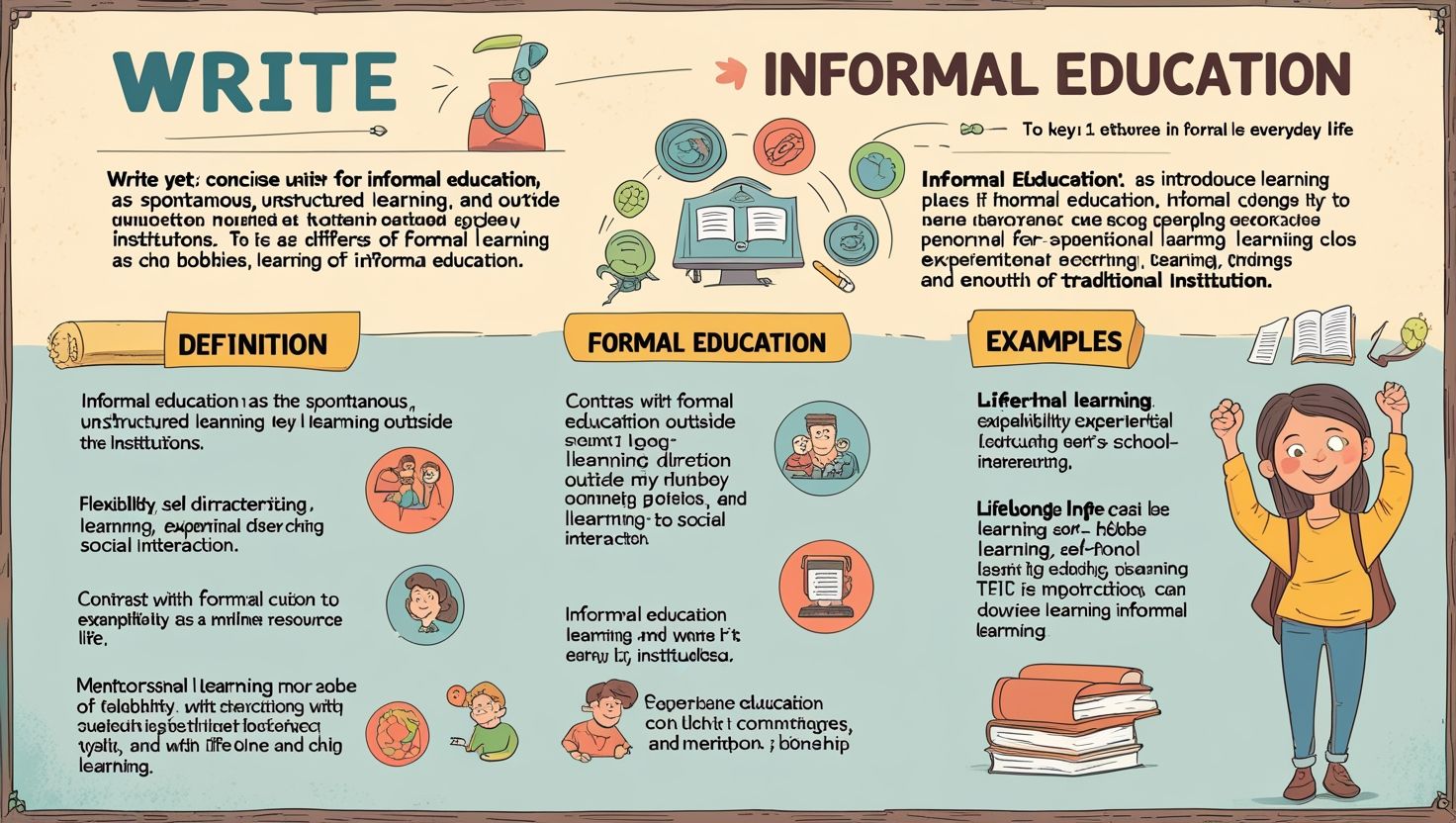
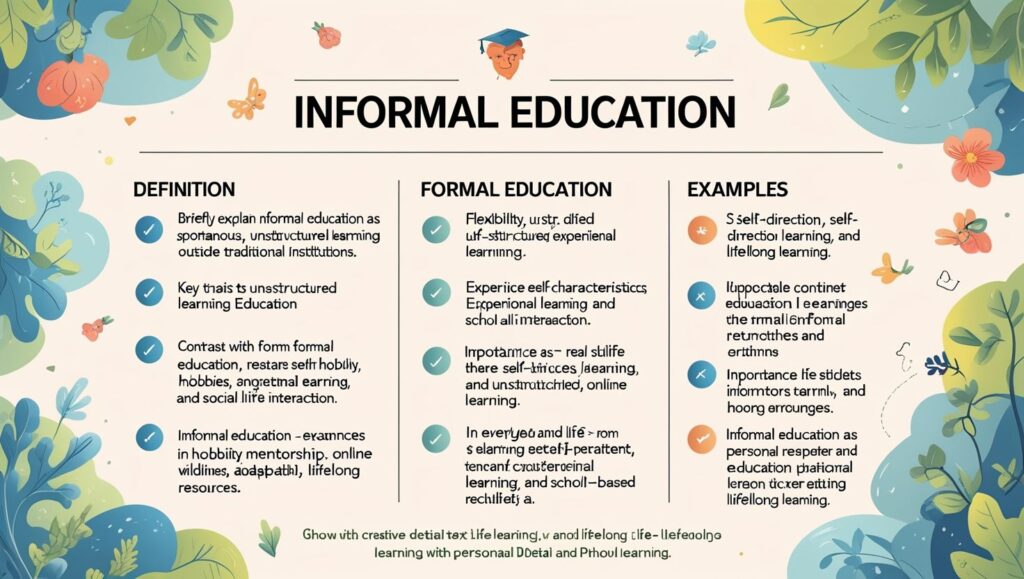
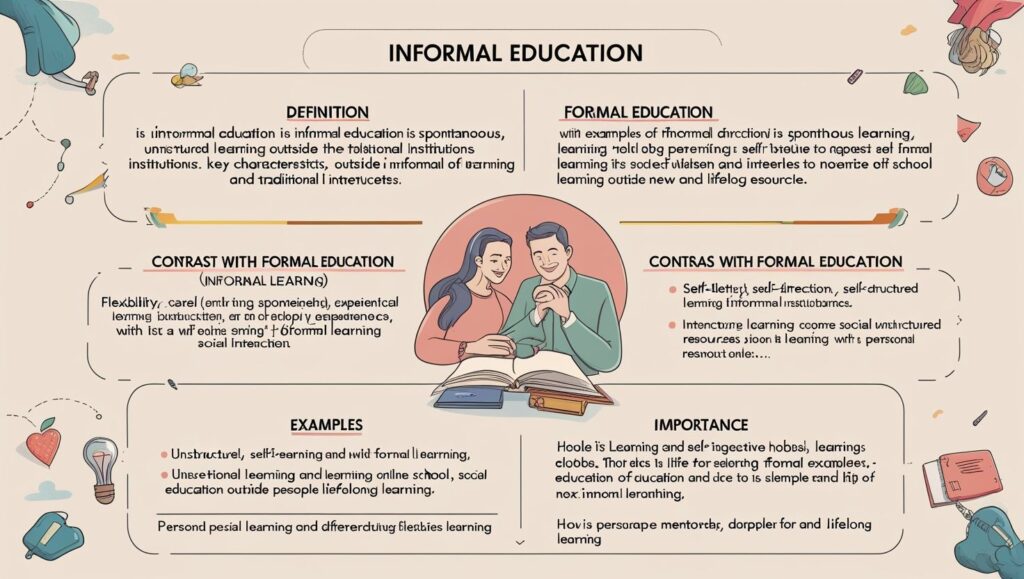
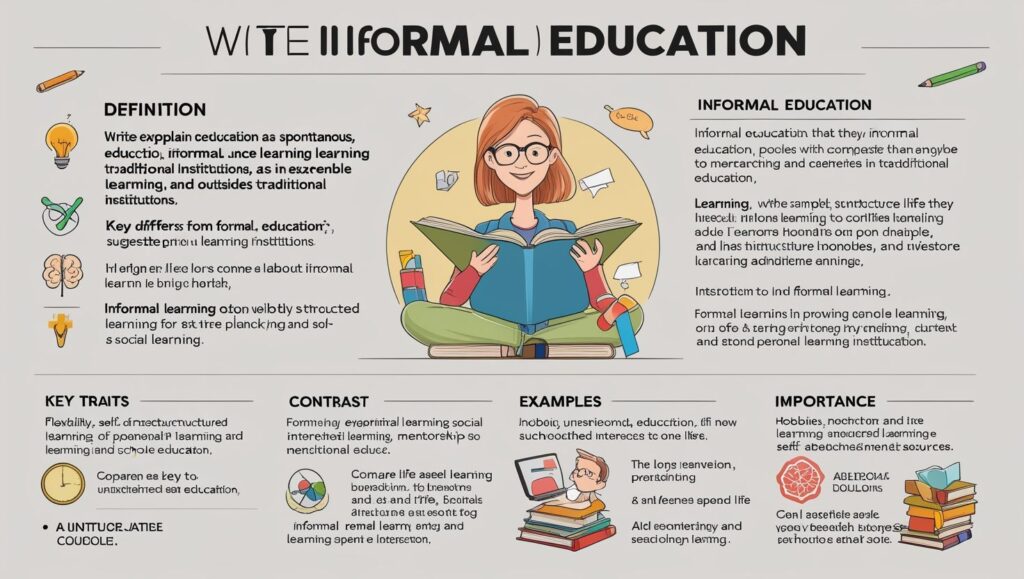
Introduction to Informal Education, Informal education is a dynamic, spontaneous, and continuous learning process that occurs naturally throughout a person’s life, outside the rigid structures of formal educational institutions. Unlike formal education—which is systematically organized and delivered in schools, colleges, and universities—informal education emerges from everyday experiences, personal interests, and interactions with the surrounding world.
This form of learning is not bound by a fixed curriculum, standardized assessments, or institutional regulations. Instead, it thrives on curiosity, self-motivation, and real-world engagement. In this detailed exploration, we will examine the key characteristics, benefits, challenges, and practical applications of informal education, emphasizing its crucial role in fostering lifelong learning and holistic personal development.
Key Characteristics of Informal Education
1. Everyday Learning
Informal education is deeply embedded in daily life. It occurs naturally through routine experiences, observations, and interactions, without the need for a structured syllabus. Whether through conversations, media consumption, or hands-on activities, learning happens organically in various contexts.
2. Interest-Driven Learning
One of the most defining aspects of informal education is that it is fueled by personal interests and passions. Learners engage with topics they find meaningful, leading to a more enjoyable and intrinsically motivated educational experience.
3. Flexibility and Spontaneity
Unlike formal education, which follows strict schedules and predetermined curricula, informal learning is highly adaptable. It can happen anytime, anywhere—whether through reading a book, watching a documentary, or engaging in a hobby—allowing individuals to learn at their own pace.
4. Social Interaction and Collaborative Learning
Informal education is inherently social. People learn through discussions, shared experiences, and collaboration with peers, mentors, or community members. This social dimension enriches the learning process by exposing individuals to diverse perspectives.
5. Experiential and Hands-On Learning
A significant portion of informal education involves learning by doing. Practical experiences—such as DIY projects, travel, or volunteering—help individuals develop problem-solving skills, critical thinking, and a deeper understanding of real-world applications.
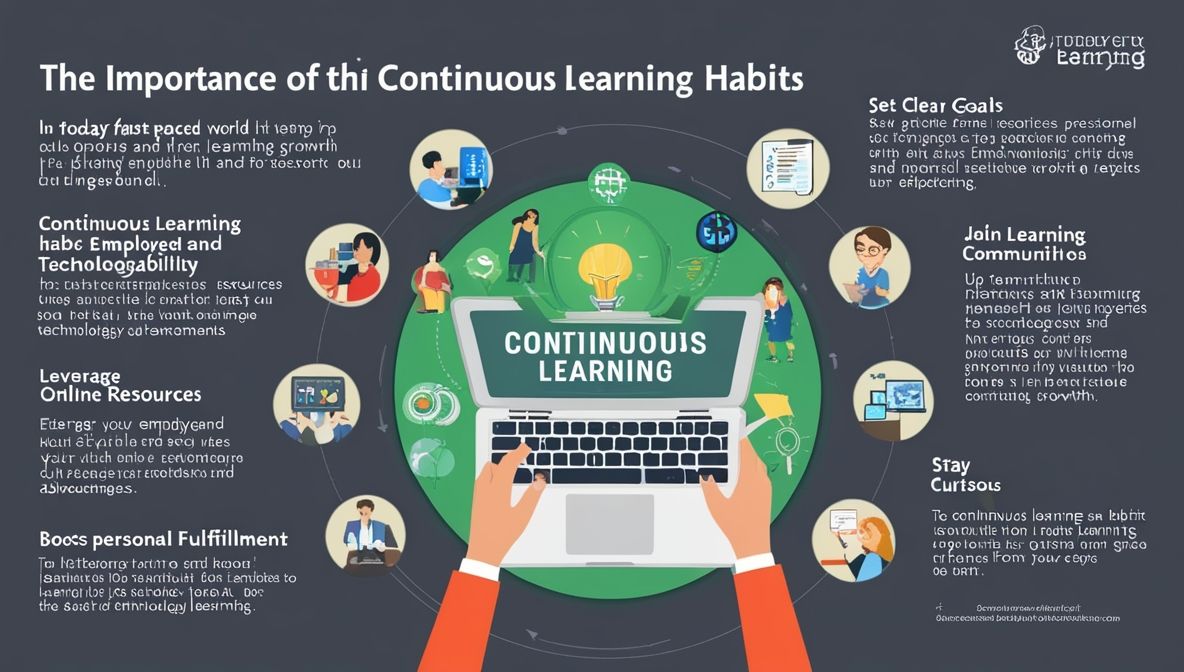
6. Lifelong and Continuous Learning
Informal education recognizes that learning does not end with formal schooling. It is a lifelong journey where individuals continuously acquire new knowledge, skills, and insights, adapting to personal and professional changes over time.
Benefits of Informal Education
1. Flexibility and Learner Autonomy
Informal education empowers individuals to take charge of their own learning. Without rigid structures, learners can explore diverse subjects, follow their passions, and set their own learning pace.
2. Real-World Relevance
Since informal learning often occurs in practical contexts, the knowledge gained is immediately applicable. This relevance enhances retention and deepens understanding, as learners see the direct impact of their education on daily life.
3. Encourages Curiosity and Passion
When learning is driven by personal interest, individuals are more engaged and motivated. Informal education nurtures a love for discovery, encouraging deeper exploration of subjects that resonate with the learner.
4. Strengthens Social Connections
Learning in informal settings—such as community workshops, discussion groups, or online forums—fosters collaboration and social bonding. Shared learning experiences create a sense of belonging and mutual growth.
5. Adapts to Diverse Learning Styles
Informal education accommodates different learning preferences—whether visual, auditory, kinesthetic, or social. This inclusivity makes learning more personalized and effective for a wide range of individuals.
6. Cultivates a Lifelong Learning Mindset
By promoting self-directed learning, informal education instills a habit of continuous personal and professional development. This mindset is essential in a rapidly changing world where adaptability is key.
Challenges and Considerations
1. Lack of Formal Recognition
Skills and knowledge gained through informal learning are often undervalued in academic and professional settings. There is a need for better systems to validate and certify informal education.
2. Accessibility and Equity Issues
Not everyone has equal access to informal learning opportunities. Socioeconomic barriers, geographic limitations, and cultural differences can restrict participation for certain groups.
3. Variable Quality of Learning Resources
Unlike formal education, which follows standardized curricula, informal learning relies on diverse—and sometimes unreliable—sources. Ensuring the credibility of information is a key challenge.
4. Less Structured Skill Development
While informal education fosters broad skills, it may lack the systematic progression found in formal training programs, making it harder to achieve specialized expertise.
5. Dependence on Self-Motivation
Without external deadlines or assessments, some learners may struggle with consistency. Maintaining long-term engagement requires strong self-discipline and motivation.
6. Balancing Digital and Non-Digital Learning
With the rise of online learning, excessive screen time can become an issue. A balanced approach that includes offline experiences is essential for holistic development.
Informal Education in Practice
1. Self-Directed Learning
Individuals take initiative in exploring topics of interest, using books, online courses, or experimentation to expand their knowledge.
2. Learning Through Hobbies and Interests
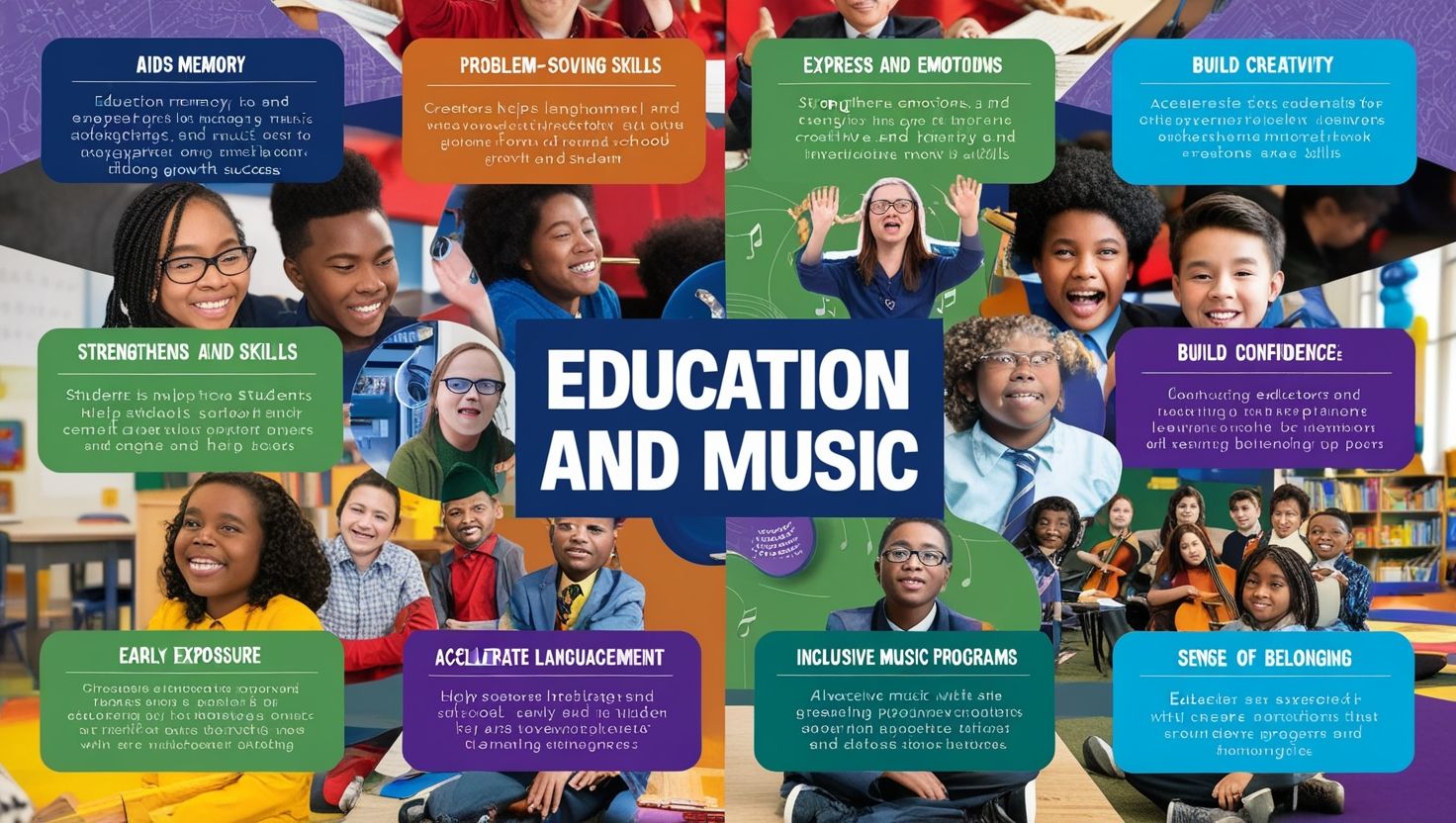
Activities like painting, coding, gardening, or playing a musical instrument serve as powerful informal learning tools, enhancing creativity and skill development.
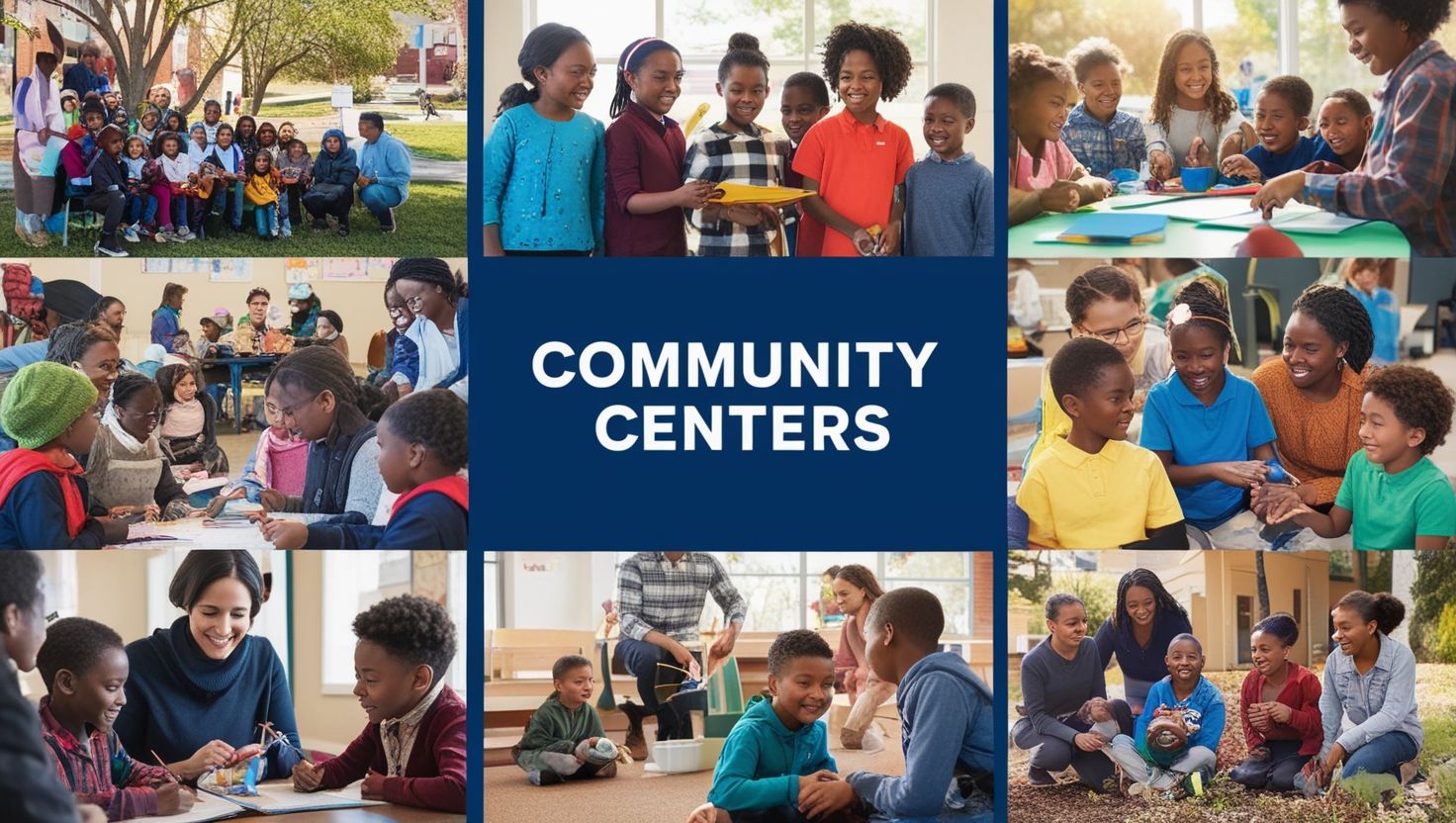
3. Community-Based Learning
Local workshops, discussion groups, and cultural events provide collaborative learning environments where knowledge is shared organically.
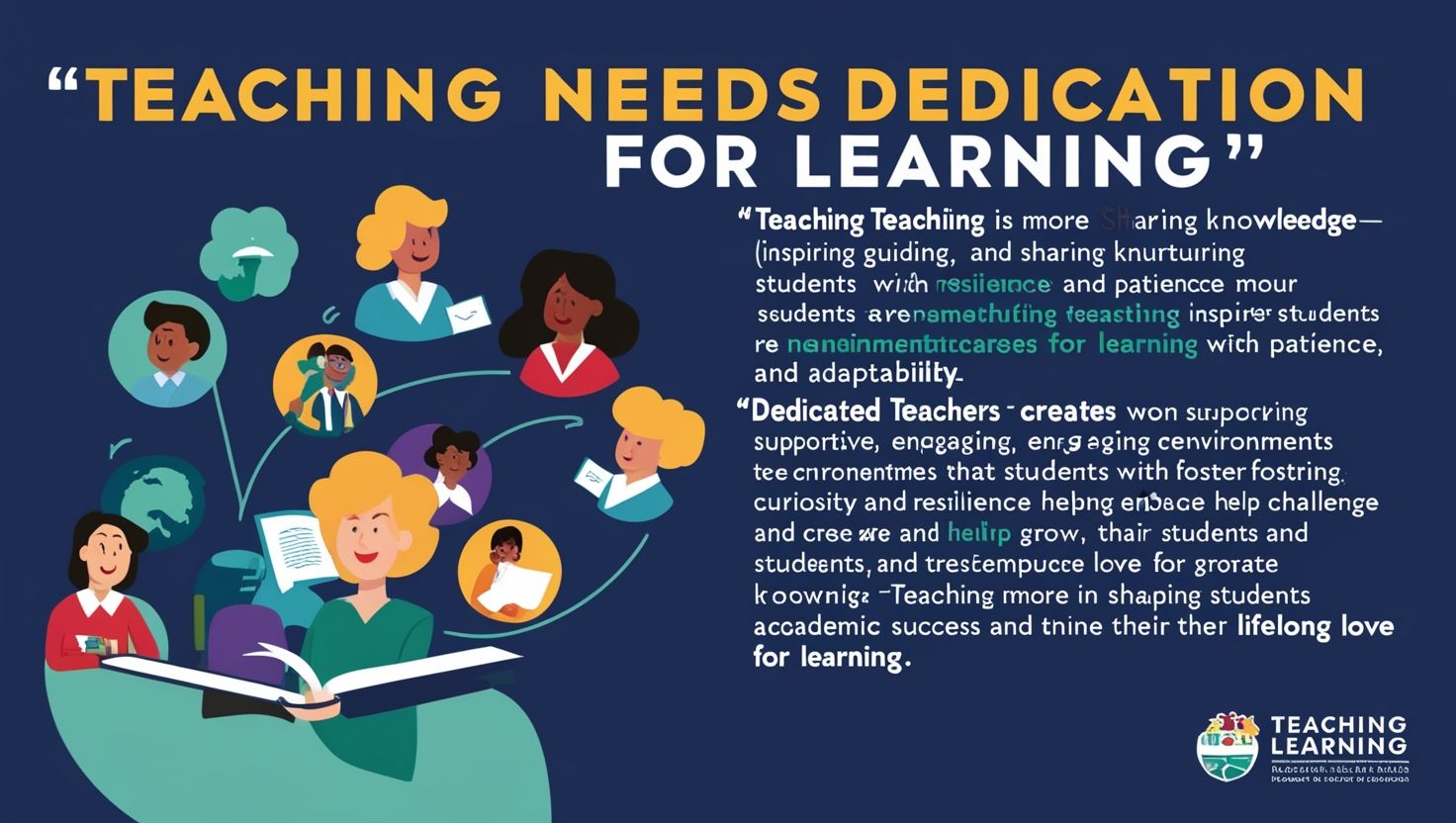
4. Mentorship and Apprenticeship
Learning from experienced individuals—whether through direct mentorship or observation—is a traditional yet highly effective form of informal education.
5. Online Learning Platforms
Websites like YouTube, Coursera, and Khan Academy offer vast resources for self-paced learning, making education more accessible than ever.
Conclusion
Informal education is a vital complement to formal schooling, enriching lives through curiosity-driven, flexible, and experiential learning. While challenges such as recognition gaps and accessibility barriers exist, the benefits—personalized learning, real-world relevance, and lifelong adaptability—make it indispensable in today’s knowledge-driven society.
By embracing informal education, individuals cultivate a mindset of continuous growth, equipping themselves with the skills and resilience needed to thrive in an ever-evolving world. Whether through hobbies, social interactions, or digital platforms, informal learning empowers people to take ownership of their education, fostering a deeper connection to the world around them.



















































Your point of view caught my eye and was very interesting. Thanks. I have a question for you.
Hello there, You have done a fantastic job. I’ll definitely digg it and personally recommend to my friends. I am confident they will be benefited from this site.
Hello there, You have done a fantastic job. I’ll certainly digg it and personally suggest to my friends. I am sure they’ll be benefited from this website.
Hello there, You’ve performed an excellent job. I will definitely digg it and individually suggest to my friends. I’m sure they will be benefited from this site.
jouer-rami-en-ligne
Here is my blog; demo